
I figured a slow cooker soup would be fine. Tasty, sure. But nothing to write home about. It took about one spoonful of this crockpot butternut squash soup for that assumption to fall apart completely.
The funny thing is, I wasn’t even planning to make soup that day. I had a butternut squash sitting on the counter for almost a week, looking at me every time I walked past. You know that guilt? The “I should really do something with that before it goes soft” kind of guilt. So I tossed it in the crockpot with some onion, garlic, and broth, figuring I’d deal with it later.
Then I made the sage brown butter. And honestly? That’s where the whole thing went from “fine” to “I need to write this down immediately.” The butter sizzles, the sage gets crispy, and the whole kitchen smells like a fancy restaurant. It’s ridiculous how something so simple can change a dish so completely.
This is the kind of soup that makes you forget you’re eating vegetables. It’s creamy without being heavy, sweet without being sugary, and the brown butter on top is just — well, you’ll see. I’ve made it for company, I’ve made it for myself on a rainy Tuesday, and it works every single time. No fuss, no complicated steps. Just a cozy bowl of something that feels way more effort than it actually is.
Why You’ll Love This Recipe
Let me tell you why this one sticks around in my rotation. It’s not just because it tastes good — it’s because it makes me look like I tried way harder than I did.
- Hands-Off Cooking: The crockpot does all the heavy lifting. You chop a few things, hit start, and walk away. No stirring, no watching, no stress.
- Simple Ingredients: Nothing weird here. Butternut squash, onion, garlic, broth, and a few pantry staples. You probably have most of it already.
- That Sage Brown Butter Topping: This is the secret weapon. It takes about 5 minutes and turns a simple soup into something you’d pay $14 for at a restaurant.
- Crowd-Pleaser: I’ve served this to picky eaters, vegetable skeptics, and my dad who “doesn’t do squash.” Empty bowls every time.
- Make-Ahead Friendly: It actually gets better after a day in the fridge. The flavors meld together and get even deeper. Perfect for meal prep or entertaining.
This isn’t just another butternut squash soup recipe. The slow cooker makes it incredibly tender, the blending makes it silky smooth, and that brown butter drizzle? It’s the kind of finishing touch that makes people close their eyes when they take a bite. I’ve tested this with different squashes, different broths, different everything — and this version is the one I keep coming back to.
What Ingredients You Will Need
This recipe uses simple, wholesome ingredients to deliver that deep, cozy flavor without any fuss. Most of these are pantry staples or easy to find at any grocery store.
- Butternut squash (1 large, about 3 pounds, peeled, seeded, and cubed) — Look for one that feels heavy for its size. That means it’s fresh and juicy. Pre-cut cubes work in a pinch, but they’re often drier.
- Yellow onion (1 medium, roughly chopped) — Adds that savory base. Sweet onions work too if that’s what you have.
- Garlic cloves (4, smashed) — Smashing them instead of mincing means they release flavor slowly without burning. Trust me on this one.
- Vegetable broth (4 cups, low-sodium) — Chicken broth works too if you’re not keeping it vegetarian. Just use low-sodium so you control the salt.
- Coconut milk (1/2 cup, full-fat) — This is my secret for creaminess without dairy. It adds a subtle richness that blends right into the background. Heavy cream works if you prefer.
- Unsalted butter (4 tablespoons) — For the brown butter. Use good butter here — it makes a difference. I like Kerrygold for this.
- Fresh sage leaves (10-12 leaves) — Don’t use dried sage for the brown butter. The fresh leaves get crispy and gorgeous. Dried sage is fine in the soup itself though.
- Maple syrup (1 tablespoon) — Just a touch to bring out the natural sweetness of the squash. Honey works too.
- Salt (1 teaspoon, plus more to taste) — I use fine sea salt for cooking and flaky salt for finishing.
- Black pepper (1/2 teaspoon, freshly ground) — Freshly ground makes a difference here. The pre-ground stuff just doesn’t pop the same way.
- Ground nutmeg (1/4 teaspoon) — Optional but highly recommended. It plays beautifully with the squash and sage.
- Optional toppings: Toasted pumpkin seeds, a drizzle of cream, extra crispy sage leaves, or a sprinkle of red pepper flakes for heat.
Equipment Needed
Nothing fancy here. You probably have most of this already.
- Slow cooker (6-quart or larger) — Any brand works. I use a basic Cuisinart model and it’s never let me down. A 4-quart will work too, just make sure the squash fits without piling too high.
- Chef’s knife — A sharp one. Peeling and cubing butternut squash is the most labor-intensive part, and a dull knife makes it miserable.
- Vegetable peeler — A Y-peeler works best for squash. The straight ones are awkward on those curved sides.
- Immersion blender — This is my preferred method because you can blend right in the pot. Less cleanup, less fuss. A regular blender works too — just work in batches and don’t fill it more than halfway with hot liquid.
- Small skillet — For the sage brown butter. Any non-stick or stainless pan works.
- Measuring cups and spoons — Standard kitchen basics.
If you don’t have an immersion blender, let the soup cool slightly before transferring to a regular blender. And please — hold the lid down with a towel. Hot soup explosions are not fun to clean up.
Preparation Method
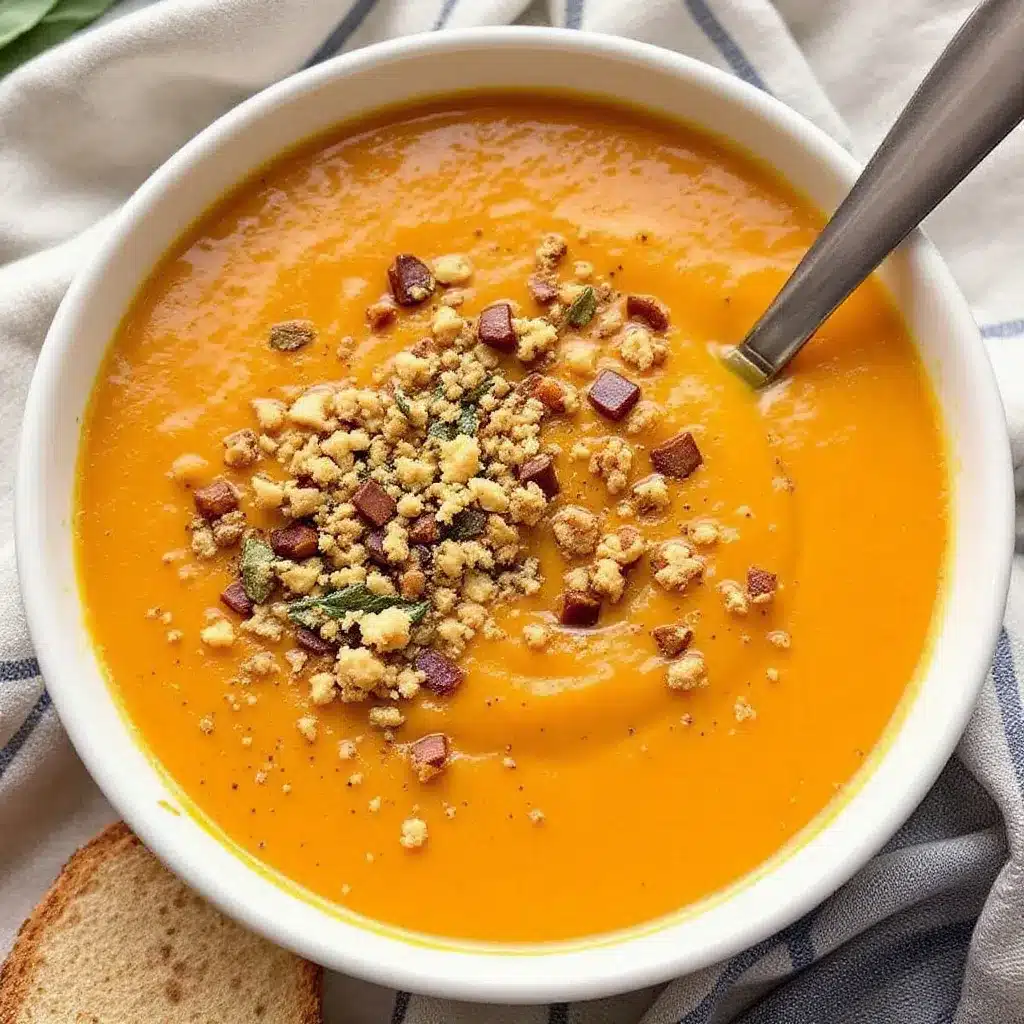
Here’s where the magic happens. Follow these steps and you’ll have a pot of soup that tastes like you’ve been tending to it all day.
- Prep the squash. Peel the butternut squash with a vegetable peeler. Cut off the top and bottom, then slice it in half lengthwise. Scoop out the seeds with a spoon. Cut into 1-inch cubes. This takes about 10 minutes, and yes, it’s the most annoying part of the whole recipe. Put on some music and power through.
- Layer the ingredients in the crockpot. Add the cubed squash, chopped onion, smashed garlic cloves, vegetable broth, maple syrup, salt, pepper, and nutmeg. Give it a quick stir to combine. Don’t worry if the squash isn’t fully submerged — it will release liquid as it cooks.
- Cook low and slow. Cover and cook on LOW for 6-7 hours or on HIGH for 3-4 hours. You’ll know it’s ready when the squash is fork-tender and practically falling apart. The smell at this point is incredible — sweet, savory, and deeply comforting.
- Blend until smooth. Use an immersion blender directly in the crockpot and blend until completely smooth. If you’re using a regular blender, let the soup cool for 10 minutes first, then blend in batches. Be careful with the hot liquid — I’ve learned this the hard way.
- Stir in the coconut milk. Add the coconut milk and stir until fully incorporated. Taste and adjust seasoning. You might want more salt or a touch more maple syrup depending on your squash. This is your soup — make it taste like you want it to.
- Make the sage brown butter. While the soup is finishing, melt the butter in a small skillet over medium heat. Swirl the pan occasionally. The butter will foam, then turn golden, then start to brown. Right when you see brown specks forming at the bottom of the pan (about 3-4 minutes), add the sage leaves. They’ll sizzle and crisp up in about 30 seconds. Remove from heat immediately. Don’t walk away from this — brown butter goes from perfect to burnt very fast.
- Serve and finish. Ladle the soup into bowls. Drizzle with sage brown butter and top with crispy sage leaves. Add a sprinkle of flaky salt and some toasted pumpkin seeds if you’re feeling fancy. Serve hot.
Cooking Tips & Techniques
I’ve made this soup about a dozen times, and here’s what I’ve learned along the way.
Don’t skip the browning step. I know it’s tempting to just throw everything in the crockpot and call it a day. And you can, honestly. But that sage brown butter on top? That’s what takes this from “good” to “can I have the recipe?” So don’t skip it. It takes five minutes and it’s worth every second.
Watch your salt. Broths vary wildly in sodium content. I always use low-sodium broth and season at the end. You can always add more salt, but you can’t take it out. I learned this after making an inedibly salty batch once. Never again.
Peel the squash efficiently. Here’s a trick: microwave the whole squash for 2-3 minutes before peeling. It softens the skin just enough to make peeling easier. Let it cool slightly, then use your peeler. Game changer.
Don’t over-blend. If you blend too long, especially with an immersion blender, you can incorporate too much air and make the soup frothy. Blend just until smooth. A few tiny chunks are fine — they add texture.
Make it ahead. This soup actually tastes better the next day. The flavors have time to meld and deepen. Make it a day ahead, refrigerate, and reheat gently on the stove or in the crockpot. Add a splash of broth or water if it’s too thick after sitting.
Variations & Adaptations
This recipe is flexible. Here are some ways to make it your own.
- Vegan version: Use coconut oil or a vegan butter alternative for the brown butter. The soup itself is already dairy-free with the coconut milk. Just check your broth to make sure it’s vegan.
- Spicy twist: Add a pinch of red pepper flakes or a diced jalapeño (seeds removed) when you layer the ingredients in the crockpot. The heat balances the sweetness beautifully.
- Roasted version: For a deeper, caramelized flavor, roast the cubed squash at 400°F for 25 minutes before adding it to the crockpot. It adds a smoky sweetness that’s hard to beat. I do this when I have extra time.
- Different squash: This works with acorn squash, kabocha, or even pumpkin. Each one has a slightly different sweetness and texture, so adjust the maple syrup and seasoning accordingly. Kabocha doesn’t even need peeling — the skin gets tender when cooked.
- Herb swap: No sage? Try thyme or rosemary in the brown butter. Thyme is more subtle, rosemary is more bold. Both are delicious. I’ve even used tarragon in a pinch — it’s surprisingly good.
Serving & Storage Suggestions
This soup is best served hot, straight from the crockpot. Ladle it into wide, shallow bowls so the brown butter drizzle has room to spread out. Top with the crispy sage leaves and a sprinkle of flaky salt right before serving — that crunch is everything.
For sides, I love this with a crusty piece of sourdough or a simple green salad with a tangy vinaigrette. The acidity cuts through the richness of the soup. If you’re feeling extra cozy, serve it alongside a creamy herb and garlic cheese ball bites for a full appetizer spread.
Storage: Let the soup cool completely, then transfer to an airtight container. It keeps in the refrigerator for up to 5 days. The flavors actually get better after a day or two.
Freezing: This soup freezes beautifully. Portion it into freezer-safe bags or containers, leaving a little room for expansion. It keeps for up to 3 months. Thaw overnight in the refrigerator and reheat gently on the stove.
Reheating: Reheat on the stovetop over medium-low heat, stirring occasionally. Add a splash of broth or water if it’s too thick. You can also reheat individual portions in the microwave — just do it in 30-second bursts, stirring in between.
One thing to note: the brown butter topping doesn’t reheat well. Make it fresh when you’re ready to serve. It takes five minutes and it’s worth it.
Nutritional Information & Benefits
This soup is as nourishing as it is delicious. Here’s a rough breakdown per serving (based on 6 servings):
- Calories: Approximately 220
- Fat: 14g (mostly from the coconut milk and brown butter)
- Carbohydrates: 24g
- Fiber: 5g
- Protein: 3g
- Vitamin A: Over 200% of your daily needs (hello, butternut squash!)
- Vitamin C: About 35% of your daily needs
Butternut squash is packed with vitamin A, which is great for eye health and immune function. The coconut milk provides healthy fats that help your body absorb those fat-soluble vitamins. And the sage? It’s been used for centuries for its anti-inflammatory properties. So yes, this soup is basically a hug in a bowl that’s also good for you.
If you’re watching your carbs, this soup is naturally low-carb at about 24g per serving. For a keto version, skip the maple syrup and use extra coconut milk. If you’re gluten-free, this recipe is naturally gluten-free — just double-check your broth label.
Conclusion
This crockpot butternut squash soup with sage brown butter has become my go-to for fall entertaining, lazy Sundays, and everything in between. It’s the kind of recipe that makes you look like you spent hours in the kitchen when you really just let your slow cooker do the work.
I love that it’s forgiving — you can swap ingredients, adjust the seasoning, make it ahead, freeze it for later. It adapts to whatever you need it to be. And that brown butter topping? It’s the kind of simple trick that makes people think you’re a culinary genius. I won’t tell if you don’t.
If you try this recipe, I’d love to hear about it. Leave a comment below and let me know how it turned out, what variations you tried, or if you discovered a new favorite topping. And if you’re looking for more cozy soup inspiration, my crockpot chicken and dumplings is another slow cooker winner that never disappoints. Happy cooking, friends!
Frequently Asked Questions
Can I use frozen butternut squash for this recipe?
Absolutely. Frozen cubed butternut squash works perfectly and saves you the peeling and chopping time. No need to thaw it first — just add it straight to the crockpot. You might need to add 30 minutes to the cooking time since it’s frozen.
Can I make this soup without a slow cooker?
Yes! You can make this on the stovetop. Combine all the ingredients (except the coconut milk and brown butter) in a large pot, bring to a boil, then simmer for about 25-30 minutes until the squash is tender. Blend, stir in the coconut milk, and top with the sage brown butter.
How do I make the soup thicker or thinner?
For a thicker soup, use less broth (start with 3 cups) or let it simmer uncovered for 10-15 minutes after blending to reduce. For a thinner soup, add more broth or a splash of water until it reaches your preferred consistency. You’re in control here.
Can I make the sage brown butter ahead of time?
You can, but it’s best made fresh. The crispy sage leaves will soften if stored, and the brown butter loses some of its nutty intensity. If you must make it ahead, store it in an airtight container in the refrigerator and gently reheat before serving. The sage leaves won’t be as crispy, but the flavor will still be good.
Is this soup freezer-friendly?
Yes, it freezes beautifully. Let the soup cool completely, then transfer to freezer-safe containers or bags. It keeps for up to 3 months. Thaw overnight in the refrigerator and reheat gently. I like to freeze it in individual portions for easy lunches. Just don’t freeze the brown butter topping — make that fresh when you’re ready to serve.
Pin This Recipe!

Easy Crockpot Butternut Squash Soup with Sage Brown Butter

A creamy, comforting butternut squash soup made effortlessly in the slow cooker, topped with a decadent sage brown butter that elevates it to restaurant-quality. Perfect for cozy fall days and entertaining.
- Prep Time: 15 minutes
- Cook Time: 6-7 hours (LOW) or 3-4 hours (HIGH)
- Total Time: 6 hours 15 minutes to 7 hours 15 minutes
- Yield: 6 servings 1x
- Category: Soup
- Cuisine: American
Ingredients
- 1 large butternut squash (about 3 pounds), peeled, seeded, and cubed
- 1 medium yellow onion, roughly chopped
- 4 garlic cloves, smashed
- 4 cups low-sodium vegetable broth
- 1/2 cup full-fat coconut milk
- 4 tablespoons unsalted butter
- 10–12 fresh sage leaves
- 1 tablespoon maple syrup
- 1 teaspoon fine sea salt, plus more to taste
- 1/2 teaspoon freshly ground black pepper
- 1/4 teaspoon ground nutmeg (optional)
- Optional toppings: toasted pumpkin seeds, extra crispy sage leaves, flaky salt, red pepper flakes
Instructions
- Prep the squash: Peel the butternut squash with a vegetable peeler. Cut off the top and bottom, slice in half lengthwise, scoop out seeds, and cut into 1-inch cubes.
- Layer the ingredients in the crockpot: Add cubed squash, chopped onion, smashed garlic, vegetable broth, maple syrup, salt, pepper, and nutmeg. Stir to combine.
- Cook low and slow: Cover and cook on LOW for 6-7 hours or on HIGH for 3-4 hours, until squash is fork-tender.
- Blend until smooth: Use an immersion blender directly in the crockpot to blend until smooth. If using a regular blender, let soup cool 10 minutes first, then blend in batches.
- Stir in the coconut milk: Add coconut milk and stir until fully incorporated. Taste and adjust seasoning.
- Make the sage brown butter: In a small skillet over medium heat, melt butter. Swirl occasionally until it foams, turns golden, and brown specks form (about 3-4 minutes). Add sage leaves and cook 30 seconds until crispy. Remove from heat immediately.
- Serve and finish: Ladle soup into bowls, drizzle with sage brown butter, top with crispy sage leaves, and add flaky salt or other toppings as desired. Serve hot.
Notes
For easier peeling, microwave the whole squash for 2-3 minutes first. Use low-sodium broth to control salt. The soup tastes even better the next day. Brown butter topping is best made fresh; do not freeze it.
Nutrition
- Serving Size: 1 serving (about 1.5
- Calories: 220
- Sugar: 8
- Sodium: 480
- Fat: 14
- Saturated Fat: 9
- Carbohydrates: 24
- Fiber: 5
- Protein: 3
Keywords: crockpot butternut squash soup, slow cooker soup, sage brown butter, fall soup, creamy squash soup, easy soup recipe