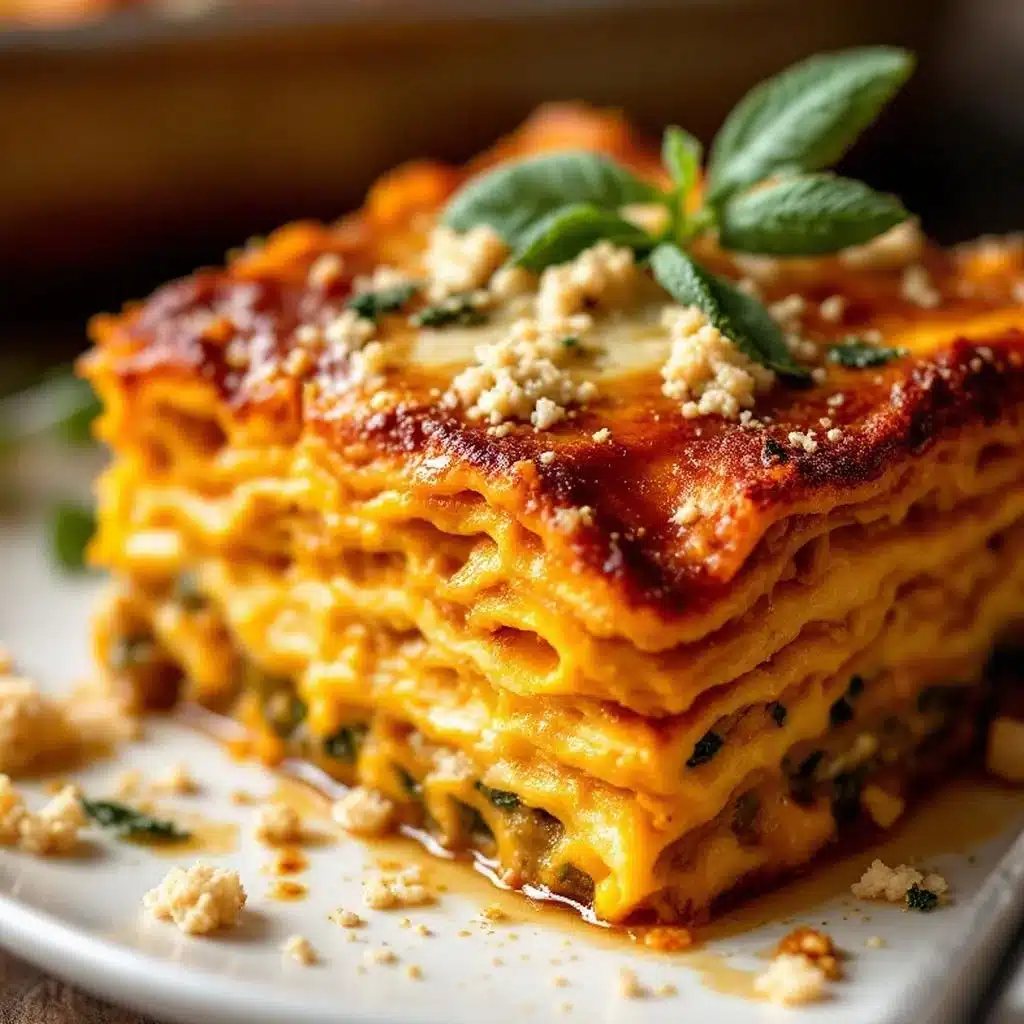
It is past nine on a Tuesday, and the only thing I want is creamy butternut squash lasagna with sage brown butter. The house is finally quiet. The kids are asleep, the dishwasher is humming its low, steady rhythm, and the winter air is pressing against the windowpanes like a cold, gray hand. I usually don’t cook this late, but tonight felt different. Tonight felt like the kind of night where you just need something warm to hold onto. Something that smells like comfort and tastes like autumn, even if it’s dead January.
I found myself staring at the squash on the counter. It was heavy, rough-skinned, and completely unassuming. You know how it is with these hard-shell squashes? They look like they’ve been sitting there for a year, waiting for someone to finally do something with them. I peeled it, roasted it until it was soft enough to mash with a fork, and then I thought, why stop at soup? Soup is nice, sure. But sometimes you need layers. Sometimes you need structure. You need pasta sheets that hold up under the weight of a rich, velvety filling. You need cheese that stretches. You need the nutty, toasted aroma of brown butter and crisp sage leaves to tie it all together.
I remember the first time I made this. Honestly, I was terrified. Lasagna can be a fussy beast. If you get the ratio wrong, it’s either a dry brick or a soupy mess. I spent years making it wrong, burning my fingers on boiling water, and wondering why my layers slid apart. But then I figured it out. It’s not about perfection. It’s about patience. It’s about letting the butter brown slowly until it smells like hazelnuts, not burnt toast. It’s about letting the noodles cook just enough so they finish in the oven without turning to mush.
This recipe isn’t for show. It’s not for when you have guests over and you’re trying to impress them with something flashy. It’s for you. It’s for that quiet moment when you pull the dish out of the oven, the kitchen filled with that incredible scent of roasted squash and herbs, and you realize you’ve made something truly special. It’s slow food for a fast world. And honestly? It’s worth every minute of the prep. It’s the kind of meal that sticks with you, long after the last bite is gone. It’s a ritual, really. A small, quiet rebellion against the rush of the week.
Why You’ll Love This Recipe
There is a reason this creamy butternut squash lasagna with sage brown butter has become my go-to comfort food when the weather turns. It’s not just because it tastes amazing, though it definitely does. It’s because it balances so many different elements perfectly. I’ve tested this recipe dozens of times, adjusting the spices, the cheese ratios, and the cooking times, until I landed on this version that just works. It’s sturdy, it’s flavorful, and it’s surprisingly easy to pull together if you have your mise en place ready.
- Quick & Easy: While roasting the squash takes time, the actual assembly is straightforward. It comes together in under an hour if you prep ahead, making it perfect for those busy weeknights when you want a gourmet meal without the stress.
- Simple Ingredients: You likely already have most of this in your kitchen. Butternut squash, pasta sheets, cheese, butter, sage—these are pantry staples or easy-to-find produce. No fancy grocery trips needed.
- Perfect for Cozy Dinners: This is the ultimate fall or winter dinner. It’s hearty enough to fill you up but light enough that you won’t feel weighed down afterward. It pairs beautifully with a simple green salad.
- Crowd-Pleaser: Even people who claim they don’t like vegetables usually love this. The squash is sweet and savory, and the brown butter adds a depth of flavor that kids and adults alike can’t resist.
- Unbelievably Delicious: The texture is next-level. You get the creaminess of the ricotta, the softness of the pasta, and the crunch of the browned butter sage. It’s comfort food reimagined—healthier, faster, but with the same soul-soothing satisfaction.
What makes this recipe different from the rest? It’s the brown butter. Most squash lasagnas rely on a simple tomato sauce or a heavy cream base. Here, we use brown butter and fresh sage to create a nutty, aromatic layer that ties the sweet squash to the savory cheese. It’s a technique that elevates the dish without making it complicated. It’s the kind of secret ingredient that makes people ask for the recipe.
What Ingredients You Will Need
This recipe uses simple, wholesome ingredients to deliver bold flavor and satisfying texture without the fuss. The beauty of butternut squash lasagna is that it relies on the natural sweetness of the vegetable, balanced by salty cheeses and aromatic herbs. You don’t need anything obscure or hard to find. In fact, the simpler the ingredients, the better this dish tastes.
Here is what you will need to make this creamy masterpiece:
- Butternut Squash (2 large, approx. 3 lbs): Look for squash that feels heavy for its size with a dull, tan skin. This ensures it’s ripe and sweet. Peeled, seeded, and cubed, it will be roasted until tender.
- Unsalted Butter (1/2 cup): This is crucial for the sage brown butter topping. Use a high-quality butter if you can, like Land O’Lakes or Kerrygold, as the flavor will be prominent.
- Fresh Sage Leaves (1/2 cup): Fresh is non-negotiable here. Dried sage just doesn’t have the same bright, piney aroma. You’ll fry these in the brown butter until crisp.
- Ricotta Cheese (15 oz): Full-fat ricotta gives the best creamy texture. I recommend using a brand like part-skim if you want it slightly lighter, but full-fat is richer. Drain it if it looks watery.
- Heavy Cream (1 cup): This helps blend the ricotta and squash into a smooth, luxurious filling. It adds richness and helps bind the layers.
- Eggs (2 large): These act as a binder for the filling, keeping the layers from becoming too loose or runny.
- Lasagna Noodles (12 sheets): You can use no-boil noodles to save time, but traditional boiled noodles often have a better texture in this type of dish. If using no-boil, ensure there is enough liquid in the sauce.
- Mozzarella Cheese (2 cups, shredded): Low-moisture mozzarella melts better and doesn’t make the lasagna watery. Avoid pre-shredded bags if you can; they often contain anti-caking agents that prevent smooth melting.
- Parmesan Cheese (1/2 cup, grated): Adds a salty, umami punch that cuts through the sweetness of the squash.
- Nutmeg (1/4 tsp): A tiny pinch goes a long way. It complements the squash perfectly. Don’t skip it, but don’t overdo it.
- Salt and Black Pepper: To taste. Season each layer well.
- Garlic (2 cloves, minced): Adds a subtle savory note to the squash mixture.
If you need substitutions, you can use gluten-free lasagna noodles, though they can be brittle, so handle them gently. For a dairy-free option, swap the ricotta and mozzarella for vegan alternatives, though the texture will differ. You can also swap the heavy cream for coconut cream if needed, but it will change the flavor profile slightly.
Equipment Needed
You don’t need a fancy kitchen to make this, but having the right tools makes the process smoother. Here is what you’ll need:
- Large Baking Dish (9×13 inch): A standard lasagna pan is essential. Glass or ceramic dishes work best because they distribute heat evenly. Metal pans can sometimes burn the bottom.
- Roasting Pan or Sheet Pan: For roasting the squash cubes. A sheet pan is easier for spreading them out in a single layer.
- Food Processor or Blender: To puree the roasted squash into a smooth consistency. An immersion blender works too if you don’t want to transfer hot squash.
- Mixing Bowls: One large bowl for the squash mixture and one smaller one for the ricotta blend.
- Small Saucepan: For browning the butter. A light-colored pan is helpful so you can see the color change of the butter clearly.
- Peeler or Knife: To peel the tough skin off the butternut squash.
If you don’t have a food processor, you can mash the squash with a fork, but it won’t be as smooth. For the brown butter, a stainless steel pan is ideal because it conducts heat well. Just be sure to watch it closely; butter burns fast.
Preparation Method
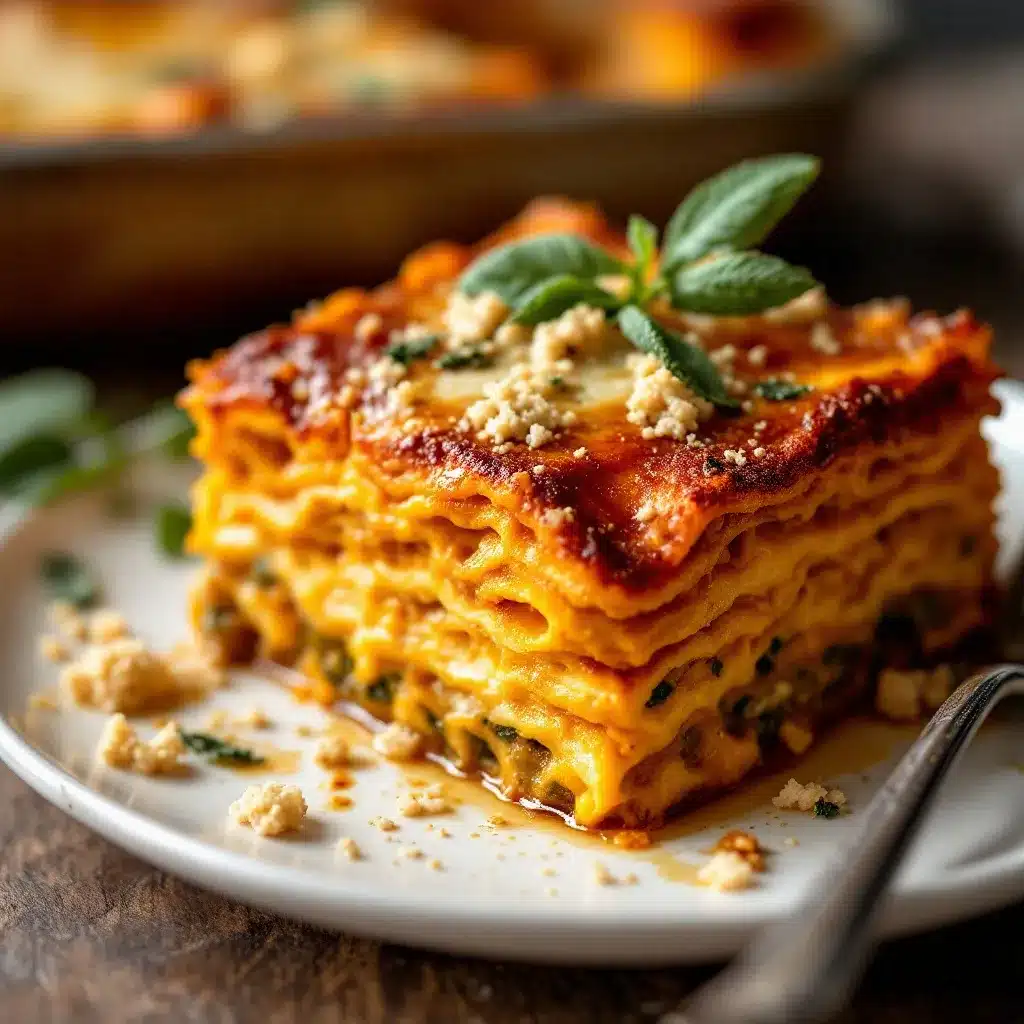
Making this creamy butternut squash lasagna with sage brown butter is a process of layers, both literally and figuratively. Here is how to pull it all together.
- Roast the Squash (20 mins prep, 45 mins cook): Preheat your oven to 400°F (200°C). Peel the butternut squash and remove the seeds. Cut the flesh into 1-inch cubes. Toss them with a little olive oil, salt, and pepper. Spread them on a sheet pan in a single layer. Roast for 30-45 minutes until tender and slightly caramelized at the edges. Let them cool completely. This step is crucial; if the squash is hot, it will cook the cheese prematurely.
- Puree the Squash: Transfer the roasted squash to a food processor. Add the minced garlic. Pulse until smooth. You want a thick, velvety puree. If it’s too thick, add a splash of milk or cream. Taste and adjust seasoning. Set aside.
- Make the Ricotta Filling: In a medium bowl, mix the ricotta cheese, heavy cream, eggs, half of the Parmesan cheese, nutmeg, salt, and pepper. Stir until smooth and creamy. Fold in half of the squash puree. This creates a marbled effect and adds flavor to the cheese layer without making it too heavy.
- Cook the Lasagna Noodles: Bring a large pot of salted water to a boil. Cook the lasagna noodles according to package directions, but stop 1 minute before they are fully al dente. They will finish cooking in the oven. Drain and lay them flat on a towel to prevent sticking. If using no-boil noodles, skip this step.
- Prepare the Brown Butter Sage: In a small saucepan over medium heat, melt the butter. Swirl the pan occasionally. Watch it closely. It will foam, then crackle. Once the foam subsides and you see brown bits at the bottom and smell a nutty aroma, remove from heat immediately. Toss in the fresh sage leaves. They will crisp up in the hot butter. Set aside.
- Assemble the Lasagna: Grease your 9×13 baking dish. Spread a thin layer of the remaining squash puree on the bottom. This prevents sticking and adds flavor. Place 3-4 noodles over the puree. Spread a layer of the ricotta-squash mixture over the noodles. Sprinkle with mozzarella and a little Parmesan. Repeat the layers: noodles, ricotta mixture, cheese, squash puree. Finish with a final layer of noodles. Top with the remaining squash puree, a generous amount of mozzarella, and the rest of the Parmesan.
- Bake: Cover the dish tightly with foil. Bake at 375°F (190°C) for 25 minutes. Remove the foil and bake for another 15-20 minutes until the cheese is bubbly and golden brown. Let it rest for 15 minutes before cutting. This step is vital; if you cut it immediately, it will fall apart.
- Serve: Drizzle the warm brown butter and crispy sage over each serving just before eating. This adds a final layer of flavor and texture.
How do I know when the lasagna is done?
The cheese should be melted and bubbling, and the noodles should be tender when pierced with a fork. The internal temperature should reach at least 165°F (74°C).
Can I make this ahead of time?
Yes! You can assemble the lasagna up to 24 hours in advance. Cover it and refrigerate. When ready to bake, you may need to add 10-15 minutes to the baking time since it’s starting cold.
Cooking Tips & Techniques
I’ve made my share of mistakes with lasagna, and I’m here to tell you what works and what doesn’t. The biggest mistake people make is using too much liquid. Butternut squash releases water when it cooks. If you don’t roast it first and drain the excess moisture, your lasagna will be soupy. Roasting concentrates the flavor and removes water, so don’t skip that step.
Another tip: don’t overcrowd the pan when roasting the squash. If the cubes are touching, they steam instead of roast. Give them space. You want those edges to get a little crispy. It adds texture to the puree.
When browning the butter, use a light-colored pan. It’s so much easier to see the color change. If you use a dark pan, you might miss the point where it’s perfectly browned and end up with burnt butter, which tastes bitter. And trust me, you don’t want bitter butter in your lasagna.
Let the lasagna rest. I know it’s hard to wait. Your family will be hovering. But letting it rest for 15 minutes allows the layers to set. It makes slicing much cleaner. If you cut it hot, it will be a mess. Patience pays off.
For the cheese, use low-moisture mozzarella. Fresh mozzarella has too much water and can make the dish soggy. If you only have fresh mozzarella, slice it and pat it dry with paper towels before using.
Variations & Adaptations
One of the best things about this recipe is how adaptable it is. You can tweak it to fit your dietary needs or taste preferences.
- Vegan Version: Use vegan ricotta (made from cashews or tofu) and vegan mozzarella. Swap the butter for vegan butter or olive oil. The sage brown butter can be made with olive oil, though it won’t have the same nutty depth.
- Gluten-Free: Use gluten-free lasagna noodles. Be sure to check the package instructions, as some GF noodles require boiling while others are no-boil. Adjust the liquid accordingly.
- Spicy Twist: Add red pepper flakes to the ricotta mixture or sprinkle them on top before baking. It cuts through the sweetness of the squash nicely.
- Meat Lovers: Add cooked Italian sausage or pancardi between the layers. It turns this into a heartier main course.
- Herb Variation: If you don’t have sage, thyme or rosemary works well with brown butter. Just be careful with rosemary as it’s stronger.
I once tried adding spinach to this recipe. It worked, but it added too much moisture. If you want to add greens, wilt them first and squeeze out all the water. But honestly, the squash and sage are perfect on their own. I usually stick to the classic version.
Serving & Storage Suggestions
This lasagna is best served warm, straight from the oven. It pairs beautifully with a simple arugula salad tossed with lemon vinaigrette. The bitterness of the arugula cuts through the richness of the dish. I also like to serve it with crusty bread to soak up the brown butter.
For storage, let the lasagna cool completely before covering it with plastic wrap or transferring it to an airtight container. It will keep in the refrigerator for up to 4 days. You can also freeze it. Wrap it tightly in foil and freeze for up to 3 months. To reheat, thaw it in the refrigerator overnight and bake at 350°F (175°C) until heated through. You can also reheat individual portions in the microwave.
The flavors actually develop and deepen over the first day or two. So if you have leftovers, they might taste even better the next day. Just remember to add a fresh drizzle of brown butter and crispy sage when reheating to keep the flavor bright.
Nutritional Information & Benefits
Butternut squash is a nutritional powerhouse. It’s rich in vitamin A, vitamin C, and fiber. It’s low in calories but high in nutrients, making this lasagna a healthier comfort food option. The ricotta cheese provides protein and calcium, while the brown butter adds healthy fats (in moderation). Overall, this dish is balanced and satisfying. It’s a great way to get your vegetables in, especially if you’re trying to eat more plant-based meals. Just be mindful of the cheese and butter, as they add calories. But hey, it’s a treat. Enjoy it guilt-free.
Conclusion
This creamy butternut squash lasagna with sage brown butter is more than just a meal. It’s a hug in a dish. It’s warm, comforting, and deeply satisfying. I hope you try it and find your own quiet moments with it. Customize it to your liking, share it with friends, or enjoy it all to yourself. It’s versatile enough for any occasion. If you make it, I’d love to hear how it turns out. Leave a comment below or share a photo. Let’s keep the conversation going. Happy cooking!
FAQs
Can I use frozen butternut squash?
You can, but fresh squash has a better texture and flavor. If you use frozen, make sure to thaw it completely and drain any excess liquid before pureeing. Frozen squash can be watery, which might affect the lasagna consistency.
How do I prevent the lasagna from being too dry?
Ensure you have enough liquid in the layers. The ricotta mixture and squash puree should be moist. Also, don’t overbake the noodles. If using no-boil noodles, make sure there is enough sauce. Covering the dish while baking helps trap steam and keeps it moist.
Can I make this in a slow cooker?
It’s not recommended. Lasagna needs the direct heat of an oven to melt the cheese and cook the noodles properly. A slow cooker might make the noodles mushy and the cheese greasy. Stick to the oven for best results.
What cheese can I use instead of ricotta?
You can use cottage cheese for a similar texture, though it’s grainier. Mascarpone is another option for a richer, creamier layer, but it’s heavier. Ricotta is the traditional choice and works best here.
How do I store leftover brown butter sage?
You can store leftover brown butter in an airtight container in the refrigerator for up to 2 weeks. Reheat it gently before using. The crispy sage leaves will soften, so it’s best to fry fresh sage for each serving.
Pin This Recipe!
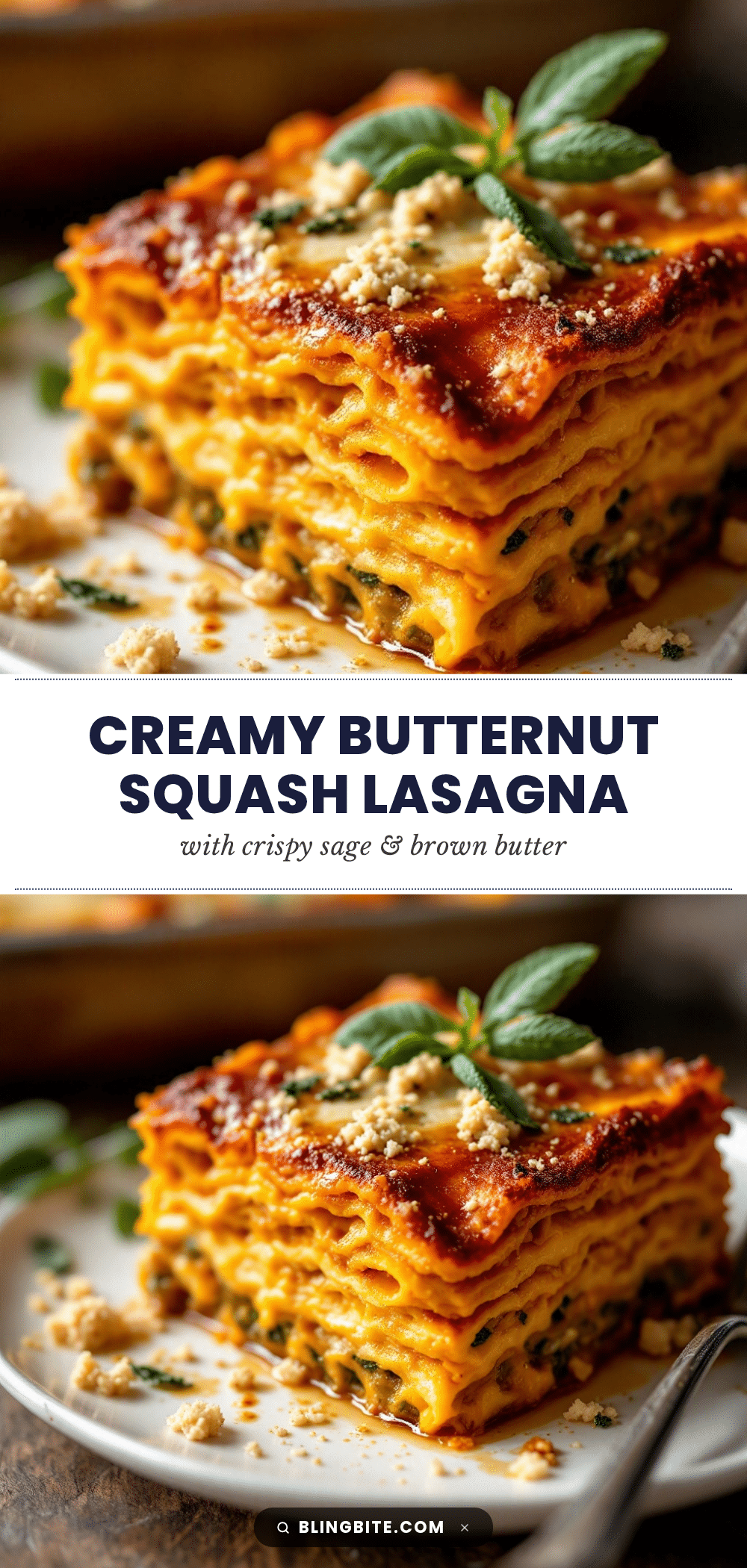
Butternut Squash Lasagna: Best Easy Creamy Recipe

A comforting, creamy butternut squash lasagna featuring layers of roasted squash puree, ricotta cheese, and mozzarella, finished with a nutty sage brown butter topping.
- Prep Time: 45 minutes
- Cook Time: 60 minutes
- Total Time: 1 hour 45 minutes
- Yield: 8 servings 1x
- Category: Main Course
- Cuisine: Italian
Ingredients
- 2 large butternut squash (approx. 3 lbs), peeled, seeded, and cubed
- 1/2 cup unsalted butter
- 1/2 cup fresh sage leaves
- 15 oz ricotta cheese (full-fat)
- 1 cup heavy cream
- 2 large eggs
- 12 lasagna noodles
- 2 cups shredded low-moisture mozzarella cheese
- 1/2 cup grated Parmesan cheese
- 1/4 tsp nutmeg
- Salt and black pepper to taste
- 2 cloves garlic, minced
- Olive oil for roasting squash
Instructions
- Preheat oven to 400°F (200°C). Toss cubed squash with olive oil, salt, and pepper. Roast on a sheet pan for 30-45 minutes until tender and caramelized. Let cool completely.
- Puree the roasted squash with minced garlic in a food processor until smooth. Adjust seasoning and set aside.
- In a medium bowl, mix ricotta, heavy cream, eggs, half of the Parmesan, nutmeg, salt, and pepper. Fold in half of the squash puree.
- Cook lasagna noodles in salted boiling water until 1 minute shy of al dente. Drain and lay flat to prevent sticking.
- In a small saucepan, melt butter over medium heat until it foams, then crackles and turns brown with a nutty aroma. Remove from heat and toss in sage leaves to crisp.
- Grease a 9×13 baking dish. Spread a thin layer of squash puree on the bottom. Layer noodles, ricotta mixture, mozzarella, and Parmesan. Repeat layers, finishing with noodles, remaining puree, and cheeses.
- Cover with foil and bake at 375°F (190°C) for 25 minutes. Remove foil and bake 15-20 minutes more until bubbly and golden.
- Let the lasagna rest for 15 minutes before cutting. Drizzle with warm brown butter and crispy sage before serving.
Notes
Roasting the squash first removes excess moisture and concentrates flavor. Let the lasagna rest for 15 minutes before cutting to ensure clean slices. Use low-moisture mozzarella to prevent a watery lasagna. Brown butter should be watched closely to avoid burning.
Nutrition
- Serving Size: 1 slice
- Calories: 450
- Sugar: 6
- Sodium: 650
- Fat: 28
- Saturated Fat: 15
- Carbohydrates: 35
- Fiber: 4
- Protein: 18
Keywords: butternut squash lasagna, sage brown butter, creamy lasagna, vegetarian main course, fall recipes, comfort food, easy lasagna