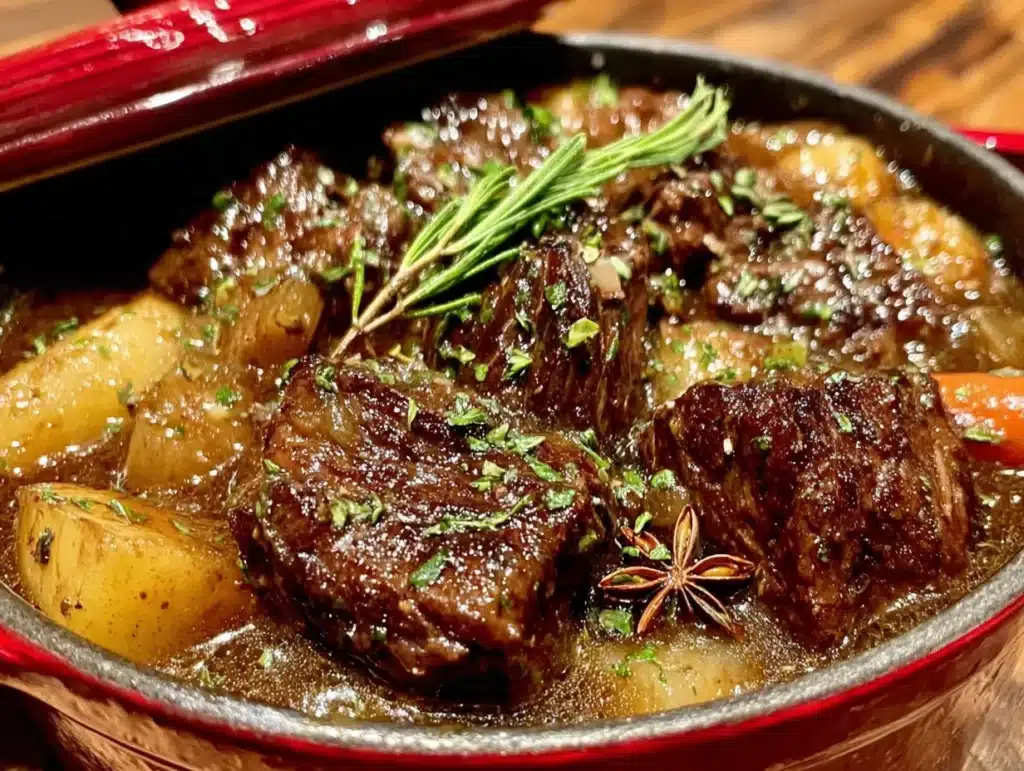
The power went out halfway through chopping the carrots. I remember standing there in my dim kitchen, knife suspended mid-air, listening to the wind howl outside. It was one of those November afternoons where the sky turns a bruised purple by 3 PM, and you can feel winter settling into your bones. I had all the ingredients for beef stew laid out on the counter—chunks of chuck roast, a bottle of red wine I’d been saving, root vegetables I’d grabbed at the farmers market that morning.
My neighbor across the hall, an older woman named Rosa who grew up in a small village in Portugal, must have heard me fumbling for candles. She knocked on my door holding a kerosene lamp and a knowing smile. “You’re making stew,” she said. It wasn’t a question. She’d smelled the beef browning earlier. Rosa sat on my kitchen stool while I worked by lamplight, telling me about the stews her grandmother made in a clay pot over an open fire. She didn’t give me a recipe—she just talked about the patience it takes, the way the wine needs to sing with the carrots and parsnips, how you can’t rush a good thing.
Honestly, I’ve never made this stew the same way twice, and that’s the point. It’s a conversation between you and your pot, your stove, your mood. The wine you choose matters. The vegetables you have on hand matter. But what matters most is the time you give it. This Cozy Red Wine Beef Stew with Root Vegetables isn’t just dinner—it’s the kind of meal that slows everything down. Maybe you’ve been there, standing in your own kitchen on a cold night, needing something to simmer and fill the house with warmth. This is that stew.
Why You’ll Love This Recipe
Let me tell you why this particular stew has earned a permanent spot in my winter rotation. I’ve tested it at least a dozen times, tweaking the wine ratio, playing with the vegetable combinations, and even accidentally burning the first batch (Rosa said that’s how you learn). What came out of those trials is a recipe I genuinely trust.
- Deep, Complex Flavor Without the Fuss: The red wine does the heavy lifting here. It tenderizes the beef and creates a broth that tastes like you’ve been simmering it for hours (you have, but it’s hands-off time). No fancy techniques required.
- Simple, Wholesome Ingredients: You probably have most of these already—beef chuck, carrots, onions, garlic, potatoes. The wine is the only “special” ingredient, and you can use a decent $10 bottle. I’ve tested it with both a bold Cabernet and a lighter Pinot Noir; both work beautifully.
- Perfect for Cold Weather and Slow Evenings: This isn’t a weeknight rush job. It’s a Sunday afternoon project, a meal to make when you have nowhere to be and a good podcast queued up. It fills your home with that incredible smell—the one that makes everyone wander into the kitchen asking, “What’s for dinner?”
- Crowd-Pleaser Through and Through: I’ve served this to my picky-eating cousin, my dad who claims he doesn’t like “fancy food,” and a group of friends who cleaned their bowls without saying a word. It’s universally loved.
- Unbelievably Tender Beef: The secret is low and slow cooking. The chuck roast breaks down into fork-tender pieces that practically melt into the broth. That first bite—the one where you close your eyes for a second—that’s what you’re after.
This recipe isn’t just another beef stew. It’s the version you’ll come back to again and again because it balances richness with comfort, depth with simplicity. It’s the kind of meal that makes you feel like you’ve done something good for yourself and the people you’re feeding.
What Ingredients You Will Need
This Cozy Red Wine Beef Stew with Root Vegetables relies on a handful of humble ingredients that come together to create something truly special. Most of these are pantry staples or easy to find at any grocery store. I’ve included notes on brands and substitutions where I think they help.
- Beef Chuck (2 pounds, cut into 1.5-inch cubes): This is your best friend for stew. It has enough marbling to stay tender during long cooking. I usually buy a whole chuck roast and cube it myself—it’s cheaper and I can control the size. Look for deep red meat with white streaks of fat running through it.
- Red Wine (1.5 cups): Use a dry red wine like Cabernet Sauvignon, Merlot, or a French Côtes du Rhône. I personally reach for a bottle of Bogle Old Vine Zinfandel when I’m making this—it’s affordable and has enough body to stand up to the beef. Don’t use “cooking wine” from the store; it’s salty and artificial. Drink the rest of the bottle with dinner.
- Beef Broth (2 cups): I prefer low-sodium broth so I can control the salt. Better Than Bouillon paste mixed with water works great in a pinch.
- Tomato Paste (2 tablespoons): This adds depth and a touch of acidity that balances the wine. I like the tube version because I never use a whole can.
- Carrots (3 large, peeled and cut into 1-inch chunks): They sweeten as they cook and soak up the wine broth beautifully.
- Parsnips (2 medium, peeled and cut into 1-inch chunks): Don’t skip these. They have a subtle, almost nutty sweetness that carrots alone can’t replicate. If you’ve never cooked with parsnips, this is a great place to start.
- Potatoes (3 medium Yukon Gold potatoes, peeled and cut into 1-inch chunks): Yukon Golds hold their shape better than russets and get creamy in the middle. Red potatoes work too.
- Yellow Onion (1 large, diced): The aromatic base of the stew.
- Garlic (4 cloves, minced): Fresh garlic is non-negotiable here. The jarred stuff won’t give you the same punch.
- All-Purpose Flour (3 tablespoons): We’ll use this to coat the beef before browning. It helps thicken the stew and gives the meat a nice crust.
- Olive Oil (2 tablespoons): For browning the beef and sautéing the vegetables. Use a good quality extra virgin olive oil if you have it.
- Fresh Thyme (4 sprigs) and Bay Leaves (2): These herbs infuse the stew with earthy, aromatic notes. Dried thyme works if you’re in a pinch—use 1 teaspoon.
- Salt and Black Pepper: To taste. I use kosher salt and freshly cracked pepper.
- Frozen Peas (1 cup, optional): I add these in the last 10 minutes of cooking for a pop of color and sweetness. They’re not traditional, but I love them.
Equipment Needed
You don’t need a fancy kitchen to make this stew, but a few specific tools make the process smoother. Here’s what I use every time.
- Dutch Oven (5 to 6 quarts): This is my go-to for stew. It distributes heat evenly and goes from stovetop to oven without a problem. Le Creuset is the gold standard, but Lodge makes an excellent cast-iron enameled version for a fraction of the price. If you don’t have a Dutch oven, a heavy-bottomed stockpot with a tight-fitting lid will work.
- Sharp Chef’s Knife: You’ll be cutting a lot of vegetables and meat. A dull knife makes the job harder and more dangerous. I use a 8-inch Wusthof, but any sharp knife will do.
- Cutting Board: A large wooden or plastic board gives you room to work.
- Wooden Spoon: For stirring and scraping up the browned bits from the bottom of the pot after deglazing with wine.
- Measuring Cups and Spoons: For accuracy, especially with the wine and broth.
- Tongs: For flipping the beef cubes while browning. They give you more control than a spatula.
- Small Bowl: For mixing the flour and salt before coating the beef.
I’ve made this stew in a cheap stockpot on a camping stove during a power outage (true story), and it still turned out delicious. Don’t stress about having the perfect equipment. Use what you have.
Preparation Method
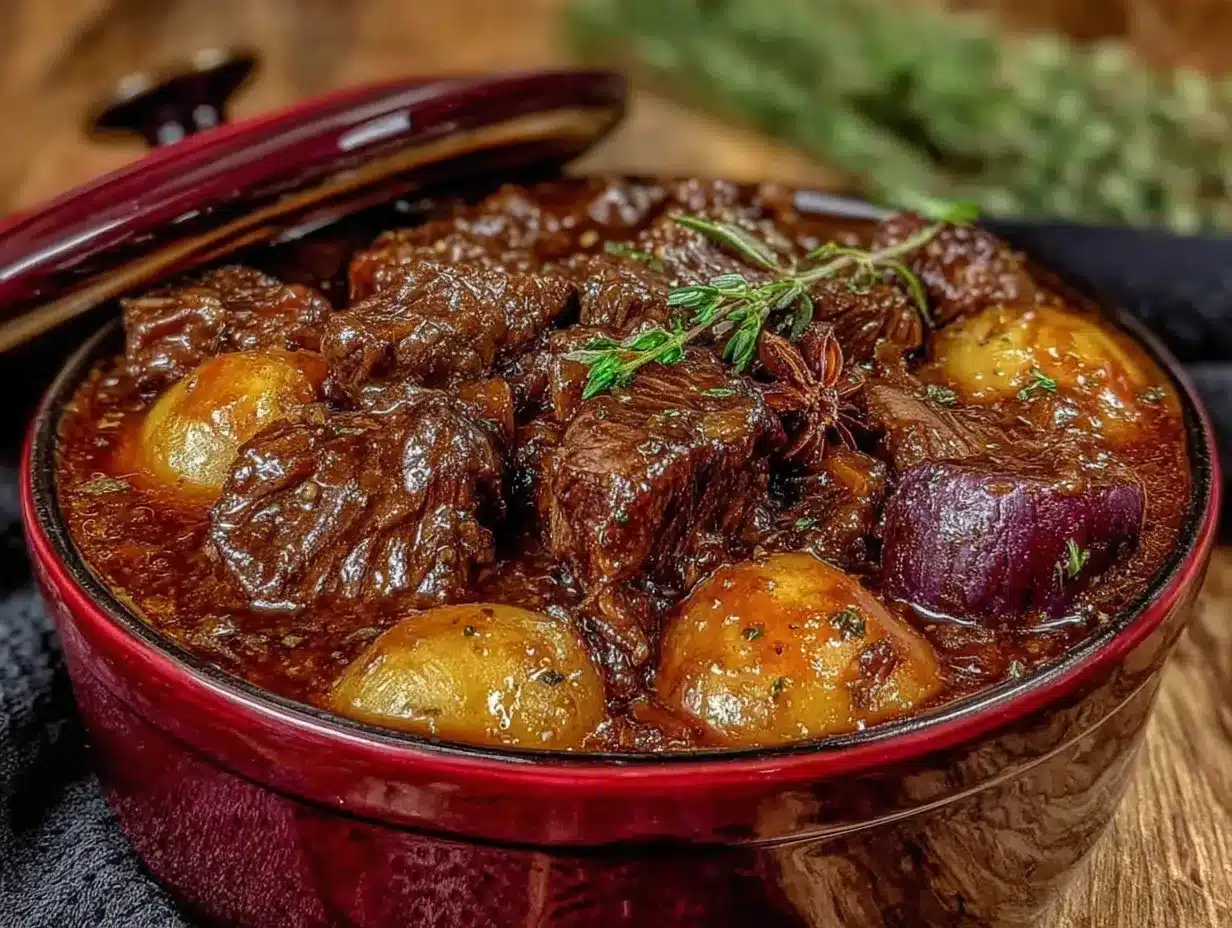
This recipe takes about 2.5 to 3 hours from start to finish, but most of that is hands-off simmering time. Here’s how to do it.
- Prep Your Ingredients (15 minutes): Before you start cooking, measure out everything. Cut the beef into 1.5-inch cubes and pat them dry with paper towels. Dry beef browns better. Peel and chop the carrots, parsnips, potatoes, onion, and garlic. This makes the cooking process smooth and stress-free.
- Season and Coat the Beef (5 minutes): In a small bowl, mix 3 tablespoons of flour with 1 teaspoon of salt and 1/2 teaspoon of black pepper. Toss the beef cubes in this mixture until they’re evenly coated. Shake off any excess flour.
- Brown the Beef (10 to 12 minutes): Heat 2 tablespoons of olive oil in your Dutch oven over medium-high heat. Once the oil shimmers, add the beef in a single layer—don’t crowd the pot. You’ll likely need to do this in two batches. Let the beef brown undisturbed for 3 to 4 minutes per side, until a deep golden crust forms. Use tongs to flip the pieces. Transfer the browned beef to a plate and set aside.
- Sauté the Aromatics (5 minutes): Reduce the heat to medium. Add the diced onion to the pot and cook for 3 to 4 minutes, stirring occasionally, until it softens and turns translucent. Add the minced garlic and cook for another 30 seconds until fragrant. Scrape up any browned bits from the bottom of the pot—that’s pure flavor.
- Deglaze with Wine (2 minutes): Pour in 1.5 cups of red wine. Use your wooden spoon to scrape up any remaining browned bits from the bottom of the pot. Let the wine simmer for 2 minutes, reducing slightly. The alcohol will cook off, leaving behind deep, fruity flavor.
- Add the Broth, Tomato Paste, and Herbs (2 minutes): Stir in 2 cups of beef broth and 2 tablespoons of tomato paste until the tomato paste is fully dissolved. Add the fresh thyme sprigs and bay leaves. Return the browned beef to the pot along with any juices that accumulated on the plate.
- Bring to a Simmer (5 minutes): Increase the heat to high and bring the liquid to a gentle boil. Then reduce the heat to low, cover the pot with the lid, and let it simmer gently. You want small bubbles breaking the surface, not a rolling boil.
- Add the Root Vegetables (after 1 hour): After the stew has simmered for 1 hour, add the carrots, parsnips, and potatoes. Stir to combine, re-cover the pot, and continue simmering for another 45 to 60 minutes. The vegetables should be fork-tender and the beef should shred easily.
- Add the Peas (Optional) (5 minutes): If you’re using frozen peas, stir them in during the last 10 minutes of cooking. They only need to warm through.
- Finish and Adjust Seasoning (5 minutes): Remove the thyme sprigs and bay leaves (they’re tough to eat). Taste the broth and add more salt and pepper if needed. I usually add another 1/2 teaspoon of salt and a few cracks of black pepper at this stage.
- Rest Before Serving (10 minutes): Let the stew sit off the heat for 10 minutes before serving. This allows the flavors to settle and the broth to thicken slightly. The stew also tastes even better the next day.
Cooking Tips & Techniques
I’ve made plenty of mistakes with stew over the years, and I’m happy to share them so you don’t have to repeat them. Here are the things I wish someone had told me.
Don’t skip the browning step. I know it’s tempting to just dump everything in the pot and walk away, but browning the beef creates that deep, savory crust called the Maillard reaction. It’s the difference between a good stew and a great one. Patience here pays off.
Use the right wine. The rule is simple: cook with a wine you’d actually drink. If it tastes harsh or overly oaky in the glass, it will taste the same in your stew. I learned this the hard way when I used a leftover bottle of cheap cooking wine and ended up with a bitter, metallic broth. A dry red with moderate tannins is perfect.
Low and slow is non-negotiable. Simmering the stew at a gentle bubble—not a rolling boil—ensures the beef becomes tender without turning into mush. If you boil it aggressively, the meat will toughen and the vegetables will fall apart. I set a timer and check every 30 minutes to make sure the heat hasn’t crept up.
Season in layers. Add salt at each stage—when you season the beef, when you sauté the onions, and again at the end. This builds depth of flavor. I used to only salt at the end, and my stew always tasted flat. Layering the seasoning changed everything.
Let it rest. Stew always tastes better the next day. The flavors meld together overnight in the fridge. I often make this a day ahead and reheat it slowly on the stove. If you can’t wait, at least let it rest for 10 minutes before serving.
Thicken if needed. If your stew is too thin at the end, mix 1 tablespoon of cornstarch with 2 tablespoons of cold water to make a slurry. Stir it into the simmering stew and cook for 2 to 3 minutes until thickened.
Variations & Adaptations
One of the best things about this Cozy Red Wine Beef Stew with Root Vegetables is how adaptable it is. I’ve tried several variations over the years, and they’ve all been delicious in their own way.
- Make It Dairy-Free: This recipe is naturally dairy-free as written. Just double-check your beef broth for any added dairy (most are fine).
- Make It Gluten-Free: Swap the all-purpose flour for a gluten-free flour blend or cornstarch when coating the beef. Use tamari instead of Worcestershire sauce if you add any (I sometimes add a splash for extra umami).
- Swap the Vegetables: Not a fan of parsnips? Use celery root or turnips instead. Sweet potatoes work beautifully in place of regular potatoes, though they’ll be a bit softer. I’ve also added chopped kale in the last 15 minutes for a green twist.
- Try a Different Protein: Lamb stew meat is incredible in this recipe. It has a richer, gamier flavor that pairs wonderfully with red wine. Just increase the cooking time by 30 minutes.
- Make It in a Slow Cooker: Brown the beef and sauté the aromatics on the stovetop first, then transfer everything to a slow cooker. Cook on low for 8 hours or high for 4 hours. Add the vegetables in the last 2 hours so they don’t turn to mush.
- Add Mushrooms: I love adding 8 ounces of cremini mushrooms, quartered, when I sauté the onions. They soak up the wine broth and add an earthy depth that’s hard to beat.
My personal favorite variation? I add a teaspoon of smoked paprika along with the tomato paste. It gives the stew a subtle smoky warmth that makes it even cozier on a cold night.
Serving & Storage Suggestions
This stew is a meal in itself, but the right accompaniments can take it from satisfying to unforgettable. Here’s how I serve and store it.
Serving Temperature and Presentation: Serve the stew piping hot in deep bowls. Ladle it over a scoop of creamy mashed potatoes or alongside a hunk of crusty bread for sopping up every last drop of broth. I like to garnish with a sprinkle of fresh parsley or a few thyme leaves for a pop of green. A glass of the same red wine you used in the stew is a lovely pairing.
Complementary Dishes: A simple green salad with a lemon vinaigrette cuts through the richness of the stew beautifully. Roasted Brussels sprouts or steamed green beans also work well on the side. For a truly cozy meal, serve it with buttery egg noodles instead of potatoes.
Storage Instructions: Let the stew cool completely before storing. Transfer it to an airtight container and refrigerate for up to 4 days. The flavors actually deepen and improve over time, so don’t be surprised if it tastes even better on day two.
Freezing Instructions: This stew freezes beautifully. Portion it into freezer-safe containers or zip-top bags, leaving a little room for expansion. It will keep for up to 3 months. Thaw overnight in the refrigerator before reheating.
Reheating Methods: The best way to reheat stew is slowly on the stovetop over medium-low heat, stirring occasionally. Add a splash of beef broth or water if it has thickened too much. You can also reheat individual portions in the microwave—just cover the bowl and heat in 1-minute intervals, stirring between each.
Flavor Development Over Time: I’ve noticed that the stew’s flavor becomes more rounded and harmonious after a day or two in the fridge. The wine mellows, the vegetables release more sweetness, and the beef becomes even more tender. If you can, make this stew a day ahead and reheat it for dinner. You won’t regret it.
Nutritional Information & Benefits
This stew is hearty and satisfying, but it also brings some solid nutritional benefits to the table. Here’s a rough estimate per serving (based on 6 servings).
- Calories: Approximately 450-500 per serving
- Protein: 35-40 grams (from the beef)
- Carbohydrates: 35-40 grams (from the vegetables)
- Fat: 15-20 grams (mostly from the beef and olive oil)
- Fiber: 6-8 grams (from the carrots, parsnips, and potatoes)
- Iron: A significant source thanks to the beef
- Vitamin A: High from the carrots
The beef provides high-quality protein and iron, which is essential for energy and oxygen transport in the body. The root vegetables are packed with fiber, vitamins, and antioxidants. Carrots are rich in beta-carotene, which supports eye health, while parsnips offer folate and vitamin C. The red wine adds resveratrol, an antioxidant linked to heart health—in moderation, of course.
If you’re watching your sodium, use low-sodium broth and go easy on the added salt. You can also swap the potatoes for cauliflower to lower the carb count. This stew is naturally gluten-free if you use a gluten-free flour substitute.
Conclusion
This Cozy Red Wine Beef Stew with Root Vegetables is more than just a recipe—it’s a ritual. It’s the meal I turn to when the world feels too fast, when I need to slow down and remember what matters. It’s the pot that simmers on the stove while I light candles and put on a record. It’s the dinner that brings people together, even if it’s just you and your thoughts.
I hope you make this stew your own. Use whatever vegetables you have. Swap the wine for a different varietal. Add extra garlic if that’s your thing. The beauty of a recipe like this is that it’s a starting point, not a rulebook. Trust your instincts, taste as you go, and don’t be afraid to make mistakes.
When you make it—and I really hope you do—come back and tell me how it turned out. Did you add something unexpected? Did your family love it? Did you eat the whole pot by yourself over the course of a rainy weekend? No judgment here. Leave a comment below or tag me in your photos. I genuinely love hearing from you.
Now go preheat your oven, pour yourself a glass of wine (you already have the bottle open), and get cooking. Your cozy night in is waiting.
Frequently Asked Questions
Can I make this stew in a slow cooker?
Absolutely. Brown the beef and sauté the onions and garlic on the stovetop first, then transfer everything to a slow cooker. Cook on low for 8 hours or high for 4 hours. Add the root vegetables in the last 2 hours so they don’t get too soft.
What’s the best cut of beef for stew?
Beef chuck is the gold standard. It has enough marbling to stay tender during long cooking. You can also use brisket or round steak, but chuck gives the best results. Avoid lean cuts like sirloin—they’ll turn tough and dry.
Can I use frozen vegetables?
You can use frozen carrots and peas, but I recommend fresh parsnips and potatoes for the best texture. Frozen vegetables release more water, which can thin out the broth. If you’re in a pinch, add frozen vegetables in the last 20 minutes of cooking.
How do I thicken the stew if it’s too thin?
Mix 1 tablespoon of cornstarch with 2 tablespoons of cold water to make a slurry. Stir it into the simmering stew and cook for 2 to 3 minutes until thickened. You can also mash some of the cooked potatoes against the side of the pot to naturally thicken the broth.
Can I make this stew ahead of time?
Yes, and I actually recommend it. The flavors deepen and meld together overnight, making the stew even more delicious. Let it cool completely, refrigerate in an airtight container, and reheat gently on the stovetop. It will keep for up to 4 days in the fridge.
Pin This Recipe!
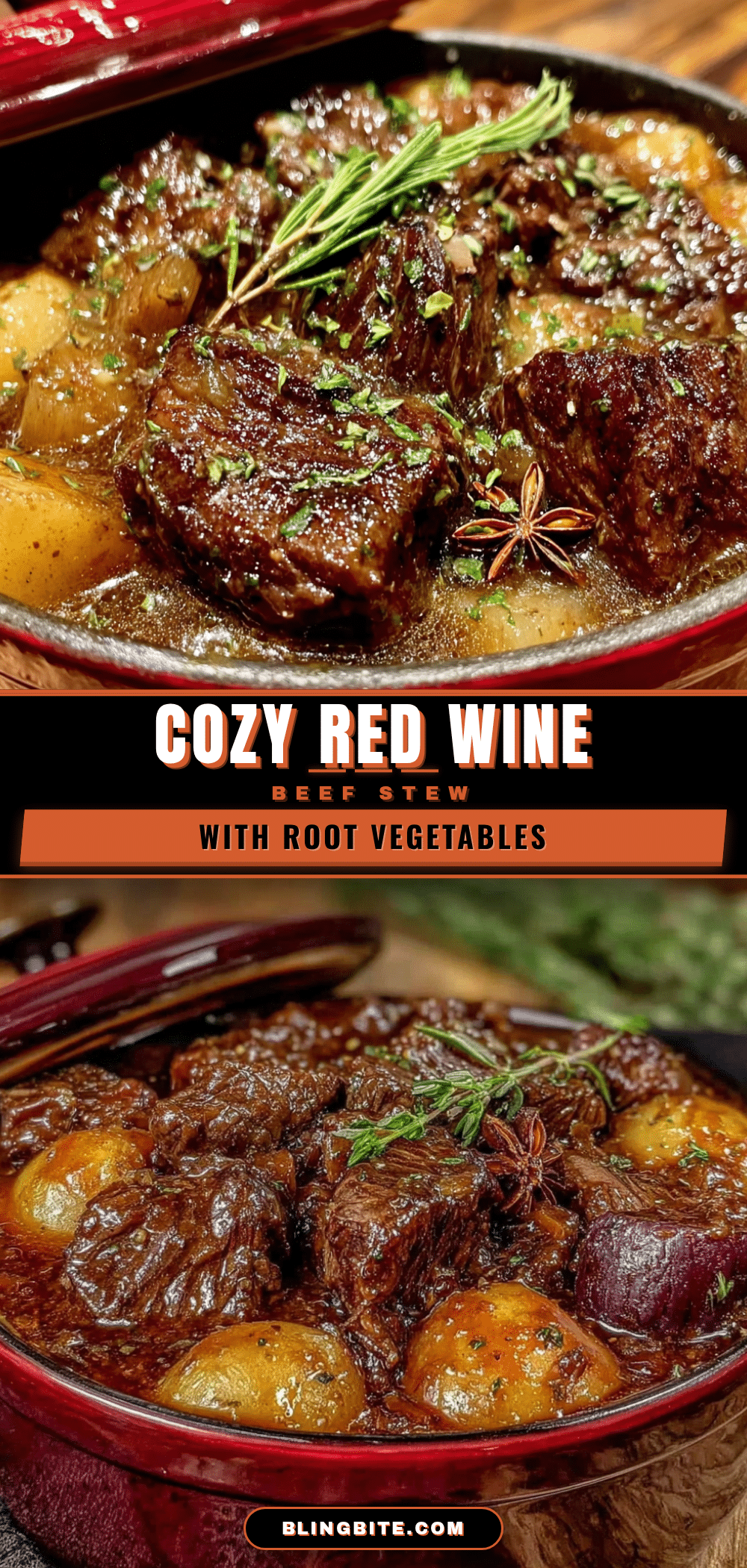
Cozy Red Wine Beef Stew with Root Vegetables
A hearty, slow-simmered beef stew with red wine and root vegetables that fills your home with warmth on cold winter nights. This recipe balances rich, complex flavor with simple, wholesome ingredients for a truly comforting meal.
- Prep Time: 15 minutes
- Cook Time: 2 hours 15 minutes
- Total Time: 2 hours 30 minutes
- Yield: 6 servings 1x
- Category: Main Course
- Cuisine: American
Ingredients
- 2 pounds beef chuck, cut into 1.5-inch cubes
- 1.5 cups dry red wine (such as Cabernet Sauvignon, Merlot, or Côtes du Rhône)
- 2 cups low-sodium beef broth
- 2 tablespoons tomato paste
- 3 large carrots, peeled and cut into 1-inch chunks
- 2 medium parsnips, peeled and cut into 1-inch chunks
- 3 medium Yukon Gold potatoes, peeled and cut into 1-inch chunks
- 1 large yellow onion, diced
- 4 cloves garlic, minced
- 3 tablespoons all-purpose flour
- 2 tablespoons olive oil
- 4 sprigs fresh thyme
- 2 bay leaves
- Salt and black pepper to taste
- 1 cup frozen peas (optional)
Instructions
- Prep your ingredients: Cut the beef into 1.5-inch cubes and pat dry. Peel and chop the carrots, parsnips, potatoes, onion, and garlic.
- In a small bowl, mix 3 tablespoons flour with 1 teaspoon salt and 1/2 teaspoon black pepper. Toss the beef cubes in the mixture until evenly coated.
- Heat 2 tablespoons olive oil in a Dutch oven over medium-high heat. Brown the beef in a single layer (work in batches if needed) for 3-4 minutes per side until a deep golden crust forms. Transfer to a plate.
- Reduce heat to medium. Add the diced onion and cook for 3-4 minutes until softened. Add the minced garlic and cook for 30 seconds until fragrant, scraping up any browned bits.
- Pour in 1.5 cups red wine and deglaze the pot, scraping up browned bits. Let simmer for 2 minutes.
- Stir in 2 cups beef broth and 2 tablespoons tomato paste until dissolved. Add the thyme sprigs and bay leaves. Return the beef and any accumulated juices to the pot.
- Increase heat to high and bring to a gentle boil. Reduce heat to low, cover, and simmer for 1 hour.
- After 1 hour, add the carrots, parsnips, and potatoes. Stir, re-cover, and continue simmering for 45-60 minutes until vegetables are fork-tender and beef is tender.
- If using frozen peas, stir them in during the last 10 minutes of cooking.
- Remove the thyme sprigs and bay leaves. Taste and adjust seasoning with salt and pepper. Let the stew rest off the heat for 10 minutes before serving.
Notes
Don’t skip browning the beef—it creates deep flavor. Use a wine you’d drink. Simmer low and slow; don’t boil. Season in layers for best results. The stew tastes even better the next day. To thicken, mix 1 tablespoon cornstarch with 2 tablespoons cold water and stir into simmering stew.
Nutrition
- Serving Size: 1 serving (about 1.5
- Calories: 475
- Sugar: 10
- Sodium: 680
- Fat: 17
- Saturated Fat: 5
- Carbohydrates: 38
- Fiber: 7
- Protein: 37
Keywords: beef stew, red wine stew, root vegetables, winter stew, comfort food, slow cooked, Dutch oven