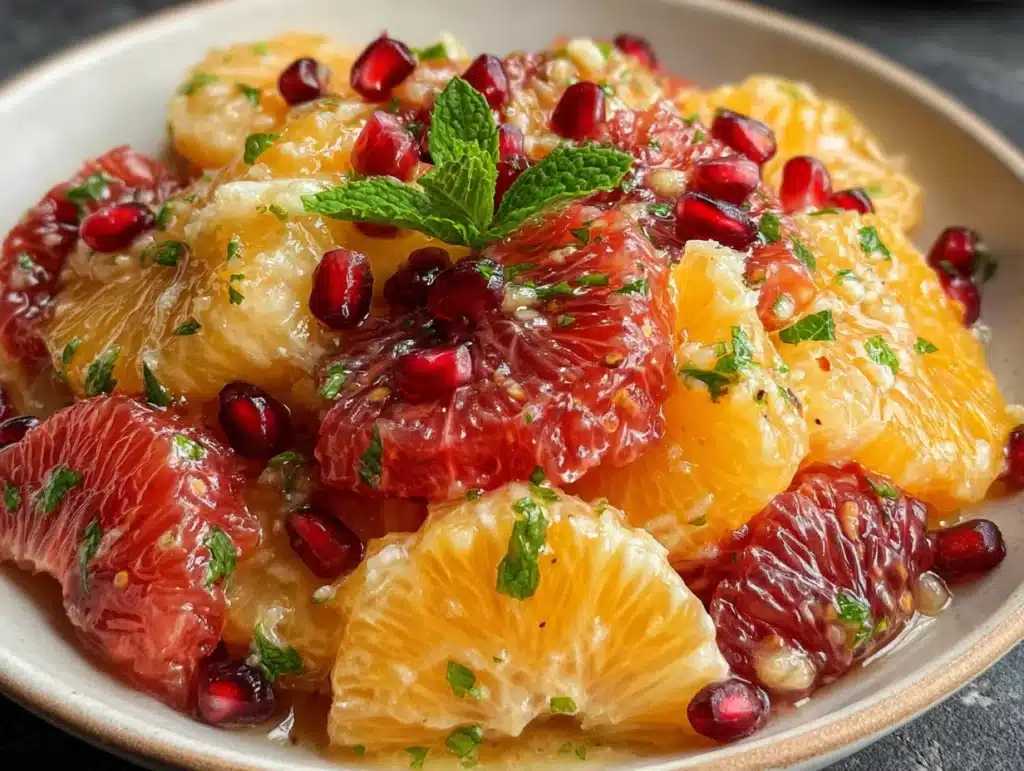
The neighborhood potluck was in three hours and I’d completely forgotten. Everyone else would be bringing those elaborate, multi-day dishes—the kind that require a spreadsheet and a trip to three different specialty stores. I had a bag of slightly sad-looking oranges, a couple of grapefruits rolling around in the crisper drawer, and a pomegranate that was probably past its prime. Honestly, I felt that familiar knot in my stomach. You know that feeling when you’re about to show up empty-handed, or worse, with something that screams “I tried nothing”?
So I did what any reasonable person in a panic does. I started slicing. Fast. The citrus got arranged on a big white platter I’d inherited from my aunt, the one with the chip in the corner that I usually hide. I drizzled it with some honey I found behind the baking soda, sprinkled on a handful of mint leaves that were somehow still alive, and crossed my fingers. I walked into that party feeling like a fraud, ready to apologize for my “minimalist” offering.
The thing is, that platter was the first thing to disappear. Not the slow-braised pork shoulder. Not the artisanal cheese board. My frantic, last-minute pile of citrus. People kept coming back for “just one more piece of that grapefruit,” and someone actually asked for the recipe. I stood there, slightly stunned, holding an empty platter. It was the underdog story of the night, and I’ve been making this Bright Winter Citrus Fruit Salad ever since. It’s the recipe that taught me that sometimes the simplest things, the ones you throw together when you think you’ve got nothing, are the ones that steal the whole show.
Why You’ll Love This Recipe
This isn’t your average fruit salad drowning in syrup. This Bright Winter Citrus Fruit Salad is a celebration of peak-season produce, and it’s designed to make you look like a hero with almost zero effort. I’ve tested this exact combination for everything from casual Sunday brunches to formal holiday dinners, and it never fails to get that “wow, who made this?” reaction.
- Quick & Easy: This comes together in under 15 minutes. Seriously. It’s faster than making a box of mac and cheese, and infinitely more impressive.
- Simple Ingredients: You likely have the honey and mint in your kitchen right now. The rest is just beautiful winter fruit from any grocery store.
- Perfect for Hosting: This is the ultimate potluck or dinner party dish. It travels well, looks stunning on a platter, and wakes up heavy winter palates.
- Crowd-Pleaser: It’s naturally vegan, gluten-free, and dairy-free. Everyone can eat it, and everyone will want seconds.
- Unbelievably Delicious: The magic is in the contrast—sweet honey against tart grapefruit, juicy oranges against crunchy pomegranate seeds. It’s a flavor party.
What makes this version different from the rest is the technique. I don’t just toss everything in a bowl. I supreme the citrus (fancy chef talk for cutting out the segments), which removes all that bitter white pith. The result is pure, jewel-like fruit that eats like candy. It’s not just another fruit salad—it’s your best version. The kind that makes you close your eyes after the first bite, honestly. It’s comfort food reimagined—lighter, brighter, but with the same soul-soothing satisfaction. Perfect for impressing guests without breaking a sweat.
What Ingredients You Will Need
This recipe uses simple, bright ingredients to deliver bold flavor and satisfying texture without the fuss. Most of these are winter staples you can find at any grocery store, and they’re easy to substitute based on what looks good.
For the Citrus Base
- 3 large navel oranges (or cara cara oranges for a deeper color)
- 2 large ruby red grapefruits (look for ones that feel heavy for their size)
- 2 blood oranges (optional but gorgeous, adds a dramatic red hue)
- 1 large pomelo or 2 small tangelos (for variety, if available)
For the Garnish & Glaze
- 1/4 cup honey (use a local wildflower honey for more complex flavor)
- 1/2 teaspoon vanilla extract (pure, not imitation—it makes a difference)
- 1/4 cup fresh mint leaves, thinly sliced (plus extra sprigs for garnish)
- 1/2 cup pomegranate arils (from about 1 pomegranate, or use pre-seeded)
- Pinch of flaky sea salt (like Maldon—trust me on this one)
I recommend using organic citrus if you can find it. Since you’re eating the skin-adjacent flesh, you want to avoid any wax or pesticide residue. The honey acts as a natural sweetener and helps the citrus release its juices, creating a light syrup. The pomegranate arils add that pop of tartness and a gorgeous crunch. And that pinch of salt? It’s not a mistake. It cuts the sweetness and makes every flavor sing.
Substitution Guidance: If you can’t find blood oranges, use more navel oranges. No pomegranate? Try dried cranberries or fresh raspberries for a similar tart pop. For a lower-sugar option, swap the honey for a few drops of stevia or monk fruit sweetener. If mint isn’t your thing, fresh basil or even a sprinkle of toasted coconut works beautifully.
Equipment Needed
You don’t need a fancy kitchen to pull this off. I’ve made this on a cramped countertop with a dull knife and it still turned out beautiful. But having the right tools makes it even easier.
- A sharp chef’s knife (a 6-inch or 8-inch knife is perfect for cutting through citrus rinds)
- A large cutting board (preferably with a juice groove to catch all that liquid)
- A small bowl for whisking the honey and vanilla
- A large serving platter or shallow bowl (a white platter makes the colors pop)
- A fine-mesh strainer (if you want to strain the extra juice for the glaze)
- A paring knife for supreme-ing the citrus (optional, but helpful)
Honestly, you can get by with just a knife and a plate. I’ve done it. But if you’re hosting, taking the extra minute to use a proper platter makes all the difference. My favorite budget-friendly option is a simple white ceramic platter from IKEA—it costs about $8 and photographs like a dream.
Preparation Method
This is where the magic happens. Follow these steps, and you’ll have a show-stopping dish that takes almost no active time.
-
Prep the citrus (5 minutes). Wash all your citrus fruits under cool water. Pat them dry. Using your sharp chef’s knife, slice off the top and bottom of each orange and grapefruit, just enough to expose the flesh. Stand the fruit upright on one cut end, then slice downward, following the curve of the fruit, to remove the peel and all the white pith. You should be left with a naked ball of fruit. Repeat for all citrus.
-
Supreme the segments (5-7 minutes). Hold a peeled citrus fruit over a bowl to catch the juice. Using your paring knife, slice along each membrane line to release the individual segments. They should fall out easily. Discard the membranes and any seeds. Work over the bowl to save all that beautiful juice—it becomes part of the dressing. Repeat for all citrus fruits. You’ll end up with a pile of jewel-like segments and a bowl of fresh juice.
-
Make the honey glaze (1 minute). In your small bowl, whisk together the reserved citrus juice (about 1/4 cup), the honey, and the vanilla extract. Taste it. It should be sweet with a bright, tart kick. If it’s too tart, add a little more honey. If too sweet, a squeeze of lemon juice balances it out.
-
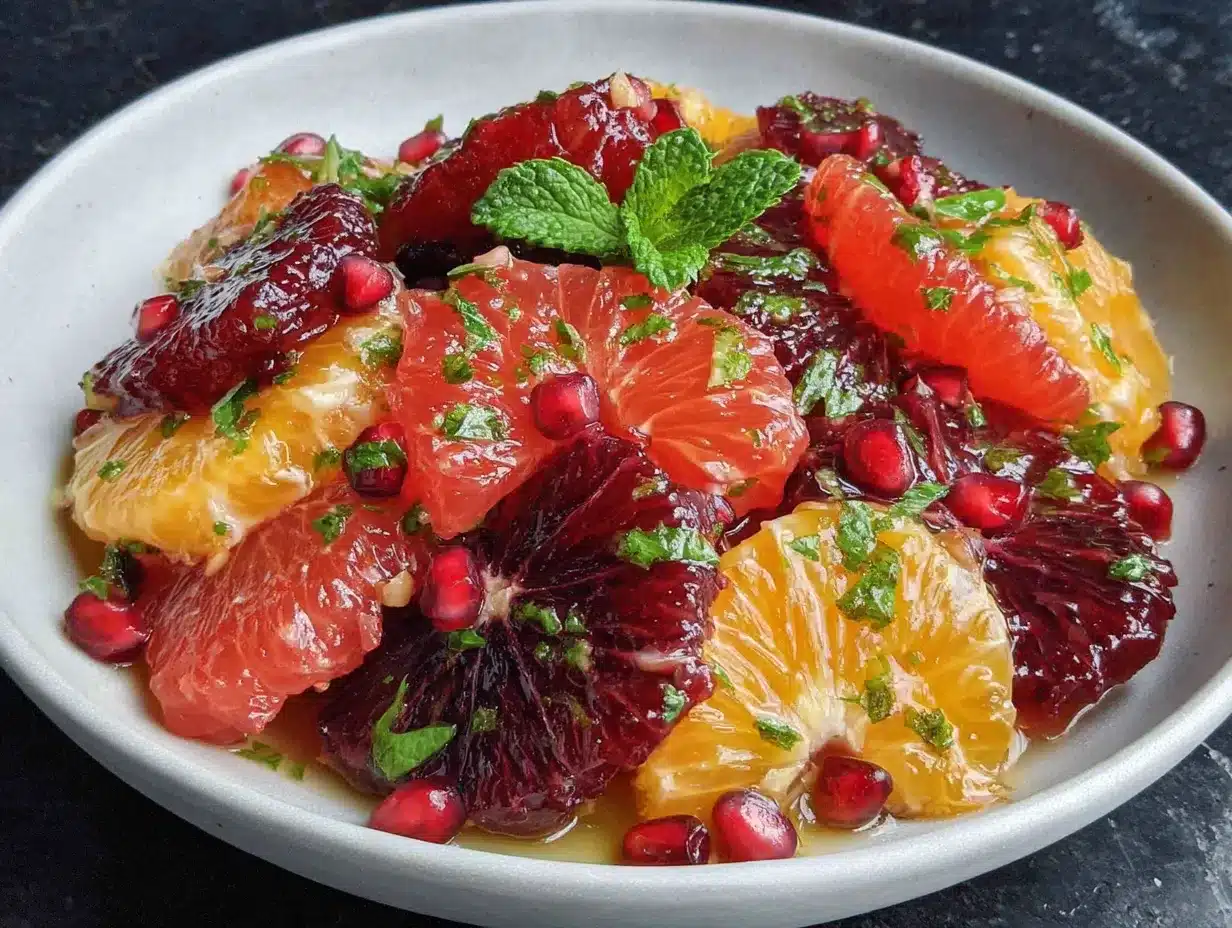
Arrange the salad (2 minutes). On your large serving platter, arrange the citrus segments in a single, slightly overlapping layer. Don’t pile them on—let each piece shine. Alternate colors for visual appeal: orange, pink grapefruit, deep red blood orange. It should look like a stained glass window.
-
Add the garnishes (1 minute). Sprinkle the pomegranate arils evenly over the citrus. They’ll settle into the nooks and crannies. Drizzle the honey-citrus glaze over the entire platter. Don’t drown it—just a light, even coating. Sprinkle the flaky sea salt and the sliced mint leaves over the top.
-
Rest and serve (5 minutes). Let the salad sit at room temperature for at least 5 minutes before serving. This allows the flavors to meld and the citrus to release more juice. The salad will look even more glossy and inviting after a short rest. Serve immediately, or refrigerate for up to 2 hours before serving.
Troubleshooting Tip: If your citrus is very tart, don’t be shy with the honey. If it’s very sweet, add an extra pinch of salt. The goal is balance. Also, if you’re prepping this for a party, you can supreme the citrus up to 24 hours in advance and store the segments in the fridge in their juice. Just add the honey glaze and garnishes right before serving.
Cooking Tips & Techniques
I’ve made this salad probably fifty times now, and I’ve learned a few things the hard way. Let me save you the trouble.
Don’t skip the supreme technique. I know it looks fancy and maybe a little intimidating, but it’s actually easier than peeling an orange. Once you get the hang of it, you’ll never go back to slicing citrus with the pith on. The pith is bitter, and it ruins the texture. Trust me, I served a batch with pith once and everyone politely ate around it. The supremes are worth the extra three minutes.
Use a very sharp knife. A dull knife will crush the citrus cells and make everything mushy. You want clean cuts that preserve the structure of each segment. I learned this lesson after a particularly frustrating session with a dull blade—I ended up with citrus soup.
Let the salad sit. This is the most important tip. The resting time isn’t just for show. It allows the honey to meld with the citrus juice, creating a light syrup that coats every piece. The salt dissolves and seasons the fruit. The mint releases its oils. It’s a transformation that happens in just a few minutes. Don’t skip it.
Multitask strategically. While the citrus rests after you slice off the ends, you can whisk the glaze. While the supremes are sitting in their bowl, you can seed the pomegranate. This salad is all about efficient, parallel work.
Common mistake to avoid: Don’t add the mint too early. If you add it hours before serving, it will turn brown and slimy. Slice it thin and add it right before you bring the platter to the table. Same with the pomegranate arils—they can get soggy if they sit too long in the juice.
Variations & Adaptations
This recipe is incredibly flexible. Here are some of my favorite ways to change it up.
1. The Savory Twist: Skip the honey and drizzle the citrus with a mixture of olive oil, balsamic vinegar, and a pinch of black pepper. Add thin slices of red onion and a handful of arugula. It’s a revelation as a side salad for roasted pork or chicken.
2. The Boozy Brunch Version: Add a splash of Grand Marnier or triple sec to the honey glaze. The orange liqueur amplifies the citrus flavor and makes it feel extra special for a holiday brunch. Just be careful not to overdo it—you want a hint, not a cocktail.
3. The Winter Berry Addition: When pomegranates aren’t in season, swap in fresh or frozen cranberries. If using fresh, slice them thin. If frozen, let them thaw slightly and drain the excess liquid. They add the same tart pop and beautiful red color.
4. The Creamy Counterpoint: Serve this salad over a dollop of thick Greek yogurt, ricotta cheese, or coconut cream. The creamy base balances the tart citrus and makes it feel like a dessert. I’ve done this for a light breakfast and it’s heavenly.
5. The Spiced Version: Add a pinch of cinnamon, cardamom, or sumac to the honey glaze. Sumac, in particular, is amazing—it adds a lemony, earthy note that complements the citrus beautifully. I discovered this combination by accident when I ran out of mint and used sumac instead. It’s now my go-to.
Dietary Adaptations: This recipe is naturally vegan, gluten-free, and dairy-free. For a low-FODMAP version, skip the honey and use maple syrup instead. For a sugar-free version, use a monk fruit sweetener. The citrus itself is naturally low in calories and high in vitamin C.
Serving & Storage Suggestions
This salad is best served at room temperature. The cold fridge dulls the flavors, so if you’ve prepped it ahead, let it sit on the counter for 15 minutes before serving. The citrus should be juicy and vibrant, not ice-cold.
Presentation Tips: Use a large, flat platter rather than a deep bowl. The single layer of citrus looks more impressive and allows each segment to shine. Garnish with whole mint sprigs and a few extra pomegranate arils on the side. For a dinner party, I like to serve it on a wooden board alongside a cheese plate—the colors contrast beautifully with aged cheddar and brie.
What to Serve Alongside: This salad is a natural partner for rich, heavy dishes. Serve it alongside a roasted pork tenderloin, a holiday ham, or a creamy pasta bake. It cuts through the richness and cleanses the palate. For brunch, it’s perfect with quiche, frittata, or even simple scrambled eggs.
Storage Instructions: Store any leftovers in an airtight container in the refrigerator for up to 2 days. The citrus will soften and release more juice, but it’s still delicious. The mint will wilt, so you may want to add fresh mint when serving leftovers. Do not freeze—the texture will be mushy.
Reheating: You don’t need to reheat this. Just let it come to room temperature. The flavors actually develop overnight—the honey and citrus juice meld into a more cohesive syrup. I’ve eaten this the next day for breakfast and loved it even more.
Flavor Development: The longer this sits, the more the honey and citrus juices combine. After a few hours, the salad will have a beautiful, light syrup that coats every piece. It’s a different experience than the fresh version, but equally delicious.
Nutritional Information & Benefits
This salad is as healthy as it is beautiful. Here’s a rough estimate per serving (based on 6 servings):
- Calories: ~120
- Carbohydrates: 28g
- Fiber: 4g
- Sugar: 20g (naturally occurring)
- Vitamin C: 80% of your daily value
- Potassium: 10% of your daily value
Health Benefits: Winter citrus is packed with vitamin C, which supports immune health during cold and flu season. Grapefruit contains naringenin, an antioxidant that may help with metabolism. Pomegranate arils are rich in punicalagins, which are powerful anti-inflammatory compounds. And honey has natural antibacterial properties. It’s a nutrient-dense dish that tastes like dessert.
Dietary Considerations: This recipe is naturally vegan, gluten-free, dairy-free, and nut-free. It’s also low in fat and sodium. The only potential allergen is honey (for those avoiding it), which can be easily substituted. It’s a safe, crowd-pleasing dish for almost any dietary restriction.
Personal Wellness Perspective: I love that this salad makes eating healthy feel like a treat. It’s not a sacrifice—it’s a celebration of what winter produce can be. When I’m feeling sluggish in January, this bright, zesty salad is exactly what I need to reset.
Conclusion
This Bright Winter Citrus Fruit Salad is proof that you don’t need hours in the kitchen or a pantry full of exotic ingredients to create something truly memorable. It’s the recipe that saved me from showing up empty-handed to that potluck, and it’s become my secret weapon for every gathering since. It’s simple, it’s stunning, and it tastes like sunshine on a plate.
I encourage you to make this your own. Swap in whatever citrus looks best at your market. Play with the garnishes. Add a pinch of spice or a splash of liqueur. The beauty of this recipe is its flexibility. It’s forgiving, it’s fast, and it always delivers.
I’d love to hear how it turns out for you. Drop a comment below and let me know what citrus combination you used, or share a photo of your platter. Don’t forget to pin this recipe for later—it’s perfect for holiday brunches, dinner parties, and those moments when you need to impress without the stress. Happy cooking, friends!
Frequently Asked Questions
Can I make this citrus fruit salad a day ahead?
Yes, you can supreme the citrus and store the segments in an airtight container in their juice for up to 24 hours. However, wait to add the honey glaze, mint, and pomegranate arils until just before serving to keep everything fresh and vibrant.
What if I can’t find pomegranates?
No problem at all. Swap in fresh raspberries, sliced strawberries, or dried cranberries for a similar pop of tartness and color. Even a handful of blueberries works beautifully.
How do I seed a pomegranate without making a mess?
Cut the pomegranate in half horizontally. Hold one half cut-side down over a bowl of water. Hit the back of the pomegranate firmly with a wooden spoon. The arils will fall into the water, and the white pith will float. Skim off the pith and drain the arils. Easy cleanup!
Is this recipe good for weight loss?
It can be part of a balanced diet. This salad is low in calories and high in fiber and vitamin C. The natural sugars come from fruit and a small amount of honey. It’s a satisfying, nutrient-dense option for a light dessert or a side dish.
Can I use bottled lemon or lime juice instead of fresh citrus?
I really don’t recommend it. Fresh citrus is the star of this dish, and bottled juice lacks the brightness and complexity of fresh-squeezed. The fresh juice also helps create the glaze. Stick with fresh fruit for the best results.
Pin This Recipe!
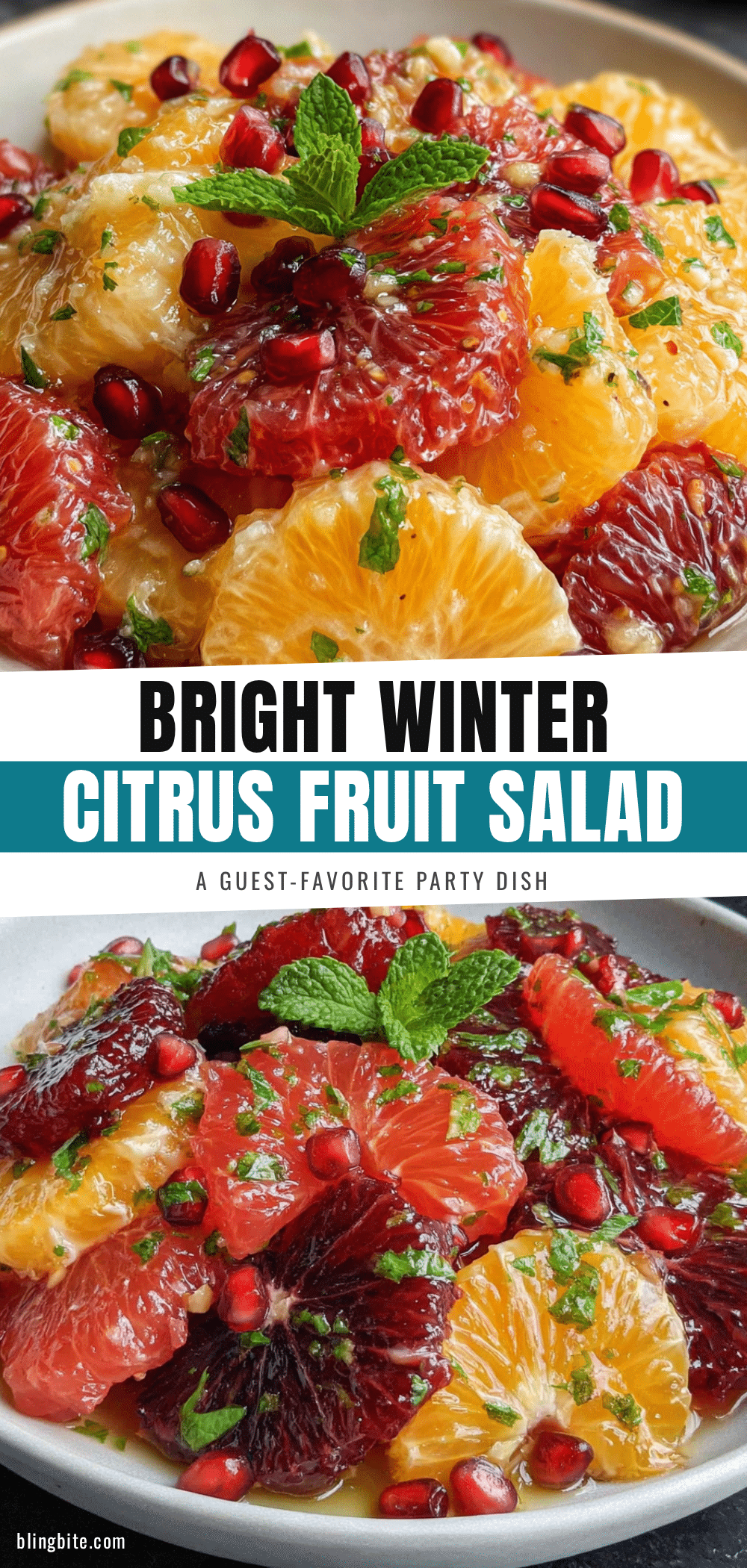
Bright Winter Citrus Fruit Salad
A stunning, simple citrus salad featuring supremed oranges and grapefruits with a honey-vanilla glaze, pomegranate arils, and fresh mint. Perfect for holiday brunches, dinner parties, and potlucks, this naturally vegan and gluten-free dish comes together in under 15 minutes.
- Prep Time: 15 minutes
- Cook Time: 0 minutes
- Total Time: 15 minutes
- Yield: 6 servings 1x
- Category: Side Dish
- Cuisine: American
Ingredients
- 3 large navel oranges (or cara cara oranges)
- 2 large ruby red grapefruits
- 2 blood oranges (optional)
- 1 large pomelo or 2 small tangelos (optional)
- 1/4 cup honey
- 1/2 teaspoon vanilla extract
- 1/4 cup fresh mint leaves, thinly sliced (plus extra sprigs for garnish)
- 1/2 cup pomegranate arils (from about 1 pomegranate)
- Pinch of flaky sea salt (like Maldon)
Instructions
- Prep the citrus: Wash all citrus fruits under cool water and pat dry. Using a sharp chef’s knife, slice off the top and bottom of each orange and grapefruit to expose the flesh. Stand the fruit upright on one cut end, then slice downward, following the curve of the fruit, to remove the peel and all the white pith. Repeat for all citrus.
- Supreme the segments: Hold a peeled citrus fruit over a bowl to catch the juice. Using a paring knife, slice along each membrane line to release the individual segments. Discard the membranes and any seeds. Repeat for all citrus fruits, reserving the juice.
- Make the honey glaze: In a small bowl, whisk together 1/4 cup of the reserved citrus juice, honey, and vanilla extract. Taste and adjust sweetness or tartness as needed.
- Arrange the salad: On a large serving platter, arrange the citrus segments in a single, slightly overlapping layer, alternating colors for visual appeal.
- Add the garnishes: Sprinkle pomegranate arils evenly over the citrus. Drizzle the honey-citrus glaze over the entire platter. Sprinkle flaky sea salt and sliced mint leaves on top.
- Rest and serve: Let the salad sit at room temperature for at least 5 minutes before serving to allow flavors to meld. Serve immediately, or refrigerate for up to 2 hours before serving.
Notes
For best results, use organic citrus if possible. The salad can be prepped up to 24 hours in advance by supreming the citrus and storing segments in their juice in the refrigerator. Add honey glaze, mint, and pomegranate arils just before serving. Do not add mint too early as it will turn brown. If citrus is very tart, add more honey; if very sweet, add an extra pinch of salt. For a lower-sugar option, swap honey for stevia or monk fruit sweetener.
Nutrition
- Serving Size: 1 serving (about 1 c
- Calories: 120
- Sugar: 20
- Sodium: 50
- Carbohydrates: 28
- Fiber: 4
- Protein: 1
Keywords: citrus fruit salad, winter fruit salad, easy fruit salad, vegan fruit salad, gluten-free fruit salad, holiday side dish, potluck recipe, bright citrus salad