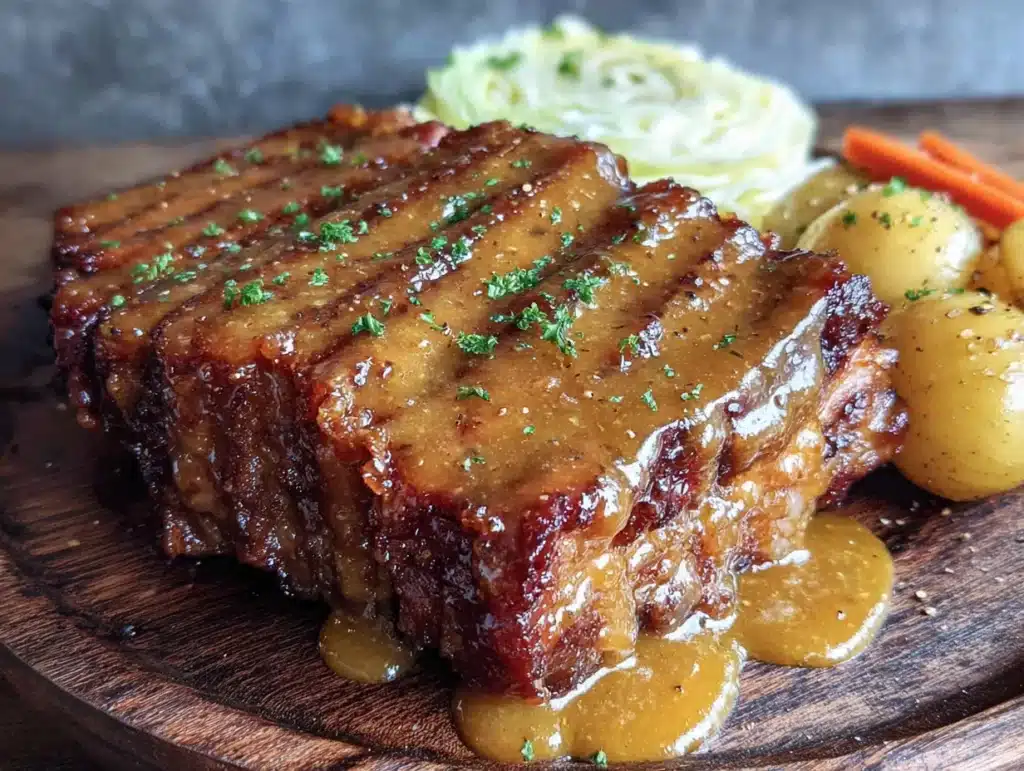
Mrs. Kowalski watched me staring at the brisket in the grocery store aisle, my phone screen cracked and covered in flour fingerprints. I’d been trying to follow a complicated recipe from some celebrity chef, and honestly, I was already exhausted. She didn’t say anything at first. She just reached past me, grabbed a corned beef brisket, and handed it to me like she was passing me a secret. “Put the phone away,” she said. “You don’t need all that. You just need a crockpot and patience.” That was three winters ago, and I still think about her every time I make this dish. The conversation that followed was just as important as the recipe itself. She told me about her mother’s kitchen in Dublin, about how the smell of boiling cabbage used to mean Sunday dinner was coming. She didn’t give me measurements—she gave me feelings. A little more of this, a splash of that, and always, always trust your nose.
I adapted her method over time, of course. I added the honey mustard glaze one rainy Tuesday when I was craving something a little sweeter, and it just clicked. The tangy heat of the mustard cutting through the rich, salty beef? That’s the kind of thing you stumble into when you’re cooking without a script. This crockpot corned beef and cabbage with honey mustard glaze isn’t a museum piece. It’s a living recipe, one that changed because I burned the first batch of glaze and had to start over. The kitchen smelled like a happy accident.
Maybe you’ve been there—standing in front of your fridge, wondering if you have the energy to make something that feels like a hug. This is that recipe. It’s the one that fills your house with that cozy, slow-cooked smell that makes everyone wander into the kitchen asking, “What’s for dinner?” It’s the one that stays with you because it works every single time, and it tastes like someone took care of you. And honestly, isn’t that the whole point?
Why You’ll Love This Recipe
Let me tell you why this crockpot corned beef and cabbage has become my go-to for those evenings when I need the kitchen to feel like a sanctuary. I’ve tested this recipe more times than I can count, and I’ve learned a few things the hard way—like the time I forgot to rinse the brisket and ended up with a pot so salty it could have cured a fish. So trust me when I say this version is the one that works.
- Quick & Easy: The crockpot does the heavy lifting. You’re looking at about 15 minutes of active prep, then 8 hours of letting that beautiful machine work its magic. Perfect for a busy weeknight or a lazy Sunday.
- Simple Ingredients: No fancy grocery store trips. Corned beef brisket, cabbage, potatoes, carrots, and a few pantry staples for the glaze. You probably already have the mustard and honey.
- Perfect for Cozy Evenings: This is the meal you want when the weather turns cold, or you’ve had a rough day and need something that feels like a warm blanket. It’s comfort food, plain and simple.
- Crowd-Pleaser: I’ve served this to picky eaters and food snobs alike, and everyone goes back for seconds. The honey mustard glaze is the secret weapon—it makes people close their eyes after the first bite.
- Unbelievably Delicious: The texture of the beef after a slow braise is something else. It’s fork-tender, almost melting, and the glaze caramelizes into this sticky, tangy-sweet coating that’s just next level.
What makes this different from the other corned beef recipes out there? It’s the glaze, honestly. Most recipes just boil everything together and call it a day. But that little bit of honey mustard magic? It transforms the whole dish. It’s not just another version—it’s the best version. And when you take that first bite, you’ll understand why I keep coming back to it.
What Ingredients You Will Need
This recipe uses simple, wholesome ingredients to deliver that bold, comforting flavor without any fuss. Most of these are pantry staples or easy to find at any grocery store. Here’s what you’ll need and why each one matters.
For the Corned Beef
- 3-4 lb corned beef brisket (with the spice packet) – This is the star of the show. Look for a brisket that’s well-marbled; the fat keeps it moist during the long cook. I usually grab the flat cut because it slices nicely, but the point cut works great too if you want extra tenderness.
- 1 tbsp whole black peppercorns – Adds a gentle warmth that complements the beef without overpowering it.
- 2 bay leaves – For that subtle herbal note that makes everything taste more complex.
- 4 cloves garlic, smashed – Because garlic makes everything better, and it infuses the cooking liquid beautifully.
- Water or beef broth (enough to cover the brisket halfway) – I use beef broth for a richer flavor, but water works perfectly fine if that’s what you have.
For the Vegetables
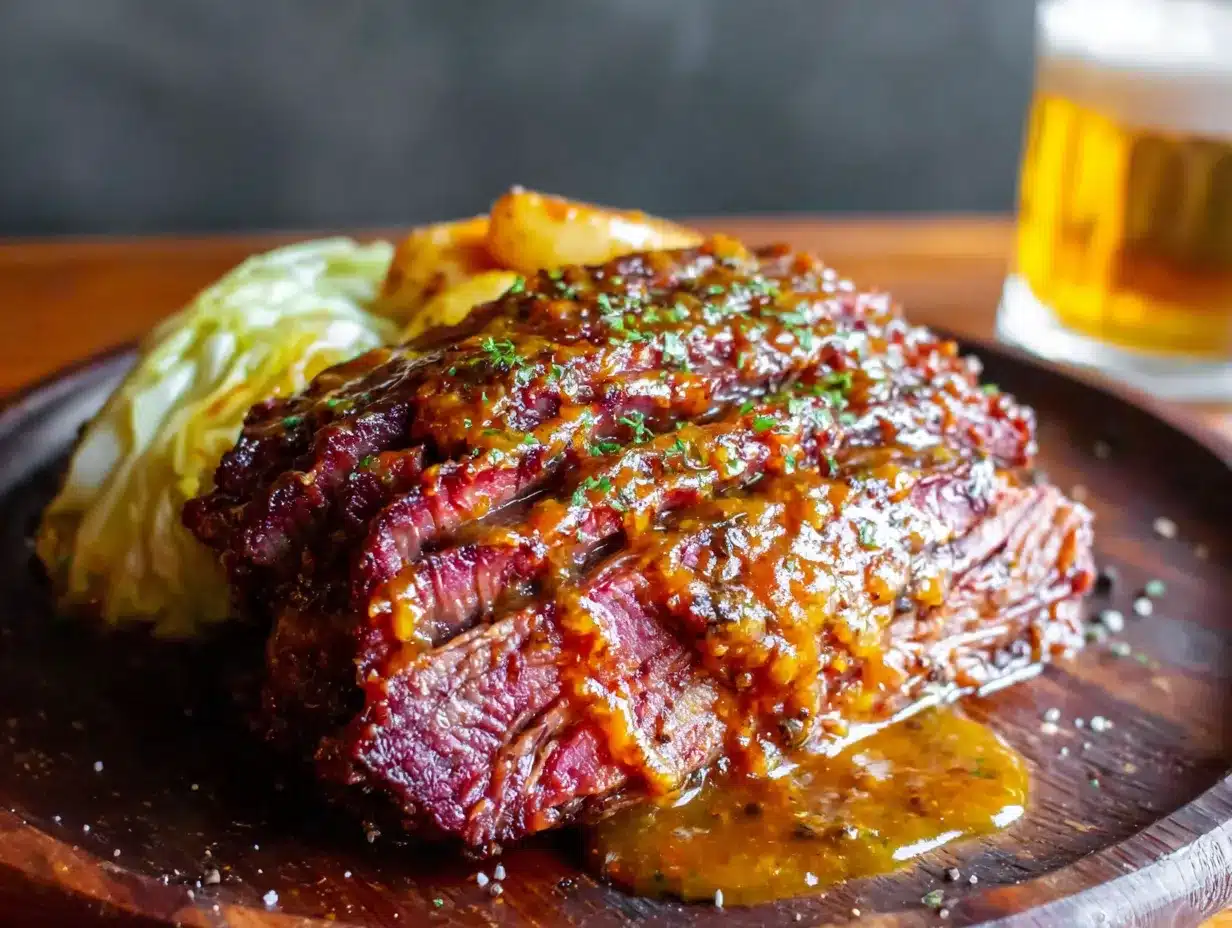
- 1 head green cabbage, cut into 6-8 wedges – The cabbage soaks up all that savory cooking liquid and gets so tender it almost melts. Don’t skip the core—it keeps the wedges intact during cooking.
- 1.5 lbs baby potatoes (or 4-5 medium potatoes, halved) – Yukon Gold or red potatoes hold up best. They get creamy on the inside and soak up the broth flavor.
- 4 large carrots, peeled and cut into 2-inch chunks – Adds a touch of sweetness that balances the salty beef.
For the Honey Mustard Glaze
- 1/4 cup honey – Use a good quality honey here. I like a mild wildflower honey, but anything works. (Local honey is a nice touch if you can find it.)
- 3 tbsp whole grain mustard – The texture of whole grain mustard is perfect here. You get those little bursts of mustard seed in every bite. Grey Poupon is my go-to, but any brand works.
- 2 tbsp Dijon mustard – For a smoother, creamier base that helps the glaze stick to the beef.
- 1 tbsp apple cider vinegar – Brightens up the glaze and cuts through the richness of the meat.
- 1 tbsp brown sugar (optional, for extra caramelization) – If you want that sticky, almost candied crust, throw this in. I usually do.
Substitution Notes: If you’re gluten-free, just double-check your spice packet—some brands use wheat flour as an anti-caking agent. For a lower-sodium version, rinse the brisket before cooking and use low-sodium broth. And if you don’t have whole grain mustard, just use all Dijon. It’ll still be delicious, I promise.
Equipment Needed
You don’t need a professional kitchen to pull this off. Here’s what you’ll need:
- 6-quart or larger slow cooker – This is non-negotiable. A 6-quart fits a 3-4 lb brisket comfortably with room for vegetables. If yours is smaller, just cook the beef alone and add the veggies later.
- Cutting board and sharp knife – For trimming the brisket and cutting the vegetables. A dull knife is just asking for trouble, honestly.
- Small bowl – For mixing the glaze. Nothing fancy.
- Tongs – For handling the hot brisket. Trust me, trying to flip a 4 lb piece of meat with a fork is a disaster waiting to happen.
- Aluminum foil – For tenting the brisket while it rests. This step matters more than you think.
- Measuring spoons and cups – For the glaze ingredients. I’ve eyeballed it before and regretted it.
Honestly, the crockpot is the only specialized piece here. If you don’t have one, you can use a Dutch oven in a 300°F oven for about 3-4 hours. But the crockpot makes it so much easier—you set it and forget it. I got mine for $30 at a garage sale, and it’s been going strong for years. No need to spend a fortune.
Preparation Method
Alright, let’s get cooking. This is the part where the magic happens. Take your time, and don’t rush it.
- Rinse and prep the brisket. Take the corned beef out of the package and rinse it under cold water. This removes some of the excess salt. Pat it dry with paper towels. If there’s a thick fat cap on top, you can trim it down to about 1/4 inch, but leave some on—it adds flavor and moisture. (I once trimmed too much and ended up with dry beef. Learn from my mistakes.)
- Layer the aromatics. Place the smashed garlic cloves, bay leaves, and peppercorns in the bottom of the slow cooker. Put the brisket on top, fat side up. Sprinkle the spice packet that came with the corned beef over the brisket. Pour in enough water or beef broth to come about halfway up the sides of the meat. Don’t submerge it completely—you want it to steam, not boil.
- Cook low and slow. Cover and cook on LOW for 8-10 hours, or on HIGH for 4-5 hours. I always go for low and slow. The meat gets so much more tender. About 2 hours before the end of cooking, carefully add the potatoes and carrots around the brisket. Nestle them into the liquid.
- Add the cabbage. During the last 45-60 minutes of cooking, add the cabbage wedges. Tuck them into the liquid as best you can. They’ll soften up quickly. Don’t add them too early, or they’ll turn into mush. (I learned that one the hard way—mushy cabbage is not a good look.)
- Make the glaze. While the cabbage is cooking, mix the honey, whole grain mustard, Dijon mustard, apple cider vinegar, and brown sugar (if using) in a small bowl. Stir until smooth. Set it aside.
- Glaze and broil. When the beef is fork-tender, carefully transfer it to a foil-lined baking sheet. Brush the honey mustard glaze all over the top and sides. Reserve a little for serving. Pop it under the broiler for 3-5 minutes, watching closely, until the glaze is bubbly and starting to caramelize. This step is where the magic happens—that sticky, sweet-savory crust is everything.
- Rest and slice. Tent the glazed brisket loosely with foil and let it rest for 10-15 minutes. This lets the juices redistribute. Slice against the grain into thick slices. Serve with the potatoes, carrots, and cabbage, and drizzle with any remaining glaze.
Sensory Cue: When the brisket is done, it should shred easily with a fork. If it resists, give it another 30 minutes. The cabbage should be tender but still hold its shape—you want it to yield to your fork, not disintegrate.
Cooking Tips & Techniques
I’ve made this crockpot corned beef and cabbage more times than I can count, and I’ve messed it up in almost every way possible. Here’s what I’ve learned so you don’t have to repeat my mistakes.
Don’t skip the rinse. I know it seems like an extra step, but rinsing the brisket removes a surprising amount of salt. The first time I made this, I skipped it, and the broth was so salty it was almost inedible. A quick rinse under cold water makes a huge difference.
Keep the fat cap on. The fat renders down during the long cook and keeps the meat moist. If you trim it all off, you’ll end up with dry, stringy beef. I trim mine to about 1/4 inch, and it’s perfect.
Layer your vegetables wisely. Potatoes and carrots can handle a longer cooking time, so add them with about 2 hours left. Cabbage is more delicate—45 minutes is plenty. If you add everything at the beginning, the cabbage will be a sad, slimy mess.
Use the broiler for the glaze. This is the step that takes the recipe from good to unforgettable. The broiler caramelizes the honey and mustard into a sticky, slightly charred crust that’s absolutely addictive. Just watch it closely—honey burns fast. I’ve set off the smoke detector more than once.
Let it rest. I know you’re hungry, but resting the meat is crucial. If you slice it right away, all those precious juices will run out onto the cutting board instead of staying in the meat. Ten minutes makes all the difference.
Multitask like a pro. While the brisket is cooking, you can prep the glaze, wash the vegetables, and even make a side dish. The crockpot gives you so much freedom. Use it.
Variations & Adaptations
This recipe is wonderfully flexible. Here are some ways to make it your own.
Dietary Variations: For a lower-carb version, skip the potatoes and add extra carrots and celery. You can also use cauliflower florets instead of potatoes—they soak up the broth beautifully. For a gluten-free option, just make sure your spice packet and mustard are certified gluten-free. Most are, but it’s worth checking.
Flavor Twists: Try adding a tablespoon of Irish whiskey to the cooking liquid for an extra layer of warmth. Or swap the whole grain mustard for a spicy brown mustard if you want more heat. I once added a teaspoon of smoked paprika to the glaze, and it gave the beef this incredible smoky depth. It’s not traditional, but it’s delicious.
Different Cooking Methods: If you don’t have a crockpot, you can make this in a Dutch oven. Brown the brisket first (optional, but nice), then add the liquid and cook in a 300°F oven for 3-4 hours. Add the vegetables in stages, just like the crockpot method. The result is slightly more concentrated flavor because there’s less liquid evaporation.
Seasonal Adaptations: In spring, add some baby turnips or parsnips to the vegetable mix. In fall, a few sprigs of fresh thyme in the cooking liquid add a lovely earthy note. I’ve even thrown in a handful of pearl onions when I had them, and they were incredible.
Personal Variation: My favorite twist is to add a tablespoon of horseradish to the glaze. It gives the honey mustard a little kick that cuts through the richness of the beef. It’s not for everyone, but I love it.
Serving & Storage Suggestions
This dish is meant to be served warm and cozy. Here’s how to make the most of it.
Serving Temperature and Presentation: Serve the brisket sliced thick, with the potatoes, carrots, and cabbage arranged around it. Drizzle a little of the remaining glaze over everything. A sprinkle of fresh parsley or chives adds a nice pop of color. I like to serve it in shallow bowls so the juices pool a little—perfect for sopping up with crusty bread.
Complementary Dishes: A side of crusty Irish soda bread or a simple green salad with a tangy vinaigrette balances the richness of the beef. If you’re feeling indulgent, a side of creamy mashed potatoes is always a hit. For drinks, a cold stout or a crisp apple cider pairs beautifully.
Storage Instructions: Store leftovers in an airtight container in the refrigerator for up to 4 days. The flavors actually get better as they meld together. The cabbage will soften more, but that’s not a bad thing—it soaks up even more flavor.
Freezing: You can freeze the cooked brisket (without the vegetables) for up to 3 months. Slice it first and wrap it tightly in foil, then place it in a freezer bag. To reheat, thaw in the fridge overnight and warm gently in a covered dish with a splash of broth. The vegetables don’t freeze well—they get mushy—so I recommend making fresh veggies when you reheat.
Reheating Tips: The best way to reheat is in a covered dish in a 300°F oven for about 15-20 minutes. You can also microwave individual portions, but the texture won’t be as good. If you’re reheating the cabbage, do it gently—high heat will turn it into a sad, limp mess.
Flavor Development: Honestly, this dish tastes even better the next day. The beef has more time to absorb the flavors, and the vegetables become incredibly tender. I often make it a day ahead on purpose.
Nutritional Information & Benefits
Here’s a rough estimate per serving (based on 8 servings). Keep in mind that exact values depend on the size of your brisket and specific ingredients.
- Calories: Approximately 450-550 per serving
- Protein: 35-40g
- Fat: 20-25g
- Carbohydrates: 35-40g
- Fiber: 6-8g
- Sodium: 800-1000mg (can be reduced by rinsing the brisket)
Health Benefits: Corned beef is a good source of protein, iron, and B vitamins, which support energy metabolism. Cabbage is packed with vitamin C and fiber, and it’s great for digestion. Potatoes provide potassium and vitamin B6. The honey in the glaze offers antioxidants, and mustard seeds contain anti-inflammatory compounds. It’s not a health food, but it’s a balanced meal that nourishes both body and soul.
Dietary Considerations: This recipe is naturally gluten-free if you check your ingredients. It’s not low-fat, but it’s a satisfying, whole-food meal. If you’re watching your sodium, rinse the brisket well and use low-sodium broth. The honey adds natural sweetness, so you can skip the brown sugar if you prefer.
Personal Perspective: I love that this meal feels indulgent but is made from real, simple ingredients. It’s the kind of food that makes you feel good without being overly restrictive. And honestly, after a long week, sometimes you just need a bowl of something hearty and comforting. This delivers.
Conclusion
This crockpot corned beef and cabbage with honey mustard glaze is more than just a recipe—it’s a ritual. It’s the smell that fills your house on a cold afternoon, the first bite that makes you close your eyes, the leftovers that taste even better the next day. It’s the kind of meal that brings people together, whether it’s a quiet dinner for one or a table full of family.
I hope you make this your own. Add a little extra mustard if you like things spicy, swap the potatoes for something else, or double the glaze because why not? That’s the beauty of cooking—you get to decide what feels right. And if you forget something or burn the glaze a little, that’s okay too. That’s how you learn.
I’d love to hear how it turns out for you. Drop a comment below and let me know if you tried any variations, or just tell me about your favorite cozy meal. And if you share a photo on Pinterest, tag me—I want to see your beautiful creation. Now go make something delicious. You’ve got this.
Frequently Asked Questions
Can I use a different cut of beef?
You can, but corned beef brisket is specifically brined and cured, which gives it that distinctive flavor and texture. A regular beef brisket or chuck roast will work, but it won’t taste the same. You’d need to add pickling spices and salt to mimic the flavor.
Do I have to use the spice packet?
Not necessarily, but it’s designed to complement the corned beef. If you lose it or don’t want to use it, you can substitute with 1 tablespoon of pickling spice mix. The flavor will be slightly different, but still delicious.
Can I make this in an Instant Pot?
Yes! Cook the brisket on high pressure for 90 minutes with a natural release. Add the potatoes and carrots and cook for another 10 minutes, then add the cabbage and cook for 5 minutes. Glaze and broil as directed. The flavor won’t be quite as deep as the slow cooker version, but it’s a great time-saver.
Why is my corned beef tough?
It probably didn’t cook long enough. Corned beef needs time to break down the connective tissue. If it’s tough, give it another hour or two on low. It should shred easily with a fork when it’s done. Also, make sure you’re slicing against the grain—that makes a huge difference in tenderness.
Can I add other vegetables?
Absolutely. Parsnips, turnips, celery root, and even fennel bulbs all work beautifully. Just add them according to their cooking time—hardy root vegetables can go in with the potatoes, while more delicate ones should be added later. I’ve even thrown in some Brussels sprouts during the last 30 minutes, and they were fantastic.
Pin This Recipe!
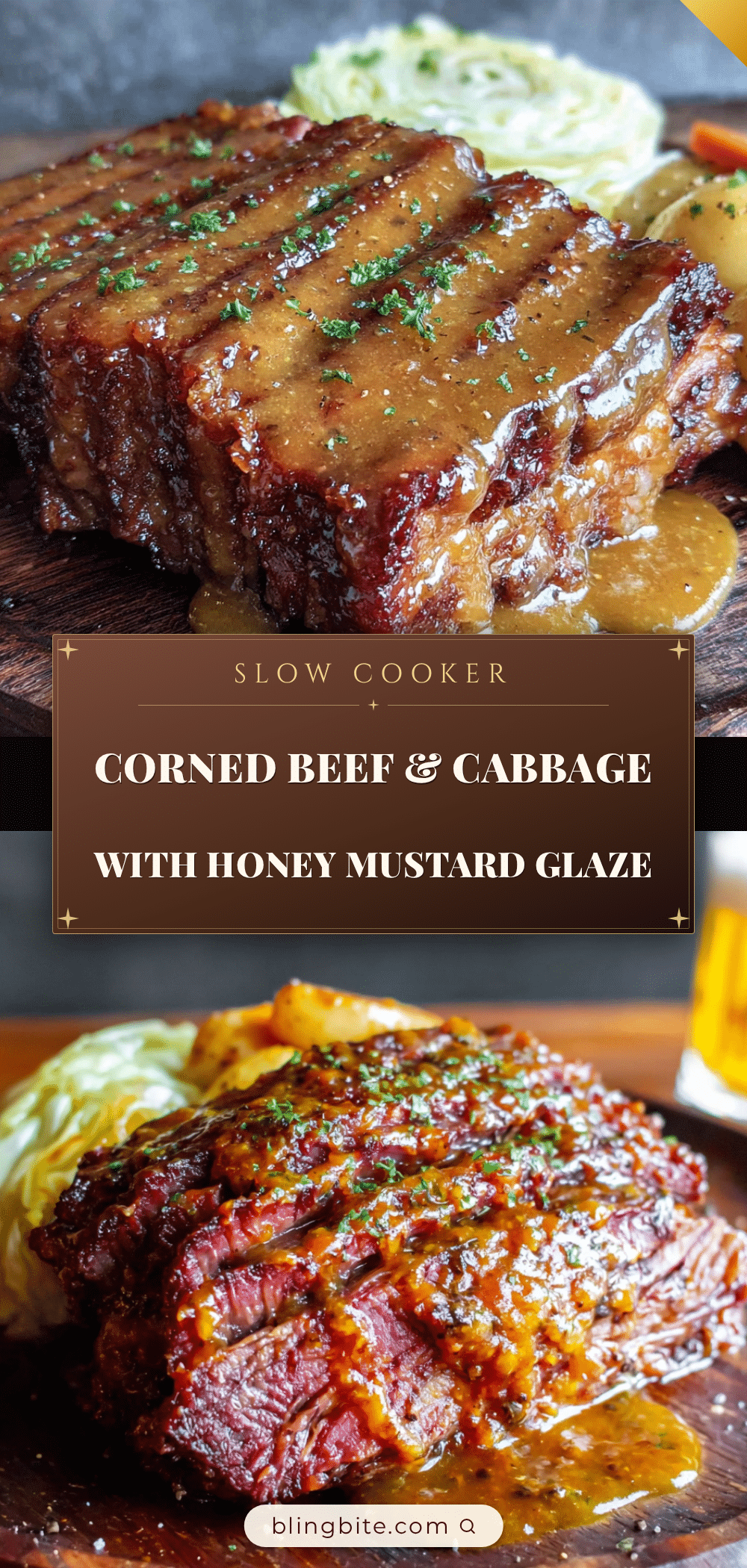
Easy Crockpot Corned Beef and Cabbage with Honey Mustard Glaze
A tender, slow-cooked corned beef brisket with a sweet and tangy honey mustard glaze, served with cabbage, potatoes, and carrots. This comforting one-pot meal is perfect for cozy evenings and requires minimal prep.
- Prep Time: 15 minutes
- Cook Time: 8 hours
- Total Time: 8 hours 15 minutes
- Yield: 8 servings 1x
- Category: Main Course
- Cuisine: Irish-American
Ingredients
- 3–4 lb corned beef brisket (with spice packet)
- 1 tbsp whole black peppercorns
- 2 bay leaves
- 4 cloves garlic, smashed
- Water or beef broth (enough to cover brisket halfway)
- 1 head green cabbage, cut into 6–8 wedges
- 1.5 lbs baby potatoes (or 4–5 medium potatoes, halved)
- 4 large carrots, peeled and cut into 2-inch chunks
- 1/4 cup honey
- 3 tbsp whole grain mustard
- 2 tbsp Dijon mustard
- 1 tbsp apple cider vinegar
- 1 tbsp brown sugar (optional)
Instructions
- Rinse the corned beef brisket under cold water and pat dry. Trim fat cap to about 1/4 inch if desired.
- Place smashed garlic, bay leaves, and peppercorns in the bottom of a 6-quart or larger slow cooker. Put brisket on top, fat side up. Sprinkle spice packet over brisket. Pour in enough water or beef broth to come halfway up the sides of the meat.
- Cover and cook on LOW for 8-10 hours or on HIGH for 4-5 hours. About 2 hours before end of cooking, add potatoes and carrots around the brisket, nestling them into the liquid.
- During the last 45-60 minutes of cooking, add cabbage wedges, tucking them into the liquid.
- While cabbage cooks, mix honey, whole grain mustard, Dijon mustard, apple cider vinegar, and brown sugar (if using) in a small bowl until smooth.
- When brisket is fork-tender, transfer to a foil-lined baking sheet. Brush glaze all over top and sides. Broil for 3-5 minutes until bubbly and caramelized, watching closely.
- Tent brisket loosely with foil and let rest for 10-15 minutes. Slice against the grain into thick slices. Serve with potatoes, carrots, and cabbage, drizzled with remaining glaze.
Notes
Rinse brisket to reduce saltiness. Keep fat cap on for moisture. Add cabbage late to avoid mushiness. Broil glaze carefully to prevent burning. Let meat rest before slicing. Leftovers keep up to 4 days in fridge; brisket can be frozen for up to 3 months.
Nutrition
- Serving Size: 1 serving (approx. 1
- Calories: 500
- Sugar: 12
- Sodium: 900
- Fat: 22
- Saturated Fat: 8
- Carbohydrates: 38
- Fiber: 7
- Protein: 38
Keywords: crockpot corned beef, corned beef and cabbage, honey mustard glaze, slow cooker, St. Patrick's Day, comfort food, one-pot meal