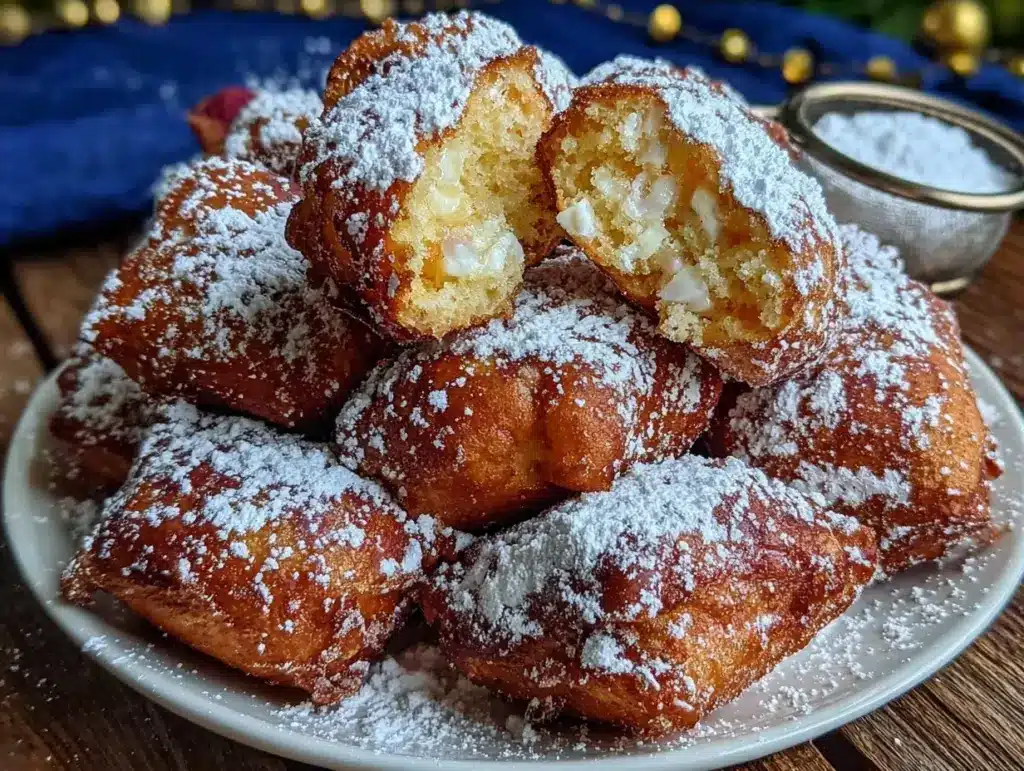
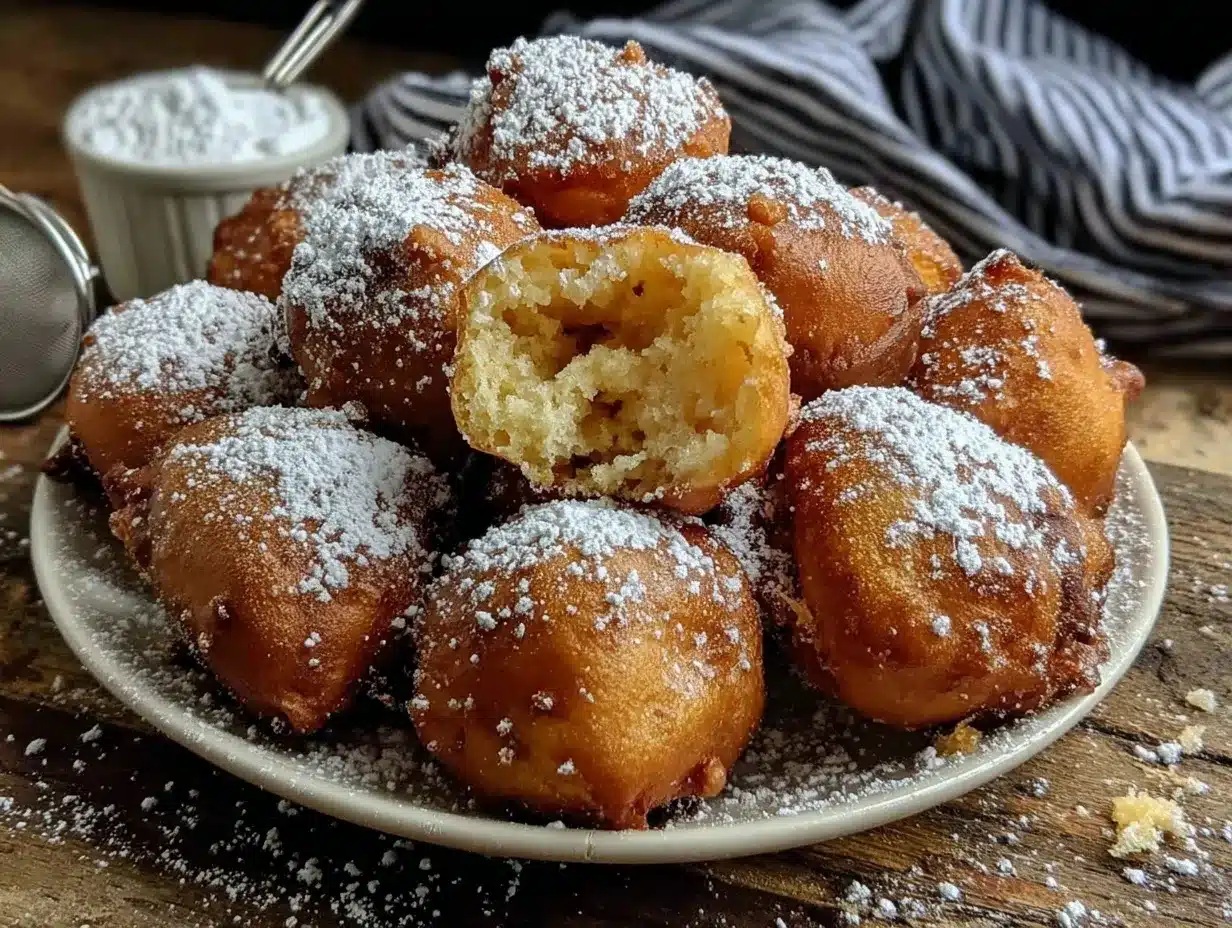
Let me tell you, the aroma of fresh, golden beignets wafting from the kitchen is honestly one of life’s little joys. Picture this: fluffy pillows of dough, sizzling in hot oil, their edges turning a perfect shade of golden brown—almost glowing, really! The first time I made Fluffy New Orleans Beignets, I was knee-high to a grasshopper (or so it feels now), watching my grandma dust a mountain of powdered sugar over a warm batch while the whole family crowded around. There’s something magical about that moment—the kind of pause where you take a deep breath, let the scent fill you up, and know you’re onto something special.
Years ago, I tried to recreate that memory on a rainy Sunday, hunting for the perfect New Orleans beignets recipe. You know what? I wish I’d discovered this easy homemade dough sooner. It’s dangerously simple, and the results are pure, nostalgic comfort. My family couldn’t stop sneaking them off the cooling rack (and I can’t blame them). Even my pickiest child—usually suspicious of anything not shaped like a chicken nugget—was hooked after the first bite. That right there is proof: these beignets are crowd-tested and family-approved.
Honestly, whether you’re brightening up a Saturday brunch, searching for a sweet treat for your kids after school, or wanting to impress at your next potluck, these fluffy beignets fit the bill. They’re the kind of recipe you’ll want to bookmark, pin, and share—because once you taste them, you realize they’re so much more than fried dough and sugar. Every time I test this recipe (in the name of research, of course!), it becomes a staple for family gatherings and gifting. It feels like a warm hug in pastry form, and I promise: you’re going to want to make these again and again.
Why You’ll Love This Recipe
Over the years, I’ve baked, fried, and tested my way through dozens of beignet recipes, but this Fluffy New Orleans Beignets Recipe stands out for all the right reasons. Here’s why it’ll be your new favorite (and why it’s become a must-have in my kitchen):
- Quick & Easy: The whole process takes under 2 hours from start to finish, making it doable even on busy mornings or spontaneous dessert cravings.
- Simple Ingredients: No fancy shopping trips required—you probably have everything on hand right now. Flour, yeast, a splash of milk, and a good dose of powdered sugar do all the heavy lifting.
- Perfect for Any Occasion: These beignets fit in at brunch, potlucks, birthday parties, or cozy weekend breakfasts. They’re Pinterest-perfect, too!
- Crowd-Pleaser: Kids gobble them up, adults sneak seconds, and even skeptics admit they’re irresistible. Trust me, I’ve seen it at family gatherings.
- Unbelievably Delicious: The texture is everything—light, airy, and slightly chewy inside, with a sweet, crispy outside that practically begs for powdered sugar.
What makes this recipe different? I use a little trick: letting the dough rest longer gives it that cloud-like fluffiness. Plus, the balance of vanilla and nutmeg brings out the classic New Orleans flavor without overpowering. I’ve even tested it with gluten-free flour for a friend, and it comes out just as dreamy! This isn’t just another fried dough—it’s the best homemade beignet recipe for beginners, with foolproof results.
There’s something special about biting into one, eyes closed, savoring the soft interior and snowy sugar coating. It’s comfort food that doesn’t weigh you down—faster, lighter, and packed with soul-soothing goodness. You can impress guests with almost zero stress, or just make a batch for yourself (no judgment here!). If you’re after a delicious, easy treat that feels like a celebration, you’ve found it.
What Ingredients You Will Need
This Fluffy New Orleans Beignets Recipe uses simple, wholesome ingredients to deliver bold flavor and that signature pillowy texture. Most are pantry staples, and you can swap a few things to suit your tastes or dietary needs. Here’s what you’ll want to gather:
- For the Dough:
- All-purpose flour – 4 cups (500g) (I love King Arthur for reliable results)
- Granulated sugar – 1/4 cup (50g) (just enough for a hint of sweetness)
- Active dry yeast – 2 1/4 tsp (1 packet, 7g)
- Warm milk – 1 cup (240ml) (about 110°F/43°C; use whole milk for richness)
- Unsalted butter – 1/4 cup (56g), melted (adds flavor and helps with tenderness)
- Large egg – 1, room temperature (binds everything together)
- Salt – 1/2 tsp (balances sweetness)
- Vanilla extract – 1 tsp (for that classic New Orleans taste)
- Ground nutmeg – 1/4 tsp (optional, but recommended for depth)
- For Frying:
- Vegetable oil – for deep-frying (canola or peanut oil are both good choices)
- For Dusting:
- Powdered sugar – 1 to 2 cups (120-240g), sifted (don’t skimp—it’s traditional!)
If you want to go gluten-free, swap the flour for a 1:1 gluten-free blend (Bob’s Red Mill works well). For a dairy-free version, use plant-based milk and vegan butter. I’ve tried both—it works! During summer, add a pinch of lemon zest for a fresh twist, or swap vanilla for almond extract. If you’re out of nutmeg, a dash of cinnamon does the trick.
All these ingredients come together to create beignets that are light, fluffy, and perfectly sweet. No need for exotic supplies—just simple items with big payoff. If you want to get fancy, sprinkle a little orange blossom water in the dough (it’s a New Orleans secret!).
Equipment Needed
Making homemade beignets doesn’t require a fancy bakery setup. Here’s what you’ll need for this Fluffy New Orleans Beignets Recipe:
- Large mixing bowl (or a stand mixer with dough hook—makes kneading easier)
- Whisk and wooden spoon (for mixing ingredients and stirring)
- Measuring cups and spoons (accuracy counts!)
- Rolling pin (if you don’t have one, a clean wine bottle works in a pinch)
- Bench scraper or sharp knife (for cutting the dough)
- Deep-frying thermometer (helps keep oil at the right temperature; optional, but recommended)
- Heavy-bottomed pot or deep fryer (I use a Dutch oven for even heat)
- Slotted spoon or spider strainer (for lifting beignets from hot oil safely)
- Wire cooling rack (prevents sogginess)
- Paper towels (for draining excess oil)
If you’re on a budget, don’t worry—most tools can be swapped for alternatives. I’ve used a regular pot and just kept an eye on the bubbles for oil temp. Clean up is easy, too—just soak your utensils in warm, soapy water after frying. Keep your thermometer and strainer handy; they last forever with a quick rinse and dry.
Honestly, the only “specialty” item is the thermometer. If you don’t have one, just drop a little dough in the oil: if it sizzles and floats, you’re good to go.
Preparation Method
-
Prepare the Dough (10 minutes):
- In a large mixing bowl, whisk together warm milk (1 cup/240ml) and granulated sugar (1/4 cup/50g).
- Sprinkle the active dry yeast (2 1/4 tsp/7g) over the mixture. Let it sit for 5-10 minutes, until foamy (if it doesn’t foam, your yeast may be old—try a new batch).
-
Add Wet Ingredients (5 minutes):
- Whisk in melted butter (1/4 cup/56g), large egg, vanilla extract (1 tsp), and ground nutmeg (1/4 tsp, optional).
- Mix until well combined—batter should look smooth and creamy.
-
Combine Dry Ingredients (5 minutes):
- Add salt (1/2 tsp) and flour (4 cups/500g) in two batches, mixing with a wooden spoon or dough hook until a sticky dough forms.
- If dough feels too wet, add an extra tablespoon of flour at a time (don’t overdo it; a soft dough gives the best beignets).
-
Knead the Dough (5-8 minutes):
- Turn the dough onto a floured surface. Knead for 5-8 minutes, until smooth and elastic (it’ll spring back when poked).
- If kneading by hand, use the “fold and push” method—my grandma’s go-to move!
-
First Rise (60 minutes):
- Place dough in a greased bowl, cover with plastic wrap or a clean towel.
- Let rise in a warm spot for 1 hour, until doubled in size (if your kitchen is chilly, set the bowl near the oven or inside with the light on).
-
Roll and Cut (10 minutes):
- Punch down the dough gently. Turn onto a floured surface and roll out to 1/4-inch (6mm) thickness.
- Cut into 2-inch (5cm) squares using a bench scraper or sharp knife (don’t worry if some are uneven—rustic is charming!).
-
Second Rise (20 minutes):
- Arrange cut dough pieces on a lightly floured tray. Cover and let rest for 20 minutes (they’ll puff up a bit more).
-
Heat the Oil (5-10 minutes):
- Pour vegetable oil into a heavy-bottomed pot, about 2 inches (5cm) deep.
- Heat to 350°F (175°C). If you don’t have a thermometer, drop a scrap of dough in—the oil is ready when it sizzles and rises quickly.
-
Fry the Beignets (10-15 minutes):
- Gently place a few dough squares into the hot oil (don’t overcrowd—work in batches).
- Fry for 1-2 minutes per side, flipping with a slotted spoon. They should puff up and turn golden brown.
- Remove to a paper towel-lined rack to drain (watch out for hot oil splashes!).
-
Dust & Serve (5 minutes):
- While still warm, generously dust with sifted powdered sugar (1-2 cups/120-240g).
- Serve immediately for maximum fluffiness and flavor!
Tip: If your beignets aren’t puffing up, your oil may be too cold. If they’re browning too fast, lower the heat a notch. Be patient—good dough takes time, but the results are worth it!
Cooking Tips & Techniques
Making Fluffy New Orleans Beignets is a little bit science, a little bit art—and trust me, I’ve had my share of crispy disasters and doughy flops. Here’s what I’ve learned along the way:
- Letting the dough rise twice is the secret to that airy, melt-in-your-mouth texture. Don’t rush it—grab a coffee and relax while the magic happens.
- Keep your oil at a steady 350°F (175°C). If it dips too low, beignets soak up oil and get greasy; too high and they burn before cooking through.
- Don’t overcrowd the pot. Frying too many at once drops the oil temperature and leads to uneven cooking.
- Flip gently! Use a slotted spoon or spider strainer, and don’t be rough. Soft dough can deflate if handled too aggressively.
- For extra flavor, mix a little cinnamon or lemon zest into your powdered sugar before dusting. It’s a tiny change that makes a big impact.
- If your dough is sticky when rolling, dust the surface and rolling pin lightly with flour—just enough to prevent sticking, but don’t over-flour or your beignets will be dense.
- Multitasking tip: While the dough rises, prep your frying station and sift your powdered sugar. It saves time and keeps things smooth.
I’ve learned the hard way: always taste your first batch and adjust oil temperature if needed. Consistency comes with practice, but these steps will set you up for success every time.
Variations & Adaptations
One of the best things about this Fluffy New Orleans Beignets Recipe is how easy it is to customize. Here are a few tried-and-true twists:
- Gluten-Free: Swap all-purpose flour for a 1:1 gluten-free blend. The texture stays fluffy, and nobody misses the gluten (my cousin swears by it!).
- Dairy-Free: Use almond milk or oat milk instead of regular milk, and a plant-based butter substitute. Easy, and just as tasty.
- Seasonal Flavors: In summer, add a pinch of lemon zest or orange blossom water to the dough. In winter, try a dash of pumpkin spice or cinnamon.
- Chocolate Beignets: Mix 2 tablespoons cocoa powder into the flour and serve with a chocolate dipping sauce for a decadent treat.
- Mini Beignets: Cut dough into 1-inch squares for bite-sized versions perfect for parties or snacking.
I’ve even tried baking them in a hot oven (425°F/220°C) for 10-12 minutes instead of frying; they’re less crispy but still delicious if you’re watching oil. For nut allergies, skip the nutmeg and check your flour blend. If you’re feeling adventurous, fill them with jam or custard before frying for a surprise center! Honestly, the possibilities are endless—make it yours.
Serving & Storage Suggestions
For peak fluffiness and flavor, serve these Fluffy New Orleans Beignets warm, right after dusting with powdered sugar. Pile them high on a pretty platter, and watch them disappear! They pair perfectly with café au lait, hot chocolate, or a glass of cold milk.
For brunch, I love offering a trio of dipping sauces: chocolate, fruit preserves, or a simple vanilla glaze. They’re also a hit at parties—just keep extra powdered sugar nearby for fresh dusting.
If you have leftovers (rare, but it happens!), store cooled beignets in an airtight container at room temperature for up to 2 days. To revive, pop them in a 350°F (175°C) oven for 5 minutes—just enough to warm through. You can freeze them, too: wrap tightly and freeze for up to 2 months. Thaw and reheat as above. Honestly, they’re best fresh, but still delicious after a quick reheat. The flavor deepens a bit as they rest, taking on a cozy, doughnut-y richness.
Nutritional Information & Benefits
Here’s a quick look at the nutrition for one medium beignet (without extra dusting):
- Calories: ~180 kcal
- Protein: 3g
- Carbohydrates: 28g
- Fat: 6g
- Sugar: 5g
Beignets are a treat—no denying that—but using whole milk and eggs adds a little protein and calcium. If you use gluten-free flour, they’re celiac-friendly. For allergies, skip the nutmeg and choose a safe oil. I like that this recipe lets you control the sugar and fat (bake instead of fry, if you wish).
From a wellness angle, enjoying these beignets in moderation is a joy. They’re not health food, but they are soul food—and sometimes, that’s exactly what you need.
Conclusion
So, why should you make this Fluffy New Orleans Beignets Recipe? Because it’s foolproof, fun, and brings a little taste of the Big Easy to your kitchen—no passport required. Whether you’re a beginner or an old hand at frying dough, you’ll love how easy and rewarding it is to whip up a batch of homemade beignets.
Customize the flavors, swap in your favorite ingredients, and share the results with friends and family. Honestly, I come back to this recipe time and again because it’s just plain delightful—warm, sweet, and perfect with a cup of coffee on a lazy morning.
If you try these beignets or have your own twist, please drop a comment below, pin this to your Pinterest boards, or share your batch with me! I’d love to hear your stories and see your creations. Until next time, happy frying—and may your kitchen always smell like sugar and smiles!
Frequently Asked Questions
How do I know if my oil is hot enough for frying beignets?
Use a deep-frying thermometer to check for 350°F (175°C). If you don’t have one, drop a small piece of dough in—the oil should sizzle and the dough should float up quickly.
Can I make beignets ahead of time?
Yes! Prepare the dough, cut into squares, and refrigerate overnight. Let them come to room temperature and rise for 20 minutes before frying for fresh flavor.
What’s the best oil for frying beignets?
Canola or peanut oil work best—they have a neutral flavor and high smoke point. Avoid olive oil, as it can taste bitter when heated.
Can I freeze leftover beignets?
Definitely. Cool them completely, wrap tightly, and freeze for up to 2 months. Reheat in a hot oven for a few minutes to restore fluffiness.
Are beignets gluten-free or vegan?
With simple swaps, yes! Use gluten-free flour and plant-based milk and butter for vegan, gluten-free beignets. The texture stays fluffy and delicious.
Pin This Recipe!

Fluffy New Orleans Beignets Recipe Easy Homemade Dough for Beginners

These homemade New Orleans beignets are light, fluffy pillows of dough, fried until golden and dusted with powdered sugar. Perfect for brunch, dessert, or a sweet treat, this easy recipe is beginner-friendly and crowd-pleasing.
- Prep Time: 30 minutes
- Cook Time: 20 minutes
- Total Time: 1 hour 50 minutes
- Yield: 24 beignets 1x
- Category: Dessert
- Cuisine: New Orleans, American
Ingredients
- 4 cups all-purpose flour (500g)
- 1/4 cup granulated sugar (50g)
- 2 1/4 tsp active dry yeast (1 packet, 7g)
- 1 cup warm milk (240ml, about 110°F)
- 1/4 cup unsalted butter, melted (56g)
- 1 large egg, room temperature
- 1/2 tsp salt
- 1 tsp vanilla extract
- 1/4 tsp ground nutmeg (optional)
- Vegetable oil (canola or peanut oil) for deep-frying
- 1 to 2 cups powdered sugar (120-240g), sifted for dusting
Instructions
- In a large mixing bowl, whisk together warm milk and granulated sugar.
- Sprinkle active dry yeast over the mixture and let sit for 5-10 minutes until foamy.
- Whisk in melted butter, egg, vanilla extract, and ground nutmeg (if using) until smooth.
- Add salt and flour in two batches, mixing until a sticky dough forms.
- Turn dough onto a floured surface and knead for 5-8 minutes until smooth and elastic.
- Place dough in a greased bowl, cover, and let rise in a warm spot for 1 hour until doubled.
- Punch down dough, turn onto a floured surface, and roll out to 1/4-inch thickness.
- Cut into 2-inch squares using a bench scraper or sharp knife.
- Arrange dough pieces on a lightly floured tray, cover, and let rest for 20 minutes.
- Pour vegetable oil into a heavy-bottomed pot to a depth of about 2 inches and heat to 350°F.
- Gently place dough squares into hot oil in batches, frying 1-2 minutes per side until golden brown.
- Remove beignets with a slotted spoon and drain on paper towels.
- While still warm, generously dust with sifted powdered sugar.
- Serve immediately for best flavor and texture.
Notes
Let the dough rise twice for maximum fluffiness. Keep oil at a steady 350°F for best results. For gluten-free or dairy-free versions, substitute flour and milk as needed. Beignets are best served fresh and warm, but leftovers can be reheated in the oven. Add lemon zest or cinnamon to powdered sugar for extra flavor.
Nutrition
- Serving Size: 1 medium beignet
- Calories: 180
- Sugar: 5
- Sodium: 90
- Fat: 6
- Saturated Fat: 2
- Carbohydrates: 28
- Fiber: 1
- Protein: 3
Keywords: beignets, New Orleans, fried dough, easy beignets, homemade, brunch, dessert, powdered sugar, beginner recipe