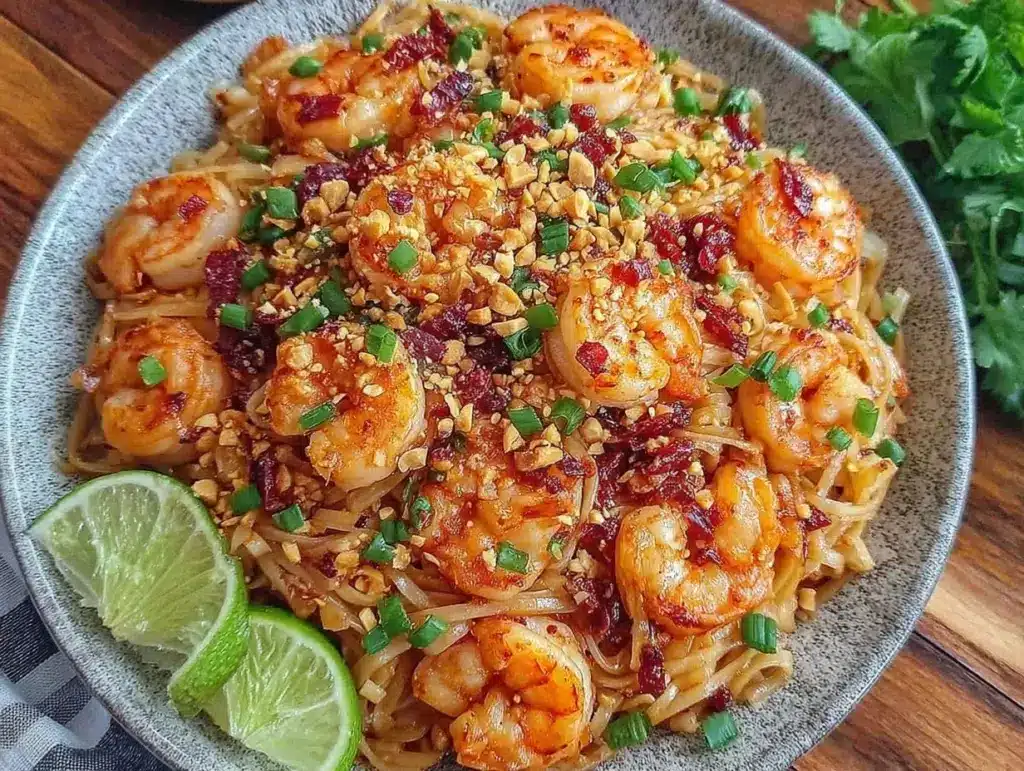
“You know that moment when the sizzle of something cooking pulls you right into the kitchen? That’s exactly what happened one steamy Thursday evening when my neighbor, Mr. Somchai, was tossing noodles in his tiny apartment kitchen. I wasn’t expecting much—just a quick hello while he grilled some shrimp. But then, the air filled with the tangy, sweet, and savory aroma of what he called his ‘secret’ Pad Thai. Honestly, I thought, how good can homemade Pad Thai be? Turns out, way better than I anticipated.
It’s funny because I’d always thought authentic Thai flavors were tricky to nail at home. But watching Mr. Somchai expertly handle those slippery rice noodles and balancing the sauce with nothing more than a few simple ingredients made me realize there’s a rhythm to it—one that anyone can catch with a little practice. Oh, and yes, there was a moment I knocked over a sauce bottle, sending a mini flood across his counter. Classic me.
That night, tucked away in his cozy kitchen filled with laughter and the clatter of pans, I learned that flavorful shrimp Pad Thai isn’t just a dish. It’s a story, a connection, and an experience packed with textures and tastes that transport you straight to a bustling street food stall in Bangkok. Maybe you’ve been there, craving that perfect balance of sweet, sour, salty, and umami, but unsure where to start. This recipe is my way of sharing that magic—simple, satisfying, and absolutely authentic.
Why You’ll Love This Recipe
After countless trials (and a couple of charred noodles), this shrimp Pad Thai recipe has become my go-to for an easy, authentic Thai dinner that impresses every time. Here’s why it might just become your favorite too:
- Quick & Easy: Ready in under 30 minutes—ideal for busy weeknights or those last-minute dinner plans.
- Simple Ingredients: You probably already have most of these in your pantry or fridge—no exotic trips needed.
- Perfect for Entertaining: Whether it’s a casual family dinner or a cozy get-together, it’s a crowd-pleaser that sparks conversation.
- Crowd-Pleaser: The combination of tender shrimp, chewy noodles, and tangy sauce gets rave reviews from both kids and adults.
- Unbelievably Delicious: The harmony of flavors and textures feels like comfort food with a kick—each bite is a little celebration.
What sets this recipe apart is the way it balances traditional Thai elements with a few personal tweaks—like the fresh lime zest in the sauce that gives it a subtle brightness or using tamarind paste from my favorite brand to nail that authentic tang. Plus, blending the sauce ingredients beforehand means you get consistent flavor every time, no guesswork involved.
Honestly, this isn’t just another Pad Thai recipe; it’s the one that makes you pause mid-bite, close your eyes, and savor the moment. The kind of meal that turns an ordinary night into a small adventure in your own kitchen.
What Ingredients You Will Need
This recipe uses straightforward ingredients that pack a flavorful punch and make the dish come alive. Most are pantry staples, with a couple of authentic touches to keep it genuinely Thai.
- Rice Noodles: 8 oz (225 g) flat rice noodles, soaked in warm water until tender (look for medium-width noodles for the best texture).
- Shrimp: 12 oz (340 g) raw shrimp, peeled and deveined (medium-sized works best; wild-caught if possible for better flavor).
- Vegetables: 2 cloves garlic, minced; 2 green onions, sliced; 1 cup bean sprouts (fresh and crisp); 1/2 cup shredded carrots.
- Eggs: 2 large eggs, lightly beaten (room temperature preferred for even cooking).
- For the Sauce:
- 3 tbsp tamarind paste (I recommend Mae Ploy brand for authentic flavor)
- 3 tbsp fish sauce (substitute with soy sauce for vegetarian option)
- 2 tbsp palm sugar (or brown sugar if unavailable)
- 1 tbsp lime juice (freshly squeezed)
- 1 tsp chili powder (adjust to taste)
- Cooking Fats: 2 tbsp vegetable oil or peanut oil (neutral oils work best for stir-frying).
- Garnishes: Crushed roasted peanuts (1/4 cup), extra lime wedges, fresh cilantro leaves.
If you’re eyeing substitutions, almond butter can add a subtle nuttiness if peanuts aren’t your thing, and in summer, swapping bean sprouts for thinly sliced snap peas adds a fresh crunch. Just remember, the tamarind paste is key to that signature tang, so try not to skip it.
Equipment Needed
To get this shrimp Pad Thai just right, you don’t need a fancy kitchen setup—just a few basic tools:
- Wok or Large Skillet: A good-quality wok helps with quick, even cooking. If you don’t have one, a large non-stick skillet works fine.
- Mixing Bowls: For soaking noodles and mixing the sauce.
- Measuring Spoons and Cups: Accuracy makes a difference with the sauce ingredients.
- Spatula or Wooden Spoon: For tossing the noodles and stirring the ingredients without breaking the noodles.
- Knife and Cutting Board: For prepping garlic, green onions, and shrimp.
I once tried this with a small frying pan and it was a bit cramped—the noodles stuck together more than I liked. So, if you’re serious about stir-fry dishes, investing in a decent wok (even a budget-friendly carbon steel one) pays off. Also, keep your spatula handy to scrape those tasty bits off the bottom—those little caramelized pieces add so much flavor!
Preparation Method
- Prepare the Rice Noodles: Place 8 oz (225 g) flat rice noodles in a large bowl and soak them in warm water for about 20–25 minutes until they’re soft but still slightly firm. Drain and set aside. Avoid over-soaking—they’ll cook further in the wok.
- Mix the Sauce: In a small bowl, whisk together 3 tbsp tamarind paste, 3 tbsp fish sauce, 2 tbsp palm sugar, 1 tbsp fresh lime juice, and 1 tsp chili powder. Taste and adjust—if it’s too tangy, add a pinch more sugar; too salty, a splash of lime juice. Set aside.
- Prep the Shrimp and Vegetables: Peel and devein 12 oz (340 g) shrimp if not done already. Mince 2 cloves garlic, slice 2 green onions, shred 1/2 cup carrots, and rinse 1 cup bean sprouts thoroughly. Have your garnishes ready: crushed peanuts, lime wedges, and cilantro.
- Cook the Shrimp: Heat 1 tbsp vegetable oil in a wok over medium-high heat until shimmering. Add the shrimp and cook for 1.5–2 minutes per side until pink and opaque. Remove and set aside to avoid overcooking.
- Sauté Aromatics and Vegetables: In the same wok, add the remaining 1 tbsp oil. Toss in the minced garlic and sliced green onions. Stir-fry for about 30 seconds until fragrant but not burnt—watch closely! Add shredded carrots and bean sprouts, cooking for another minute.
- Add the Eggs: Push the veggies to one side of the wok. Pour in the beaten eggs and let them sit for 10 seconds, then scramble gently until just set.
- Combine Noodles and Sauce: Add the drained noodles to the wok. Pour the prepared sauce over the top, tossing everything together quickly but gently to coat the noodles evenly. This takes about 2-3 minutes. The noodles should be glossy and slightly sticky—if they seem dry, splash in a tablespoon of water.
- Return the Shrimp: Add the cooked shrimp back to the wok. Toss to combine and warm through for another minute. Check seasoning—add a little extra fish sauce or lime if desired.
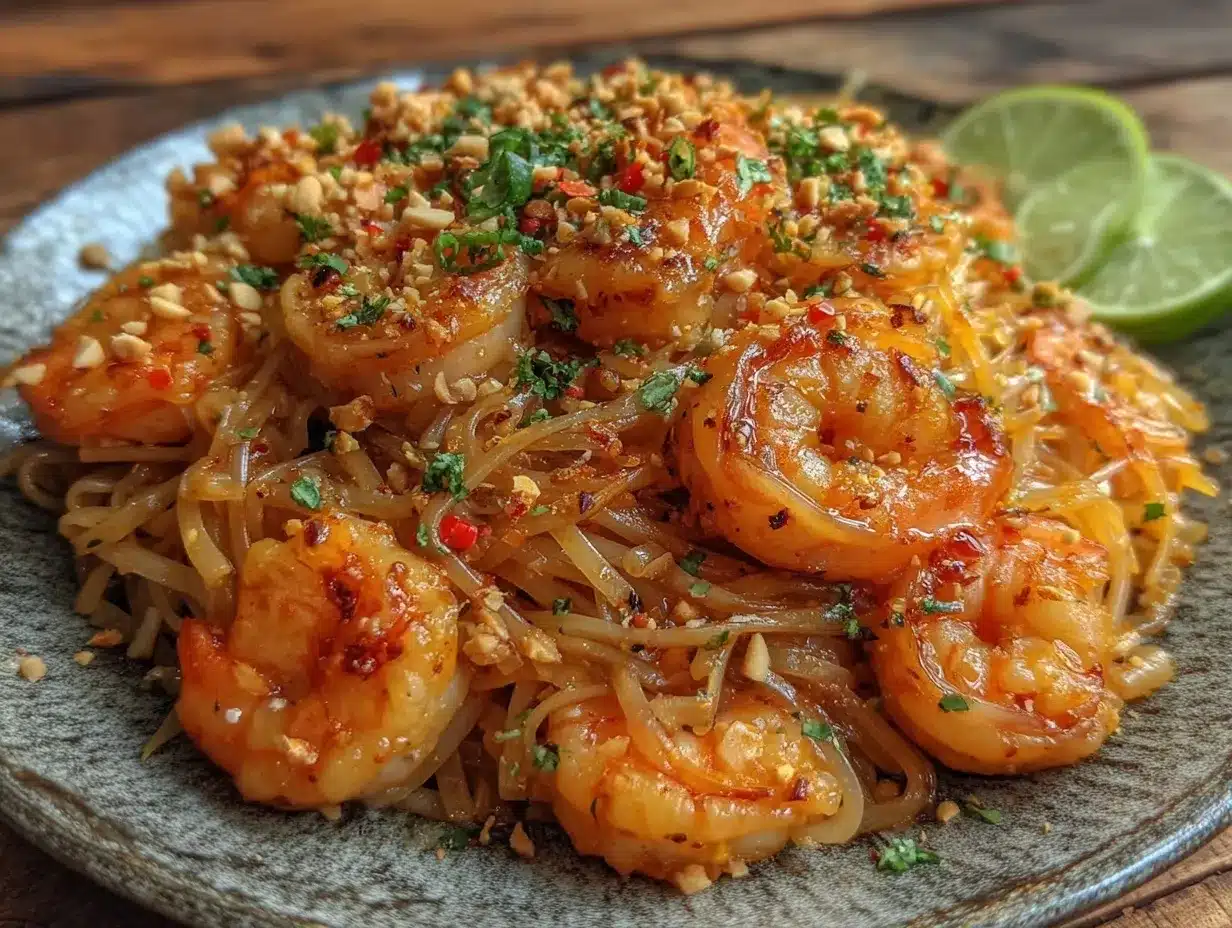
- Serve: Plate the Pad Thai immediately. Sprinkle with crushed peanuts, fresh cilantro leaves, and lime wedges on the side for squeezing.
Pro tip: Keep the heat on high but controlled; too low and the noodles get soggy, too high and things burn quickly. And don’t be shy to stir constantly but gently—this keeps everything moving and stops sticking. That’s the rhythm, like Mr. Somchai showed me!
Cooking Tips & Techniques
Let me share some hard-earned tips that make this shrimp Pad Thai sing:
- Don’t Over-Soak the Noodles: They should be pliable but not mushy—over-soaking means soggy noodles that break apart during cooking.
- High Heat is Your Friend: Stir-frying at high heat seals in flavors quickly and keeps the noodles with the perfect chew.
- Prep Everything Before Starting: Once the wok is hot, things move fast. Have all ingredients chopped, sauce mixed, and garnishes ready to go.
- Control Your Sauce: Taste as you go. Tamarind paste can vary in intensity, so adjust sugar and lime juice accordingly.
- Avoid Overcrowding: If your wok is small, cook shrimp in batches to ensure even cooking and prevent steaming.
- Use a Non-Stick or Well-Seasoned Wok: This prevents sticking, especially important for delicate rice noodles.
I once ruined a batch by turning my back for a second—the garlic burned, and the whole dish carried a bitter note. Lesson learned: stay attentive. Also, tossing the noodles gently but confidently keeps their structure intact and stops clumping.
Variations & Adaptations
Want to switch things up? Here are some tasty ways to customize your shrimp Pad Thai:
- Vegetarian Version: Swap shrimp for firm tofu, cut into cubes and pan-fried until crispy. Replace fish sauce with soy sauce or tamari for a vegan-friendly option.
- Spice It Up: Add fresh Thai bird’s eye chilies or a splash of Sriracha to the sauce for an extra kick. I like to keep some chili flakes on the side for guests to adjust.
- Seasonal Twist: In spring, toss in asparagus tips or snap peas for crunch. In autumn, try adding thin strips of roasted pumpkin for a sweet balance.
- Low-Carb Swap: Use shirataki noodles or spiralized zucchini noodles if you’re cutting carbs but still craving those Pad Thai flavors.
One time, I tried adding crushed cashews instead of peanuts—surprisingly delicious and gave it a slightly creamier texture. The key is keeping the balance of tangy, sweet, salty, and spicy intact.
Serving & Storage Suggestions
This shrimp Pad Thai is best served piping hot, straight from the wok, garnished with crunchy peanuts and fresh herbs to contrast the tender noodles. A wedge of lime on the side is a must for that final zing.
Pair it with a light cucumber salad or a cold Thai iced tea to round out the meal. For drinks, a crisp lager or even a jasmine green tea complements the bold flavors nicely.
Leftovers? Store them in an airtight container in the fridge for up to 2 days. When reheating, add a splash of water and warm gently in a skillet to bring back the noodles’ tenderness without drying out. Avoid the microwave if you can—it tends to make the noodles gummy.
Interestingly, letting Pad Thai sit for a few hours allows the flavors to meld, deepening the tangy notes—sometimes that’s even better the next day.
Nutritional Information & Benefits
Per serving (serves 3-4): approximately 350-400 calories, 30g protein, 40g carbohydrates, 12g fat.
This recipe is rich in protein thanks to the shrimp, which is low in calories but high in essential nutrients like selenium and vitamin B12. The tamarind provides antioxidants, while fresh veggies add fiber and vitamins.
For those watching gluten, this recipe is naturally gluten-free when you choose tamari or gluten-free fish sauce alternatives. It’s also relatively low in carbs compared to other noodle dishes, especially if you swap in shirataki noodles.
Allergy note: contains shellfish and peanuts—substitutions can be made for either if needed.
Conclusion
So, why try this flavorful shrimp Pad Thai recipe? Because it’s a genuine taste of Thailand that you can whip up anytime with minimal fuss and maximum flavor. It’s flexible enough to suit different diets and tastes, yet authentic enough to remind you of street food stalls buzzing with energy.
Honestly, it’s the kind of recipe that sticks with you—not just for its deliciousness but for the moments shared around the table. I love making it when I want something comforting but exciting, simple but special.
Give it a go, tweak it your way, and drop a comment to share your own twists or questions. Cooking is an adventure, and this Pad Thai is a delicious chapter waiting for you to write!
FAQs
Can I use frozen shrimp for this recipe?
Yes! Just thaw the shrimp completely and pat dry before cooking to avoid excess water in the wok.
What if I can’t find tamarind paste?
You can substitute with a mix of lime juice and a bit of brown sugar, but the flavor won’t be quite as authentic. Tamarind paste adds that unique tang that’s hard to replicate.
How do I prevent the noodles from sticking together?
Soak them just until pliable, toss them with a small amount of oil after draining, and stir-fry quickly on high heat to keep them separate.
Can I make Pad Thai ahead of time?
It’s best fresh, but you can make the components in advance and quickly toss them together before serving. Leftovers should be reheated gently to keep the noodles from getting mushy.
Is Pad Thai traditionally served spicy?
It varies—some versions are mild, others pack heat. This recipe includes chili powder for a gentle kick, but you can always add more or less to suit your preference.
Pin This Recipe!
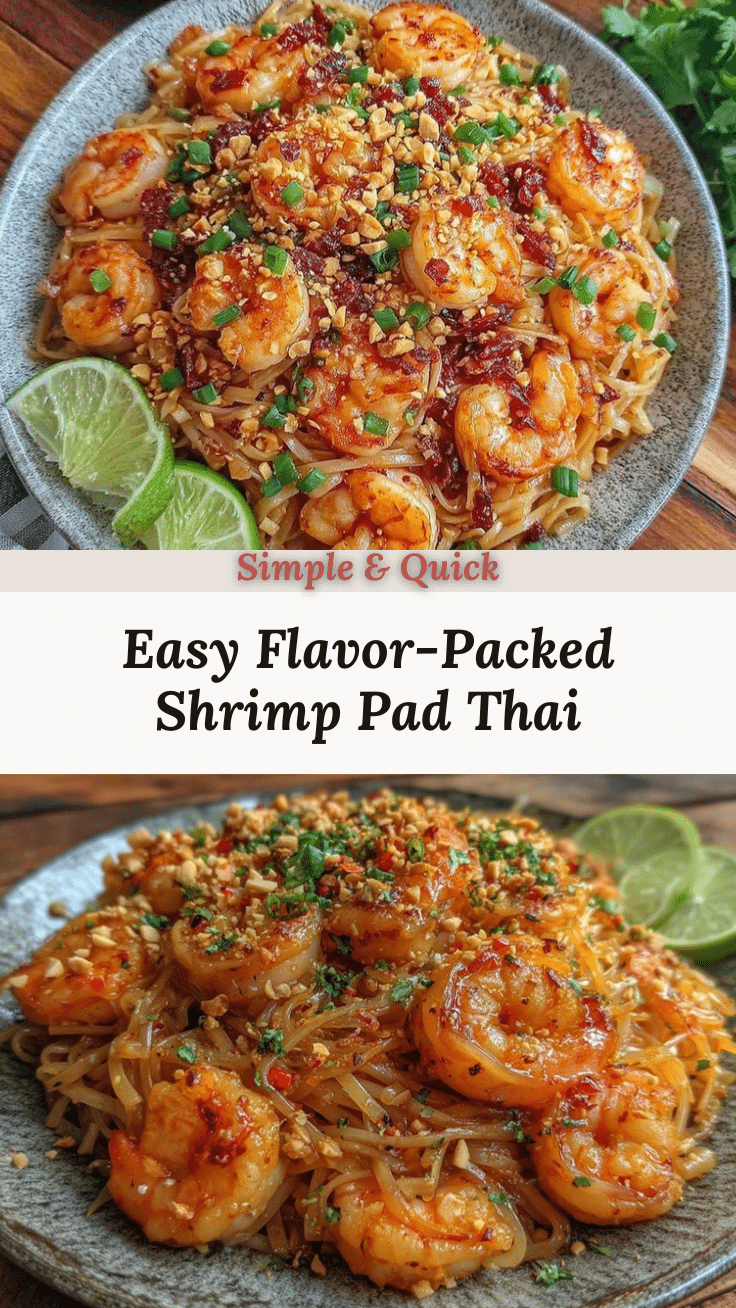
Flavorful Shrimp Pad Thai

An easy, authentic Thai dinner recipe featuring tender shrimp, chewy rice noodles, and a tangy, sweet, and savory sauce that brings the flavors of Bangkok street food to your kitchen.
- Prep Time: 25 minutes
- Cook Time: 10 minutes
- Total Time: 35 minutes
- Yield: 3-4 servings 1x
- Category: Main Course
- Cuisine: Thai
Ingredients
- 8 oz (225 g) flat rice noodles, soaked in warm water until tender
- 12 oz (340 g) raw shrimp, peeled and deveined
- 2 cloves garlic, minced
- 2 green onions, sliced
- 1 cup bean sprouts, fresh and crisp
- 1/2 cup shredded carrots
- 2 large eggs, lightly beaten
- 3 tbsp tamarind paste
- 3 tbsp fish sauce (or soy sauce for vegetarian option)
- 2 tbsp palm sugar (or brown sugar)
- 1 tbsp fresh lime juice
- 1 tsp chili powder
- 2 tbsp vegetable oil or peanut oil
- 1/4 cup crushed roasted peanuts
- Extra lime wedges
- Fresh cilantro leaves
Instructions
- Place 8 oz flat rice noodles in a large bowl and soak in warm water for 20–25 minutes until soft but still slightly firm. Drain and set aside.
- In a small bowl, whisk together 3 tbsp tamarind paste, 3 tbsp fish sauce, 2 tbsp palm sugar, 1 tbsp fresh lime juice, and 1 tsp chili powder. Adjust seasoning to taste and set aside.
- Peel and devein 12 oz shrimp. Mince 2 cloves garlic, slice 2 green onions, shred 1/2 cup carrots, and rinse 1 cup bean sprouts. Prepare garnishes: crushed peanuts, lime wedges, and cilantro.
- Heat 1 tbsp vegetable oil in a wok over medium-high heat until shimmering. Cook shrimp for 1.5–2 minutes per side until pink and opaque. Remove and set aside.
- Add remaining 1 tbsp oil to the wok. Stir-fry garlic and green onions for about 30 seconds until fragrant. Add shredded carrots and bean sprouts; cook for another minute.
- Push vegetables to one side of the wok. Pour in beaten eggs and let sit for 10 seconds, then scramble gently until just set.
- Add drained noodles to the wok. Pour sauce over noodles and toss quickly but gently to coat evenly, about 2-3 minutes. Add a splash of water if noodles seem dry.
- Return cooked shrimp to the wok. Toss to combine and warm through for another minute. Adjust seasoning with extra fish sauce or lime juice if desired.
- Serve immediately, garnished with crushed peanuts, fresh cilantro leaves, and lime wedges.
Notes
[‘Do not over-soak the noodles; they should be pliable but not mushy to avoid breaking during cooking.’, ‘Use high heat for stir-frying to seal in flavors and maintain noodle texture.’, ‘Prep all ingredients before cooking as the stir-fry process moves quickly.’, ‘Adjust sauce seasoning to taste, especially tamarind paste intensity.’, ‘Cook shrimp in batches if wok is small to avoid overcrowding.’, ‘Use a non-stick or well-seasoned wok to prevent sticking.’, ‘Add a splash of water if noodles seem dry during cooking.’, ‘Leftovers store well in the fridge for up to 2 days; reheat gently with a splash of water in a skillet.’]
Nutrition
- Serving Size: Approximately 1 serv
- Calories: 375
- Sugar: 8
- Sodium: 900
- Fat: 12
- Saturated Fat: 2
- Carbohydrates: 40
- Fiber: 3
- Protein: 30
Keywords: Shrimp Pad Thai, Thai dinner, easy Pad Thai recipe, authentic Thai food, shrimp noodles, stir-fry noodles, tamarind sauce