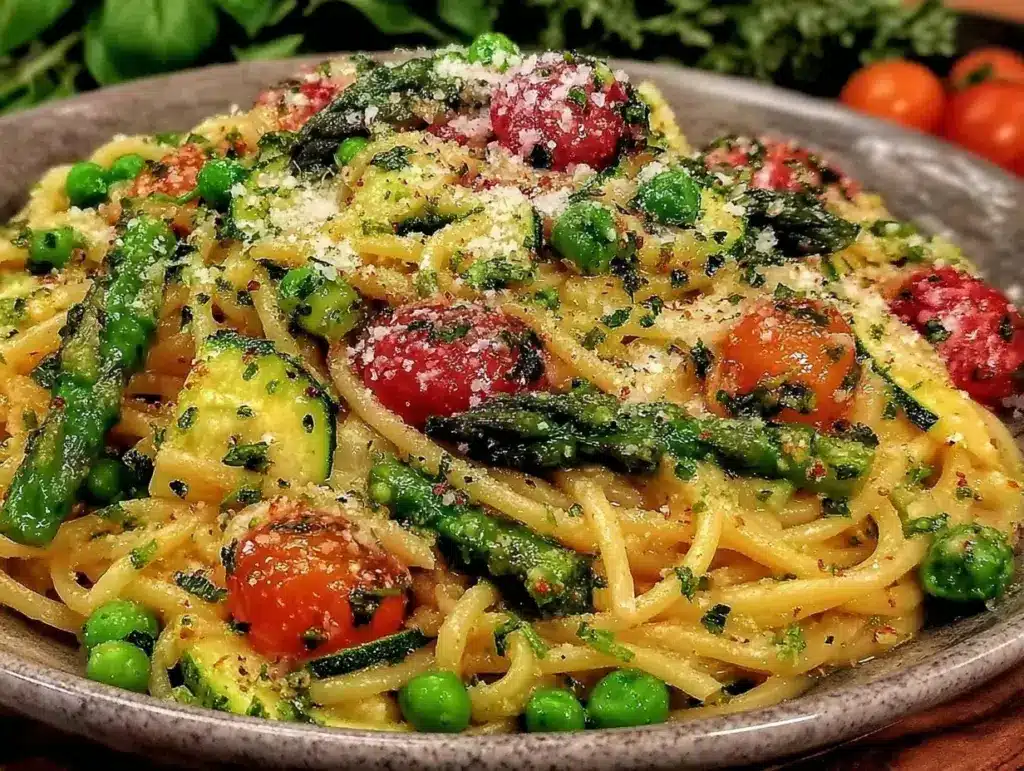
“You know that feeling when the sun starts dipping low, and your kitchen smells like a garden just after rain? That was me last Thursday, standing in my cramped city apartment kitchen, staring at a bunch of asparagus I’d impulsively grabbed from the farmer’s market earlier that day. I wasn’t planning to make anything fancy—just a quick dinner before the evening news. But honestly, what came out was this fresh spring vegetable primavera with tender asparagus and Parmesan that felt like a tiny celebration of the season.”
It all started when I realized I’d forgotten to pick up pasta for my usual quick meal. The fridge was almost bare except for a handful of cherry tomatoes, a bell pepper, and that asparagus bundle. I tossed everything together, a bit of olive oil, garlic, and a sprinkle of Parmesan, hoping for the best. The sizzle when the asparagus hit the pan was like music, and soon, the whole kitchen was filled with the warmth of roasted veggies and garlic.
Maybe you’ve been there—scrambling for dinner ingredients and ending up with something unexpectedly delightful. This primavera recipe isn’t just about tossing some veggies and pasta together; it’s about bringing out the best textures—the tender crunch of asparagus, the sweet burst of tomatoes, and the nutty kiss of Parmesan. There were moments when I nearly burnt the garlic (classic me), but those little hiccups just made the victory taste sweeter.
That night, as I sat down with a bowl of this primavera, I realized why I keep coming back to it—it’s simple, bright, and comforting all at once. Whether you’re a veggie lover or just someone who appreciates a quick, healthy meal, this dish has a way of making the ordinary feel special.
Why You’ll Love This Fresh Spring Vegetable Primavera Recipe
Honestly, this recipe has become a staple in my kitchen for several reasons. It’s one of those dishes that’s quick and forgiving, yet impressive enough to serve when guests pop in unexpectedly. I’ve tested it countless times, tweaking the seasoning and timing to hit that sweet spot every single time.
- Quick & Easy: Ready in under 30 minutes, perfect for those busy weeknights when you want healthy without the hassle.
- Simple Ingredients: You probably already have most of these in your pantry or fridge—no need for fancy shopping trips.
- Perfect for Spring: Showcases seasonal veggies like tender asparagus and sweet peas, capturing the fresh flavors of the season.
- Crowd-Pleaser: Kids and adults alike love the balance of textures and the comforting Parmesan finish.
- Unbelievably Delicious: The combination of crisp-tender asparagus, lightly sautéed garlic, and melty Parmesan creates a harmony that’s hard to beat.
This isn’t just another primavera. The key difference? I lightly roast the asparagus first to bring out its natural sweetness before tossing it with al dente pasta and fresh veggies. Plus, a final dusting of freshly grated Parmesan (I like Parmigiano-Reggiano from my local deli) adds that creamy, savory pop that turns this dish from simple to special.
Honestly, every time I make this, it feels like a little victory—a dish that’s healthy, vibrant, and comforting without any fuss. It’s the kind of meal that makes you pause, close your eyes after the first bite, and think, “Yeah, this is good.”
What Ingredients You Will Need
This recipe uses straightforward, wholesome ingredients that come together to create bold flavor and delightful texture without any complicated steps. Most are pantry staples or fresh market finds, and substitutions are easy if needed.
- Asparagus: 1 bunch (about 1 lb / 450g), trimmed and cut into 2-inch pieces (look for firm, bright green stalks)
- Pasta: 12 oz (340g) of your favorite short pasta, like penne or farfalle (I recommend Barilla for consistent texture)
- Cherry Tomatoes: 1 cup (150g), halved (fresh in season or frozen if out of season)
- Yellow Bell Pepper: 1 medium, thinly sliced (adds sweetness and color)
- Peas: 1/2 cup (75g), fresh or frozen (sweet and bright)
- Garlic: 3 cloves, minced (the aromatic backbone)
- Extra Virgin Olive Oil: 3 tablespoons (for sautéing and flavor)
- Fresh Basil: A handful, chopped (adds herbal freshness)
- Parmesan Cheese: 1/2 cup (50g), freshly grated (Parmigiano-Reggiano preferred)
- Lemon Zest: From 1 lemon (brightens the dish)
- Salt & Pepper: To taste
If needed, you can swap the pasta for gluten-free options like brown rice pasta, or use dairy-free Parmesan alternatives to keep this vegan-friendly. For a protein boost, consider tossing in some toasted pine nuts or cooked chickpeas.
Equipment Needed
For this fresh spring vegetable primavera, you’ll want to have a few basics on hand. Nothing too fancy, but some tools really make the process smoother.
- Large Pot: For boiling the pasta (a 6-quart pot works well)
- Large Skillet or Sauté Pan: To cook the asparagus and veggies (non-stick or stainless steel both do the job)
- Colander: For draining the pasta
- Microplane or Fine Grater: For zesting the lemon and grating Parmesan
- Sharp Knife and Cutting Board: Essential for prepping the veggies
If you don’t have a microplane, a regular fine grater works fine for lemon zest. I once tried using a vegetable peeler to zest lemon—let’s just say it was a learning moment! Also, a wooden spoon or silicone spatula helps to gently toss the pasta with the veggies without breaking the delicate asparagus.
Preparation Method
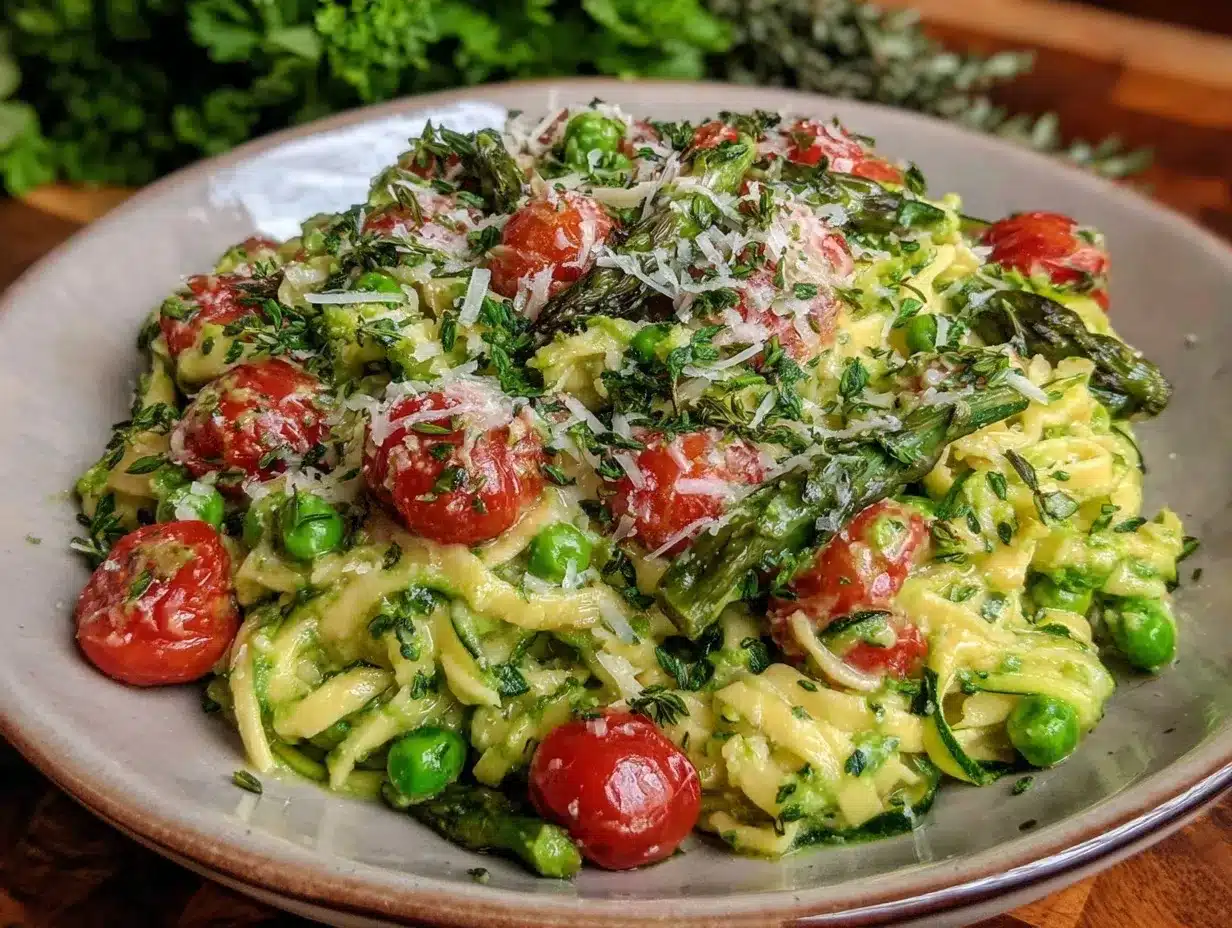
- Prep the asparagus and veggies: Trim and cut the asparagus into 2-inch pieces. Halve the cherry tomatoes, slice the bell pepper thinly, and mince the garlic. Set the peas aside if frozen; no need to thaw.
- Boil the pasta: Bring a large pot of salted water to a boil. Add 12 oz (340g) pasta and cook until al dente, about 9-11 minutes depending on pasta type. Reserve 1 cup of pasta water before draining.
- Cook the asparagus: While pasta cooks, heat 2 tablespoons olive oil in a large skillet over medium-high heat. Add asparagus and sauté for 4-5 minutes, stirring occasionally, until they’re bright green and just tender with slight char marks. Remove asparagus and set aside.
- Sauté remaining veggies: In the same skillet, add remaining 1 tablespoon olive oil and garlic. Cook for 30 seconds until fragrant—don’t let it burn! Add bell peppers and sauté for 3 minutes until softened. Toss in cherry tomatoes and peas, cooking another 2 minutes until tomatoes start to blister.
- Combine pasta and veggies: Return asparagus to the skillet. Add drained pasta to the pan and toss gently. If it looks dry, add reserved pasta water a little at a time until the desired consistency (creamy but not soupy) is reached.
- Finish with flavor: Remove from heat. Stir in lemon zest, chopped basil, and half the Parmesan. Season with salt and pepper to taste. Toss gently to combine all flavors.
- Serve immediately: Plate the primavera, then sprinkle remaining Parmesan on top. For a little extra, add a twist of black pepper or a drizzle of good olive oil.
Pro tips: Keep an eye on garlic—it can go from golden to bitter quickly. Also, the reserved pasta water has natural starch that helps bind the sauce and veggies to the pasta, so don’t skip it! I learned the hard way that skipping this step can make the dish a bit dry and sad.
Cooking Tips & Techniques
Getting this primavera just right means paying attention to a few small details. For starters, timing is everything. Cooking the asparagus separately allows it to keep its tender-crisp texture, which contrasts beautifully with softer veggies.
Don’t rush the garlic—low and slow is the way to coax out that sweet aroma without bitterness. I’ve burned garlic more times than I’d like to admit, so I recommend adding it last and watching carefully.
When tossing pasta with veggies, use reserved pasta water gradually. It’s a simple trick I learned from a chef buddy—this starchy water acts like a glue, helping everything cling together without needing heavy cream or butter.
Multitasking helps too. While pasta cooks, you can prep and sauté veggies, cutting down total time. Just keep stirring so nothing sticks or burns.
Lastly, fresh herbs and lemon zest added at the end brighten the dish and make it taste fresh and vibrant. I always add basil last to keep its flavor punchy.
Variations & Adaptations
- Protein Boost: Toss in grilled chicken strips, shrimp, or pan-fried tofu for a heartier meal.
- Seasonal Swaps: In fall, swap asparagus for roasted butternut squash and kale; in winter, try Brussels sprouts and roasted root veggies.
- Different Cheeses: Use crumbled feta or shaved Pecorino Romano instead of Parmesan for a tangier twist.
- Gluten-Free: Substitute pasta with gluten-free varieties like chickpea or brown rice pasta without sacrificing texture.
- Vegan Option: Skip the cheese or use a dairy-free Parmesan alternative; toss in nutritional yeast for that cheesy flavor.
One personal favorite variation is adding a sprinkle of toasted pine nuts for crunch and nuttiness. It adds an extra layer of texture that makes this primavera feel even more special.
Serving & Storage Suggestions
This primavera is best served warm, straight from the pan, with a generous sprinkle of fresh Parmesan. It pairs beautifully with a simple green salad and a crisp white wine like Pinot Grigio or Sauvignon Blanc.
Leftovers keep well in an airtight container in the fridge for up to 3 days. Reheat gently in a skillet over low heat with a splash of water or broth to bring back moisture. Avoid microwaving too aggressively or the asparagus may lose its snap.
Flavors meld nicely overnight, so if you make it ahead, you might find it tastes even better the next day—though I won’t judge if you can’t resist eating it fresh!
Nutritional Information & Benefits
This fresh spring vegetable primavera is not only delicious but packed with nutrients. Asparagus is a great source of vitamins A, C, and K, plus fiber and antioxidants. The cherry tomatoes add lycopene, which supports heart health, while peas contribute plant-based protein and fiber.
The olive oil provides healthy monounsaturated fats, and Parmesan adds calcium and protein, making this dish balanced and nourishing. It’s naturally low in calories and gluten-free if you choose the right pasta. Just watch the cheese quantity if you’re watching sodium intake.
This recipe fits well into a wholesome, plant-forward diet and supports overall wellness without sacrificing flavor or satisfaction.
Conclusion
Why should you try this fresh spring vegetable primavera? Because it’s a simple, joyful way to celebrate seasonal produce with a dish that’s both comforting and light. I love how it brings together fresh, crisp asparagus and sweet veggies with the savory depth of Parmesan—all in under half an hour.
Feel free to make it your own—swap veggies, add proteins, or tweak the herbs. Cooking is a conversation, and this recipe is an easy one to join. I hope it finds a cozy spot in your weeknight rotation like it did in mine.
If you give it a try, drop a comment or share your twists. I’m always curious how other kitchens make this primavera their own. Happy cooking!
FAQs about Fresh Spring Vegetable Primavera
Can I use frozen asparagus for this recipe?
Yes! Frozen asparagus works well if fresh isn’t available. Just thaw and pat dry before sautéing to avoid excess moisture.
What pasta types work best for primavera?
Short pasta like penne, farfalle, or rigatoni hold the sauce and veggies nicely, but feel free to use spaghetti or linguine if that’s what you have.
How do I store leftovers to keep veggies crisp?
Store in an airtight container in the fridge and reheat gently on the stovetop with a splash of water. Avoid microwaving at high heat to keep asparagus tender-crisp.
Can I make this recipe vegan?
Absolutely! Omit the Parmesan or use a dairy-free cheese alternative or nutritional yeast for that cheesy flavor.
Is it possible to prepare this recipe in advance?
You can prep the veggies and cook the pasta ahead, then combine and finish cooking just before serving to keep everything fresh and vibrant.
Pin This Recipe!
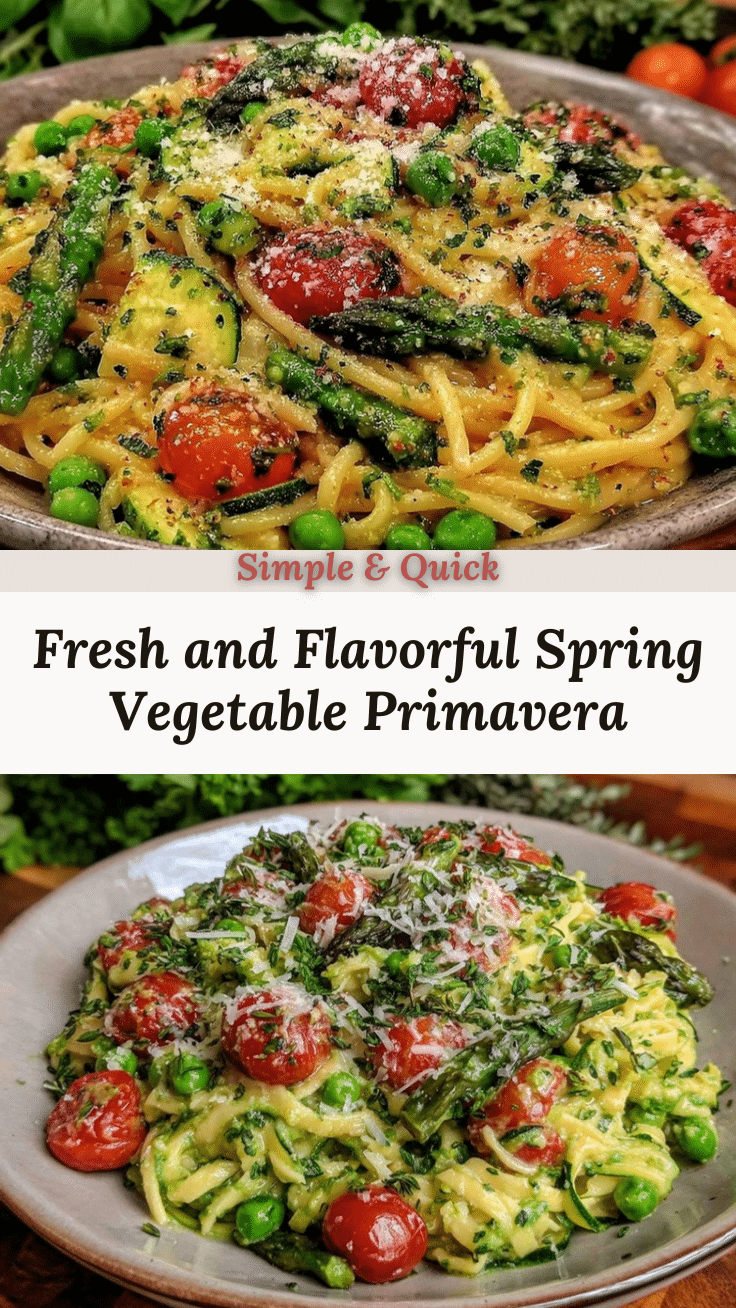
Fresh Spring Vegetable Primavera Recipe with Tender Asparagus and Parmesan
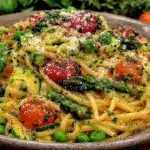
A quick, healthy, and vibrant primavera featuring tender asparagus, cherry tomatoes, bell pepper, peas, and Parmesan cheese, perfect for easy spring meals.
- Prep Time: 10 minutes
- Cook Time: 15 minutes
- Total Time: 25 minutes
- Yield: 4 servings 1x
- Category: Main Course
- Cuisine: Italian
Ingredients
- 1 bunch asparagus (about 1 lb / 450g), trimmed and cut into 2-inch pieces
- 12 oz (340g) short pasta (penne or farfalle recommended)
- 1 cup (150g) cherry tomatoes, halved
- 1 medium yellow bell pepper, thinly sliced
- 1/2 cup (75g) peas, fresh or frozen
- 3 cloves garlic, minced
- 3 tablespoons extra virgin olive oil
- A handful fresh basil, chopped
- 1/2 cup (50g) Parmesan cheese, freshly grated
- Zest of 1 lemon
- Salt and pepper to taste
Instructions
- Trim and cut the asparagus into 2-inch pieces. Halve the cherry tomatoes, slice the bell pepper thinly, and mince the garlic. Set peas aside if frozen; no need to thaw.
- Bring a large pot of salted water to a boil. Add 12 oz pasta and cook until al dente, about 9-11 minutes depending on pasta type. Reserve 1 cup of pasta water before draining.
- While pasta cooks, heat 2 tablespoons olive oil in a large skillet over medium-high heat. Add asparagus and sauté for 4-5 minutes, stirring occasionally, until bright green and just tender with slight char marks. Remove asparagus and set aside.
- In the same skillet, add remaining 1 tablespoon olive oil and garlic. Cook for 30 seconds until fragrant, being careful not to burn the garlic. Add bell peppers and sauté for 3 minutes until softened. Toss in cherry tomatoes and peas, cooking another 2 minutes until tomatoes start to blister.
- Return asparagus to the skillet. Add drained pasta and toss gently. Add reserved pasta water a little at a time until desired creamy consistency is reached.
- Remove from heat. Stir in lemon zest, chopped basil, and half the Parmesan. Season with salt and pepper to taste. Toss gently to combine all flavors.
- Serve immediately, plating the primavera and sprinkling remaining Parmesan on top. Optionally add a twist of black pepper or a drizzle of good olive oil.
Notes
Watch garlic carefully to avoid burning. Use reserved pasta water to create a creamy sauce without cream. Fresh herbs and lemon zest added at the end brighten the dish. For vegan option, omit Parmesan or use dairy-free alternatives. Leftovers keep well for up to 3 days; reheat gently on stovetop with splash of water.
Nutrition
- Serving Size: 1 serving (about 1/4
- Calories: 350
- Sugar: 6
- Sodium: 320
- Fat: 14
- Saturated Fat: 4
- Carbohydrates: 42
- Fiber: 6
- Protein: 14
Keywords: spring vegetable primavera, asparagus recipe, healthy pasta, easy dinner, Parmesan pasta, vegetarian primavera, quick pasta recipe