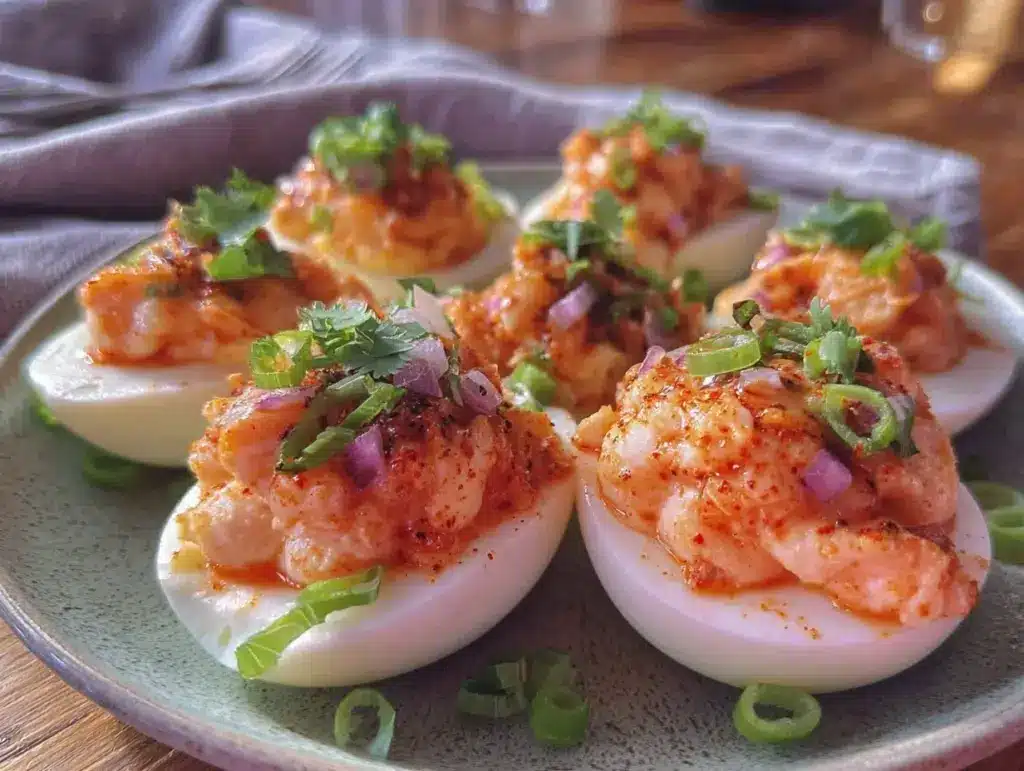
“You won’t believe how a simple fix-up in my kitchen turned into a party favorite,” my friend Mark said over the clatter of pans last Saturday. It was one of those lazy afternoons where I was half-watching a cooking show and half scrolling through my phone when I stumbled upon a quirky twist on deviled eggs that caught my eye. The recipe wasn’t just your run-of-the-mill creamy filling; it sported a bold punch of gochujang paired with a tangy kimchi relish. Now, I’m not the biggest fan of spicy stuff, but this combo intrigued me. Honestly, I was skeptical—eggs and kimchi? But I gave it a shot, and let me tell you, the sizzle and tang danced perfectly together.
That afternoon, I made a bit of a mess peeling eggs (you know how stubborn those shells can be!), but the result was worth every cracked shell and sticky finger. The heat from the gochujang added a smoky, sweet depth, while the kimchi topping brought a crunchy, tangy pop that balanced out the richness. Maybe you’ve been there—looking to impress at a potluck or just wanting a snack that’s a bit different from the usual. These Flavorful Gochujang Deviled Eggs with Tangy Kimchi Relish quickly became my go-to when those moments strike. The first time I served them at a casual get-together, they vanished within minutes, and I caught my neighbor sneaking back for seconds when she thought no one was looking!
It’s funny how sometimes the best recipes come from the most unexpected places or little kitchen experiments that don’t go quite as planned but somehow turn out better than expected. This one has stuck around in my repertoire because it’s easy, packs a punch, and honestly, it’s just plain fun to make and eat. So, if you want to try something a bit different that’ll have your guests talking, keep reading—this recipe might just be your new favorite party trick.
Why You’ll Love This Recipe
When it comes to deviled eggs, this version shakes things up without overcomplicating the process. I’ve tested and retested this recipe to get the balance just right, and here’s why it’s become such a hit in my kitchen:
- Quick & Easy: Ready in under 30 minutes, perfect for busy weeknights or last-minute entertaining.
- Simple Ingredients: Uses staples like eggs, mayonnaise, and gochujang—no need for specialty shops.
- Perfect for Parties: These bites pack flavor and personality, making them stand out on any appetizer table.
- Crowd-Pleaser: The combo of spicy, tangy, and creamy has won over both spice lovers and skeptics alike.
- Unbelievably Delicious: The sweet heat of gochujang paired with the crunchy kimchi topping creates a texture and flavor combo that’s addictive.
This isn’t just your average deviled egg recipe. The secret is in the gochujang—a fermented Korean chili paste that adds complexity without overwhelming heat—and the fresh kimchi relish that cuts through the richness. I’ve found that blending a bit of cream cheese with the yolks gives an ultra-smooth texture, so each bite melts in your mouth. Honestly, it’s comfort food with a little kick and a whole lot of personality. You’ll find yourself closing your eyes after the first taste, savoring that perfect balance.
What Ingredients You Will Need
This recipe calls for simple yet punchy ingredients that come together to create bold flavor and satisfying texture without fuss. Most of these are pantry staples or easy to find at your local grocery or Asian market.
- Eggs: 12 large eggs, hard-boiled and peeled (the base of our deviled eggs).
- Mayonnaise: ⅓ cup (about 80 ml), for creaminess; I prefer Hellmann’s for its smooth texture.
- Gochujang: 2 tablespoons (30 grams), Korean fermented chili paste (adds sweet, smoky heat).
- Cream cheese: 2 tablespoons, softened (for a velvety, smooth filling).
- Rice vinegar: 1 teaspoon, to brighten the filling.
- Kimchi: ½ cup, finely chopped (use a crunchy, well-fermented kimchi for best tangy flavor).
- Green onions: 2 tablespoons, thinly sliced (freshness and mild bite for garnish).
- Sesame seeds: 1 teaspoon, toasted (for nutty crunch on top).
- Salt & pepper: To taste (enhances overall flavor).
Substitution tips: You can use dairy-free mayo and cream cheese for a vegan-friendly option, though you’ll want to swap eggs for boiled tofu or avocado halves if avoiding eggs entirely. If you can’t find gochujang, a mix of chili paste and a touch of miso paste can mimic some of the flavors. Fresh kimchi is best, but store-bought jarred kimchi works well too—just drain some of the liquid to avoid sogginess.
Equipment Needed
- Medium pot: For boiling eggs evenly without cracking.
- Slotted spoon: To safely transfer eggs between pot and ice bath.
- Mixing bowl: For combining egg yolks and filling ingredients.
- Fork or whisk: To mash yolks smoothly.
- Piping bag or resealable plastic bag: For neat filling of egg whites (optional but helpful).
- Sharp knife: To halve eggs cleanly.
If you don’t have a piping bag, no worries—spooning the filling works just fine, though it’s a bit messier. I’ve used a zip-top bag with a corner snipped off more times than I’d like to admit when I forgot my piping bag in the cupboard. Also, an ice bath is a must to cool the eggs quickly; it helps make peeling easier and keeps the whites firm. Investing in a good egg slicer can speed things up if you make deviled eggs often, but it’s not essential.
Preparation Method
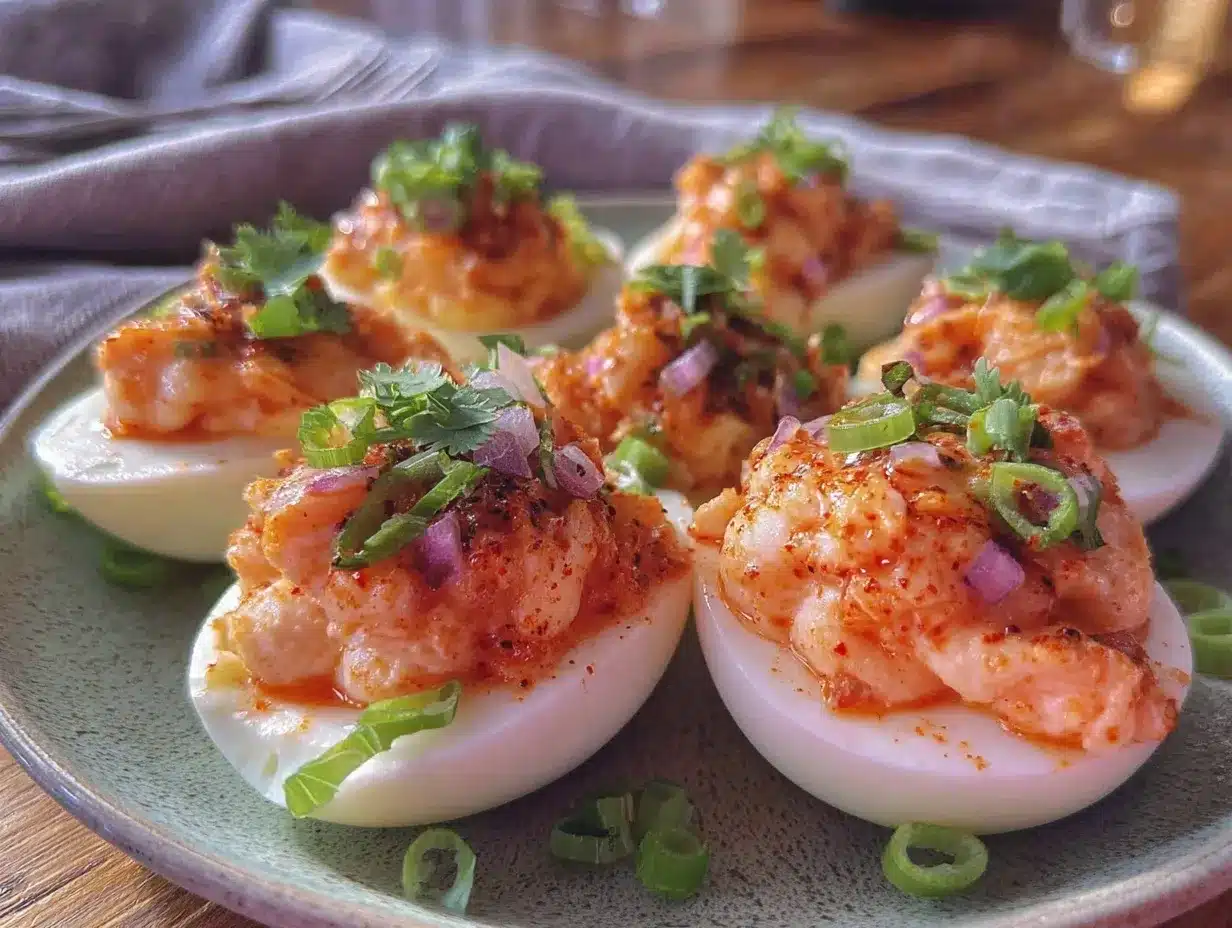
- Hard boil the eggs: Place 12 large eggs in a single layer in a medium pot. Cover with cold water about 1 inch (2.5 cm) above eggs. Bring to a rolling boil over medium-high heat (about 10 minutes). Remove from heat and immediately transfer eggs to an ice bath. Let cool for 10 minutes to stop cooking and ease peeling.
- Peel the eggs: Gently tap each egg on the counter to crack the shell, then roll lightly to loosen. Peel under running water if needed to help remove stubborn bits. Pat dry with paper towels.
- Halve the eggs: Using a sharp knife, slice eggs lengthwise. Carefully remove yolks and place in a mixing bowl. Arrange whites on a serving plate.
- Prepare the filling: Mash yolks with a fork until crumbly. Add ⅓ cup (80 ml) mayonnaise, 2 tablespoons (30 g) gochujang, 2 tablespoons softened cream cheese, and 1 teaspoon rice vinegar. Mix thoroughly until smooth and creamy. Season with salt and pepper to taste.
- Fill the egg whites: Transfer the yolk mixture to a piping bag or resealable plastic bag with a small corner cut off. Pipe evenly into the egg white halves. If you don’t have a piping bag, use a spoon to dollop and gently spread the filling.
- Add the topping: Finely chop ½ cup kimchi and spoon a small amount on top of each deviled egg. Sprinkle with thinly sliced green onions and toasted sesame seeds for crunch and color.
- Chill before serving: Refrigerate the deviled eggs for at least 15 minutes to let flavors meld. Serve cold or at room temperature.
Tip: If the filling feels too thick, add a splash more mayonnaise or a few drops of rice vinegar to loosen it. The kimchi topping adds moisture, so avoid overfilling to prevent sogginess. The eggs should look neat with a pop of bright orange-red from the gochujang filling and a fresh crunch from the kimchi.
Cooking Tips & Techniques
Getting perfect deviled eggs can be surprisingly tricky, but a few tricks make all the difference. Here’s what I’ve learned through trial, error, and many kitchen messes (you know the ones where you end up with yolk all over the counter):
- Egg boiling: Fresh eggs are harder to peel, so if possible, use eggs that have been in the fridge for about a week. The ice bath stops cooking immediately, which keeps whites tender and yolks creamy.
- Peeling: Peeling under running water helps loosen shells and rinses away small bits, giving a cleaner look.
- Filling texture: Mixing mayonnaise with cream cheese creates a smooth, luscious filling that holds shape better than mayo alone. Don’t overmix, or it can get runny.
- Balancing spice: Gochujang adds heat and sweetness, but start small and taste as you go—too much can overpower the eggs.
- Topping freshness: Add kimchi just before serving to keep its crunch and tang alive. If you add it too early, the eggs might get soggy.
- Presentation: Using a piping bag isn’t necessary, but it makes the eggs look professional and neat—worth the extra effort for parties.
Honestly, the first few times I made these, I undercooked the eggs and ended up with chalky yolks. Now I set a timer and keep a close eye. The texture of the yolk filling is the star here, so it’s worth the patience. Also, don’t skip the kimchi topping—it’s the unexpected twist that makes these deviled eggs stand out.
Variations & Adaptations
Flavorful Gochujang Deviled Eggs are highly adaptable, making it easy to suit different tastes or dietary needs. Here are some variations I’ve tried and loved:
- Vegan version: Use firm tofu as a base instead of eggs, mash with vegan mayo, gochujang, and a bit of turmeric for color. Top with vegan kimchi or pickled vegetables.
- Less spicy: If you’re sensitive to heat, swap gochujang with a mild red pepper paste or mix half mayo and half sour cream to mellow it out.
- Extra crunch: Add finely chopped toasted nuts like walnuts or pecans to the filling for texture contrast.
- Seasonal twist: In summer, swap kimchi for fresh cucumber relish with a splash of rice vinegar and sesame seeds.
One personal favorite: I swapped the kimchi topping for pickled radish and a sprinkle of furikake seasoning when I ran out of kimchi one time. It gave a bright, salty twist that was surprisingly delicious! Feel free to experiment with your favorite fermented or pickled veggies for toppings—for instance, tangy sauerkraut or even a quick jalapeño relish can work wonders.
Serving & Storage Suggestions
These deviled eggs shine best when served chilled or at room temperature. I like to arrange them on a platter garnished with extra green onions and a sprinkle of toasted sesame seeds to make them pop visually. Pair with light, crisp beverages like sparkling water with lemon or a cold lager to balance the richness.
For storage, keep them covered in an airtight container in the refrigerator. They’re best eaten within 2 days, as the kimchi topping can soften the eggs over time. If you want to prep in advance, fill the egg whites with the yolk mixture but add the kimchi topping right before serving to keep that crunch fresh.
Reheating isn’t recommended for deviled eggs, but if you prefer them less cold, simply take them out of the fridge 15 minutes prior to serving. The flavors tend to meld even more as they sit, making each bite more harmonious. Perfect for potlucks, picnics, or a simple snack anytime.
Nutritional Information & Benefits
Each serving of these deviled eggs (2 halves) provides approximately:
| Calories | Protein | Fat | Carbohydrates |
|---|---|---|---|
| 110 kcal | 6 g | 8 g | 2 g |
Eggs are a great source of high-quality protein and essential vitamins like B12 and D. Gochujang, being fermented, offers probiotics and antioxidants, and kimchi is well-known for its gut-friendly bacteria and vitamins A and C. The recipe is naturally gluten-free and low-carb, making it suitable for many diets. Just be mindful of the sodium content in kimchi and gochujang if you’re watching salt intake.
Personally, I appreciate this recipe because it combines indulgence with some gut-healthy ingredients, making it feel a bit less guilty than your average party snack. It’s a tasty way to sneak in a bit of fermentation and spice without overthinking it.
Conclusion
Flavorful Gochujang Deviled Eggs with Tangy Kimchi Relish prove that a classic snack can be transformed with a little creativity and bold flavors. They’re easy enough to whip up on a busy day yet impressive enough to serve guests. I love this recipe because it brings together creamy, spicy, and tangy notes in every bite—something that keeps me coming back for more and makes every get-together a bit more memorable.
Feel free to tweak the heat level or toppings to suit your palate, and don’t be shy about making it your own. If you give this a try, I’d love to hear how you adapted it or what unexpected twist you added! Drop a comment below or share your version with friends. Cooking is all about experimentation, and this recipe is a fun place to start.
Here’s to flavorful bites and happy gatherings—enjoy every spicy, tangy mouthful!
FAQs
Can I make these deviled eggs ahead of time?
You can prepare the eggs and filling up to a day in advance, but add the kimchi topping just before serving to keep the texture fresh and crunchy.
How spicy is gochujang for those new to Korean flavors?
Gochujang has a sweet, smoky heat that’s moderate. If you’re unsure, start with less and adjust to taste. It’s more about flavor depth than fiery spice.
What if I don’t like kimchi?
No problem! You can swap the kimchi relish for other tangy pickled veggies like cucumber, radish, or even a quick vinegar slaw.
Can I use store-bought mayonnaise or should I make my own?
Store-bought mayo works perfectly here; I personally prefer a good-quality brand like Hellmann’s for the best texture and flavor.
Is it okay to use brown eggs for this recipe?
Absolutely! Brown or white eggs taste the same—the choice depends on your preference or what’s available. Just make sure they’re fresh and peeled carefully.
Pin This Recipe!
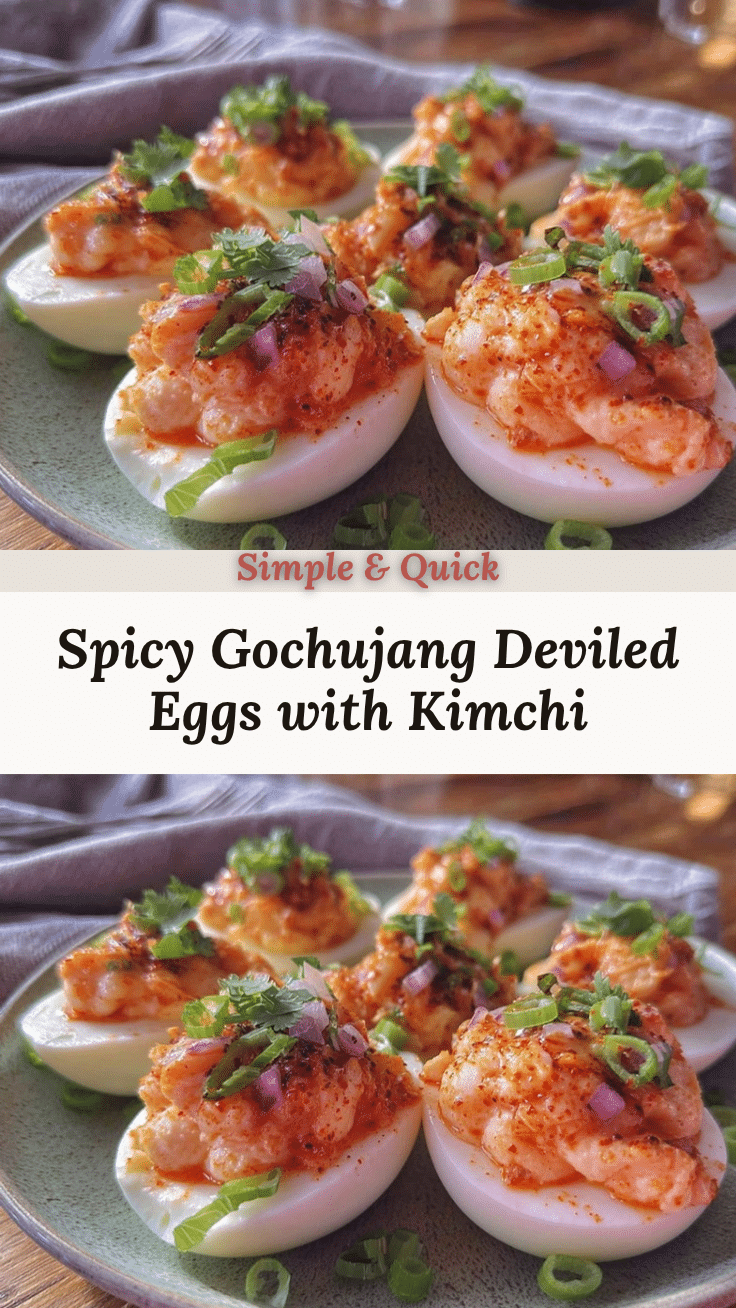
Flavorful Gochujang Deviled Eggs Recipe with Tangy Kimchi Relish
A bold twist on classic deviled eggs featuring a creamy gochujang filling topped with tangy kimchi relish, perfect for parties and quick to prepare.
- Prep Time: 15 minutes
- Cook Time: 15 minutes
- Total Time: 30 minutes
- Yield: 24 halves (12 deviled eggs) 1x
- Category: Appetizer
- Cuisine: Korean Fusion
Ingredients
- 12 large eggs, hard-boiled and peeled
- ⅓ cup (80 ml) mayonnaise
- 2 tablespoons (30 grams) gochujang (Korean fermented chili paste)
- 2 tablespoons softened cream cheese
- 1 teaspoon rice vinegar
- ½ cup finely chopped kimchi
- 2 tablespoons thinly sliced green onions
- 1 teaspoon toasted sesame seeds
- Salt and pepper to taste
Instructions
- Place 12 large eggs in a single layer in a medium pot. Cover with cold water about 1 inch above eggs. Bring to a rolling boil over medium-high heat (about 10 minutes). Remove from heat and immediately transfer eggs to an ice bath. Let cool for 10 minutes.
- Gently tap each egg on the counter to crack the shell, then roll lightly to loosen. Peel under running water if needed. Pat dry with paper towels.
- Using a sharp knife, slice eggs lengthwise. Carefully remove yolks and place in a mixing bowl. Arrange whites on a serving plate.
- Mash yolks with a fork until crumbly. Add mayonnaise, gochujang, softened cream cheese, and rice vinegar. Mix thoroughly until smooth and creamy. Season with salt and pepper to taste.
- Transfer the yolk mixture to a piping bag or resealable plastic bag with a small corner cut off. Pipe evenly into the egg white halves. Alternatively, spoon and gently spread the filling.
- Finely chop kimchi and spoon a small amount on top of each deviled egg. Sprinkle with sliced green onions and toasted sesame seeds.
- Refrigerate the deviled eggs for at least 15 minutes to let flavors meld. Serve cold or at room temperature.
Notes
Use eggs that have been in the fridge for about a week for easier peeling. Peel eggs under running water to remove stubborn bits. Add kimchi topping just before serving to keep crunch. If filling is too thick, add a splash more mayonnaise or rice vinegar. For vegan adaptation, use firm tofu and vegan mayo/cream cheese with turmeric for color.
Nutrition
- Serving Size: 2 halves (1 whole de
- Calories: 110
- Fat: 8
- Carbohydrates: 2
- Protein: 6
Keywords: deviled eggs, gochujang, kimchi, appetizer, party food, Korean, spicy, tangy, easy recipe