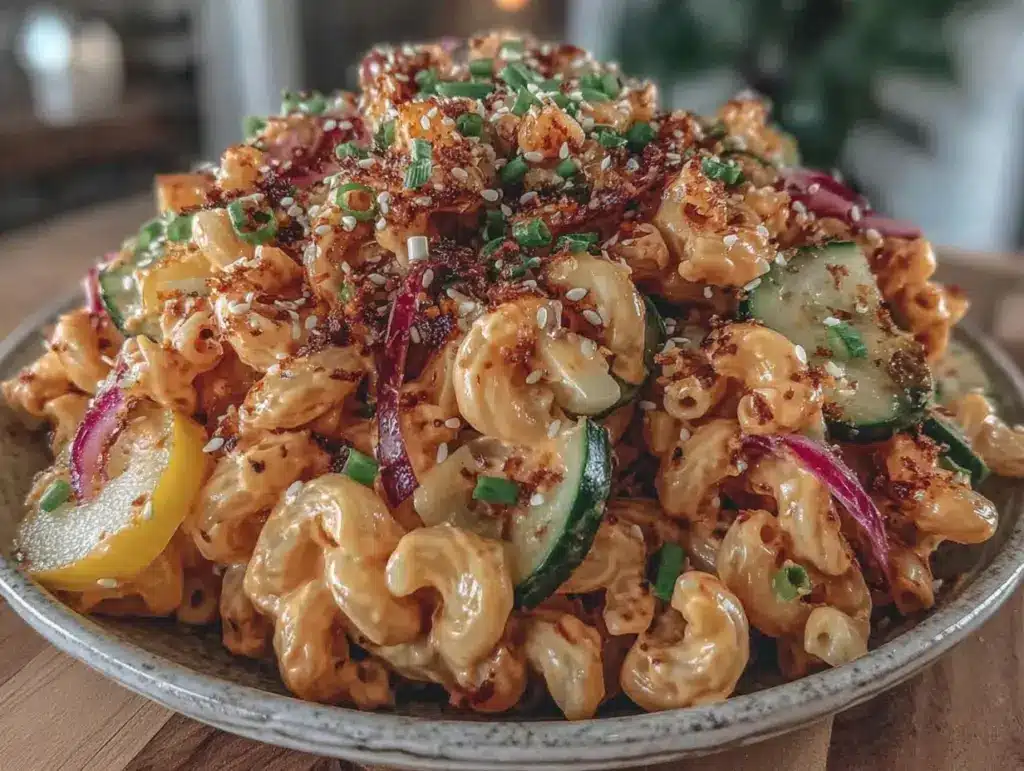
“You won’t believe this salad started as a total kitchen mishap,” my friend Jun whispered the first time I tasted his gochujang macaroni salad. It was a humid Tuesday afternoon in late July, and honestly, I wasn’t expecting much from a dish combining spicy Korean chili paste with creamy pasta salad. But there I was, spoon in hand, as the vibrant flavors hit my tongue—the perfect mix of heat, tang, and cool creaminess.
Jun had been experimenting with some pickled vegetables he made himself, intending to serve them separately. Somehow, those tangy bites found their way into the macaroni mix, and voilà—the magic happened. I remember the way the noodles glistened under the kitchen light, flecked with fiery red gochujang and crunchy bits of pickled radish and cucumber. It wasn’t just a salad; it was a lively conversation on a plate.
Maybe you’ve been there—staring into the fridge, juggling leftovers and random condiments, when suddenly inspiration strikes. This gochujang macaroni salad with pickled vegetables is exactly that kind of recipe. It’s not your typical creamy pasta side dish; it’s got personality, it’s got punch, and it’s got a story. I made a mess trying to replicate Jun’s recipe one evening, dropping half the pickles on the floor (classic me), but after a few tweaks, it became my go-to summer salad for backyard barbecues and casual dinners alike.
Let me tell you, this salad stays with you—not just because of its bold flavors, but because it’s the kind of dish that invites you back for just one more bite. So, if you’re ready to shake up your pasta salad game and add a little zing to your meals, keep reading. This recipe might just be the unexpected favorite you didn’t know you needed.
Why You’ll Love This Recipe
Honestly, I’ve tried a bunch of pasta salads in my day, but this gochujang macaroni salad stands out for a bunch of reasons. First off, the balance of flavors is spot on—spicy, tangy, creamy, and crunchy all at once. It’s not just a side; it’s a conversation starter at any table.
- Quick & Easy: Ready in under 30 minutes, making it perfect for busy weeknights or last-minute gatherings.
- Simple Ingredients: Uses pantry staples like elbow macaroni and gochujang, plus easy-to-find veggies—no fancy or hard-to-source items.
- Perfect for Summer: The pickled vegetables add a refreshing zip that’s especially welcome on hot days.
- Crowd-Pleaser: Kids and adults alike seem to love the spicy-sweet kick; it’s a guaranteed hit at potlucks.
- Unbelievably Delicious: The texture combo of creamy noodles and crisp pickled veggies keeps you coming back for more.
What really makes this recipe different? It’s the way the gochujang is blended into the dressing, giving just the right amount of heat without overpowering the other flavors. Plus, the homemade pickled vegetables add a fresh crunch and tang that store-bought pickles just can’t match. I’ve tested this recipe multiple times—sometimes adding a splash of rice vinegar or a dash of honey to tweak the heat balance—and each time it comes out just right.
This salad isn’t just food; it’s a little celebration of contrasts and harmony. It’s comfort food with a spicy, tangy twist, perfect for anyone wanting something a bit different but still familiar. I bet once you try it, you’ll find yourself making it again and again, just like I do.
What Ingredients You Will Need
This gochujang macaroni salad uses simple, wholesome ingredients to deliver bold flavor and satisfying texture without fuss. Most of these are pantry staples or easy to find at your local grocery store.
- Elbow macaroni: 8 ounces (about 225 grams), cooked al dente (the classic pasta base that holds the dressing well)
- Gochujang: 2 tablespoons (the star Korean chili paste, adds spicy depth; I prefer Chung Jung One brand for its balanced heat)
- Mayonnaise: ½ cup (120 ml), for creaminess—use your favorite brand or homemade mayo
- Sour cream or Greek yogurt: ¼ cup (60 ml), adds tang and lightness (Greek yogurt works great for a healthier twist)
- Rice vinegar: 2 tablespoons (30 ml), brings brightness and balances the heat
- Pickled vegetables: About 1 cup total, chopped (I like a mix of quick-pickled cucumber, radish, and carrot for crunch and zing)
- Scallions: 2 stalks, thinly sliced (for a fresh, mild onion flavor)
- Sesame oil: 1 teaspoon, toasted if possible (adds a nutty aroma and depth)
- Honey or sugar: 1 teaspoon (optional, to balance the heat if needed)
- Salt and pepper: To taste
- Optional garnish: Toasted sesame seeds or chopped fresh cilantro for a pop of color and texture
If you can’t find gochujang, a mix of chili paste with a bit of miso paste can work, but honestly, the authentic gochujang makes a noticeable difference. For the pickled vegetables, if you’re short on time, store-bought quick pickles are fine, but homemade pickles give this salad its signature zing.
Feel free to swap Greek yogurt for full-fat sour cream if you want a richer salad. And if you need it dairy-free, just use vegan mayo and skip the sour cream—still delicious!
Equipment Needed
- Medium pot for boiling pasta (a 3-quart / 3-liter pot works well)
- Colander or fine mesh strainer to drain pasta
- Mixing bowl (medium to large, at least 2-quart / 2-liter capacity)
- Whisk or fork for mixing the dressing (a small whisk helps incorporate the gochujang smoothly)
- Sharp knife and cutting board for chopping pickled vegetables and scallions
- Measuring cups and spoons for precise ingredient amounts
- Optional: Glass jar or container if you want to quick-pickle your own vegetables ahead of time
If you don’t have a whisk, a fork works just fine to blend the dressing ingredients. For pickling, a simple glass jar with a tight lid is all you need; no fancy equipment required. Personally, I use a non-stick pot for cooking pasta to avoid sticking and an enamel mixing bowl that’s easy to clean afterwards. Budget-friendly tools work just as well—no need to break the bank here!
Preparation Method
- Cook the macaroni: Bring a large pot of salted water to a boil (about 4 quarts / 4 liters). Add 8 ounces (225 g) elbow macaroni and cook until just al dente, about 7-8 minutes, stirring occasionally to prevent sticking. Drain in a colander and rinse under cold water to stop cooking and cool the pasta. Set aside to drain thoroughly. (Tip: Don’t skip rinsing or the salad could get mushy.)
- Prepare the pickled vegetables: If using homemade quick pickles, slice ½ cup each of cucumber, radish, and carrot thinly. Toss with 1 tablespoon salt and ½ cup (120 ml) rice vinegar, 1 tablespoon sugar, and let sit for at least 15 minutes. (If using store-bought, chop to bite-sized pieces.) Drain before adding to salad.
- Make the dressing: In a medium bowl, whisk together 2 tablespoons gochujang, ½ cup (120 ml) mayonnaise, ¼ cup (60 ml) sour cream or Greek yogurt, 2 tablespoons (30 ml) rice vinegar, 1 teaspoon toasted sesame oil, and 1 teaspoon honey or sugar if desired. Season with salt and pepper to taste. (Pro tip: Whisk gochujang with a little mayo first to avoid lumps.)
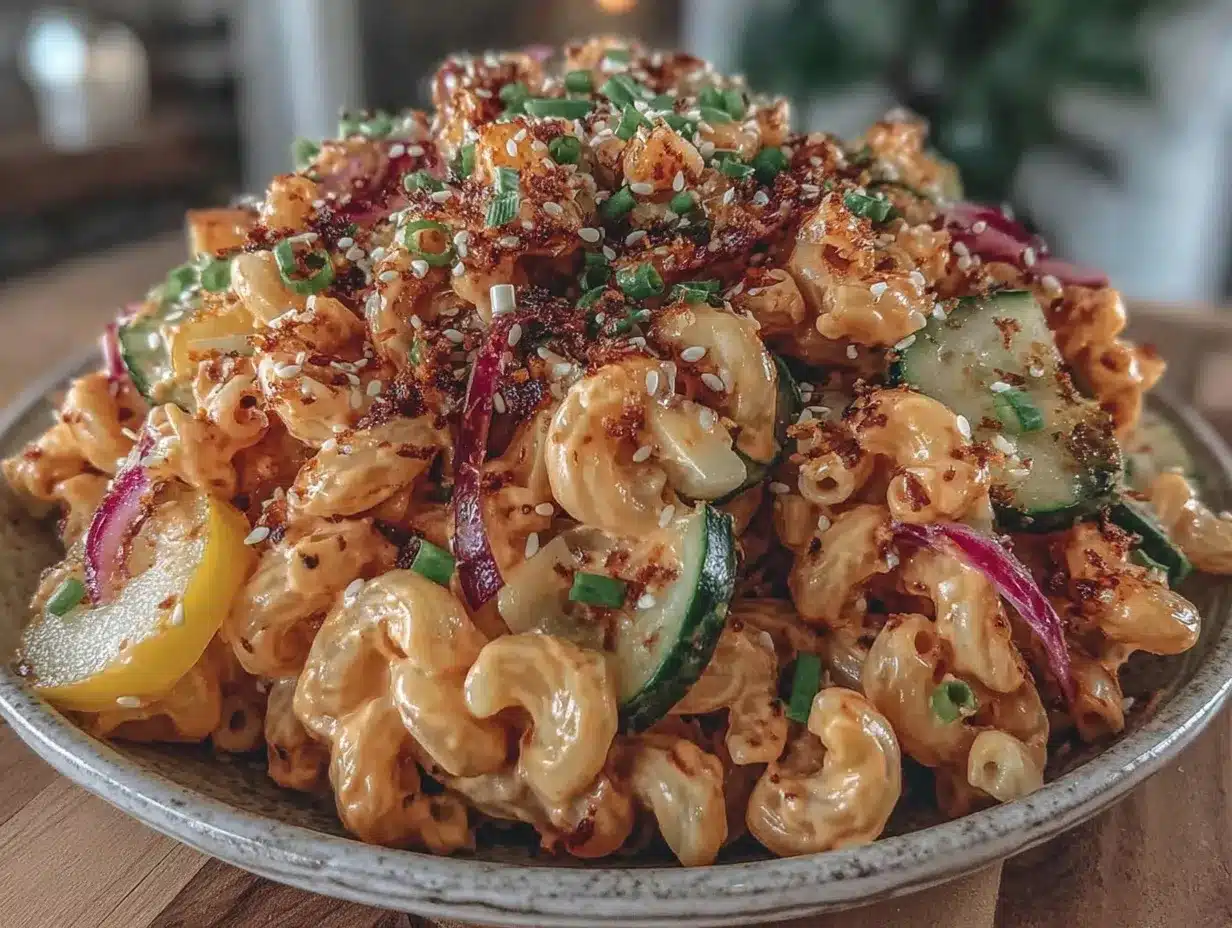
- Combine the salad: Add the cooled macaroni to a large bowl. Pour dressing over pasta and toss gently to coat evenly. Fold in the drained pickled vegetables and 2 sliced scallions. Taste and adjust seasoning, adding more salt, vinegar, or a pinch of sugar if needed.
- Chill and serve: Refrigerate the salad for at least 30 minutes before serving to let flavors meld. Just before serving, sprinkle with toasted sesame seeds or chopped cilantro for garnish.
Watch out when chopping pickled veggies—they can be slippery! Also, if the salad seems dry after chilling, stir in an extra splash of mayo or vinegar to brighten it up. The salad should have a creamy coating with pops of tang from the pickles and a gentle heat from gochujang.
And hey, if you’re like me and get distracted mid-prep (I once forgot the pasta on the stove while answering a call), just remember to taste often and adjust. This salad is forgiving and flexible—perfect for improvisation.
Cooking Tips & Techniques
Getting this gochujang macaroni salad just right is all about balance and timing. Here are some tips I picked up over my many kitchen attempts:
- Cook pasta al dente: It should be tender but still have a slight bite to stand up to the creamy dressing and crunchy pickles. Overcooked pasta turns mushy fast.
- Rinse pasta with cold water: This stops cooking immediately and cools the noodles for salad. It also washes away excess starch, preventing clumping.
- Blend the gochujang well: Gochujang can be thick and sticky. Mix it first with mayo or a bit of vinegar to get a smooth dressing without lumps.
- Pickle vegetables fresh: Homemade quick-pickled cucumbers and radishes add brightness. If you’re short on time, soaking them for at least 15 minutes is enough, but longer is better.
- Adjust sweetness and acidity: The salad should have a nice balance of spicy, sweet, tangy, and creamy. Don’t be shy about tweaking vinegar or honey to suit your taste buds.
- Chill before serving: Letting the salad rest in the fridge melds flavors beautifully. I often make this a few hours ahead or even the day before a party.
One mistake I made early on was adding too much gochujang at once—trust me, it’s easier to add more later than to fix a salad that’s too spicy. Also, when stirring, be gentle to avoid breaking the pasta. Lastly, multitasking helps—while the pasta boils, prep your pickles and dressing to save time.
Variations & Adaptations
This gochujang macaroni salad is wonderfully flexible, so you can adapt it to your preferences or dietary needs without losing its essence.
- Vegan version: Swap mayonnaise and sour cream for vegan alternatives like plant-based mayo and coconut yogurt. Use agave syrup instead of honey for sweetness.
- Low-carb alternative: Replace macaroni with cooked cauliflower florets or spiralized zucchini for a lighter, grain-free option. Adjust pickling time since veggies are softer.
- Seasonal twist: In fall or winter, swap pickled cucumbers for pickled beets or fennel. These add a deeper, earthier flavor that pairs beautifully with gochujang.
- Extra protein: Toss in shredded cooked chicken or firm tofu cubes marinated in soy sauce for a heartier salad.
- Spice level: For a milder salad, reduce gochujang to 1 tablespoon and add a splash more mayo. For a kick, add a pinch of Korean chili flakes (gochugaru).
Personally, I tried adding roasted sesame seeds and chopped peanuts for extra crunch once—totally worth it! Also, swapping pickled veggies for kimchi gives it a funky, spicy edge that some friends can’t get enough of.
Serving & Storage Suggestions
This salad tastes best chilled, straight from the fridge, making it refreshing on warm days. Serve it in a colorful bowl to highlight the vibrant reds and greens, garnished with a sprinkle of toasted sesame seeds or fresh herbs.
It pairs beautifully with grilled meats, Korean BBQ, or even as a standalone light lunch. For beverages, I like to serve it alongside iced green tea or a crisp lager to balance the heat.
Store leftovers in an airtight container in the fridge for up to 3 days. The flavors actually deepen over time, but the pickled veggies can soften a bit after a couple of days—still delicious, just less crunchy.
When reheating is desired (though this salad is best cold), bring it to room temperature and give it a quick stir. Avoid microwaving as it can make the mayo separate.
Nutritional Information & Benefits
Per serving (about 1 cup / 200 grams): roughly 280 calories, 12g fat, 35g carbohydrates, 6g protein.
This salad offers a good balance of macronutrients with healthy fats from mayo and sesame oil, carbs for energy, and some protein from dairy. Gochujang is rich in fermented ingredients, which may support gut health. The pickled vegetables provide vitamins and antioxidants, plus probiotic benefits if homemade.
It’s naturally gluten-free if you use gluten-free pasta, and can be adapted for dairy-free diets easily. Just watch the sodium content if you’re sensitive—pickling and gochujang both add saltiness.
From a wellness perspective, I find this salad satisfying and energizing without weighing me down, perfect for staying active and nourished during busy days.
Conclusion
This flavorful gochujang macaroni salad with pickled vegetables is more than just a side dish; it’s a little burst of excitement on your plate. Whether you’re looking to spice up your usual pasta salad or want a cool, tangy dish for summer meals, this recipe fits the bill.
Feel free to tweak the spice, swap veggies, or add proteins to make it your own. I love this salad because it’s adaptable, quick, and always gets compliments—plus, it reminds me of that surprising kitchen experiment with Jun that turned into a favorite.
If you give it a try, I’d love to hear how you made it your own—drop a comment or share your variations! Cooking should be fun, a little messy sometimes, and full of flavor.
So, grab your gochujang, cook up some pasta, and treat yourself to a salad with personality!
FAQs
Can I make this salad ahead of time?
Yes! It tastes even better after chilling for a few hours or overnight. Just store it in an airtight container in the fridge and give it a stir before serving.
What can I substitute for gochujang if I can’t find it?
You can mix a bit of miso paste with chili garlic sauce or sriracha as a rough substitute, but gochujang’s unique fermented flavor is hard to replace.
How long do homemade pickled vegetables last?
Quick pickles last about 1 week refrigerated. Use fresh pickled veggies for the best crunch and flavor in this salad.
Is this recipe suitable for vegans?
With simple swaps like vegan mayo and coconut yogurt, yes! Just avoid traditional dairy ingredients and honey.
Can I use other types of pasta?
Definitely! Small shapes like shells, rotini, or penne work well too. Just cook until al dente for best texture.
Pin This Recipe!
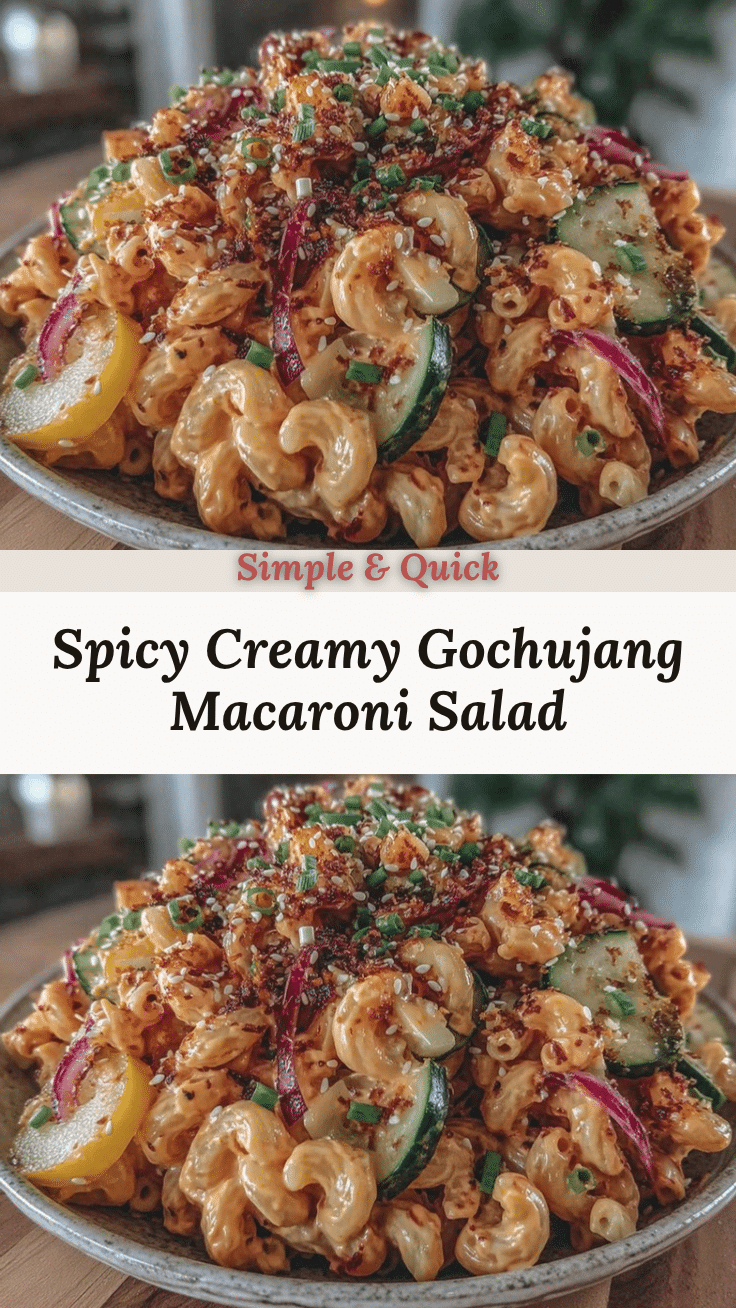
Flavorful Gochujang Macaroni Salad Recipe Easy Homemade with Pickled Vegetables
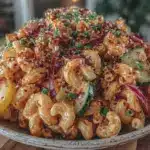
A vibrant and spicy macaroni salad featuring Korean gochujang chili paste and crunchy homemade pickled vegetables, perfect for summer gatherings and quick meals.
- Prep Time: 15 minutes
- Cook Time: 8 minutes
- Total Time: 38 minutes
- Yield: 4 servings 1x
- Category: Side Dish
- Cuisine: Korean Fusion
Ingredients
- 8 ounces elbow macaroni, cooked al dente
- 2 tablespoons gochujang (Korean chili paste)
- 1/2 cup mayonnaise
- 1/4 cup sour cream or Greek yogurt
- 2 tablespoons rice vinegar
- About 1 cup pickled vegetables (quick-pickled cucumber, radish, and carrot), chopped
- 2 scallions, thinly sliced
- 1 teaspoon toasted sesame oil
- 1 teaspoon honey or sugar (optional)
- Salt and pepper to taste
- Optional garnish: toasted sesame seeds or chopped fresh cilantro
Instructions
- Bring a large pot of salted water to a boil (about 4 quarts). Add 8 ounces elbow macaroni and cook until just al dente, about 7-8 minutes, stirring occasionally to prevent sticking. Drain in a colander and rinse under cold water to stop cooking and cool the pasta. Set aside to drain thoroughly.
- If using homemade quick pickles, slice 1/2 cup each of cucumber, radish, and carrot thinly. Toss with 1 tablespoon salt, 1/2 cup rice vinegar, and 1 tablespoon sugar, then let sit for at least 15 minutes. If using store-bought, chop to bite-sized pieces and drain before adding to salad.
- In a medium bowl, whisk together 2 tablespoons gochujang, 1/2 cup mayonnaise, 1/4 cup sour cream or Greek yogurt, 2 tablespoons rice vinegar, 1 teaspoon toasted sesame oil, and 1 teaspoon honey or sugar if desired. Season with salt and pepper to taste. Whisk gochujang with a little mayo first to avoid lumps.
- Add the cooled macaroni to a large bowl. Pour dressing over pasta and toss gently to coat evenly. Fold in the drained pickled vegetables and 2 sliced scallions. Taste and adjust seasoning, adding more salt, vinegar, or a pinch of sugar if needed.
- Refrigerate the salad for at least 30 minutes before serving to let flavors meld. Just before serving, sprinkle with toasted sesame seeds or chopped cilantro for garnish.
Notes
Cook pasta al dente and rinse with cold water to prevent mushiness. Whisk gochujang with mayo first to avoid lumps. Pickle vegetables fresh for best crunch. Adjust sweetness and acidity to taste. Chill salad before serving to meld flavors. Salad is forgiving and flexible for improvisation. For vegan version, use plant-based mayo and coconut yogurt, and agave syrup instead of honey. Store leftovers in airtight container in fridge up to 3 days. Avoid microwaving to prevent mayo separation.
Nutrition
- Serving Size: About 1 cup (200 gra
- Calories: 280
- Fat: 12
- Carbohydrates: 35
- Protein: 6
Keywords: gochujang macaroni salad, Korean pasta salad, pickled vegetables salad, spicy macaroni salad, easy pasta salad, summer salad, creamy pasta salad