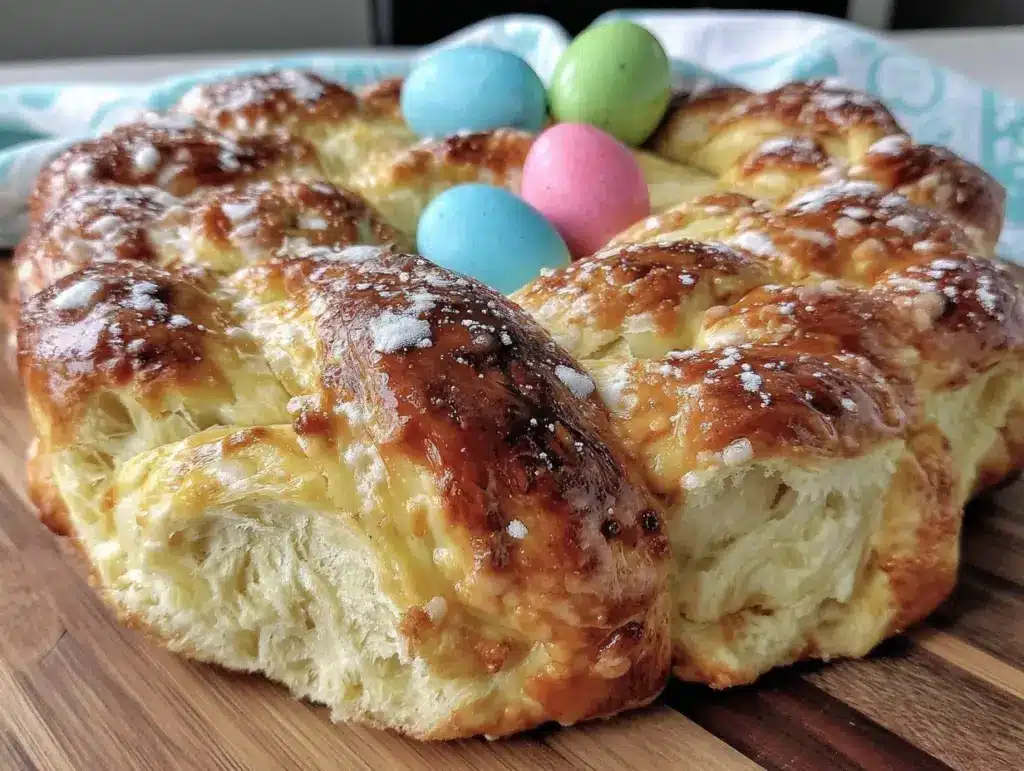
“You won’t believe where I stumbled upon this recipe,” my neighbor chuckled as she handed me a slightly crumpled, handwritten note tucked inside an old cookbook she found at a thrift shop. It was a classic Easter braided bread recipe, promising a soft, fluffy texture that sounded like something straight from a bakery window. Honestly, I wasn’t expecting much at first—just another sweet bread—but that first bite surprised me completely. The dough was pillowy, slightly sweet, with just enough chew to make you want another slice (or three).
One Saturday morning, I decided to try it out, despite forgetting to buy the right kind of yeast—so I improvised with what was in the pantry. The kitchen turned into a bit of a mess, flour everywhere, and my cat decided it was the perfect time to investigate. Still, the bread came out golden and braided just like the picture, with a soft inside that made my whole house smell like spring. You know that feeling when a simple loaf can turn a regular breakfast into a cozy celebration? That’s exactly what this bread did for me.
Maybe you’ve been there—wanting to bake something meaningful but not wanting to fuss for hours. This classic Easter braided bread is exactly that: a humble recipe with a surprisingly fluffy texture and a look that says, “I made this with care.” Whether it’s your first try or you’re a seasoned baker, this bread has a way of making any morning feel special.
Why You’ll Love This Recipe
- Quick & Easy: Comes together in under 3 hours, including rise time—perfect for a weekend baking session or holiday prep.
- Simple Ingredients: No fancy or hard-to-find items. Chances are, you already have everything in your kitchen pantry.
- Perfect for Easter & Beyond: Makes a beautiful centerpiece for holiday brunches or family gatherings.
- Crowd-Pleaser: Kids and adults alike will be asking for seconds, thanks to its irresistible soft crumb and subtly sweet flavor.
- Unbelievably Delicious: The braided shape isn’t just for looks—each bite delivers a perfect balance of chewy crust and airy inside.
This isn’t just another braided bread. The magic lies in the slightly enriched dough—using milk and butter for softness—and a touch of honey that adds just the right hint of sweetness without overpowering. I spent a few weekends tweaking the proofing times and braid technique to get that soft, fluffy texture that feels like a comforting hug from the oven. Honestly, it’s the kind of bread that brings smiles around the table and makes you want to slow down and enjoy the moment.
What Ingredients You Will Need
This recipe uses simple, wholesome ingredients to deliver bold flavor and satisfying texture without the fuss. Most are pantry staples, with a few fresh additions that make all the difference.
- All-purpose flour – about 4 cups (480g), plus extra for dusting (I prefer King Arthur for consistent results)
- Active dry yeast – 2 1/4 teaspoons (one packet)
- Whole milk – 1 cup (240ml), warmed to about 110°F (43°C) to activate the yeast
- Unsalted butter – 1/4 cup (56g), softened (adds richness and tenderness)
- Granulated sugar – 1/4 cup (50g), for subtle sweetness
- Large eggs – 2, at room temperature (for binding and softness)
- Salt – 1 teaspoon, to balance flavors
- Honey – 2 tablespoons (optional, but great for flavor depth)
- Egg wash – 1 egg beaten with 1 tablespoon water (for shiny golden crust)
- Optional toppings: Pearl sugar, sliced almonds, or coarse sugar for a festive finish
If you want a dairy-free alternative, swap the milk with almond or oat milk, and use a plant-based butter substitute. For gluten-free, almond flour won’t work here, but a high-quality gluten-free all-purpose blend can be tried with caution (though texture will differ). When selecting your yeast, make sure it’s fresh; expired yeast can lead to failed rising, and trust me, I learned that the hard way after a morning of waiting with no dough puff!
Equipment Needed
- Large mixing bowl: for combining and proofing the dough. Glass or stainless steel works well.
- Measuring cups and spoons: for precise ingredient amounts. I keep a set of both metric and US units handy.
- Wooden spoon or dough hook attachment: if using a stand mixer, the dough hook makes kneading easier.
- Baking sheet: lined with parchment paper to prevent sticking and for easy cleanup.
- Kitchen towel or plastic wrap: to cover the dough during rising.
- Pastry brush: to apply the egg wash evenly.
If you don’t have a stand mixer, no worries—this dough is soft and forgiving enough to knead by hand. Just expect to get a little flour on your sleeves! For those on a budget, a simple large bowl and wooden spoon will do the trick, and parchment paper is a game-changer for cleanup. Keeping your tools clean and dry helps the dough behave better, so avoid any lingering moisture on your surfaces.
Preparation Method
- Activate the yeast: In a small bowl, combine the warm milk (110°F/43°C) with sugar and yeast. Let it sit for 5-10 minutes until frothy and bubbly. If it doesn’t foam, your yeast might be old—consider trying fresh yeast. (Time: 10 minutes)
- Mix the dough: In a large mixing bowl, whisk together the flour and salt. Add the softened butter, beaten eggs, honey (if using), and the yeast mixture. Stir with a wooden spoon or dough hook until a shaggy dough forms.
- Knead the dough: Turn the dough onto a floured surface and knead for about 8-10 minutes until smooth and elastic. If using a stand mixer, knead on medium speed for 6-7 minutes. The dough should be soft but not sticky; add flour a tablespoon at a time if too sticky.
- First rise: Place the dough in a lightly greased bowl, cover with a damp kitchen towel or plastic wrap, and let it rise in a warm, draft-free spot until doubled in size—about 1 to 1.5 hours. (Tip: I sometimes put mine inside the oven with just the light on.)
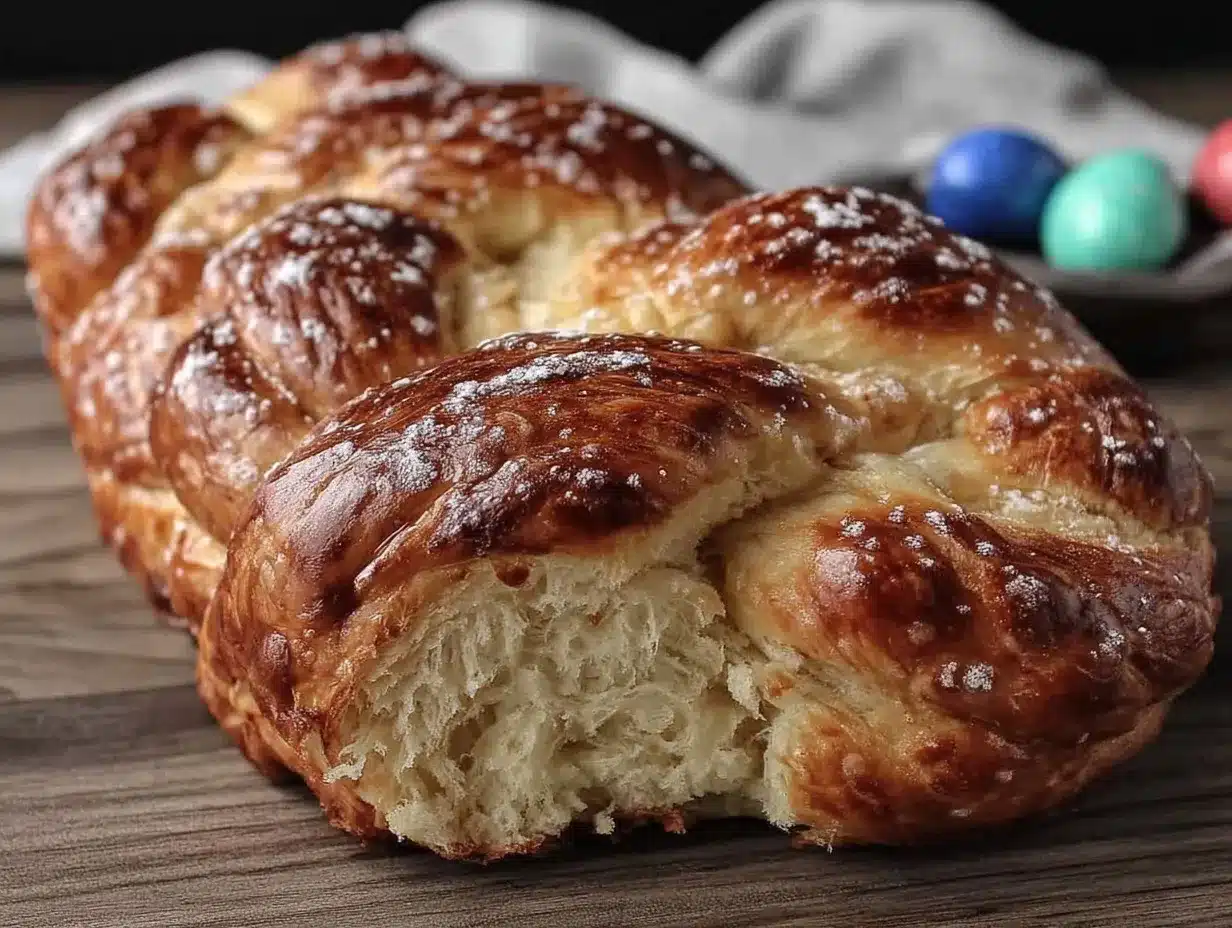
- Divide and braid: Punch down the dough gently and turn it onto a floured surface. Divide into three equal parts. Roll each into a long rope, about 12-14 inches (30-35 cm) long. Pinch the tops together and braid loosely, pinching the ends to seal.
- Second rise: Transfer the braid to a parchment-lined baking sheet. Cover loosely and let rise another 30-45 minutes until puffy.
- Preheat oven: While the bread is rising, preheat your oven to 350°F (175°C).
- Apply egg wash: Brush the braid gently with the beaten egg and water mixture. This gives a shiny, golden crust. Sprinkle pearl sugar or sliced almonds on top if desired.
- Bake: Bake for 25-30 minutes until the bread is golden brown and sounds hollow when tapped on the bottom. If it browns too fast, tent with foil after 20 minutes.
- Cool and enjoy: Remove from oven and let cool on a wire rack for at least 30 minutes before slicing. This helps the crumb set beautifully.
A quick heads-up: I once forgot to punch down the dough after the first rise, and the braid turned out dense and heavy. Don’t skip that step! Also, keep an eye on your oven temperature; every oven’s a little different. Using an oven thermometer can be a lifesaver.
Cooking Tips & Techniques
When it comes to classic Easter braided bread, a few tricks can make all the difference. First, make sure your milk isn’t too hot when activating yeast; above 115°F (46°C) can kill it, and below 105°F (40°C) might not wake it up properly. I learned this the hard way after a flat dough disaster.
Kneading is key to developing gluten, which gives the bread its soft, chewy texture. If you’re new to kneading, think of it as folding and pressing the dough repeatedly—don’t rush! A well-kneaded dough should spring back when poked gently.
For the braid, keep it loose enough to expand during the second rise but tight enough to hold shape. If you braid too tightly, the bread may crack while baking, and too loose can flatten out.
Egg wash is your secret weapon for that gorgeous golden crust. Brush gently and evenly, or you risk patchy spots. If you want a matte finish, skip this step, but honestly, who doesn’t love a shiny loaf?
Timing is everything—rising times can vary with room temperature. In cool kitchens, it might take longer. Patience here pays off. Also, multitasking by prepping a salad or setting the table during the second rise makes good use of your time.
Variations & Adaptations
- Sweet variation: Add 1/2 cup (75g) raisins or dried cranberries to the dough before the first rise for a festive touch.
- Herb-infused bread: Mix 1 tablespoon fresh rosemary or thyme into the dough for a savory twist perfect with soups or cheese.
- Gluten-free option: Use a high-quality gluten-free all-purpose blend designed for yeast breads, but keep in mind the texture will be denser and less fluffy.
- Egg-free version: Substitute eggs with 1/4 cup unsweetened applesauce per egg and increase milk slightly to maintain moisture.
- Alternative braids: Try four or six strands for a fancier look, though it takes a bit more practice.
I once tried folding in citrus zest and chopped pistachios for a bright, nutty flavor that surprised my brunch guests. It’s fun to experiment, but the classic version’s simplicity really shines on its own.
Serving & Storage Suggestions
This braided bread is best served slightly warm or at room temperature. Toasting slices gently brings out the buttery flavor and adds a little crunch. It pairs beautifully with butter, fruit preserves, or a drizzle of honey.
For Easter brunch, serve alongside fresh fruit, scrambled eggs, or smoked salmon for a balanced spread. A cup of strong coffee or herbal tea complements the bread’s subtle sweetness perfectly.
Store leftovers wrapped tightly in plastic wrap or in an airtight container at room temperature for up to 2 days. For longer storage, freeze the cooled bread in a freezer bag for up to 3 months. Thaw at room temperature, then warm briefly in the oven before serving.
Flavors tend to mellow and meld over time, making next-day slices even tastier. Just remember, fresh is always best when you can manage it!
Nutritional Information & Benefits
Each serving (approximate slice) of this classic Easter braided bread contains roughly 180 calories, with 5 grams of fat, 30 grams of carbohydrates, and 5 grams of protein. The use of whole milk and butter adds richness and some essential fat-soluble vitamins.
Honey offers a natural sweetness with antioxidants, while the eggs contribute to the bread’s protein and moisture.
This bread isn’t low-carb or gluten-free by default, but it provides a satisfying, wholesome treat that can be part of a balanced diet when enjoyed in moderation. For those with allergies, the recipe can be adapted as noted above.
Personally, I find that sharing this bread with loved ones feels like a small but meaningful moment of nourishment and comfort during busy holidays.
Conclusion
This classic Easter braided bread recipe is a delightful way to bring a soft, fluffy, and beautifully braided loaf to your table. It’s approachable enough for beginner bakers but special enough to impress guests or brighten your own mornings.
Feel free to tweak the flavors, braids, or toppings to suit your taste. I love this recipe because it’s like a warm hug in bread form—simple, honest, and made with a touch of love. If you give it a try, I’d love to hear how your braid turned out or what variations you experimented with!
Go ahead, braid some joy into your kitchen, and don’t forget to share your experience in the comments below or with your friends. Happy baking!
FAQs
Can I make this braided bread without eggs?
Yes! Substitute each egg with 1/4 cup unsweetened applesauce or a commercial egg replacer to maintain moisture and binding.
How do I know if my yeast is still active?
Mix yeast with warm milk and sugar. If it bubbles and froths within 5-10 minutes, it’s alive. No bubbles mean the yeast is likely expired.
Can I prepare the dough the night before?
Absolutely! After the first knead, cover the dough tightly and refrigerate overnight. Let it come to room temperature and complete the rising and braiding steps in the morning.
What if my bread crust gets too dark before baking is finished?
Cover the bread loosely with aluminum foil halfway through baking to prevent over-browning.
Is it okay to freeze the bread after baking?
Yes, once fully cooled, wrap tightly and freeze. Thaw at room temperature and warm in the oven to refresh softness.
Pin This Recipe!
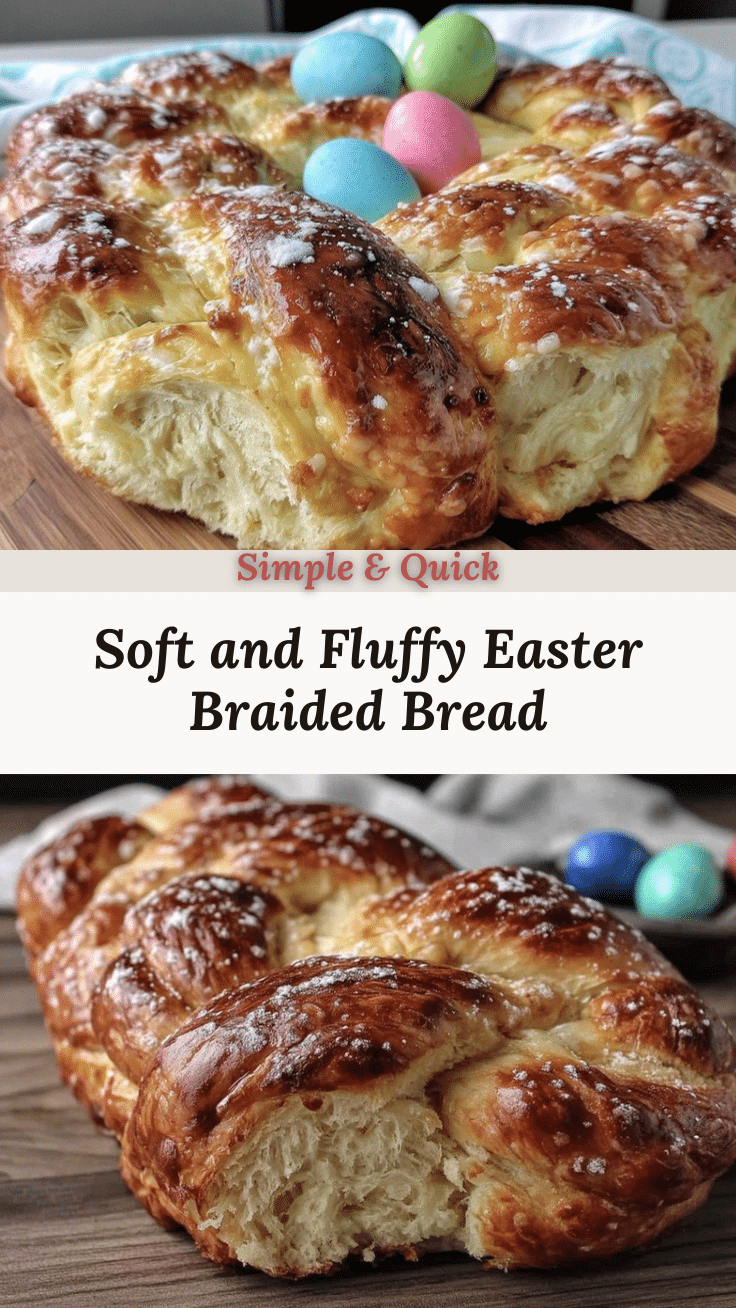
Classic Easter Braided Bread

A soft, fluffy, and beautifully braided bread perfect for Easter or any special breakfast. This easy homemade bread features a slightly sweet, enriched dough with a golden crust.
- Prep Time: 20 minutes
- Cook Time: 30 minutes
- Total Time: 2 hours 45 minutes
- Yield: 1 loaf (about 12-14 slices) 1x
- Category: Bread
- Cuisine: American
Ingredients
- 4 cups (480g) all-purpose flour, plus extra for dusting
- 2 1/4 teaspoons active dry yeast (one packet)
- 1 cup (240ml) whole milk, warmed to about 110°F (43°C)
- 1/4 cup (56g) unsalted butter, softened
- 1/4 cup (50g) granulated sugar
- 2 large eggs, at room temperature
- 1 teaspoon salt
- 2 tablespoons honey (optional)
- 1 egg beaten with 1 tablespoon water (egg wash)
- Optional toppings: pearl sugar, sliced almonds, or coarse sugar
Instructions
- Activate the yeast: In a small bowl, combine the warm milk (110°F/43°C) with sugar and yeast. Let it sit for 5-10 minutes until frothy and bubbly.
- Mix the dough: In a large mixing bowl, whisk together the flour and salt. Add the softened butter, beaten eggs, honey (if using), and the yeast mixture. Stir with a wooden spoon or dough hook until a shaggy dough forms.
- Knead the dough: Turn the dough onto a floured surface and knead for about 8-10 minutes until smooth and elastic. If using a stand mixer, knead on medium speed for 6-7 minutes. Add flour a tablespoon at a time if too sticky.
- First rise: Place the dough in a lightly greased bowl, cover with a damp kitchen towel or plastic wrap, and let it rise in a warm, draft-free spot until doubled in size—about 1 to 1.5 hours.
- Divide and braid: Punch down the dough gently and turn it onto a floured surface. Divide into three equal parts. Roll each into a long rope, about 12-14 inches (30-35 cm) long. Pinch the tops together and braid loosely, pinching the ends to seal.
- Second rise: Transfer the braid to a parchment-lined baking sheet. Cover loosely and let rise another 30-45 minutes until puffy.
- Preheat oven: While the bread is rising, preheat your oven to 350°F (175°C).
- Apply egg wash: Brush the braid gently with the beaten egg and water mixture. Sprinkle pearl sugar or sliced almonds on top if desired.
- Bake: Bake for 25-30 minutes until the bread is golden brown and sounds hollow when tapped on the bottom. Tent with foil after 20 minutes if browning too fast.
- Cool and enjoy: Remove from oven and let cool on a wire rack for at least 30 minutes before slicing.
Notes
Use fresh yeast for best results. Milk temperature should be between 105°F and 115°F to activate yeast properly. Knead dough until smooth and elastic. Do not skip punching down the dough after the first rise to avoid dense bread. Cover bread with foil if crust browns too quickly. For dairy-free, substitute milk and butter with plant-based alternatives. Gluten-free adaptations possible but texture will differ.
Nutrition
- Serving Size: 1 slice
- Calories: 180
- Sugar: 5
- Sodium: 150
- Fat: 5
- Saturated Fat: 3
- Carbohydrates: 30
- Fiber: 1
- Protein: 5
Keywords: Easter bread, braided bread, soft bread, homemade bread, sweet bread, holiday bread, easy bread recipe