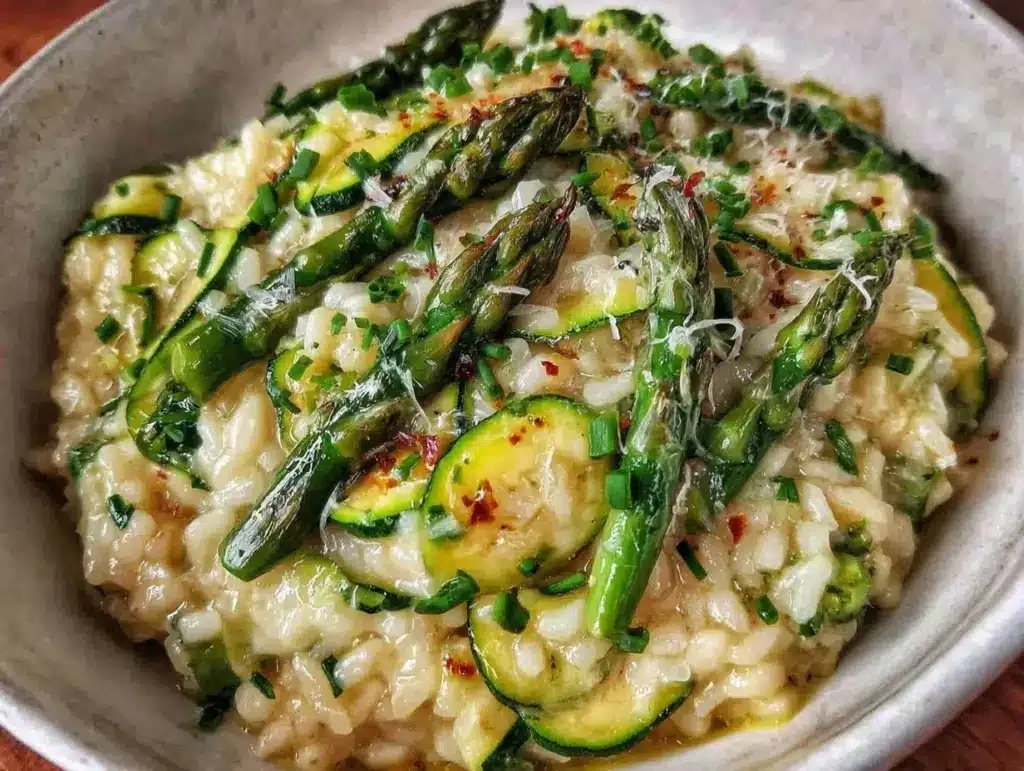
Let me tell you, the smell of simmering Arborio rice mingling with fresh peas, tender asparagus, and zesty herbs is enough to make anyone’s mouth water. The first time I stirred together this creamy spring vegetable risotto, I was instantly hooked—the kind of moment where you pause, take a deep breath, and just smile because you know you’re onto something truly special. It wasn’t just the silky texture or the vibrant colors; it was like spring itself had been captured in a bowl.
Years ago, when I was knee-high to a grasshopper, my grandma used to make risotto during our family gatherings, but it always felt a little too heavy for my taste. This version, though? It’s lighter, packed with fresh garden veggies and herbs, but still offers that comforting creaminess I craved. Honestly, I wish I’d discovered this recipe years ago—it’s dangerously easy and perfect for those days when you want something both fancy and homey.
My family couldn’t stop sneaking spoonfuls off the stove while I was finishing up, and I can’t really blame them. This creamy spring vegetable risotto with fresh herbs quickly became a staple for our Sunday dinners and potlucks. You know what? It’s a sweet treat for your taste buds, brightens up your Pinterest recipe board, and fits perfectly on cozy, fresh evenings. Tested multiple times in the name of research, of course, this recipe feels like a warm hug. Trust me—you’re going to want to bookmark this one.
Why You’ll Love This Creamy Spring Vegetable Risotto Recipe with Fresh Herbs
Over the years, I’ve fine-tuned this spring vegetable risotto recipe so it’s not just good, but really something special. Whether you’re an experienced cook or just getting started, this dish is a winner for so many reasons:
- Quick & Easy: Ready in about 40 minutes, it’s perfect for busy weeknights or whenever those last-minute cravings hit.
- Simple Ingredients: No fancy or hard-to-find items here—just fresh veggies and pantry staples you likely have on hand.
- Ideal for Spring Gatherings: Great for brunches, light dinners, or impressing guests without sweating the prep.
- Crowd-Pleaser: Kids and adults alike can’t get enough of its creamy texture and fresh, herby flavor.
- Unbelievably Delicious: The way the rice soaks up the broth and melds with tender vegetables and fresh herbs? Pure magic.
This risotto isn’t just any creamy vegetable dish—it’s the best version I’ve found that balances richness and freshness. A little trick I use is stirring in a bit of grated Parmesan and finishing with a splash of lemon juice to brighten the whole thing up. Honestly, this recipe makes you close your eyes after the first bite and savor every spoonful. It’s comfort food that feels fresh and light, perfect for those who want flavor without heaviness.
What Ingredients You Will Need for Creamy Spring Vegetable Risotto with Fresh Herbs
This recipe uses simple, wholesome ingredients to deliver bold flavor and satisfying texture without the fuss. Most are pantry staples, with fresh seasonal veggies adding that springtime pop.
- Arborio rice (1 ½ cups / 300 g): The star of any risotto for that creamy, chewy texture.
- Vegetable broth (5 cups / 1.2 liters): Homemade or store-bought, warmed—this is what the rice absorbs for flavor.
- Unsalted butter (3 tablespoons / 45 g), divided: Adds richness and helps create that velvety finish.
- Extra virgin olive oil (2 tablespoons): For sautéing the veggies and rice gently.
- Shallots (2 medium), finely chopped: Adds a subtle sweetness and depth.
- Garlic cloves (3), minced: Brings that gentle aromatic punch.
- Fresh asparagus (1 bunch, about 12 spears), trimmed and cut into 1-inch pieces: Tender and vibrant—look for firm, bright green stalks.
- Fresh peas (1 cup / 150 g): Sweet little bursts, frozen peas work fine if fresh aren’t available.
- Fresh spinach (2 cups / 60 g), roughly chopped: Adds earthiness and color.
- White wine (½ cup / 120 ml), optional: Adds acidity and complexity, but water or broth can be used instead.
- Fresh herbs, chopped (¼ cup total): A mix of parsley, chives, and tarragon brings brightness and freshness.
- Grated Parmesan cheese (½ cup / 50 g): Use a good-quality Parmigiano-Reggiano for best flavor.
- Salt and freshly ground black pepper: To taste—season gradually as you cook.
- Lemon zest (1 teaspoon) and juice (1 tablespoon): Adds a lively pop that ties it all together.
Feel free to swap frozen peas for fresh when in season, or try adding ramps or baby zucchini for a twist. For a vegan option, skip the butter and Parmesan, and use nutritional yeast or vegan cheese instead.
Equipment Needed
- Heavy-bottomed saucepan or sauté pan (medium to large): Essential for even heat distribution, which helps prevent scorching the rice.
- Wooden spoon or heatproof spatula: For stirring gently without mashing the rice.
- Ladle: Handy for adding broth gradually—keeps your hands clean and the cooking smooth.
- Measuring cups and spoons: For precise ingredient amounts.
- Chef’s knife and cutting board: For prepping veggies and herbs.
If you don’t have a ladle, a small cup works fine too, but ladles make the process easier. I’ve tried both, and ladles save time and mess. A nonstick pan can work, but I prefer stainless steel or enameled cast iron for that perfect gentle browning. Budget-wise, a good heavy-bottomed pan is a kitchen workhorse—you’ll use it for way more than just risotto!
Preparation Method for Creamy Spring Vegetable Risotto with Fresh Herbs
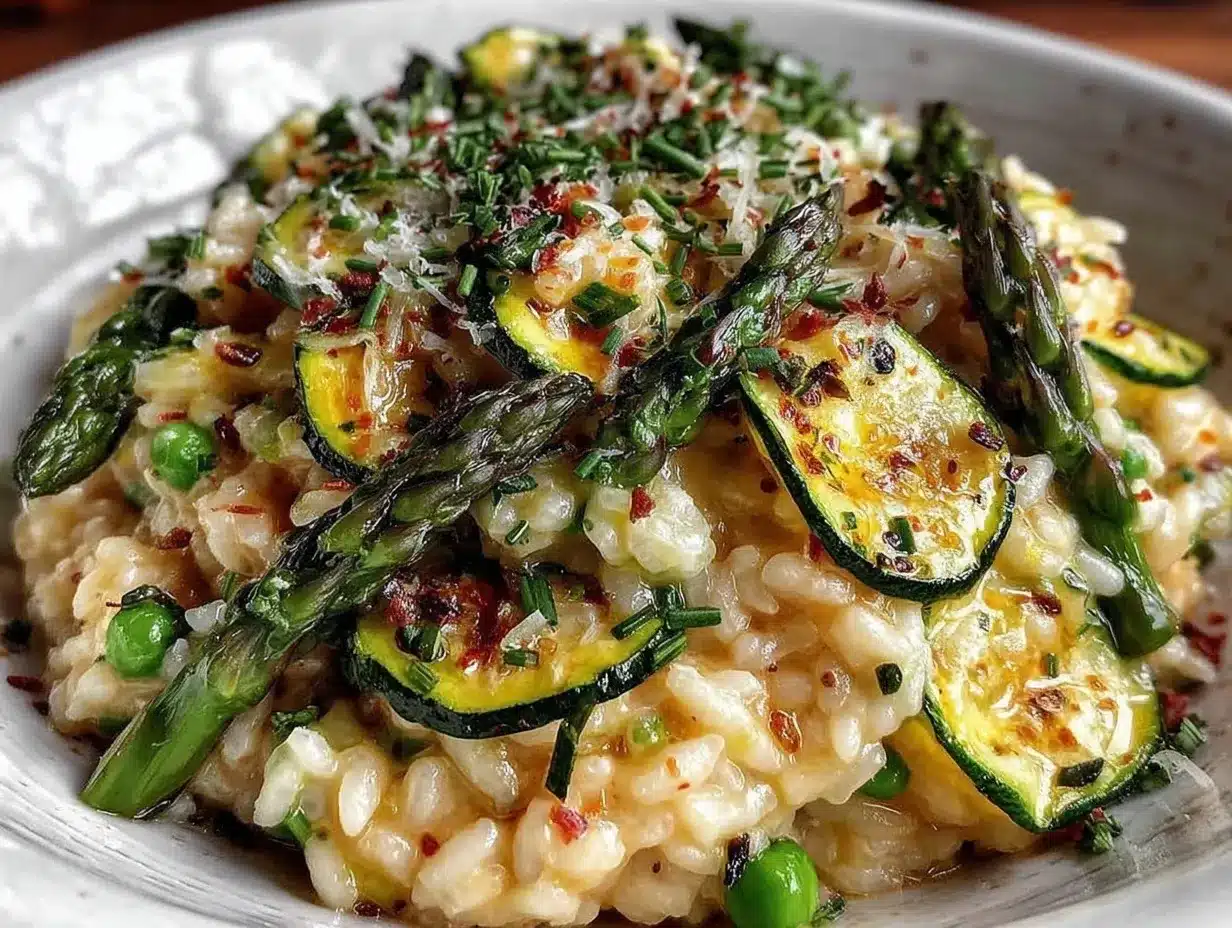
- Warm your broth: Pour 5 cups (1.2 liters) of vegetable broth into a saucepan and keep it at a gentle simmer over low heat while you cook the risotto. This ensures each ladle added is hot enough to keep the rice cooking evenly.
- Sauté aromatics: In a large heavy-bottomed pan, heat 1 tablespoon (15 g) of butter with 2 tablespoons (30 ml) olive oil over medium heat. Add the finely chopped shallots and cook for 3-4 minutes until translucent but not browned. Stir in the minced garlic and cook for another 30 seconds until fragrant.
- Toast the rice: Add 1 ½ cups (300 g) Arborio rice to the pan. Stir constantly for about 2 minutes so each grain is coated with fat and slightly toasted. You should smell a nutty aroma at this point.
- Add white wine (optional): Pour in ½ cup (120 ml) white wine and stir until mostly absorbed. If skipping wine, add a ladle of broth instead.
- Begin adding broth: Add one ladle of hot broth to the rice. Stir gently but continuously until the liquid is mostly absorbed. Repeat this process, adding broth one ladle at a time, stirring often. This should take about 20-25 minutes. The rice should be creamy and tender but still firm to the bite (“al dente”).
- Prepare vegetables: While the rice cooks, blanch the asparagus pieces in boiling salted water for 2-3 minutes until bright green and just tender. Drain and set aside. If using frozen peas, defrost them now.
- Add vegetables and spinach: When the rice is about halfway cooked (after about 12 minutes of broth addition), stir in the peas and spinach. Continue adding broth and stirring until rice is nearly done.
- Finish with butter, cheese, and herbs: Once the rice is creamy and tender (after about 20-25 minutes), remove from heat. Stir in the remaining 2 tablespoons (30 g) butter, ½ cup (50 g) grated Parmesan, chopped fresh herbs (parsley, chives, tarragon), lemon zest, and 1 tablespoon lemon juice. Season with salt and pepper to taste.
- Rest and serve: Let the risotto sit for a minute or two—it thickens slightly and flavors meld. Serve immediately, garnished with extra herbs or Parmesan if desired.
Tip: Keep stirring gently but don’t overdo it—vigorous stirring can break the rice grains, making the risotto gluey rather than creamy. Also, if the risotto seems too thick before all broth is absorbed, add a splash of warm water to loosen it up.
Cooking Tips & Techniques for Perfect Risotto Every Time
Risotto can seem intimidating, but once you get the hang of it, it’s pretty straightforward. Here are some tips I’ve picked up from many batches—some successes, some learning moments:
- Use warm broth: Adding cold broth slows down cooking and can shock the rice, resulting in uneven texture.
- Stir gently: The goal is to release starch gradually, creating creaminess without turning the rice mushy.
- Don’t rush the broth additions: Let the rice absorb each ladle fully before adding more. Patience is key!
- Season gradually: Salt early and adjust at the end. This helps avoid over-salting.
- Watch the heat: Medium to medium-low works best. Too hot, and the broth evaporates too fast; too low, and cooking drags.
- Use fresh herbs: They brighten the dish. Add them at the end to keep their vibrant flavor.
- Don’t skip the lemon zest and juice: It cuts through richness and adds a fresh lift that makes this spring vegetable risotto truly sing.
I once accidentally added cold broth and ended up with lumpy rice—not fun! Now, I keep broth warm on the stove and keep a steady rhythm. Also, stirring for 30 minutes straight? Not necessary if you stir often but gently. Multitasking a little, like prepping veggies during broth absorption, saves time and sanity.
Variations & Adaptations for Your Creamy Spring Vegetable Risotto
This recipe is a fantastic base ripe for customization. I’ve tried a few variations that you might enjoy:
- Vegan version: Skip the butter and Parmesan. Use olive oil and nutritional yeast or vegan cheese to keep that savory depth.
- Seasonal swap: In early summer, fresh peas and asparagus shine, but you can swap in artichoke hearts, baby zucchini, or ramps for a different flavor profile.
- Protein boost: Stir in cooked shrimp, grilled chicken, or crispy pancetta for a heartier dish.
- Gluten-free twist: Arborio rice is naturally gluten-free, but check broth labels to be sure if you have allergies.
- Herb variations: Try basil and mint instead of parsley and tarragon for a Mediterranean flair.
One personal favorite is adding a handful of sautéed wild mushrooms along with the spring veggies—adds earthiness and richness that pairs beautifully with the lemony herbs.
Serving & Storage Suggestions for Spring Vegetable Risotto
This creamy spring vegetable risotto is best served hot and fresh—risotto waits for no one! Serve it straight from the pan, garnished with extra fresh herbs and a sprinkle of Parmesan. It pairs wonderfully with a crisp green salad and a glass of chilled white wine or sparkling water with lemon.
If you have leftovers, cool them quickly and store in an airtight container in the refrigerator for up to 2 days. When reheating, add a splash of broth or water and warm gently on the stove or microwave, stirring occasionally to bring back the creaminess.
Freezing risotto isn’t ideal; it tends to lose that lovely texture. But if you must, freeze in small portions and thaw overnight in the fridge before reheating.
Fun fact: the flavors often deepen after resting overnight, so if you can plan ahead, the second-day risotto can taste even better—just reheat gently and add a bit of fresh cheese or herbs before serving.
Nutritional Information & Benefits
This spring vegetable risotto offers a balanced blend of carbs, healthy fats, and vitamins. A typical serving provides around 350-400 calories, with moderate protein from Parmesan and healthy fats from olive oil and butter.
Key benefits come from the fresh vegetables: asparagus and peas are loaded with fiber, vitamins A and C, and antioxidants. The fresh herbs provide additional nutrients and support digestion.
For those watching dietary needs, this recipe is naturally gluten-free and can easily be made dairy-free or vegan as mentioned. It’s a lighter alternative to heavy cream-based risottos but still delivers that soul-soothing satisfaction you crave.
Conclusion
There’s just something about this creamy spring vegetable risotto with fresh herbs that feels like a little celebration of the season. It’s comforting yet fresh, simple yet special, and truly a dish you can make your own. I love how easy it is to customize with whatever spring veggies or herbs you have on hand, making it a perfect go-to for both quiet weeknights and festive gatherings.
Give it a try, tweak it to your taste, and let me know how it turns out! I’d love to hear your favorite variations or any insider tips you discover. Don’t be shy—drop your comments, share with friends, and keep this recipe handy for when you want that creamy, herby, veggie-packed goodness on your plate.
Happy cooking and enjoy every spoonful!
Frequently Asked Questions About Creamy Spring Vegetable Risotto
Can I make this risotto ahead of time?
Risotto is best served fresh, but you can prepare it a few hours ahead. Keep it covered and reheat gently with a splash of broth to restore creaminess. Avoid freezing if possible.
What if I don’t have white wine?
No worries! Simply replace the white wine with an equal amount of warm vegetable broth. It still adds flavor and helps the rice cook evenly.
How do I know when the risotto is done?
The rice should be tender but still have a slight bite (“al dente”). The texture will be creamy but not mushy. Taste frequently near the end to avoid overcooking.
Can I use other vegetables in this recipe?
Absolutely! Feel free to swap or add veggies like mushrooms, zucchini, peas, or baby spinach. Just adjust cooking times so everything stays tender and bright.
Is Arborio rice the only option for risotto?
Arborio rice is best for that creamy texture, but Carnaroli or Vialone Nano are excellent alternatives if you can find them. Long-grain rice won’t produce the same creaminess.
Pin This Recipe!
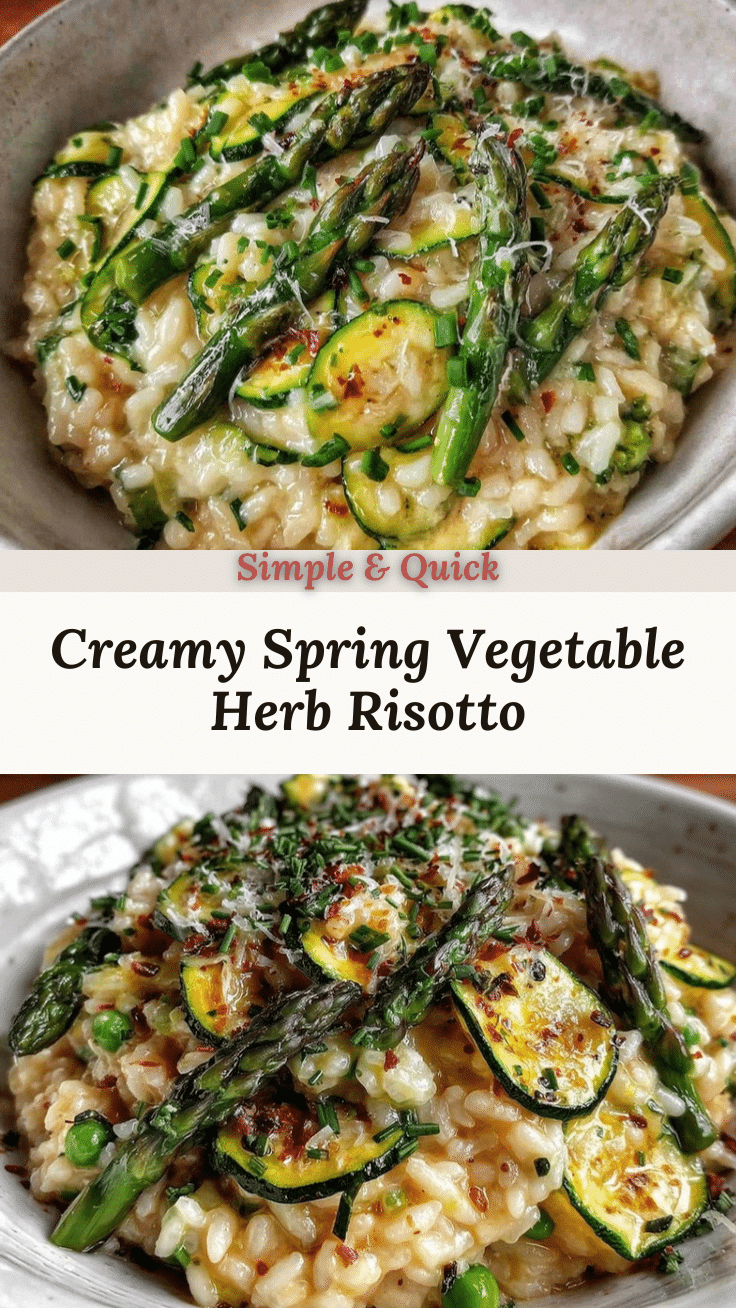
Creamy Spring Vegetable Risotto Recipe with Fresh Herbs

A light and creamy risotto featuring fresh spring vegetables and herbs, perfect for a comforting yet fresh meal. This recipe balances richness and freshness with simple ingredients and easy preparation.
- Prep Time: 10 minutes
- Cook Time: 30 minutes
- Total Time: 40 minutes
- Yield: 4 servings 1x
- Category: Main Course
- Cuisine: Italian
Ingredients
- 1 ½ cups (300 g) Arborio rice
- 5 cups (1.2 liters) vegetable broth, warmed
- 3 tablespoons (45 g) unsalted butter, divided
- 2 tablespoons extra virgin olive oil
- 2 medium shallots, finely chopped
- 3 garlic cloves, minced
- 1 bunch (about 12 spears) fresh asparagus, trimmed and cut into 1-inch pieces
- 1 cup (150 g) fresh peas (frozen peas can be used)
- 2 cups (60 g) fresh spinach, roughly chopped
- ½ cup (120 ml) white wine (optional, can substitute with broth or water)
- ¼ cup chopped fresh herbs (parsley, chives, tarragon)
- ½ cup (50 g) grated Parmesan cheese
- Salt and freshly ground black pepper, to taste
- 1 teaspoon lemon zest
- 1 tablespoon lemon juice
Instructions
- Warm the vegetable broth in a saucepan and keep it at a gentle simmer over low heat.
- In a large heavy-bottomed pan, heat 1 tablespoon butter with 2 tablespoons olive oil over medium heat.
- Add the finely chopped shallots and cook for 3-4 minutes until translucent but not browned.
- Stir in the minced garlic and cook for another 30 seconds until fragrant.
- Add the Arborio rice and stir constantly for about 2 minutes until each grain is coated and slightly toasted.
- Pour in the white wine (if using) and stir until mostly absorbed; if skipping wine, add a ladle of broth instead.
- Add one ladle of hot broth to the rice and stir gently until mostly absorbed. Repeat this process, adding broth one ladle at a time, stirring often, for about 20-25 minutes until rice is creamy and tender but still al dente.
- While the rice cooks, blanch the asparagus in boiling salted water for 2-3 minutes until bright green and tender. Drain and set aside. Defrost frozen peas if using.
- When the rice is about halfway cooked (after about 12 minutes), stir in the peas and spinach. Continue adding broth and stirring until rice is nearly done.
- Remove the pan from heat. Stir in the remaining 2 tablespoons butter, grated Parmesan, chopped fresh herbs, lemon zest, and lemon juice.
- Season with salt and freshly ground black pepper to taste.
- Let the risotto rest for 1-2 minutes to thicken and meld flavors.
- Serve immediately, garnished with extra herbs or Parmesan if desired.
Notes
Keep broth warm to ensure even cooking. Stir gently to release starch without breaking rice grains. Add broth gradually and allow absorption before adding more. Use fresh herbs at the end for brightness. Lemon zest and juice add a fresh lift. For vegan version, omit butter and Parmesan and use nutritional yeast or vegan cheese.
Nutrition
- Serving Size: 1 cup risotto
- Calories: 375
- Sugar: 5
- Sodium: 600
- Fat: 14
- Saturated Fat: 7
- Carbohydrates: 50
- Fiber: 4
- Protein: 10
Keywords: risotto, spring vegetables, creamy risotto, fresh herbs, Arborio rice, vegetarian, easy dinner, Italian recipe