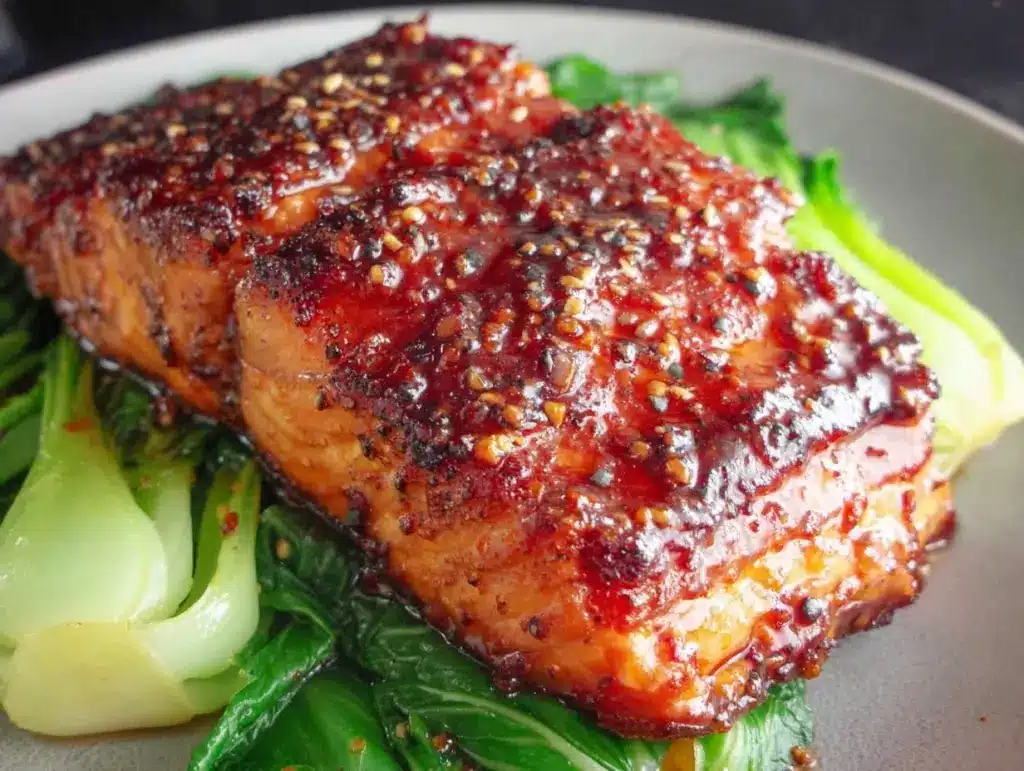
“You know that moment when the kitchen feels alive with sizzling sounds, and suddenly everything smells like a cozy dinner waiting to happen? That was me last Thursday evening, juggling a cracked mixing bowl and a half-open fridge door while trying to whip up something quick yet satisfying. I wasn’t aiming for anything fancy—just something to quiet the rumbling in my stomach after a long day. Then, out of nowhere, I remembered a tip my neighbor, Mrs. Tanaka, shared during a brief chat over the fence: her secret for a simple miso glaze that made salmon sing. I wasn’t expecting much, honestly, but within minutes, the sweet-savory aroma filled my tiny kitchen, and that fish? It was like a warm hug on a plate.
This flavorful miso glazed salmon with fresh bok choy side has since become my go-to when I want something that feels both fancy and effortless. Maybe you’ve been there too—wanting a meal that’s impressive but doesn’t have you standing in the kitchen for hours. What makes this recipe stick with me isn’t just the taste, but how it carries a quiet memory of that evening: the clatter, the laughter from a quick call, and the simple joy of creating something good, fast. Let me tell you, once you try this, you’ll get why I keep coming back to it—even on the busiest nights.
Why You’ll Love This Recipe
From my many kitchen trials, this miso glazed salmon recipe stands out for several reasons that I’m pretty sure you’ll appreciate:
- Quick & Easy: Ready in about 25 minutes, perfect for weeknights when you’re juggling a million things.
- Simple Ingredients: No exotic items here—mostly pantry staples and fresh bok choy you can find at any local market.
- Perfect for Dinner: Whether you’re cooking solo or feeding a small crowd, it hits the spot without fuss.
- Crowd-Pleaser: Friends and family always ask for seconds, especially those who usually shy away from fish.
- Unbelievably Delicious: The glaze strikes a perfect balance of umami and sweetness, while the bok choy adds a crisp, fresh contrast.
What sets this recipe apart is the magic of the miso glaze—a quick blend that brings out deep layers of flavor without overpowering the salmon’s natural richness. Plus, the way the bok choy is simply sautéed keeps its vibrant color and crunch intact, making the whole plate as visually appealing as it is tasty. Honestly, this isn’t just another salmon recipe; it’s the one I trust when I want a meal that feels special but doesn’t need a second thought.
What Ingredients You Will Need
This recipe uses straightforward, wholesome ingredients that come together to deliver a bold flavor and satisfying texture without any hassle. You probably have most of these in your kitchen already!
- For the Salmon:
- 4 salmon fillets (about 6 ounces / 170 grams each), skin on
- 2 tablespoons white miso paste (I like using Hikari brand for its smooth texture)
- 1 tablespoon soy sauce (low sodium preferred)
- 1 tablespoon mirin (a sweet rice wine, optional but adds depth)
- 1 teaspoon honey or maple syrup (for a touch of sweetness)
- 1 teaspoon freshly grated ginger (adds a mild zing)
- 1 teaspoon sesame oil (to bring it all together)
- For the Bok Choy Side:
- 1 pound (450 grams) fresh baby bok choy, rinsed and halved lengthwise
- 2 cloves garlic, thinly sliced
- 1 tablespoon vegetable or canola oil
- Salt and pepper, to taste
- Optional: a sprinkle of toasted sesame seeds for garnish
Ingredient Tips: Look for firm, bright green bok choy with no yellowing leaves for the best texture. If you can’t find mirin, a splash of dry sherry or even a pinch of sugar works well as a substitute. For a gluten-free version, swap soy sauce with tamari.
Equipment Needed
- Non-stick or cast-iron skillet (for searing the salmon)
- Small mixing bowl (to whisk the miso glaze together)
- Chef’s knife and cutting board (for prepping garlic and bok choy)
- Tongs or fish spatula (to gently flip the salmon without breaking it)
- Measuring spoons and cups (for accurate glaze measurements)
- Optional: a steamer basket if you prefer steaming bok choy
Personally, I find a cast-iron skillet gives the salmon skin a crispy edge, but a good quality non-stick pan works just as well and is easier to clean. If you don’t have measuring spoons handy, a regular teaspoon from your cutlery set does the trick in a pinch. Keeping your knife sharp makes slicing garlic and halving bok choy much smoother—trust me, dull knives make the prep feel like a chore.
Preparation Method
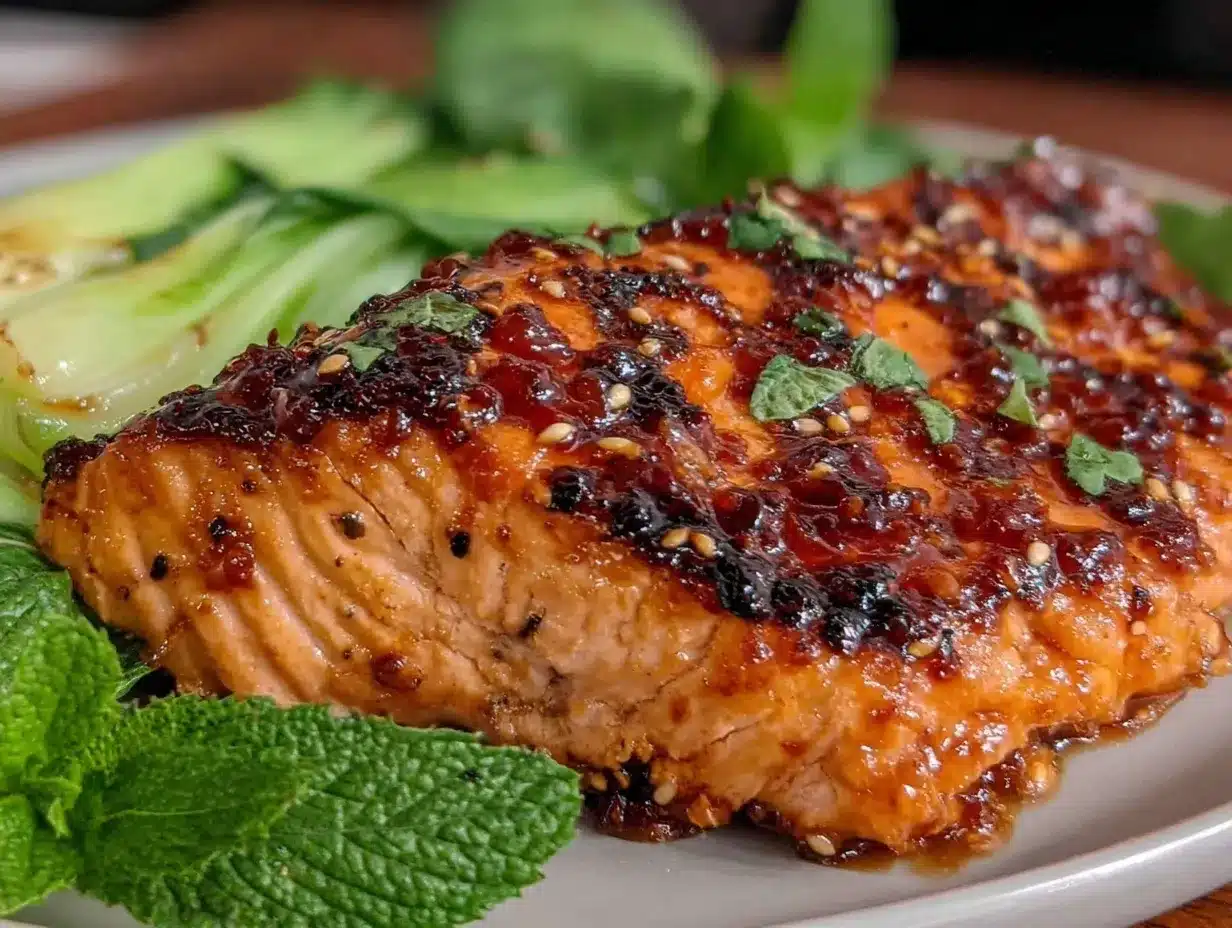
- Prepare the glaze: In a small bowl, whisk together 2 tablespoons white miso paste, 1 tablespoon soy sauce, 1 tablespoon mirin, 1 teaspoon honey, 1 teaspoon grated ginger, and 1 teaspoon sesame oil until smooth. This should take about 3 minutes.
- Prep the salmon: Pat the salmon fillets dry with paper towels—this helps the skin crisp up. Then brush each fillet generously with the miso glaze, leaving some glaze aside for basting later. Let the salmon sit at room temperature for 10 minutes to absorb flavors.
- Cook the salmon: Heat your skillet over medium-high heat and add a teaspoon of oil. Place the salmon skin-side down and cook for 4-5 minutes without moving it. You want to see the edges turn golden and the skin crisp up nicely.
- Flip and baste: Carefully turn the salmon over and cook for another 2-3 minutes. During this time, brush the remaining glaze over the top. The salmon should be opaque and flake easily when done. Total cook time is about 7-8 minutes.
- Prepare the bok choy: While the salmon cooks, heat 1 tablespoon oil in another pan over medium heat. Add the sliced garlic and sauté for 30 seconds until fragrant, being careful not to burn it.
- Sauté bok choy: Add the halved bok choy, cut side down. Cook for 3-4 minutes until the leaves start to wilt and the stems become tender-crisp. Season with salt and pepper to taste.
- Finish and serve: Plate the salmon alongside the bok choy, sprinkle with toasted sesame seeds if you like, and enjoy immediately while warm.
If you notice the glaze starting to burn, lower the heat slightly. Also, if your salmon fillets are thicker than 1 inch (2.5 cm), add a minute or two to the cooking time. You want that luscious flakiness without drying it out—trust me, it happens!
Cooking Tips & Techniques
The secret to perfect miso glazed salmon lies in balancing heat and timing. Use medium-high heat to get that crispy skin but watch closely to avoid burning the glaze’s sugars. I once got distracted by a phone call and ended up with a smoky kitchen—lesson learned!
Whisking the glaze ingredients thoroughly before applying ensures an even coating that sticks well during cooking. Also, letting the salmon rest with the glaze at room temperature allows flavors to meld nicely.
When sautéing bok choy, add it cut side down first to get a slight caramelization—it adds a subtle sweetness and keeps the stems tender but crunchy. Avoid overcooking; you want those vibrant greens and a bit of snap.
Multitasking tip: start prepping the bok choy while the salmon is marinating to save time. And if you want to deepen the flavor, a quick splash of soy sauce over the bok choy at the end works wonders.
Variations & Adaptations
- Dietary swaps: For a dairy-free and gluten-free option, use tamari instead of soy sauce and check your miso paste label for gluten content.
- Seasonal twists: Swap bok choy with tender baby spinach or Chinese broccoli for a slightly different texture and flavor.
- Flavor boosts: Add a teaspoon of chili paste or fresh sliced chili to the glaze for a spicy kick. I tried this once on a chilly night, and it was surprisingly addicting!
- Cooking method changes: For a no-fuss approach, you can bake the salmon at 400°F (200°C) for 12-15 minutes after glazing, but you’ll miss out on that crispy skin texture.
- Personal favorite: I sometimes toss roasted sesame seeds and thinly sliced scallions on top just before serving to add an extra layer of crunch and freshness.
Serving & Storage Suggestions
This miso glazed salmon is best enjoyed hot, right off the pan, when the skin is still crisp and the glaze is glossy. Serve it with steamed jasmine rice or quinoa for a complete meal that’s light but filling.
Pair with a chilled glass of dry white wine or a light green tea to balance the savory flavors. The bok choy’s mild bitterness complements the sweet miso glaze perfectly.
If you have leftovers, store salmon and bok choy separately in airtight containers in the fridge for up to 2 days. Reheat gently in a skillet over low heat to preserve texture—microwaving tends to make salmon rubbery and bok choy soggy.
Over time, the flavors in the salmon deepen, but the skin loses crispness, so eating it fresh is really the way to go.
Nutritional Information & Benefits
Each serving of this flavorful miso glazed salmon with fresh bok choy provides approximately:
| Calories | 350 kcal |
|---|---|
| Protein | 34 g |
| Fat | 18 g |
| Carbohydrates | 8 g |
| Fiber | 2 g |
Salmon is an excellent source of omega-3 fatty acids, which support heart health and brain function. Miso, made from fermented soybeans, adds probiotics that aid digestion. Bok choy supplies vitamin C, calcium, and antioxidants, making this dish both tasty and nourishing.
For those watching carbs, this meal fits nicely into low-to-moderate carb diets. Be mindful of soy allergies and gluten sensitivities depending on the soy sauce and miso brands you choose.
From a wellness standpoint, this recipe brings together fresh ingredients and balanced flavors that satisfy without heaviness—perfect for keeping energy steady through the evening.
Conclusion
This flavorful miso glazed salmon with fresh bok choy side is a humble yet impressive dish that’s stuck around in my kitchen for all the right reasons. It’s easy enough to make after a hectic day but delivers on flavor and texture with every bite. I encourage you to tweak it—maybe add a bit more ginger or swap the bok choy for your favorite greens—and make it your own.
Honestly, I love this recipe because it reminds me that good food doesn’t need to be complicated, just thoughtful. Give it a try, and if you do, drop a comment below to share your tweaks or stories—I’d love to hear how it fits into your kitchen routine. Happy cooking!
FAQs
Can I use frozen salmon for this recipe?
Yes, but thaw it completely and pat dry before glazing and cooking to avoid excess moisture that can steam rather than sear the fish.
What can I substitute if I don’t have mirin?
A splash of dry sherry, a teaspoon of sugar mixed with water, or even a light honey drizzle can work in a pinch.
Is it necessary to have the skin on the salmon?
Keeping the skin helps the fillet stay moist and adds a crispy texture when cooked properly, but you can remove it if you prefer.
How do I prevent the miso glaze from burning?
Cook the salmon over medium to medium-high heat and keep a close eye, especially when the glaze is applied. Lower the heat if it starts to darken too quickly.
Can I prepare the glaze in advance?
Absolutely! The glaze keeps well in the fridge for up to 3 days in an airtight container, making weeknight prep even easier.
Pin This Recipe!
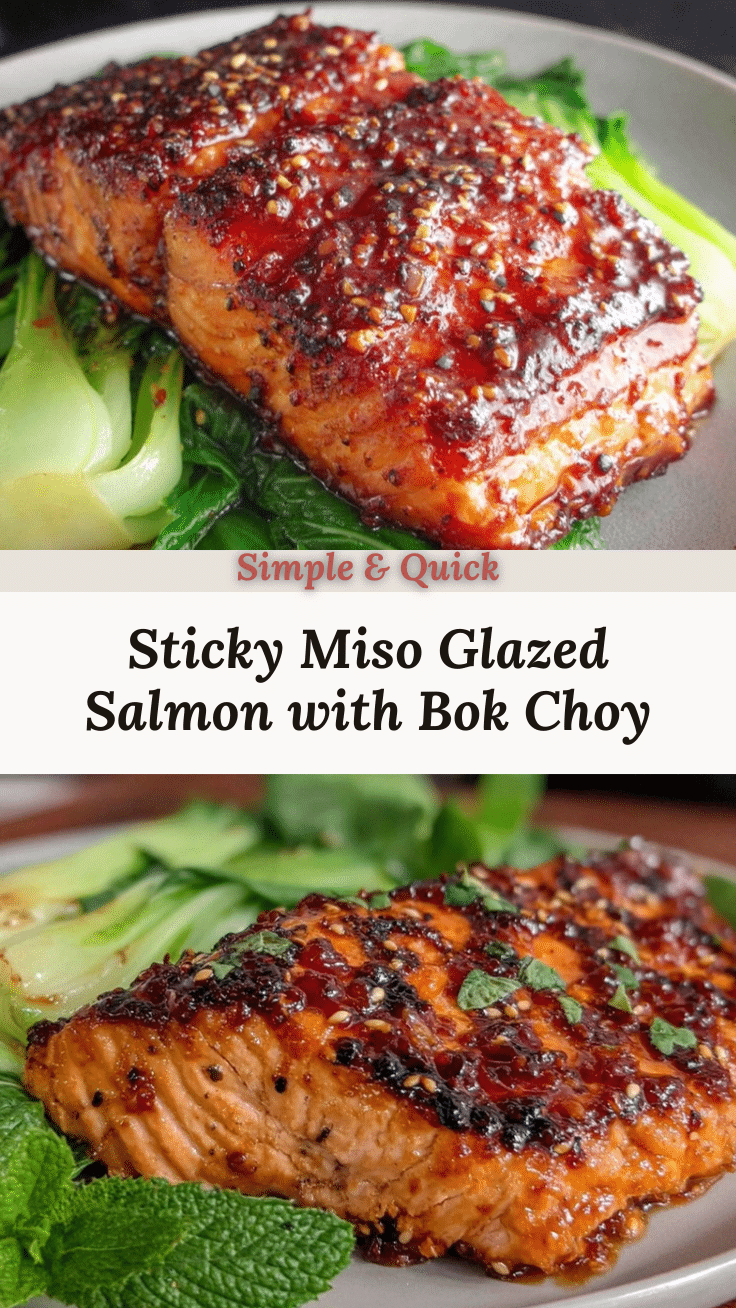
Flavorful Miso Glazed Salmon Recipe with Easy Bok Choy Side
A quick and easy miso glazed salmon served with sautéed fresh bok choy, perfect for a satisfying weeknight dinner with bold umami flavors and a crisp vegetable side.
- Prep Time: 10 minutes
- Cook Time: 15 minutes
- Total Time: 25 minutes
- Yield: 4 servings 1x
- Category: Main Course
- Cuisine: Japanese
Ingredients
- 4 salmon fillets (about 6 ounces / 170 grams each), skin on
- 2 tablespoons white miso paste
- 1 tablespoon soy sauce (low sodium preferred)
- 1 tablespoon mirin (optional)
- 1 teaspoon honey or maple syrup
- 1 teaspoon freshly grated ginger
- 1 teaspoon sesame oil
- 1 pound fresh baby bok choy, rinsed and halved lengthwise
- 2 cloves garlic, thinly sliced
- 1 tablespoon vegetable or canola oil
- Salt and pepper, to taste
- Optional: toasted sesame seeds for garnish
Instructions
- Prepare the glaze: In a small bowl, whisk together 2 tablespoons white miso paste, 1 tablespoon soy sauce, 1 tablespoon mirin, 1 teaspoon honey, 1 teaspoon grated ginger, and 1 teaspoon sesame oil until smooth (about 3 minutes).
- Prep the salmon: Pat the salmon fillets dry with paper towels. Brush each fillet generously with the miso glaze, leaving some glaze aside for basting. Let sit at room temperature for 10 minutes.
- Cook the salmon: Heat a skillet over medium-high heat and add 1 teaspoon oil. Place salmon skin-side down and cook for 4-5 minutes without moving it until edges turn golden and skin crisps.
- Flip and baste: Turn salmon over and cook for another 2-3 minutes, brushing remaining glaze over the top. Salmon should be opaque and flake easily when done (total cook time about 7-8 minutes).
- Prepare the bok choy: While salmon cooks, heat 1 tablespoon oil in another pan over medium heat. Add sliced garlic and sauté for 30 seconds until fragrant.
- Sauté bok choy: Add halved bok choy cut side down. Cook for 3-4 minutes until leaves wilt and stems are tender-crisp. Season with salt and pepper to taste.
- Finish and serve: Plate salmon alongside bok choy, sprinkle with toasted sesame seeds if desired, and serve immediately while warm.
Notes
If glaze starts to burn, lower heat. For thicker fillets (>1 inch), add 1-2 minutes cooking time. Mirin can be substituted with dry sherry or a pinch of sugar. Use tamari for gluten-free option. Let salmon rest with glaze at room temperature before cooking for better flavor absorption. Avoid overcooking bok choy to keep vibrant color and crunch.
Nutrition
- Serving Size: 1 salmon fillet with
- Calories: 350
- Fat: 18
- Carbohydrates: 8
- Fiber: 2
- Protein: 34
Keywords: miso glazed salmon, salmon recipe, bok choy side, easy dinner, quick salmon, healthy salmon, Japanese cuisine, weeknight meal