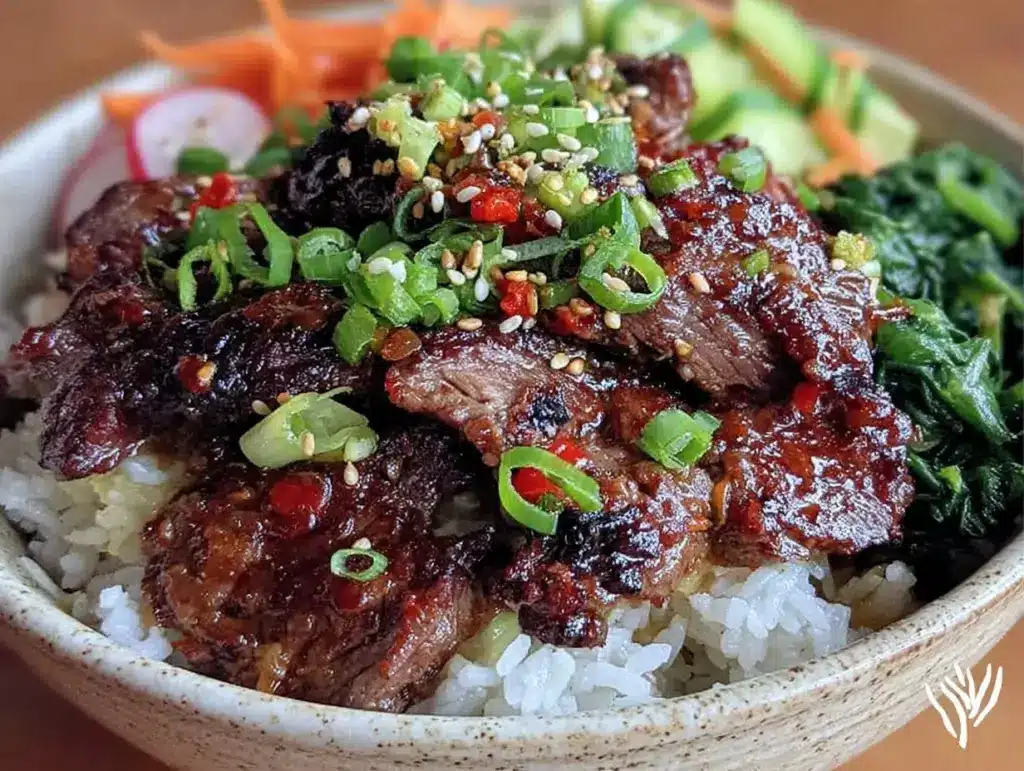
“You know that moment when you walk into a friend’s kitchen, and the air is bursting with something wildly inviting?” That was last Thursday evening when my neighbor, Jin, was tossing together what looked like a simple dinner but smelled like a celebration. He wasn’t exactly trying to impress, just cooking up his usual Korean beef bulgogi bowl with fresh veggies. I honestly thought it was just another stir-fry, but that first bite had me hooked—sweet, savory, with this smoky depth that made me close my eyes. I forgot my phone on the counter, knocked over a glass (classic me), but I kept sneaking bites between cleanup.
That night stuck with me because, well, this recipe feels like a little kitchen secret shared among friends. Maybe you’ve been there too—hungry, tired, craving something that tastes like it took hours but comes together fast and easy. This flavorful Korean beef bulgogi bowl is exactly that kind of dish. It’s got all the elements: tender marinated beef, crisp fresh veggies, and the kind of sauce you want to drizzle over everything.
Honestly, I didn’t expect to fall so hard for a bowl that’s so straightforward. But here’s the thing—this recipe is approachable, packed with bold flavors, and feels like a treat without the fuss. It’s perfect for those nights when you want to impress yourself more than anyone else. Let me tell you, once you make this bulgogi bowl, it’s going to be a go-to in your rotation, just like it is in mine.
Why You’ll Love This Recipe
This Korean beef bulgogi bowl recipe is one I’ve tested multiple ways (trust me, I’m a bit obsessed), and it’s always a hit. From casual family dinners to unexpected guests, it fits right in without any stress.
- Quick & Easy: Ready in under 30 minutes, it’s perfect for busy weeknights or last-minute cravings.
- Simple Ingredients: No need for fancy or hard-to-find items; you probably have most of them sitting in your pantry or fridge.
- Perfect for Sharing: Great for casual dinners, potlucks, or even lunch prep the next day.
- Crowd-Pleaser: Kids, adults, picky eaters—all love the sweet-savory balance and fresh crunch.
- Unbelievably Delicious: The combination of tender marinated beef with crisp veggies and fluffy rice makes it comfort food that feels special.
What makes this bulgogi bowl stand out? It’s the marinade—a perfect blend of soy, garlic, and a hint of sweetness that seeps into every bite. Plus, the fresh veggies aren’t just garnish—they add brightness and texture that keeps the bowl lively. I’ve swapped in low-sodium soy sauce for a cleaner taste and added a touch of toasted sesame oil for that nutty aroma that makes you sigh with contentment.
This isn’t just a recipe; it’s a way to bring a little Korean street food magic into your kitchen without the hassle. Whether you’re a kitchen novice or a seasoned cook, you’ll find it approachable but with enough punch to keep you coming back.
What Ingredients You Will Need
This Korean beef bulgogi bowl uses simple, wholesome ingredients to deliver bold flavor and satisfying texture without the fuss. Most are pantry staples or easy to find at your local grocery store.
- For the Beef Marinade:
- 1 pound (450g) thinly sliced beef ribeye or sirloin (look for pre-sliced bulgogi beef at Asian markets)
- 1/4 cup (60ml) soy sauce (I prefer Kikkoman for its balance)
- 2 tablespoons brown sugar (adds a subtle caramel note)
- 2 tablespoons toasted sesame oil (for that signature nutty aroma)
- 3 cloves garlic, minced (fresh is best)
- 1 teaspoon freshly grated ginger (brightens the flavor)
- 1 tablespoon rice vinegar (adds a gentle tang)
- 1/2 teaspoon crushed red pepper flakes (optional, for a slight kick)
- For the Bowl:
- 2 cups cooked jasmine rice or short-grain rice (warm and fluffy)
- 1 cup shredded carrots (adds crunch and color)
- 1 cup thinly sliced cucumber (refreshing and crisp)
- 1 cup fresh spinach or baby kale (lightly wilted or raw)
- 2 green onions, sliced (for garnish and mild onion flavor)
- 1 tablespoon toasted sesame seeds (sprinkle on top for texture)
- Pickled radish or kimchi (optional, for authentic tang)
If you want to switch things up, you can swap the beef for thinly sliced chicken or even firm tofu for a vegetarian twist. For a gluten-free option, use tamari instead of soy sauce. Fresh ginger and garlic really make the marinade pop, so don’t skip them if you can help it!
Equipment Needed
- Large mixing bowl: For marinating the beef comfortably.
- Non-stick skillet or cast-iron pan: A hot pan is key to getting that lovely sear on the beef.
- Sharp knife: For slicing vegetables thinly and prepping the beef if not pre-sliced.
- Rice cooker or pot: To cook the rice perfectly every time. I personally love my Zojirushi rice cooker for consistent fluffiness.
- Measuring spoons and cups: To keep the marinade balanced.
- Optional: Small whisk or fork to mix the marinade evenly.
If you don’t have a cast-iron pan, a heavy-bottom skillet works fine. Just make sure it gets good and hot before adding the beef to get that nice caramelization. For budget-friendly options, any sturdy non-stick pan will do—just avoid overcrowding the pan to keep the meat from steaming.
Preparation Method
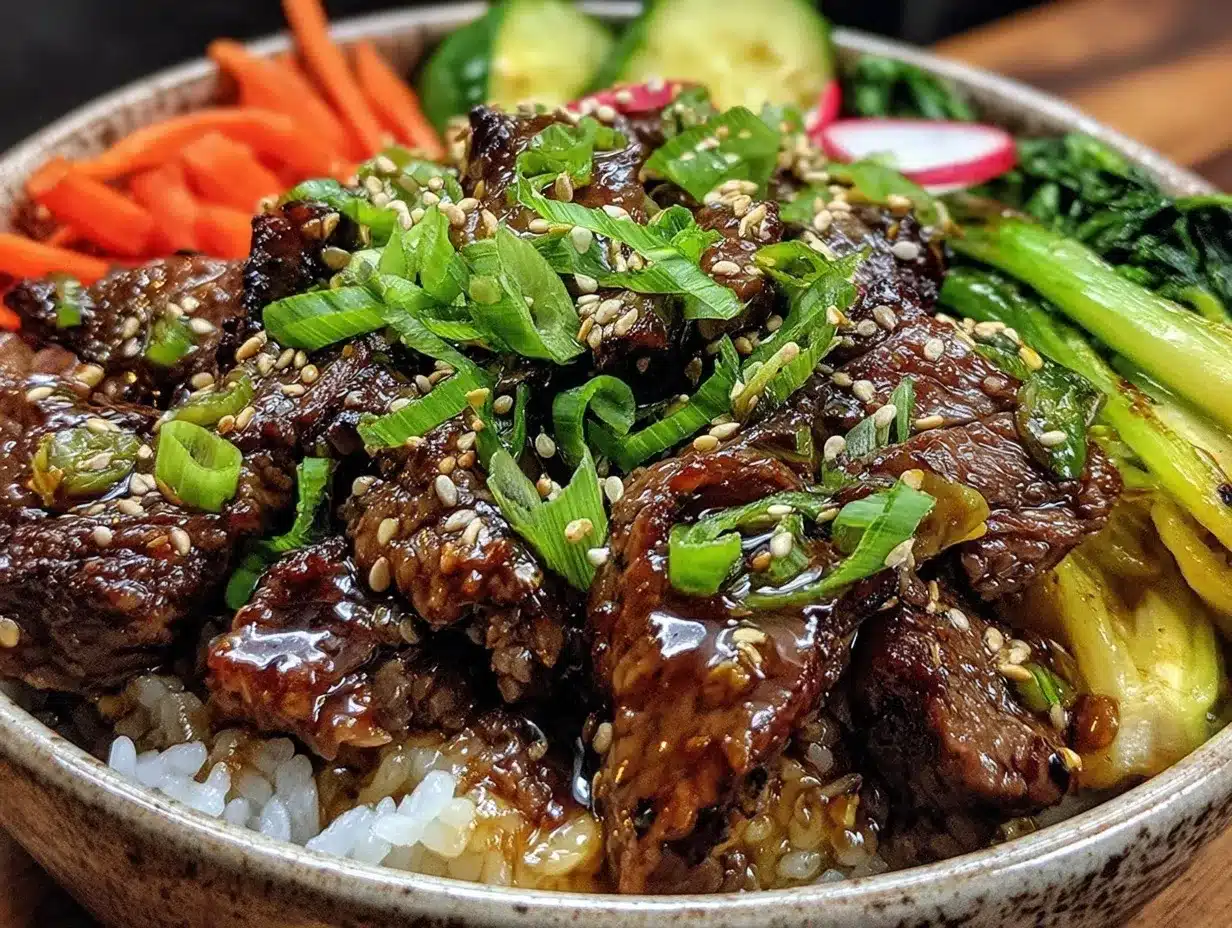
- Prepare the Marinade and Beef (10 minutes): In a large mixing bowl, combine 1/4 cup soy sauce, 2 tablespoons brown sugar, 2 tablespoons toasted sesame oil, minced garlic, grated ginger, rice vinegar, and red pepper flakes if using. Whisk until sugar dissolves. Add the thinly sliced beef and toss to coat evenly. Cover and let it marinate in the fridge for at least 15 minutes, or up to 2 hours for deeper flavor.
- Cook the Rice (15-20 minutes): While the beef marinates, cook 2 cups of rice according to package instructions. Fluff with a fork when done and keep warm. If using a rice cooker, simply rinse the rice until water runs clear for the best texture.
- Prep the Fresh Veggies (5-7 minutes): Thinly slice the cucumber and green onions, shred the carrots, and rinse the spinach or kale. If you prefer, lightly wilt the greens in a hot pan with a teaspoon of sesame oil for 1-2 minutes, then set aside.
- Cook the Beef (5-7 minutes): Heat a non-stick skillet or cast-iron pan over medium-high heat until hot. Add the marinated beef in a single layer (work in batches if needed). Let it sear undisturbed for 2-3 minutes to get a nice crust, then stir and cook for another 2-3 minutes until fully cooked and slightly caramelized. Avoid overcrowding to keep that perfect sear.
- Assemble the Bowls (3-5 minutes): Divide the warm rice into bowls. Top each with cooked bulgogi beef, shredded carrots, cucumber, spinach or kale, and green onions. Sprinkle toasted sesame seeds on top. Add a side of kimchi or pickled radish if you have it for an extra flavor punch.
- Final Touches: For a little extra zing, drizzle a small amount of extra sesame oil or a splash of soy sauce. Serve immediately while everything is warm and fresh.
Pro tip: If your beef starts releasing too much liquid, raise the heat slightly to help it evaporate and keep those edges crispy. Also, don’t rush the searing step—it’s where flavor builds.
Cooking Tips & Techniques
Getting this bulgogi bowl just right is all about balance and timing. From my many attempts (and a few burnt batches), here’s what I’ve learned:
- Marinate the meat: Even 15 minutes helps, but a couple of hours gives that deep, caramelized flavor. I once forgot to marinate, and it tasted flat, so don’t skip this!
- Use thinly sliced beef: It cooks quickly and soaks in the marinade. If your store doesn’t have bulgogi beef, freeze a larger cut for 30 minutes and slice thinly yourself.
- High heat searing: A hot pan is non-negotiable for that slightly crispy edge. Don’t overcrowd, or the beef will steam instead of sear.
- Fresh veggies: They balance the rich beef. Try to prep them just before serving so they stay crisp.
- Timing is key: Cook rice first, then beef last so it stays piping hot. You can prep veggies ahead but keep them chilled to maintain freshness.
Honestly, one time I started cooking with a distracted mind and added the garlic too late. The flavor was off, reminding me how crucial layering those aromatics is. So, trust the process and enjoy the little kitchen dance.
Variations & Adaptations
One of the best things about this bulgogi bowl is how adaptable it is to your taste and dietary needs.
- Vegetarian Version: Swap beef for firm tofu or tempeh. Press and marinate tofu the same way for at least 30 minutes, then pan-fry until golden.
- Spicy Twist: Add gochujang (Korean chili paste) to the marinade or drizzle on top for a fiery kick. I sometimes mix a teaspoon into the sauce when I want extra heat.
- Gluten-Free: Use tamari or coconut aminos instead of soy sauce. It keeps the flavor authentic without gluten.
- Seasonal Veggies: Swap cucumber and carrots for sautéed mushrooms, bell peppers, or even roasted sweet potatoes in fall and winter.
- Low-Carb Option: Replace rice with cauliflower rice or a bed of mixed greens for a lighter bowl.
I once made this with leftover roast chicken instead of beef, tossed in the marinade briefly, and it was surprisingly good—comfort food meets improvisation!
Serving & Storage Suggestions
Serve your bulgogi bowl warm for the best experience. The aroma alone makes it feel like a celebration. Garnish with extra green onions and sesame seeds right before serving to keep things fresh and vibrant.
Pair it with simple sides like steamed edamame, a crisp cucumber salad, or a light soup like miso to round out the meal. For drinks, a chilled barley tea or a light lager complements the flavors nicely.
Leftovers? Store the beef and veggies separately from the rice in airtight containers in the fridge for up to 3 days. When reheating, warm the beef gently in a skillet to keep it juicy, and microwave the rice with a sprinkle of water to keep it moist.
Flavors tend to meld beautifully after a day, so leftovers can taste even better. Just add fresh veggies or a quick side of kimchi for brightness before serving again.
Nutritional Information & Benefits
This Korean beef bulgogi bowl offers a satisfying mix of protein, fiber, and vitamins. The beef provides iron and B vitamins, essential for energy and overall health. Fresh veggies add fiber and antioxidants, supporting digestion and immunity.
Using lean cuts of beef and controlling the sugar in the marinade keeps it balanced. For those watching carbs, swapping rice for cauliflower rice lowers the glycemic load.
Keep in mind, the dish contains soy and sesame, common allergens. If needed, substitutions like coconut aminos can reduce soy exposure.
From a wellness perspective, this bowl hits the sweet spot between indulgence and nourishment—comfort food that doesn’t leave you feeling heavy or sluggish.
Conclusion
This flavorful Korean beef bulgogi bowl with fresh veggies is a recipe that’s both simple and satisfying, making it a wonderful addition to your weeknight dinner lineup. I love how it brings together bold flavors, fresh textures, and that little touch of sweetness that keeps you coming back for more.
Feel free to tweak the veggies, spice level, or protein to suit your preferences—this bowl is forgiving and adaptable. Honestly, it’s one of those dishes that feels like a warm hug after a long day.
If you give it a try, I’d love to hear how you made it your own—drop a comment or share your favorite twist. Cooking is a journey, and this bulgogi bowl might just become your next favorite stop.
Enjoy every flavorful bite!
FAQs
Can I use other cuts of beef for bulgogi?
Yes! Thinly sliced ribeye or sirloin works best for tenderness and quick cooking. If you can’t find bulgogi beef, freezing a thicker cut for 30 minutes before slicing thinly helps.
How long should I marinate the beef?
At least 15 minutes is good for quick flavor, but 1-2 hours or overnight gives the best depth and tenderness.
What can I substitute for soy sauce?
Tamari or coconut aminos are great gluten-free alternatives that still provide that umami flavor.
Can I prepare this recipe ahead of time?
You can marinate the beef and prep veggies in advance. Cook the beef and rice just before serving for the freshest taste.
Is it okay to add spicy elements?
Absolutely! Adding gochujang or red pepper flakes to the marinade or as a drizzle on top adds a delicious spicy kick.
Pin This Recipe!
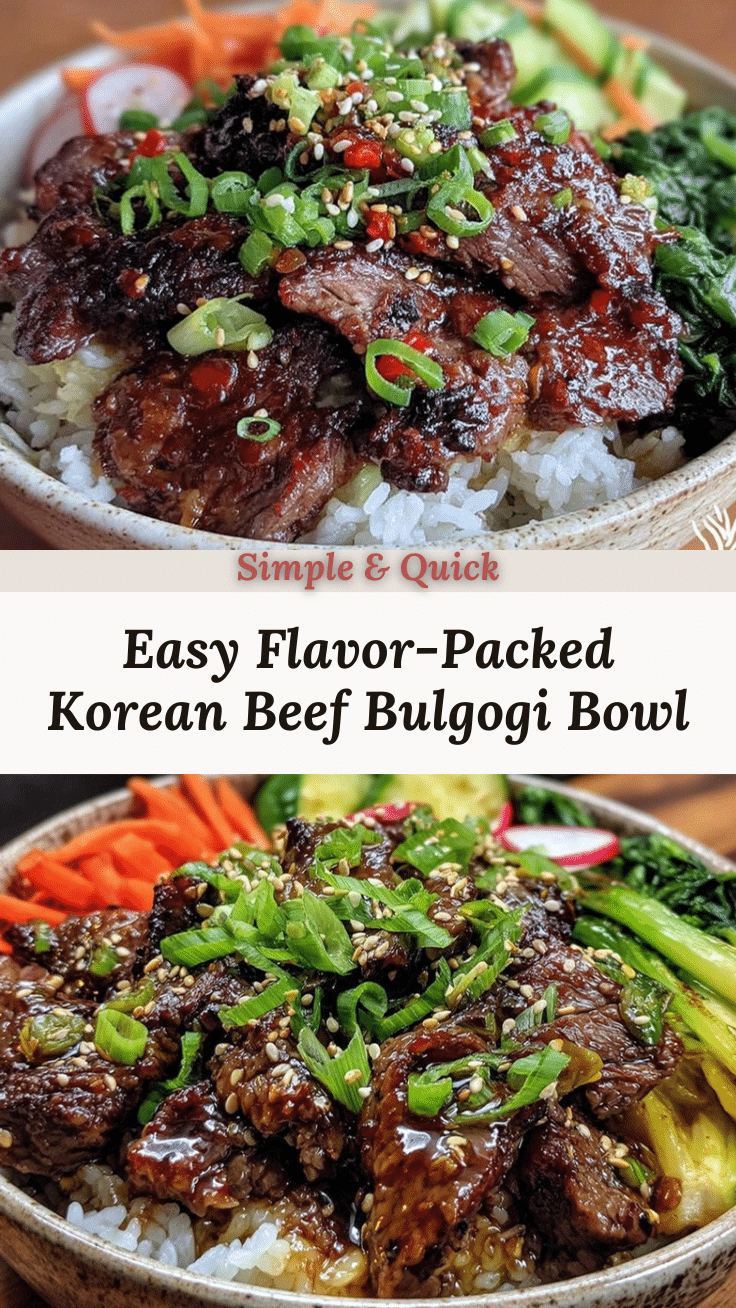
Korean Beef Bulgogi Bowl
A quick and easy Korean beef bulgogi bowl featuring tender marinated beef, fresh veggies, and fluffy rice, perfect for flavorful weeknight dinners.
- Prep Time: 15 minutes
- Cook Time: 15 minutes
- Total Time: 30 minutes
- Yield: 4 servings 1x
- Category: Main Course
- Cuisine: Korean
Ingredients
- 1 pound thinly sliced beef ribeye or sirloin
- 1/4 cup soy sauce
- 2 tablespoons brown sugar
- 2 tablespoons toasted sesame oil
- 3 cloves garlic, minced
- 1 teaspoon freshly grated ginger
- 1 tablespoon rice vinegar
- 1/2 teaspoon crushed red pepper flakes (optional)
- 2 cups cooked jasmine rice or short-grain rice
- 1 cup shredded carrots
- 1 cup thinly sliced cucumber
- 1 cup fresh spinach or baby kale
- 2 green onions, sliced
- 1 tablespoon toasted sesame seeds
- Pickled radish or kimchi (optional)
Instructions
- In a large mixing bowl, combine soy sauce, brown sugar, toasted sesame oil, minced garlic, grated ginger, rice vinegar, and red pepper flakes if using. Whisk until sugar dissolves.
- Add the thinly sliced beef and toss to coat evenly. Cover and marinate in the fridge for at least 15 minutes or up to 2 hours.
- Cook 2 cups of rice according to package instructions. Fluff with a fork and keep warm.
- Thinly slice cucumber and green onions, shred carrots, and rinse spinach or kale. Optionally, lightly wilt greens in a hot pan with a teaspoon of sesame oil for 1-2 minutes.
- Heat a non-stick skillet or cast-iron pan over medium-high heat until hot. Add marinated beef in a single layer, sear undisturbed for 2-3 minutes, then stir and cook another 2-3 minutes until fully cooked and caramelized. Avoid overcrowding.
- Divide warm rice into bowls. Top with cooked beef, shredded carrots, cucumber, spinach or kale, and green onions.
- Sprinkle toasted sesame seeds on top and add kimchi or pickled radish if desired.
- Optionally drizzle extra sesame oil or soy sauce before serving. Serve immediately.
Notes
Marinate beef for at least 15 minutes for flavor; longer marination (1-2 hours) enhances taste. Use high heat for searing to get caramelized edges. Avoid overcrowding the pan to prevent steaming. Fresh veggies add balance and texture. For gluten-free, substitute soy sauce with tamari or coconut aminos. Vegetarian version can use firm tofu or tempeh marinated and pan-fried similarly.
Nutrition
- Serving Size: 1 bowl (including be
- Calories: 450
- Sugar: 8
- Sodium: 900
- Fat: 18
- Saturated Fat: 4
- Carbohydrates: 45
- Fiber: 4
- Protein: 30
Keywords: Korean beef bulgogi, bulgogi bowl, Korean recipe, beef stir-fry, easy dinner, weeknight meal, Korean marinade