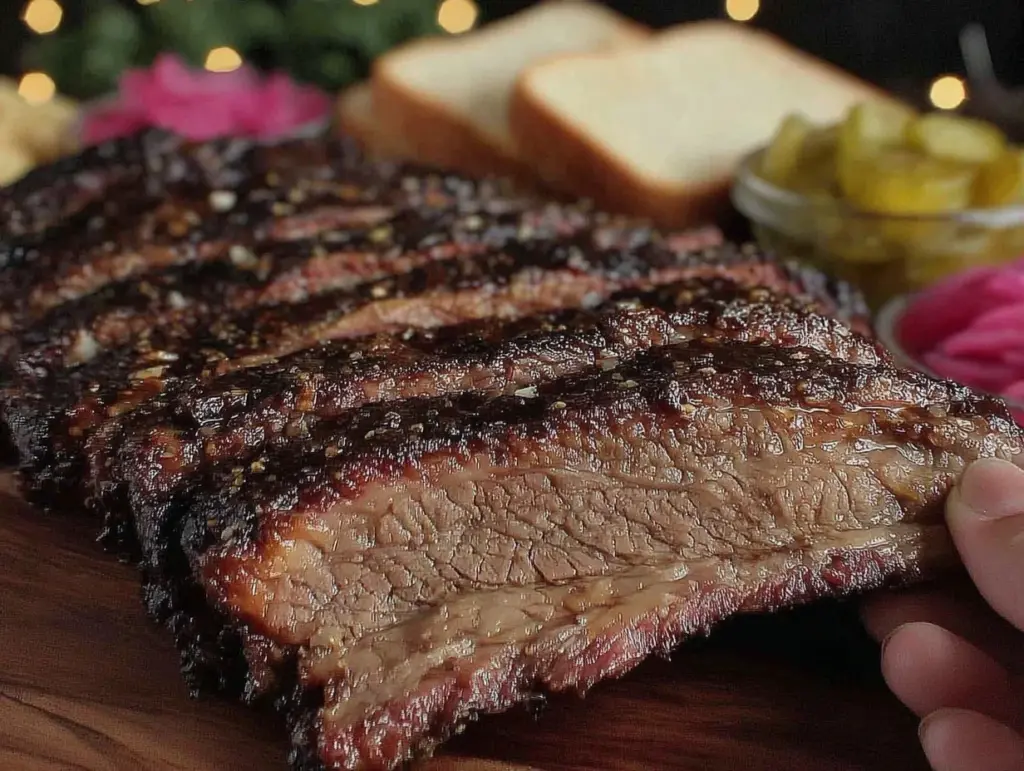
There’s nothing quite like the smoky perfume of a Texas-style smoked brisket drifting through the backyard on a sunny afternoon. The first time I opened my smoker and saw that glistening, mahogany bark hugging a juicy brisket, I swear my knees got a little wobbly. That aroma—rich beef mingling with sweet oak—took me straight back to family reunions under wide Texas skies, my uncle tending the pit and doling out slices to hungry cousins (we were all lined up, napkins tucked in, plates outstretched).
I was pretty young the first time I tasted brisket with that real, crackly bark. You know, the kind that shatters a bit under your teeth, giving way to meat so tender you barely need a knife. It’s the kind of moment where you pause, take a deep breath, and just smile because you know you’ve hit something truly special. Years ago, I was the kid sneaking burnt ends from the cutting board while my dad pretended not to notice. Those flavors stuck with me, and now, I can’t help but chase that same magic every time I fire up the smoker.
There’s something dangerously easy about this recipe—once you get the basics down, you’ll find yourself making excuses to smoke brisket for every occasion. My family always hovers around the pit, “taste-testing” the trimmings (I’m guilty too, honestly). This brisket is perfect for big game days, potlucks, backyard parties, or just a weekend when you want to treat yourself to pure, nostalgic comfort. I wish I’d cracked the code on that authentic bark years ago.
I’ve tested this recipe more times than I can count—in the name of research, of course—and it’s become a staple for family gatherings and neighborhood cookouts. Each brisket feels like a warm hug, and you’re going to want to bookmark this one. Let’s get to it, and bring a little Texas smoke to your kitchen!
Why You’ll Love This Texas-Style Smoked Brisket
Having cooked my way through countless briskets (and a few heartbreaks), I can confidently say this Texas-style smoked brisket recipe is the real deal. It’s not just about the meat—it’s about the process, the flavors, and the memories you’ll make around the smoker. Here’s why this recipe has folks raving every time:
- Quick & Easy (for brisket!): While brisket takes its time, this recipe breaks down each step so you’re never overwhelmed. Perfect for both first-timers and seasoned pitmasters.
- Simple Ingredients: No need for fancy rubs or secret sauces. You’ll only need salt, pepper, and a touch of garlic powder—the Texas trifecta.
- Perfect for Gatherings: There’s nothing like sharing brisket with friends, family, or even your neighbors. It feeds a crowd and feels like a celebration every single time.
- Crowd-Pleaser: I haven’t met anyone who can resist a slice of juicy brisket with a crunchy bark. It’s always the highlight at any get-together.
- Unbelievably Delicious: That balance of smoky, peppery bark and buttery, tender meat? Pure comfort food. Every bite is packed with flavor and tradition.
What sets this Texas-style smoked brisket recipe apart? It’s all about simplicity and patience. We skip the complicated injections or sugary rubs and stick to the basics—letting the smoke do the heavy lifting. I always use a blend of post oak and a little hickory for that classic flavor, and I wrap the brisket just in time to protect the bark but keep it moist inside.
This isn’t just another brisket—it’s the one that’ll have you closing your eyes after each bite, savoring every moment. You can trust this method because it’s been tested (and devoured) by picky eaters, BBQ enthusiasts, and my own family, who never hold back with their feedback. It’s comfort food, Texas-style, made just the way you want it: honest, approachable, and downright delicious.
Whether you’re impressing a crowd or just treating yourself, this recipe promises less fuss, more flavor, and a brisket that’s sure to become your go-to. Ready to create those legendary backyard memories? Let’s get started!
What Ingredients You Will Need
This recipe uses simple, wholesome ingredients to deliver bold flavor and that signature, authentic bark. You’ll find most of these are pantry staples, and if you’ve smoked a brisket before, you might even have a few of these ready to go. Here’s what you’ll need for the perfect Texas-style smoked brisket:
- Whole packer brisket (12-14 lbs or 5.5-6.5 kg): Look for USDA Choice or Prime for best results. The fat cap should be even and the meat flexible when you pick it up.
- Kosher salt (1/4 cup or 60g): The foundation of a good bark. I prefer Diamond Crystal for its texture.
- Coarse black pepper (1/4 cup or 30g): Freshly cracked for max flavor. It creates that classic Texas crust.
- Garlic powder (1 tablespoon or 9g): Not strictly traditional, but it adds a subtle savoriness. You can skip it if you want pure classic.
- Mustard (2 tablespoons or 30ml): Acts as a binder, helps the rub stick. The flavor won’t come through, so use what you have (yellow or Dijon are fine).
- Post oak or hickory wood chunks: For that authentic Texas smoke. You can use a mix of woods if needed, but post oak is king in Central Texas.
Optional Add-Ons:
- Worcestershire sauce (2 tablespoons or 30ml): Some pitmasters spritz with this for extra umami, but it’s not a must.
- Apple cider vinegar and water (mixed 1:1 in a spray bottle): For spritzing if your bark starts to look dry during smoking.
Ingredient Tips:
- If you can’t find post oak, mix oak with a bit of hickory or pecan. Avoid mesquite unless you want a much stronger smoke flavor.
- For a smaller brisket, reduce the rub proportionally. For a larger one, just scale up the salt and pepper.
- Substitute garlic powder with onion powder if desired, or skip it for a purist approach.
- To make it gluten-free, double-check your mustard and any sauces you choose to use.
These ingredients are the backbone of Texas BBQ. No brown sugar, no paprika—just honest flavors and smoke. Trust me, you won’t miss the extras.
Equipment Needed
You don’t need a fancy backyard setup to make amazing Texas-style smoked brisket, but a few trusty tools make all the difference. Here’s what you’ll need:
- Offset smoker or pellet grill: The classic choice is an offset barrel smoker, but pellet grills or even a kettle grill with a smoking setup work in a pinch. I’ve used all three—each has its quirks, but they all can make great brisket.
- Chimney starter: For safely lighting your charcoal if using a coal-fired smoker.
- Instant-read meat thermometer: Essential for checking doneness. I swear by my ThermoWorks Thermapen for accuracy, but any reliable digital model will do.
- Large cutting board: Preferably with a juice groove. Brisket is juicy!
- Long, sharp slicing knife: A 12-inch slicing knife or brisket knife lets you get those clean, even slices. If you don’t have one, a long chef’s knife works in a pinch—just sharpen it well.
- Butcher paper or heavy-duty aluminum foil: For wrapping the brisket (“the Texas crutch”). Pink butcher paper is my favorite—it keeps the bark from getting soggy, but foil works if that’s what you’ve got.
- Spray bottle: For spritzing with water or vinegar if needed.
- Pair of heat-resistant gloves: Makes handling the hot brisket a breeze.
- Sheet pan or roasting tray: For moving the brisket around and letting it rest.
If you’re just starting, don’t stress about getting everything brand-name or top-of-the-line. I’ve made plenty of briskets with a simple kettle grill and a few bricks to set up indirect heat. Just keep your tools clean, especially your thermometer and knives, and you’ll be set for brisket success.
How to Make Tender Texas-Style Smoked Brisket with Authentic Bark
-
Trim the Brisket (15 minutes):
- Start with a cold brisket—it’s easier to handle. With a long, sharp knife, trim any hard fat off the top and sides, leaving about 1/4 inch (6mm) fat cap on top for moisture and flavor.
- Remove thin edges (they’ll just dry out) and any silver skin underneath. Don’t over-trim; you want some fat left for basting.
Personal tip: Don’t toss the trimmings—render them down for beef tallow if you’re feeling ambitious!
-
Apply the Rub (5 minutes):
- Slather the brisket all over with mustard (2 tablespoons or 30ml) to help the rub stick.
- Mix together kosher salt (1/4 cup or 60g), coarse black pepper (1/4 cup or 30g), and garlic powder (1 tablespoon or 9g). Sprinkle generously and evenly on all sides.
Sensory cue: The brisket should look speckled and well-coated, not clumpy.
-
Preheat Your Smoker (30 minutes):
- Get your smoker up to 225-250°F (107-121°C). Add post oak or hickory wood chunks for smoke flavor.
- Set up for indirect heat; coals or pellets should be off to one side, brisket goes on the cool side.
Warning: Don’t rush preheating—steady temp is key for bark development.
-
Start Smoking (6-8 hours):
- Place the brisket fat side up on the smoker grates. Insert a thermometer into the thickest part (the “flat”).
- Close the lid and smoke, maintaining 225-250°F (107-121°C) the whole time. Add more wood as needed to keep a steady stream of thin blue smoke.
- Check brisket every 60-90 minutes. If the bark looks dry, spritz with the vinegar/water mix.
Sensory cue: The bark will get deep and dark, and the fat should start to render and pool on top.
-
The Stall & Wrapping (when brisket hits 160°F/71°C):
- When the brisket stalls (internal temp plateaus around 155-165°F/68-74°C), wrap it tightly in butcher paper or foil. This locks in moisture and helps power through the stall.
- Return to the smoker, seam side down.
Personal tip: Butcher paper keeps the bark crisper than foil, but foil will get you there faster.
-
Finish Smoking (2-4 hours more):
- Continue cooking until the brisket hits 200-205°F (93-96°C) internal temp. Probe with your thermometer—it should slide in like butter in the thickest part.
Warning: Don’t go by color alone—always check tenderness in several spots.
-
Rest the Brisket (1-2 hours):
- Remove from smoker and keep wrapped. Place on a clean sheet pan, cover with a towel, and let rest for at least 1 hour (up to 2 is even better).
Sensory cue: The juices will redistribute, making every slice tender and moist.
-
Slice and Serve:
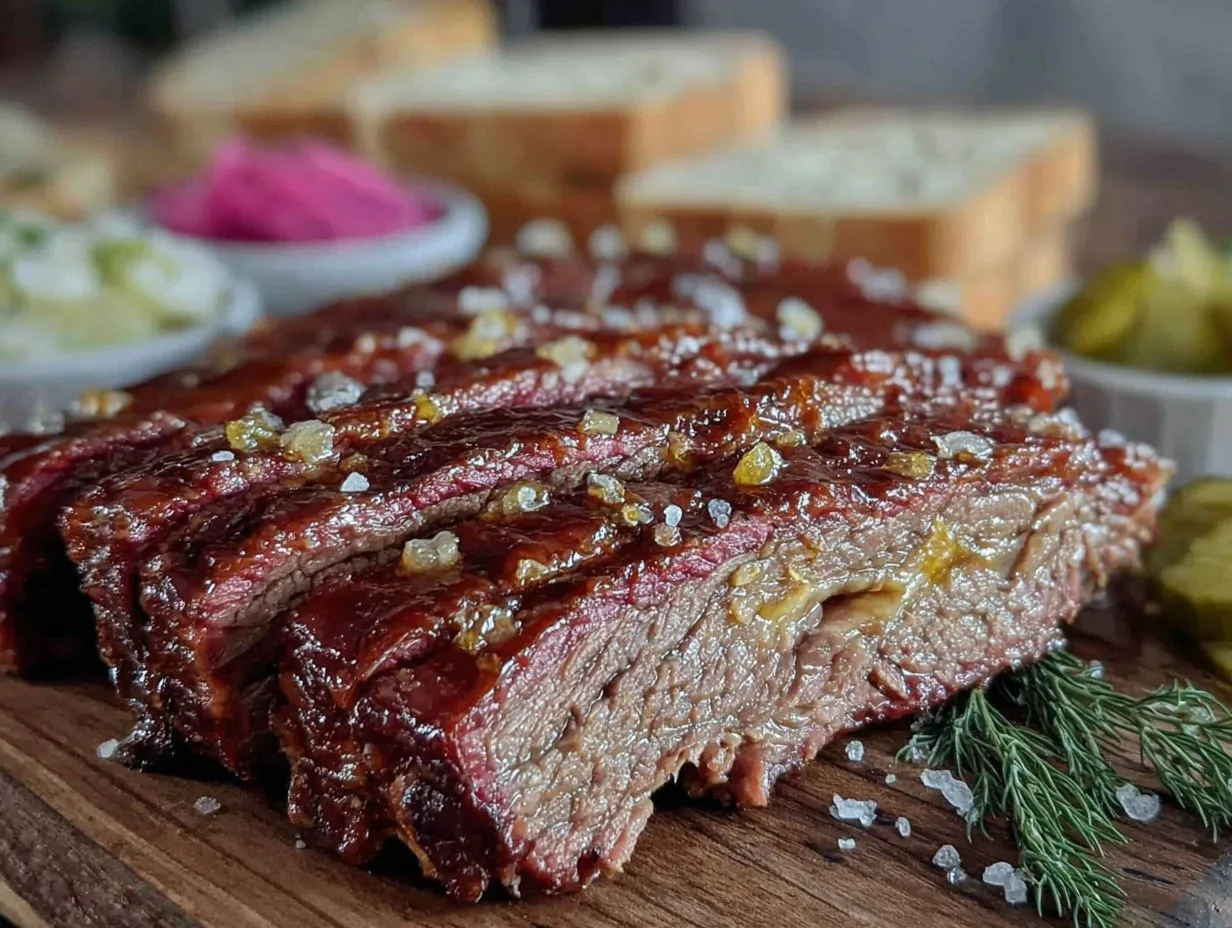
- Slice against the grain into 1/4-inch (6mm) thick pieces. The point (fattier end) and flat (leaner end) run in different directions—watch for the grain shift!
- Serve hot, with your favorite fixings or just straight up.
Personal tip: Wipe your knife every few slices for picture-perfect brisket.
If your bark looks pale, let it smoke unwrapped for another 30-60 minutes. If the brisket seems tough, it probably needs a bit more time—don’t rush it. Once you’ve got the basics, brisket becomes a labor of love that’s always worth the wait.
Cooking Tips & Techniques for Authentic Texas Brisket
- Control That Temperature: The biggest mistake I made early on was letting the smoker fluctuate too much. Watch your fire—too hot and you’ll burn the bark; too cold and your brisket will dry out. Aim for that sweet spot, 225-250°F (107-121°C), and resist opening the lid too often.
- Don’t Oversmoke: You want a thin, steady smoke—not clouds. If the smoke turns white and billowy, you’ll end up with bitter meat. Stick to well-seasoned wood and don’t overload the firebox.
- Probe for Doneness, Not Just Temp: The thermometer is helpful, but the true test is tenderness. When your probe slides in with no resistance, you’re there. I’ve pulled briskets a little early and regretted it—patience pays off.
- Wrap at the Right Moment: Wrapping too soon can give you a soggy bark, but waiting too long risks dryness. I wrap when the bark is set and the internal temp hits 160°F (71°C).
- Rest Generously: It’s tempting to slice right away, but brisket needs to rest so the juices redistribute. I wrap mine in towels and drop it in a cooler if I’m delaying serving—works like a charm.
- Multitasking: Use your downtime to prep sides, clean up, or just kick back. Brisket is a “low and slow” event, so enjoy the process!
Honestly, I’ve had briskets that looked perfect outside but were tough as shoe leather inside. Every smoker is a little different—take notes and tweak your method each time. With a little practice, you’ll hit that sweet spot of juicy, tender meat with a bark that’s truly worth showing off on Pinterest (or just to your hungry family)!
Texas-Style Smoked Brisket Variations & Adaptations
- Low-Carb/Keto: This recipe is already low-carb, but you can skip the mustard binder or use olive oil if you’re avoiding processed foods. Serve with roasted veggies or a tangy slaw for a full keto meal.
- Spicy Brisket: Add 1 tablespoon (7g) of cayenne or chipotle powder to your rub for some Texas heat. I sometimes sneak a pinch of ancho chile powder for depth.
- Oven Method: No smoker? No problem. Prep your brisket the same way, roast uncovered at 250°F (121°C) for 6-8 hours on a wire rack over a baking sheet. Add a small pan of water for moisture and finish wrapped at the end. You won’t get smoke, but you’ll still get a lovely bark.
- Different Woods: If you want a sweeter flavor, try pecan or applewood. Avoid strong woods like mesquite unless you’re a smoke fanatic.
- Allergen-Friendly: For a mustard allergy, use mayonnaise or even just water as your binder (it works, I promise!).
I’ve tried a coffee-rubbed version before—just add 1 tablespoon of finely ground coffee to the rub. The result? Deep, earthy bark that pairs great with bourbon or a bold red wine. Don’t be afraid to make this brisket your own—every pitmaster has their secret touch!
Serving & Storage Suggestions
For best results, serve your Texas-style smoked brisket hot, right after resting. Arrange slices on a big wooden cutting board or platter—let folks see that beautiful bark! I like to keep sides simple: white bread, pickles, sliced onions, and a little BBQ sauce on the side (never on top, if you’re a purist).
Brisket pairs well with creamy potato salad, tangy coleslaw, or a pot of slow-cooked beans. For drinks, sweet tea or a cold beer never misses. If you’re planning ahead, brisket is even better the next day—just store leftovers tightly wrapped in foil or butcher paper, then place in an airtight container and refrigerate for up to 4 days.
To freeze, slice the brisket and wrap tightly in foil, then in a freezer-safe bag. Thaw overnight in the fridge. To reheat, place slices (still wrapped) in a 250°F (121°C) oven until warmed through—add a splash of beef broth if needed. The bark might soften a little, but the flavor deepens as it rests. Honestly, leftover brisket sandwiches are almost as good as the first round!
Nutritional Information & Benefits
Here’s a rough estimate per 4-ounce (113g) serving of smoked brisket (untrimmed):
- Calories: 320
- Protein: 25g
- Total Fat: 23g (Saturated: 8g)
- Carbs: 0g
- Sugar: 0g
- Sodium: 600mg (depending on rub)
Brisket is rich in protein and iron, making it a hearty choice for an active day. If you’re following a low-carb or ketogenic diet, this recipe fits right in. Be mindful if you’re watching sodium or saturated fat—trimming more fat can help. Allergens? The main ones here are mustard and any cross-contamination with gluten if using certain sauces, but the base recipe is naturally gluten-free and dairy-free. My take: enjoy in moderation and pair with veggie sides for balance!
Conclusion
Texas-style smoked brisket with authentic bark is more than just a meal—it’s a celebration of tradition, patience, and that unbeatable smoky aroma. This recipe takes you straight to a backyard BBQ, no matter where you are. It’s easy enough for beginners but satisfying for seasoned pitmasters, and I promise, the results will have everyone asking for seconds.
Don’t be afraid to make it your own—try a new wood, tweak the rub, or serve with your favorite sides. That’s the beauty of brisket: it fits any gathering and brings folks together. Personally, I love this brisket for the memories it sparks and the smiles it brings to my table. If you give it a try (and I hope you do!), please drop a comment, share your photos, or let me know how you made it yours.
Here’s to smoky kitchens, happy bellies, and a recipe you’ll want to pass down. Fire up that smoker—you’re about to create something legendary!
Frequently Asked Questions
How long does it take to smoke a brisket?
Plan on about 1 to 1.5 hours per pound at 225°F (107°C). For a 12-pound brisket, that’s usually 12-16 hours, including resting time. Low and slow is the way to go!
What’s the secret to getting that authentic Texas bark?
It’s all about a simple salt and pepper rub, steady heat, and letting the brisket smoke unwrapped until a crust forms. Wrapping in butcher paper at the right time helps preserve the bark’s texture without drying out the meat.
Can I make this brisket without a smoker?
Yes! You can use your oven with a little creativity. Roast at a low temp on a wire rack over a sheet pan, add a small pan of water, and finish wrapped. You’ll miss the smoke, but the bark and tenderness will still impress.
What should I do if my brisket turns out tough?
If the brisket is tough, it probably needs more time. Return it to the smoker or oven, keep it wrapped, and check again in 30-45 minutes. Brisket gets tender only after the connective tissue breaks down.
How should I store leftover brisket?
Wrap leftover brisket tightly in foil or butcher paper, then place in an airtight container. Refrigerate for up to 4 days or freeze slices for up to 3 months. Reheat gently to keep it moist.
Pin This Recipe!
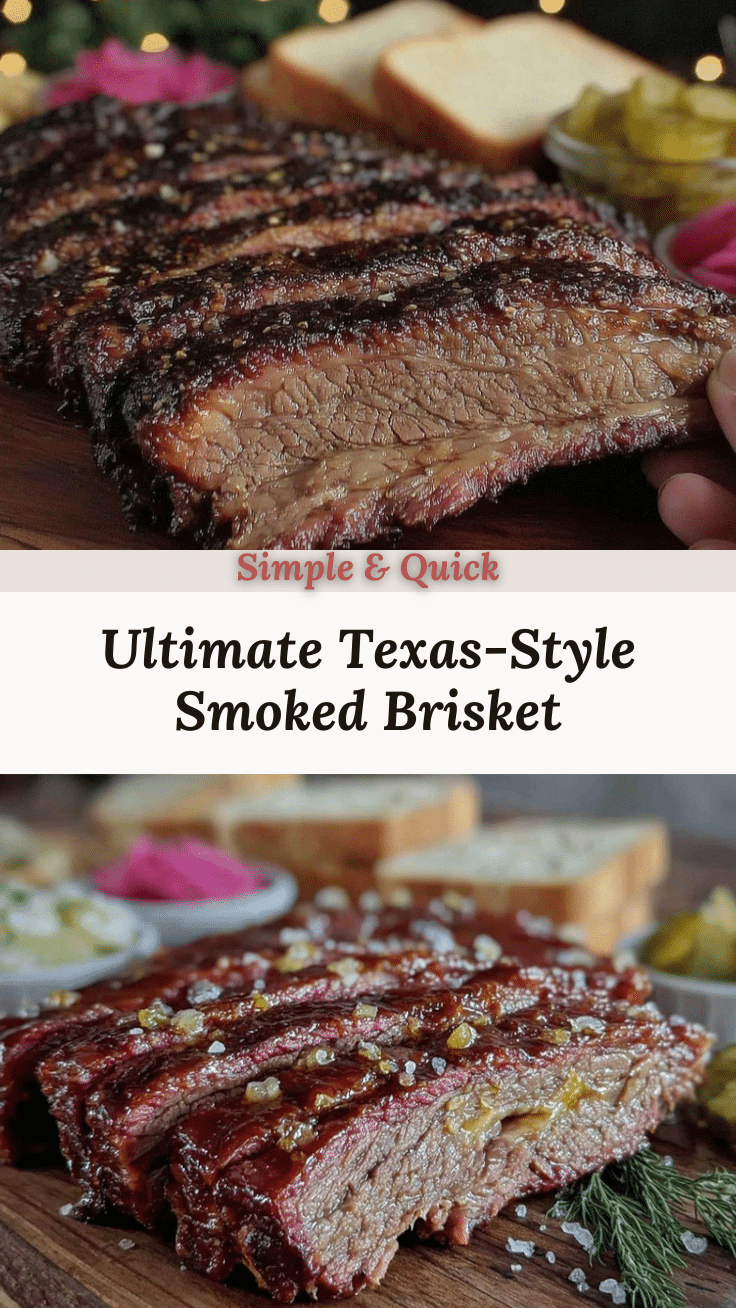
Texas-Style Smoked Brisket Recipe Easy Guide for Authentic Bark
This Texas-style smoked brisket recipe delivers juicy, tender meat with a crackly, mahogany bark using simple ingredients and classic smoking techniques. Perfect for gatherings, game days, or backyard parties, it’s a true taste of Texas tradition.
- Prep Time: 20 minutes
- Cook Time: 10-14 hours
- Total Time: 10.5-14.5 hours
- Yield: 12-16 servings 1x
- Category: Main Course
- Cuisine: American, Texas BBQ
Ingredients
- 1 whole packer brisket (12–14 lbs)
- 1/4 cup kosher salt
- 1/4 cup coarse black pepper
- 1 tablespoon garlic powder (optional)
- 2 tablespoons mustard (yellow or Dijon, as binder)
- Post oak or hickory wood chunks
- Optional: 2 tablespoons Worcestershire sauce (for spritzing)
- Optional: Apple cider vinegar and water (mixed 1:1 in a spray bottle for spritzing)
Instructions
- Trim the brisket: With a sharp knife, trim hard fat off the top and sides, leaving about 1/4 inch fat cap. Remove thin edges and silver skin underneath.
- Apply the rub: Slather brisket with mustard. Mix salt, pepper, and garlic powder, then sprinkle generously and evenly on all sides.
- Preheat smoker to 225-250°F. Add post oak or hickory wood chunks for smoke flavor. Set up for indirect heat.
- Place brisket fat side up on smoker grates. Insert thermometer into thickest part. Smoke, maintaining 225-250°F, for 6-8 hours. Spritz with vinegar/water mix if bark looks dry.
- When brisket stalls at 160°F internal temp, wrap tightly in butcher paper or foil. Return to smoker, seam side down.
- Continue cooking until brisket reaches 200-205°F internal temp (2-4 hours more). Probe for tenderness.
- Remove from smoker, keep wrapped, and rest for at least 1 hour (up to 2 hours).
- Slice against the grain into 1/4-inch thick pieces. Serve hot with sides or as desired.
Notes
Control smoker temperature for best bark. Use butcher paper for crispier bark, foil for faster cooking. Rest brisket generously before slicing. For oven method, roast at 250°F on a wire rack over a baking sheet, finish wrapped. Brisket is naturally gluten-free and dairy-free. Adjust rub for smaller or larger briskets. Store leftovers tightly wrapped and refrigerate up to 4 days or freeze up to 3 months.
Nutrition
- Serving Size: 4 ounces (about 1/4
- Calories: 320
- Sodium: 600
- Fat: 23
- Saturated Fat: 8
- Protein: 25
Keywords: Texas brisket, smoked brisket, BBQ, authentic bark, beef, smoker, backyard barbecue, easy brisket recipe, gluten-free, keto, low-carb