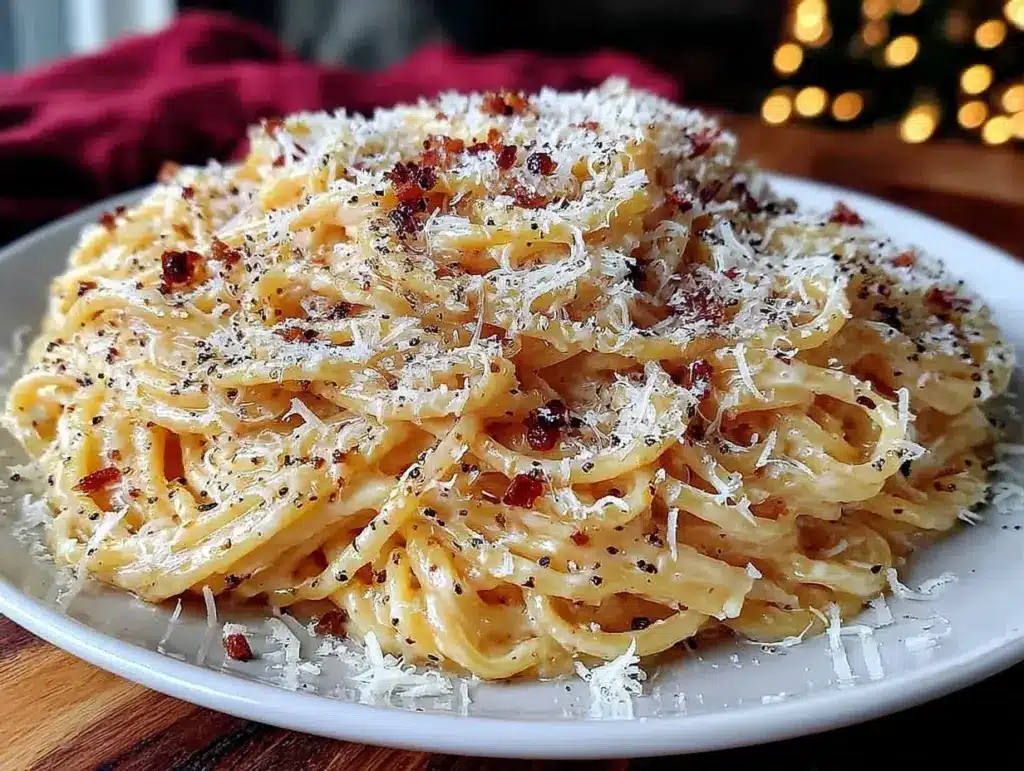
“You won’t believe where I first heard about cacio e pepe,” my friend Luca said one evening as we shared a late dinner. It wasn’t a fancy trattoria or a Michelin-starred place but his tiny, cluttered kitchen in Trastevere. While waiting for the pasta water to boil, he casually tossed together this creamy, peppery sauce that looked too simple to be anything special. But honestly, that first bite was a revelation. The way the Pecorino cheese melted into the pasta, wrapping each strand in a silky, pepper-kissed hug — I was hooked.
It’s funny how some of the best recipes come from moments like those: unexpected, unpretentious, and full of heart. That night, I learned that creamy cacio e pepe isn’t just a dish; it’s a story told through texture and taste. Maybe you’ve been there, craving something comforting but quick. The kind of meal that feels both humble and indulgent. Well, this authentic Roman pasta recipe does exactly that. It’s a little messy (I admit, I spilled some cheese on the counter the first time I tried), but the charm is in that imperfect, homemade vibe.
Every time I make this creamy cacio e pepe, I’m transported back to that warm kitchen, the chatter of friends, and the simple joy of sharing food. It’s the kind of recipe that stays with you, the one you find yourself making again and again because it just hits the spot. So, if you’re ready to bring a little Roman sunshine to your dinner table, let’s get started with this easy, authentic pasta recipe.
Why You’ll Love This Creamy Cacio e Pepe Recipe
From my many attempts perfecting this classic, I can say with confidence that this creamy cacio e pepe recipe is a keeper. It’s one of those dishes that feels fancy but comes together faster than you’d expect. Here’s why you might find yourself making it often:
- Quick & Easy: Ready in about 20 minutes – ideal for those busy evenings or whenever hunger strikes suddenly.
- Simple Ingredients: Uses just a handful of staples you probably already have: Pecorino Romano, black pepper, pasta, and pasta water.
- Perfect for Cozy Nights: It’s that comforting plate you crave after a long day, with creamy texture and a peppery kick.
- Crowd-Pleaser: I’ve brought this to potlucks and family dinners where it always disappears fast, even among picky eaters.
- Unbelievably Delicious: The secret lies in the technique – creating a creamy sauce without cream, just cheese and pasta water! This makes it authentic and exquisitely silky.
This isn’t just another pasta with cheese. The magic is in how the Pecorino Romano cheese blends with hot pasta water, emulsifying into a luscious coating. And don’t underestimate the black pepper — freshly cracked, it gives that signature sharp warmth that balances the richness. Honestly, once you try this, you’ll understand why Roman cooks swear by it.
What Ingredients You Will Need
This recipe shines because of its simplicity. Each ingredient plays a vital role, delivering bold flavor and that creamy texture without fuss. Here’s what you’ll gather:
- Spaghetti or Tonarelli Pasta – 12 oz (340 g); I prefer spaghetti for its classic feel, but tonarelli is traditional in Rome.
- Pecorino Romano Cheese – 1 ½ cups (150 g), finely grated; look for aged Pecorino with sharp, tangy notes. Brands like Locatelli work beautifully.
- Freshly Cracked Black Pepper – 2 teaspoons, plus extra for serving; freshly cracked is key to bring the full aroma and flavor.
- Salt – For pasta water; use coarse sea salt if you can.
- Water – For boiling pasta and making the sauce.
Note: No cream, butter, or oil here — the creaminess comes purely from the cheese and pasta water. If you want a gluten-free option, you could try a gluten-free spaghetti, but expect slightly different texture.
Equipment Needed
- Large Pot – For boiling pasta; a wide pot helps pasta cook evenly.
- Large Skillet or Pan – To mix pasta with cheese and pepper; non-stick or stainless steel both work.
- Fine Grater or Microplane – Essential for finely grating Pecorino Romano; a coarse grate won’t melt as smoothly.
- Measuring Spoons – For pepper and salt.
- Tongs or Pasta Fork – To toss pasta efficiently.
- Mixing Bowl – Optional, if you prefer mixing cheese and water before combining with pasta.
Personally, I’ve found that a good microplane makes a huge difference; it’s worth investing in one if you don’t have it. For budget-friendly cooks, a box grater works too but expect a bit more effort. Also, a sturdy skillet with a wide base helps create that silky sauce more easily – I use my trusty stainless steel pan that’s seen better days but still goes strong.
Preparation Method
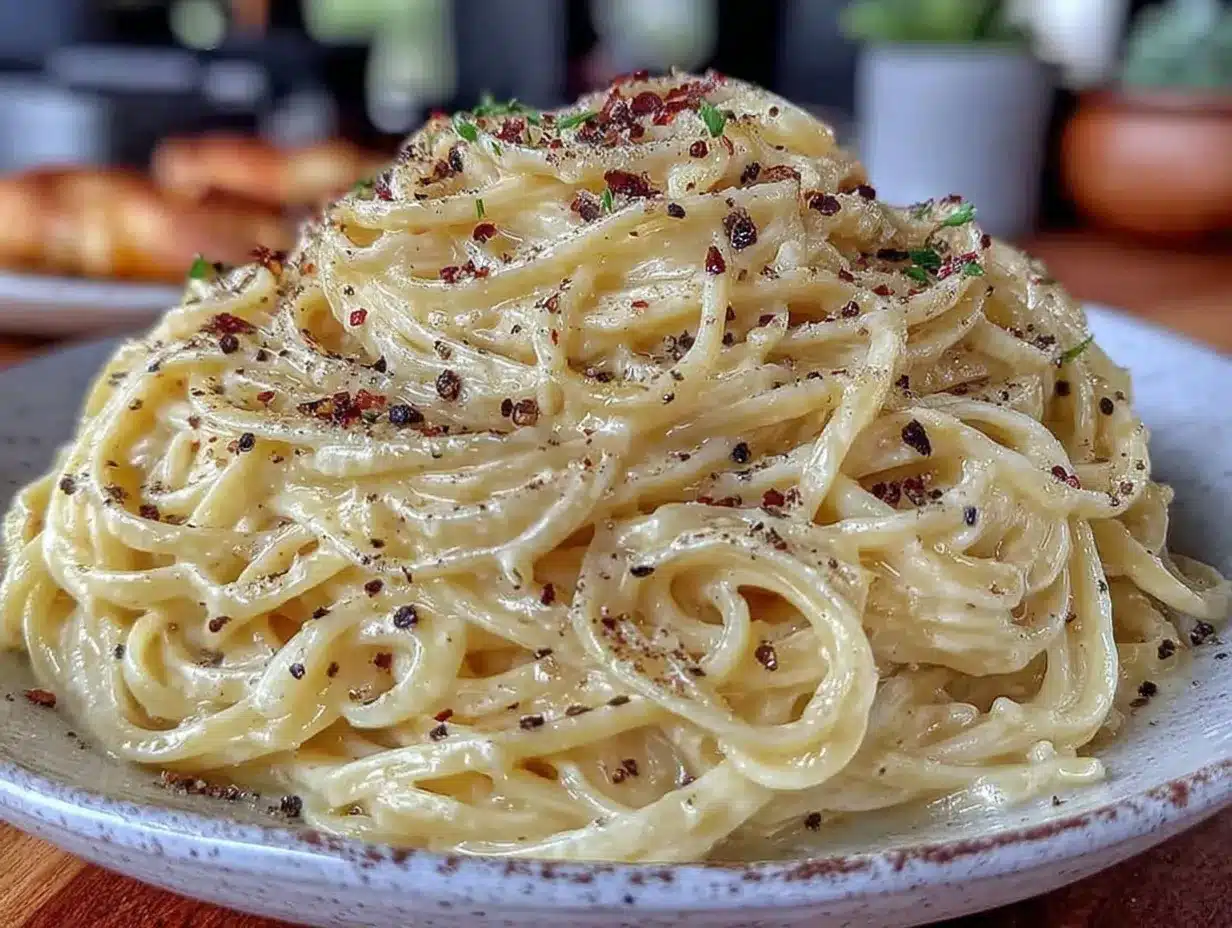
- Boil the Pasta: Bring a large pot of salted water to a rolling boil. Add 12 oz (340 g) spaghetti and cook until just shy of al dente, about 7-8 minutes (check package instructions). The pasta should have a little bite left since it will cook more in the sauce.
- Reserve Pasta Water: Before draining, scoop out about 1 ½ cups (350 ml) of the starchy pasta water and set aside. This liquid is crucial for the sauce’s creaminess.
- Toast the Pepper: While pasta cooks, heat a large skillet over medium heat. Add 2 teaspoons freshly cracked black pepper and toast for about 1 minute, stirring constantly until fragrant. This releases the essential oils and deepens flavor.
- Add Pasta to the Pan: Drain pasta quickly and transfer it directly to the skillet with toasted pepper. Toss to coat evenly.
- Make the Sauce: Gradually add reserved pasta water to the skillet, about ½ cup (120 ml) at a time, tossing the pasta to combine. The starches in the water help the sauce bind.
- Add the Cheese: Remove skillet from heat to avoid clumping. Slowly sprinkle 1 ½ cups (150 g) finely grated Pecorino Romano over the pasta while tossing vigorously with tongs or a fork. Add more pasta water as needed to create a creamy, silky sauce that clings to each strand.
- Adjust Consistency: If sauce feels too thick or clumpy, add a splash more reserved pasta water and keep tossing. The goal is a smooth, creamy coating without dry cheese bits.
- Final Touch: Taste and add a pinch of salt if needed (remember Pecorino is salty). Finish with an extra crack of black pepper on top for a little heat punch.
- Serve Immediately: Plate your creamy cacio e pepe hot, garnished with a sprinkle of cheese and pepper.
Note: Timing is everything here – don’t let the pasta sit too long before mixing with cheese or the sauce won’t emulsify properly. When I first made this, I wiped out my kitchen counter trying to grate cheese too fast, so take your time and enjoy the process!
Cooking Tips & Techniques for Perfect Cacio e Pepe
Making creamy cacio e pepe might seem simple, but there are a few tricks to keep in mind for that flawless silky sauce:
- Use Hot Pasta Water: The starchy water is your secret weapon for sauce emulsion. Don’t skip reserving enough before draining.
- Grate Cheese Finely: Pecorino should be almost powdery to melt quickly and blend smoothly. Avoid pre-grated cheese—it won’t behave the same.
- Toss Off Heat: Always mix cheese off direct heat to prevent clumping or stringiness.
- Work Quickly: Pasta cools fast, and cheese can seize up. Have everything ready and toss immediately after draining.
- Toast Pepper Freshly: Cracking pepper freshly and toasting brings out the oils and flavor complexity, elevating the dish.
- Don’t Over-Salt: Pecorino is naturally salty, so taste before adding extra salt to pasta water or final dish.
- Practice Makes Perfect: I’ve burned the cheese more times than I care to admit, so don’t get discouraged. Each batch teaches you a little more about timing and texture.
Variations & Adaptations for This Roman Classic
While the authentic creamy cacio e pepe is a masterpiece on its own, it’s fun to try twists to suit different tastes or dietary needs:
- Gluten-Free: Use gluten-free spaghetti or linguine; just remember the texture will differ slightly but flavor remains fantastic.
- Vegan Version: Swap Pecorino for a nut-based cheese alternative and add a bit of nutritional yeast for that umami punch. Use black salt (kala namak) sparingly for a subtle savory note.
- Extra Creamy: Add a splash of whole milk or cream for an indulgent, richer sauce (though not traditional).
- With Garlic: Some like to add a light sauté of garlic in olive oil before toasting the pepper – it adds a lovely aroma without overpowering.
- Herb Twist: A sprinkle of fresh parsley or basil can add a fresh pop of color and flavor.
Personally, one chilly evening I added just a touch of smoked paprika alongside the pepper. It gave the dish a subtle smoky warmth that surprised even me! Feel free to experiment, but the classic version is timeless for a reason.
Serving & Storage Suggestions
Cacio e pepe is best enjoyed fresh and hot, right off the stove. The creamy sauce starts to set as it cools, so here’s how to make the most of it:
- Serving Temperature: Serve immediately at warm temperature for the best texture and flavor.
- Presentation: A simple garnish of extra Pecorino and cracked black pepper adds a rustic touch. Serve in shallow bowls to keep the sauce visible and inviting.
- Pairings: Goes beautifully with a crisp green salad, roasted vegetables, or crusty bread to mop up the sauce. A light Italian white wine like Pinot Grigio or Vermentino complements the peppery notes.
- Storage: Leftovers keep for 1-2 days refrigerated in an airtight container. Reheat gently with a splash of water to loosen the sauce.
- Flavor Development: Though best fresh, the flavors mellow overnight, making it lovely for next-day lunches if reheated carefully.
Nutritional Information & Benefits
This creamy cacio e pepe recipe is a satisfying comfort food that packs protein and calcium thanks to Pecorino Romano cheese. Here’s a rough estimate per serving (serves 4):
| Calories | 440 kcal |
|---|---|
| Protein | 18 g |
| Fat | 15 g |
| Carbohydrates | 60 g |
| Fiber | 3 g |
Key benefits come from:
- Pecorino Romano: Rich in calcium and protein, it supports bone health.
- Black Pepper: Contains piperine, which may aid digestion and has antioxidant properties.
- Pasta: Provides energy-sustaining carbohydrates; choose whole grain for extra fiber.
For those watching sodium, note Pecorino is salty, so adjust extra salt accordingly. Gluten-free pasta options make this recipe accessible for many dietary needs.
Conclusion
So, what makes this creamy cacio e pepe worth your time? It’s simplicity at its best — a few humble ingredients coming together to create something truly satisfying. This recipe brings a little slice of Rome into your kitchen, with that perfect peppery kick and silky cheese sauce that feels both rustic and elegant.
Feel free to tweak the pepper level or try your favorite pasta shape. You might find your own signature spin on it! Honestly, I keep coming back to this dish when I want comfort food that’s quick, rewarding, and just a little bit special.
If you try it, I’d love to hear how it goes — your tweaks, your spills, your “I nailed it!” moments. Share your experience in the comments or pass this recipe along to a fellow pasta lover. Here’s to many cozy meals filled with creamy, peppery goodness!
FAQs About Creamy Cacio e Pepe
Can I use Parmesan cheese instead of Pecorino Romano?
Parmesan is milder and less salty than Pecorino, so the flavor will be less sharp. For the authentic taste, Pecorino is best, but Parmesan can work in a pinch.
How do I prevent the cheese from clumping?
Remove the pan from direct heat before adding cheese and add reserved pasta water gradually while tossing quickly to create a smooth sauce.
Is it okay to use pre-ground black pepper?
Freshly cracked black pepper offers more aroma and flavor. Pre-ground can be used but the dish won’t have the same vibrant peppery kick.
Can I make this recipe ahead of time?
It’s best fresh, but you can prepare the pasta and sauce separately and combine just before serving. Leftovers reheat well with a splash of water.
What’s the best pasta shape for cacio e pepe?
Spaghetti or tonarelli are traditional choices. Thin long pasta holds the sauce beautifully, but feel free to experiment with bucatini or linguine.
Pin This Recipe!
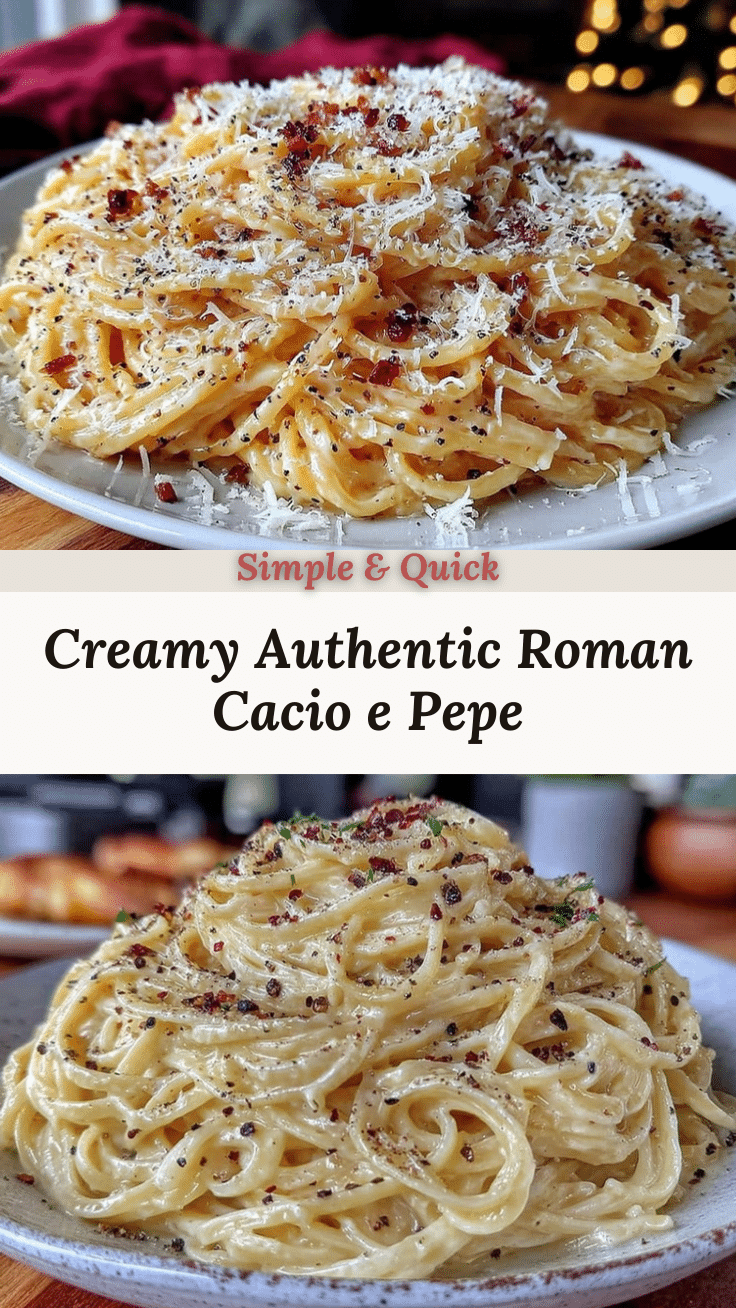
Creamy Cacio e Pepe Recipe Easy Authentic Roman Pasta to Make at Home
An easy and authentic Roman pasta recipe featuring a creamy, peppery sauce made from Pecorino Romano cheese and freshly cracked black pepper, emulsified with pasta water for a silky texture.
- Prep Time: 5 minutes
- Cook Time: 15 minutes
- Total Time: 20 minutes
- Yield: 4 servings 1x
- Category: Main Course
- Cuisine: Italian
Ingredients
- 12 oz (340 g) spaghetti or tonarelli pasta
- 1 ½ cups (150 g) finely grated Pecorino Romano cheese
- 2 teaspoons freshly cracked black pepper, plus extra for serving
- Salt for pasta water (preferably coarse sea salt)
- Water for boiling pasta and making the sauce
Instructions
- Bring a large pot of salted water to a rolling boil. Add 12 oz (340 g) spaghetti and cook until just shy of al dente, about 7-8 minutes.
- Before draining, scoop out about 1 ½ cups (350 ml) of the starchy pasta water and set aside.
- While pasta cooks, heat a large skillet over medium heat. Add 2 teaspoons freshly cracked black pepper and toast for about 1 minute, stirring constantly until fragrant.
- Drain pasta quickly and transfer it directly to the skillet with toasted pepper. Toss to coat evenly.
- Gradually add reserved pasta water to the skillet, about ½ cup (120 ml) at a time, tossing the pasta to combine.
- Remove skillet from heat to avoid clumping. Slowly sprinkle 1 ½ cups (150 g) finely grated Pecorino Romano over the pasta while tossing vigorously with tongs or a fork. Add more pasta water as needed to create a creamy, silky sauce.
- If sauce feels too thick or clumpy, add a splash more reserved pasta water and keep tossing until smooth.
- Taste and add a pinch of salt if needed. Finish with an extra crack of black pepper on top.
- Serve immediately, garnished with extra Pecorino and cracked black pepper.
Notes
Use finely grated Pecorino Romano cheese for a smooth sauce. Toast freshly cracked black pepper to release oils and deepen flavor. Mix cheese off heat to prevent clumping. Work quickly to toss pasta and cheese before pasta cools. Adjust salt carefully as Pecorino is naturally salty. For gluten-free option, use gluten-free pasta. Variations include adding garlic, herbs, or making a vegan version with nut-based cheese.
Nutrition
- Serving Size: 1 serving (approxima
- Calories: 440
- Sugar: 1
- Sodium: 600
- Fat: 15
- Saturated Fat: 9
- Carbohydrates: 60
- Fiber: 3
- Protein: 18
Keywords: cacio e pepe, creamy pasta, Roman pasta, Pecorino Romano, black pepper pasta, easy pasta recipe, authentic Italian, quick dinner