Lena wasn’t trying to impress anyone. I’d stopped by to drop off a book I’d borrowed—something I’d put off for weeks, honestly—and the smell hit me before I even got to the front door. It was warm and earthy, a little smoky, with this deep red chile aroma that stopped me mid-step on her porch. I stood there for a second, just breathing it in, feeling like I’d walked into someone’s abuela’s kitchen in the middle of December.
When she finally opened the door, she was wiping her hands on her apron and laughing about the mess in her kitchen. “Oh, it’s just tamales,” she said, like it was no big deal. Just tamales. Like she hadn’t spent the morning simmering pork until it fell apart, or toasting chiles until the whole house smelled like a fiesta. I mean, I’ve made tamales before—the store-bought kind in the frozen aisle, which let’s face it, are fine in a pinch—but this was something else entirely.
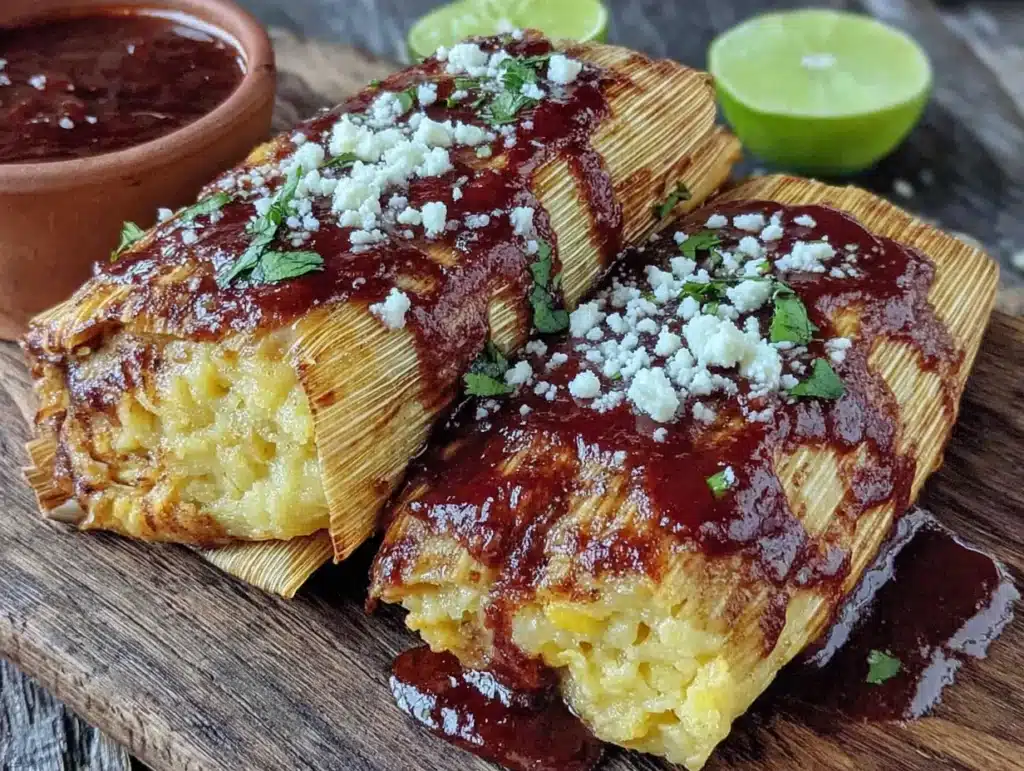
She let me peek into her kitchen, and there they were: a mountain of homemade tamales wrapped in corn husks, stacked like little presents on the counter. The masa was soft and pillowy, the filling rich and savory, and that red chile sauce—honestly, I could have eaten it with a spoon. She handed me one while it was still warm, and I think I made some embarrassing noise when I bit into it. Maybe you’ve been there, that moment when a food is so good you forget you’re standing in someone’s doorway holding a book you should have returned three weeks ago.
I asked for the recipe, of course. She shrugged and scribbled it on a napkin—no measurements, just a list of ingredients and a few hand gestures. “You’ll figure it out,” she said. And honestly, that’s the best kind of cooking, isn’t it? The kind that comes from feel, from knowing when the masa is just right, when the chiles have given up all their flavor. It took me a few tries to get it right, but now these cozy homemade pork tamales with red chile sauce are my go-to for cold weekends and holiday gatherings. They’re the kind of food that makes you slow down and pay attention. And every time I make them, I think of Lena’s porch and that first incredible bite.
Why You’ll Love This Recipe
Let me tell you why these tamales are worth every minute of the process. I’ve tested this recipe about six times now—yes, six—and each batch taught me something new. The first one was a little dry. The second had too much sauce. But by the third, I’d figured out the magic ratio, and now I’m confident enough to say this is the best version I’ve ever made. Here’s what makes it special:
- Authentic Flavor Without the Fuss : The red chile sauce is made from dried chiles, not powder, which gives it a depth you just can’t fake. But I’ve streamlined the process so you’re not standing over the stove for hours.
- Simple, Real Ingredients : No weird additives or hard-to-find items. You’ll grab dried chiles, pork shoulder, masa harina, and a few pantry staples. That’s it.
- Perfect for a Cozy Weekend Project : This isn’t a 30-minute weeknight dinner, and that’s the point. Make it on a Saturday when you want to spend the afternoon in the kitchen with music playing and a glass of something cold nearby.
- Crowd-Pleaser Guaranteed : I’ve brought these to potlucks, holiday dinners, and casual get-togethers. They disappear fast. People who’ve never made tamales at home will ask for the recipe every single time.
- Freezer-Friendly Hero : Make a big batch, freeze half, and you’ve got homemade tamales ready whenever you need a taste of comfort. They reheat beautifully.
What makes this recipe different from all the others I’ve tried? It’s the balance. The masa is seasoned with a bit of the red chile sauce itself, so every bite—not just the filling—has that warm, smoky flavor. And the pork is braised low and slow until it’s so tender you can shred it with a fork. No dry tamales here, I promise. This is the kind of food that makes you close your eyes after the first bite. It’s comfort food reimagined—a little time-consuming, yes, but with the same soul-soothing satisfaction that only something made from scratch can deliver.
What Ingredients You Will Need
This recipe uses simple, honest ingredients to build layers of flavor. Most of these are pantry staples if you cook Mexican food regularly, but I’ve included notes on where to find things and what to look for.
For the Pork Filling
- 2 pounds pork shoulder (also called pork butt)—cut into 2-inch chunks. I prefer this cut because it has enough fat to stay moist during braising. Don’t use pork loin; it will dry out.
- 1 medium white onion, quartered—adds sweetness to the braising liquid
- 4 cloves garlic, smashed—because garlic makes everything better
- 1 teaspoon salt, plus more to taste
- 1 teaspoon dried oregano—Mexican oregano if you have it, but regular works too
- 1 bay leaf
- Water, enough to cover the pork by about an inch
For the Red Chile Sauce
- 8 to 10 dried guajillo chiles—these are the backbone of the sauce. They’re mild with a slightly sweet, fruity flavor. Look for them in the international aisle or a Latin market.
- 2 dried ancho chiles—these add a deeper, almost raisin-like sweetness. They’re also mild, just a little smoky.
- 1 dried chile de árbol (optional)—if you want some heat. I add it about half the time, depending on my mood.
- 2 cloves garlic, peeled
- 1/2 teaspoon ground cumin
- 1/2 teaspoon dried oregano
- 1 tablespoon vegetable oil
- Salt to taste
- 2 cups reserved pork cooking liquid
For the Masa (Dough)
- 4 cups masa harina (I recommend Maseca brand for consistent results)—this is corn flour, not cornmeal. Don’t swap them.
- 1 1/2 teaspoons baking powder
- 1 teaspoon salt
- 1 cup lard or vegetable shortening—lard gives the best flavor and texture, but Crisco works fine if you want a vegetarian version. I’ve used both and honestly, the lard version is noticeably better.
- 2 to 2 1/2 cups warm pork cooking liquid or chicken broth
- 1/2 cup red chile sauce (from above)—this is my secret for flavoring the masa
For Assembly
- 1 package dried corn husks (about 20 to 25)—you’ll find these in the Latin foods section. Soak them in hot water for at least 30 minutes before using.
Ingredient Tips: When buying dried chiles, look for ones that are pliable and smell fragrant, not dusty or brittle. I usually grab mine from the local Mexican market, but I’ve also ordered them online in a pinch. For the pork, I prefer getting it from the butcher counter rather than pre-packaged—it’s usually fresher and you can ask them to cut it for you. And if you’re wondering about the lard, I get Armour brand at the grocery store. It’s shelf-stable and works perfectly.
Equipment Needed
You don’t need anything fancy for this recipe, but a few tools will make your life easier. Here’s what I use:
- Large pot or Dutch oven (at least 5 quarts)—for braising the pork. A Dutch oven holds heat beautifully, but any heavy-bottomed pot works.
- Skillet or comal—for toasting the dried chiles. A dry cast-iron skillet is ideal.
- Blender—for pureeing the chile sauce. A regular blender works fine; I’ve also used an immersion blender in a tall cup in a pinch.
- Fine-mesh strainer—to strain the chile sauce for a smooth texture. This step is non-negotiable if you want a silky sauce.
- Large mixing bowl—for mixing the masa dough
- Electric mixer or sturdy wooden spoon—mixing masa by hand is a workout. I use a hand mixer on low speed, but a stand mixer works too. My grandmother would probably scold me for saying that.
- Steamer pot or large stockpot with steamer basket—for steaming the tamales. I have a dedicated tamale steamer I got for $20 at a Latin market, but a regular steamer basket works if you improvise.
- Kitchen twine or strips of corn husk—for tying the tamales. I usually just tear a few soaked husks into thin strips.
If you don’t have a steamer, you can use a large pot with a colander or metal strainer that fits inside. Just make sure the water doesn’t touch the tamales. I’ve done this before when I was visiting my sister’s place and forgot my steamer—it worked, but the tamales were a little more crowded than I’d like.
Preparation Method
Okay, let’s get into it. This recipe has a few steps, but I’ve broken it down so it feels manageable. Plan for about 3 hours total, but most of that is hands-off simmering and steaming.
Step 1: Braise the Pork (About 2 hours)
- Place the pork chunks in a large pot or Dutch oven. Add the quartered onion, smashed garlic, salt, oregano, and bay leaf.
- Pour in enough water to cover the pork by about an inch. Bring it to a boil over high heat, then reduce to a simmer.
- Cover and let it cook for 1 1/2 to 2 hours, until the pork is fork-tender and shreds easily. Check occasionally and add more water if the level drops too much.
- Remove the pork from the pot and set it aside to cool slightly. Reserve the cooking liquid—you’ll need it for the sauce and the masa. Strain it if you want to remove the onion and garlic bits.
- Once the pork is cool enough to handle, shred it with two forks. Discard any large pieces of fat (but leave some for flavor).
Step 2: Make the Red Chile Sauce (About 20 minutes)
- While the pork is cooking, prepare the chiles. Wipe them clean with a damp paper towel. Cut off the stems and shake out the seeds. (I usually do this over the sink—seeds get everywhere.)
- Heat a dry skillet over medium heat. Toast the chiles in batches for about 30 seconds per side, until they’re fragrant and slightly puffed. Don’t burn them, or the sauce will be bitter. You’ll smell when they’re ready—it’s a warm, almost chocolatey aroma.
- Place the toasted chiles in a bowl and cover with hot water. Let them soak for 15 to 20 minutes, until they’re soft and pliable.
- Transfer the softened chiles to a blender, along with the garlic, cumin, oregano, and about 2 cups of the reserved pork cooking liquid. Blend until completely smooth, about 2 minutes.
- Strain the sauce through a fine-mesh strainer into a bowl, pressing with a spatula to extract all the liquid. Discard the solids.
- Heat the vegetable oil in a saucepan over medium heat. Pour in the strained sauce and let it simmer for 5 to 7 minutes, stirring occasionally. Season with salt to taste. Set aside about 1/2 cup for the masa; the rest will go into the filling and for serving.
Step 3: Prepare the Filling (About 10 minutes)
- In a bowl, combine the shredded pork with about 1 cup of the red chile sauce. Mix well so the meat is evenly coated. Taste and add more sauce if you like it spicier. Set aside.
Step 4: Soak the Corn Husks (30 minutes before assembling)
- Place the dried corn husks in a large bowl or sink and cover with hot water. Weigh them down with a plate or heavy bowl so they stay submerged. Let them soak for at least 30 minutes, until they’re soft and pliable. Drain and pat dry before using.
Step 5: Make the Masa Dough (About 15 minutes)
- In a large mixing bowl, combine the masa harina, baking powder, and salt. Whisk to break up any lumps.
- Add the lard or shortening. Using an electric mixer on low speed (or a wooden spoon and some elbow grease), mix until the fat is incorporated and the mixture looks like coarse crumbs.
- Warm 2 cups of the reserved pork cooking liquid (or chicken broth) until it’s warm to the touch but not hot. Add the 1/2 cup of red chile sauce to the liquid.
- Gradually pour the liquid mixture into the masa, mixing on low speed. You’re looking for a soft, spreadable dough—like thick hummus or peanut butter. If it seems dry, add more liquid a tablespoon at a time. If it’s too wet, add a little more masa harina.
- To test the consistency, drop a small piece of masa into a glass of cold water. If it floats, it’s ready. If it sinks, mix for another minute and test again. This trick has never failed me.
Step 6: Assemble the Tamales (About 30 minutes)
- Take a soaked corn husk and pat it dry. Place it on a work surface with the wide end at the top and the narrow end pointing toward you.
- Scoop about 2 to 3 tablespoons of masa onto the upper half of the husk. Using the back of a spoon or your fingers, spread it into a thin, even layer, leaving at least a 1-inch border on the sides and about 2 inches at the bottom.
- Place about 1 to 2 tablespoons of the pork filling down the center of the masa, in a line from top to bottom.
- Fold one side of the husk over the filling, then fold the other side over to overlap. Fold the bottom end up. If desired, tie with a strip of corn husk or kitchen twine to secure. Don’t wrap too tightly—the masa needs room to expand.
- Repeat with the remaining husks and filling. You should get about 20 to 24 tamales.
Step 7: Steam the Tamales (About 1 hour)
- Place a steamer basket in a large pot. Add water to just below the basket. Arrange the tamales upright in the basket, with the open ends facing up. Don’t pack them too tightly—they need space for steam to circulate.
- Cover the pot with a tight-fitting lid. Bring the water to a boil, then reduce to a simmer. Steam for 45 minutes to 1 hour, checking the water level every 20 minutes and adding more hot water if needed.
- To test for doneness, remove one tamale and let it cool for a minute. Unwrap it—the masa should peel away cleanly from the husk and feel firm but tender. If it’s still sticky or mushy, steam for another 10 to 15 minutes.
- Remove the tamales from the pot and let them rest for 5 to 10 minutes before serving. This helps the masa set.
Cooking Tips & Techniques
I’ve made plenty of mistakes with tamales over the years, so let me save you some trouble. Here’s what I’ve learned the hard way:
Don’t skip toasting the chiles. I know it’s an extra step, but it makes a huge difference in flavor. The first time I made this sauce, I was in a hurry and just soaked the chiles without toasting. The sauce was flat and one-dimensional. Toasting brings out their natural sweetness and adds that smoky depth you’re looking for. Just watch them closely—they go from fragrant to burnt in about 10 seconds.
The masa consistency is everything. If your masa is too dry, the tamales will be dense and crumbly. If it’s too wet, they’ll be gummy. That float test I mentioned? It’s not just an old wives’ tale—it works. I’ve also learned that the masa should feel slightly tacky to the touch, like play-dough that’s been sitting out for a minute. If it sticks to your fingers, add a little more masa harina.
Spread the masa thin. I used to go overboard with the dough, thinking more is better. But thick masa means the filling-to-dough ratio is off, and the tamales take longer to cook. Aim for about 1/8-inch thickness. You should be able to see the husk through the masa in some spots.
Keep the steamer water at a gentle simmer. A rolling boil will jostle the tamales and can make them waterlogged. I keep mine at a steady simmer and check the water level every 20 minutes. Adding cold water to a hot pot will stop the steaming, so use hot water from the kettle.
Let them rest before serving. I know it’s hard to wait, but letting the tamales sit for 5 to 10 minutes after steaming allows the masa to firm up. They’ll hold together better when you unwrap them. I once served them straight out of the steamer and ended up with a plate of delicious mush.
Multitask wisely. While the pork is braising, toast and soak the chiles. While the chiles are soaking, prep the corn husks. This recipe is all about overlapping tasks so you’re not standing around waiting. I usually make the sauce while the pork cooks, then mix the masa while the sauce simmers.
Variations & Adaptations
One of the best things about tamales is how customizable they are. Here are some variations I’ve tried and loved:
Chicken Tamales: Swap the pork for shredded chicken. Use bone-in chicken thighs for the most flavor, and braise them the same way you would the pork. I’ve done this when I had leftover rotisserie chicken, and it worked great in a pinch.
Vegetarian Tamales: Replace the lard with vegetable shortening and use vegetable broth instead of pork cooking liquid. For the filling, try sautéed mushrooms, zucchini, and black beans with some of the red chile sauce. I made these for a friend who’s vegetarian, and she said they were the best tamales she’d ever had—even better than the meat version, according to her.
Cheese and Green Chile Tamales: Instead of the red chile sauce filling, use a mixture of shredded Monterey Jack cheese and roasted green chiles. This is a classic variation from northern Mexico. I add a little sour cream to the masa for extra richness.
Sweet Tamales: For dessert, make a sweet masa by adding 1/2 cup sugar, 1 teaspoon cinnamon, and 1/2 cup raisins to the dough. Fill with a small spoonful of pineapple jam or dulce de leche. These are amazing with coffee.
Spicy Version: Add an extra chile de árbol or two to the sauce, or stir in some chipotle peppers in adobo for a smoky heat. I did this once when I was craving something with more kick, and it turned out fantastic—just warn your guests.
Slow Cooker Method: You can braise the pork in a slow cooker on low for 6 to 8 hours. The texture won’t be quite as rich as stovetop braising, but it’s a great option if you want to set it and forget it. I’ve done this on busy weekends, and it works fine.
Serving & Storage Suggestions
Tamales are best served warm, straight from the steamer. Here’s how I like to present them:
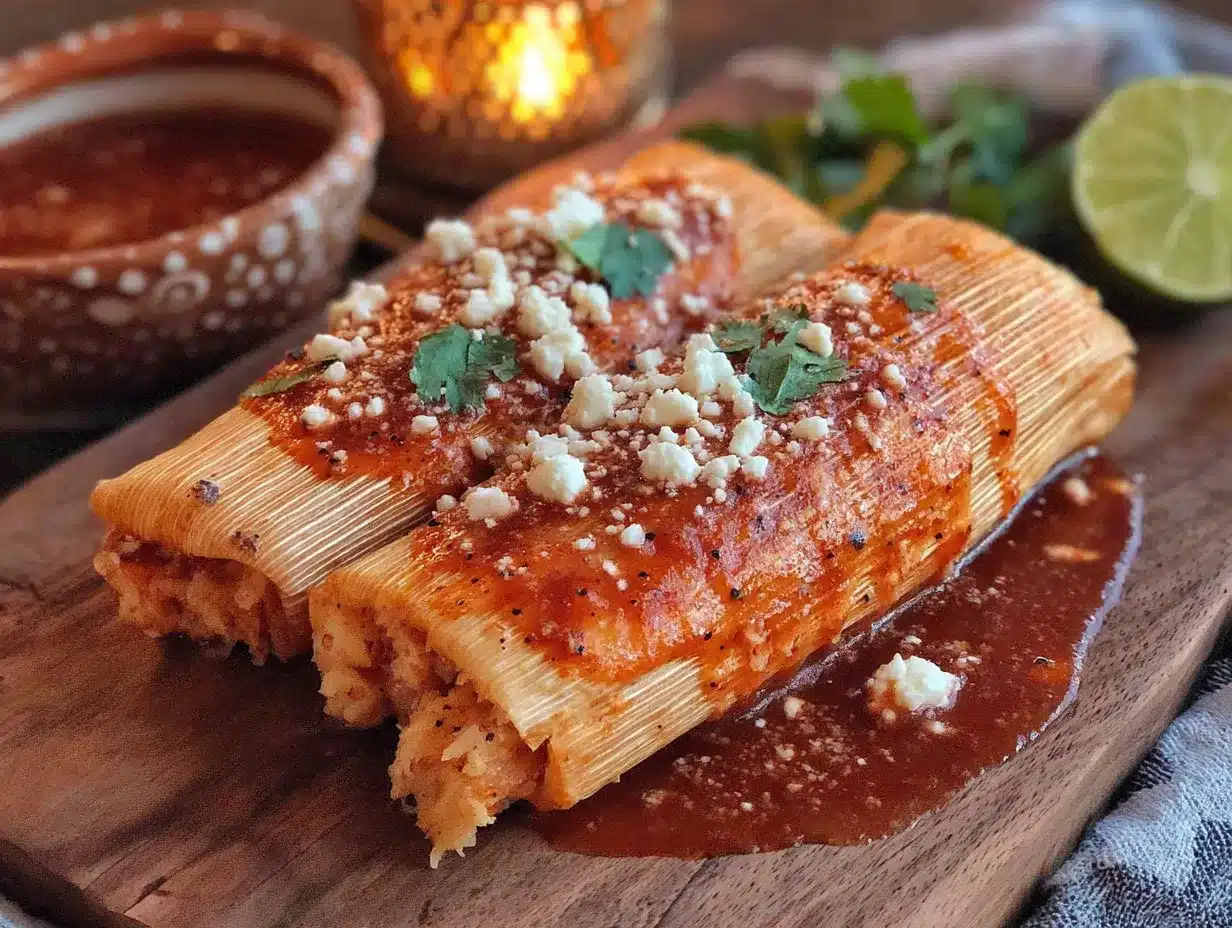
Serving: Unwrap the tamales and arrange them on a platter. Drizzle with extra red chile sauce and sprinkle with crumbled queso fresco, chopped cilantro, and a squeeze of lime. I also like to serve them with refried beans and Mexican rice on the side for a full meal. The combination of textures is just perfect.
Temperature: Serve them hot, but not scalding. Let them rest for 5 minutes after steaming so the masa sets. If you’re serving a crowd, keep the tamales warm in a low oven (200°F) covered with foil.
What to drink: A cold Mexican Coke or a tart horchata balances the richness of the tamales beautifully. For adults, a crisp lager or a margarita on the rocks is a natural pairing.
Storage: Let any leftover tamales cool completely, then store them in an airtight container in the refrigerator for up to 5 days. To freeze, wrap each tamale individually in plastic wrap, then place them in a freezer bag. They’ll keep for up to 3 months. I always make a double batch and freeze half for busy weeks.
Reheating: The best way to reheat tamales is by steaming them for 10 to 15 minutes. If you’re in a hurry, you can microwave them wrapped in a damp paper towel for 1 to 2 minutes, but the texture won’t be as good. I’ve also reheated them in an air fryer at 350°F for 5 minutes—crispy on the outside, tender inside. Not traditional, but delicious.
Flavor development: Here’s a secret—tamales actually taste better the next day. The flavors meld together overnight, and the masa firms up beautifully. So if you can, make them a day ahead and reheat before serving. Your future self will thank you.
Nutritional Information & Benefits
I’m not a nutritionist, but I’ve done my research on this recipe because I make it often enough to care about what’s in it. Here’s a rough estimate per tamale (based on 20 tamales):
- Calories: Approximately 220-250
- Protein: 12-15 grams
- Fat: 12-15 grams (mostly from the pork and lard)
- Carbohydrates: 18-22 grams
- Fiber: 3-4 grams
- Sodium: 300-400 mg (varies based on salt added)
Health Benefits: Pork shoulder is a good source of high-quality protein, B vitamins (especially B12 and B6), and minerals like zinc and selenium. The masa harina is made from nixtamalized corn, which makes the nutrients more bioavailable—specifically niacin (vitamin B3) and calcium. Dried chiles are packed with vitamin C, vitamin A, and capsaicin, which has anti-inflammatory properties. And the garlic and onions add prebiotic fiber that supports gut health.
Dietary Considerations: This recipe is naturally dairy-free (unless you add cheese on top) and can be made gluten-free by using certified gluten-free masa harina. For a lower-fat version, you can reduce the lard by half, though the texture will be less tender. If you’re watching sodium, use low-sodium broth and go easy on the added salt.
Allergens: Corn is the primary grain used, which is generally well-tolerated. However, some people with corn allergies should avoid this recipe. The lard and pork are animal products, so this is not suitable for vegans or vegetarians without modifications.
I personally feel good about serving these tamales because they’re made from whole, real ingredients. There’s nothing processed or artificial in the recipe, and the nutritional profile is balanced enough for an occasional indulgence. I mean, it’s not health food—let’s be real—but it’s honest food made with care.
Conclusion
These cozy homemade pork tamales with red chile sauce are more than just a recipe—they’re a project, a tradition, and a labor of love all rolled into one. Yes, they take time. Yes, there are several steps. But the payoff is a batch of the most satisfying, soul-warming food you’ll ever make. The kind that makes people close their eyes when they take a bite. The kind that gets requested for every holiday gathering.
I love this recipe because it connects me to something bigger than myself. Every time I spread masa onto a corn husk, I think about all the hands that have done this before me—grandmothers, aunties, home cooks across generations. And now you get to be part of that tradition too. Don’t be afraid to make it your own. Add more chiles if you like heat. Swap in chicken if that’s what you have. Experiment with different fillings. The best tamales are the ones that taste like you.
I’d love to hear how yours turn out. Drop a comment below and let me know if you tried any variations, or if you have a family tamale tradition of your own. Share this post with someone who needs a cozy weekend project. And most importantly—enjoy every single bite. You’ve earned it.
Frequently Asked Questions
Can I use store-bought red chile sauce instead of making my own?
You can, but I wouldn’t recommend it for this recipe. Homemade sauce from dried chiles has a depth of flavor that jarred sauces just can’t match. It’s not difficult to make, and the difference is night and day. If you’re really in a pinch, look for a brand like Las Palmas or Herdez in the Latin foods aisle, but add some extra cumin and garlic to boost the flavor.
Why are my tamales falling apart when I unwrap them?
This usually happens for one of two reasons: the masa was too wet, or the tamales didn’t steam long enough. Make sure your masa passes the float test before assembling. And steam for the full hour—don’t rush it. If they’re still falling apart, try adding a little more masa harina to the dough next time.
Can I make these tamales in an Instant Pot?
Yes, you can braise the pork in an Instant Pot on high pressure for 45 minutes with natural release. For steaming, you can use the Instant Pot’s steamer basket function, but you’ll need to do it in batches since they don’t fit many at once. I prefer the stovetop method for steaming because it gives me more control and I can do a larger batch.
How do I know when the corn husks are soft enough to use?
After soaking for 30 minutes, the husks should be pliable and easy to bend without cracking. If they still feel stiff, soak them for another 15 minutes. I usually test one by folding it gently—if it bends without breaking, it’s ready. Pat them dry before using, or the excess water will make the masa too wet.
Can I prepare these tamales ahead of time for a party?
Absolutely! In fact, I prefer making them a day ahead. Assemble and steam the tamales, let them cool completely, then store them in the refrigerator. The next day, reheat them in the steamer for 10 to 15 minutes before serving. The flavors meld together beautifully overnight, and it takes the stress out of party prep.
Pin This Recipe!
Easy Homemade Pork Tamales with Red Chile Sauce

These cozy homemade pork tamales with red chile sauce are a labor of love, featuring tender braised pork, a smoky homemade red chile sauce, and soft, pillowy masa. Perfect for cold weekends and holiday gatherings, they’re a crowd-pleaser that freezes beautifully.
- Prep Time: 30 minutes
- Cook Time: 2 hours 30 minutes
- Total Time: 3 hours
- Yield: 20-24 tamales 1x
- Category: Main Course
- Cuisine: Mexican
Ingredients
- 2 pounds pork shoulder (pork butt), cut into 2-inch chunks
- 1 medium white onion, quartered
- 4 cloves garlic, smashed
- 1 teaspoon salt, plus more to taste
- 1 teaspoon dried oregano (Mexican oregano preferred)
- 1 bay leaf
- Water, enough to cover pork by about an inch
- 8 to 10 dried guajillo chiles
- 2 dried ancho chiles
- 1 dried chile de árbol (optional, for heat)
- 2 cloves garlic, peeled
- 1/2 teaspoon ground cumin
- 1/2 teaspoon dried oregano
- 1 tablespoon vegetable oil
- Salt to taste
- 2 cups reserved pork cooking liquid
- 4 cups masa harina (Maseca brand recommended)
- 1 1/2 teaspoons baking powder
- 1 teaspoon salt
- 1 cup lard or vegetable shortening
- 2 to 2 1/2 cups warm pork cooking liquid or chicken broth
- 1/2 cup red chile sauce (from above)
- 1 package dried corn husks (about 20 to 25)
Instructions
- Braise the pork: Place pork chunks in a large pot or Dutch oven. Add quartered onion, smashed garlic, salt, oregano, and bay leaf. Cover with water by about an inch. Bring to a boil, then reduce to a simmer. Cover and cook for 1 1/2 to 2 hours until fork-tender. Remove pork and reserve cooking liquid. Shred pork with two forks, discarding large fat pieces.
- Make the red chile sauce: While pork cooks, wipe chiles clean, cut off stems, and shake out seeds. Toast in a dry skillet over medium heat for about 30 seconds per side until fragrant. Soak in hot water for 15-20 minutes until soft. Transfer softened chiles to a blender with garlic, cumin, oregano, and 2 cups reserved pork cooking liquid. Blend until smooth. Strain through a fine-mesh strainer. Heat oil in a saucepan, add strained sauce, and simmer for 5-7 minutes. Season with salt. Set aside 1/…
- Prepare the filling: In a bowl, combine shredded pork with about 1 cup of red chile sauce. Mix well and set aside.
- Soak the corn husks: Place dried corn husks in a large bowl and cover with hot water. Weigh down with a plate and soak for at least 30 minutes until pliable. Drain and pat dry.
- Make the masa dough: In a large bowl, combine masa harina, baking powder, and salt. Add lard or shortening and mix with an electric mixer on low until coarse crumbs form. Warm 2 cups reserved pork cooking liquid (or broth) and add 1/2 cup red chile sauce. Gradually pour into masa mixture, mixing until soft and spreadable (like thick hummus). Test by dropping a small piece into cold water—if it floats, it’s ready.
- Assemble the tamales: Take a soaked corn husk and pat dry. Place with wide end at top. Spread 2-3 tablespoons masa on upper half, leaving borders. Place 1-2 tablespoons pork filling down center. Fold one side over, then the other, and fold bottom up. Tie with a strip of husk or twine if desired. Repeat for about 20-24 tamales.
- Steam the tamales: Place a steamer basket in a large pot with water just below the basket. Arrange tamales upright with open ends up. Cover and bring to a boil, then reduce to a simmer. Steam for 45 minutes to 1 hour, checking water level every 20 minutes. Test by unwrapping one—masa should peel away cleanly. Let rest 5-10 minutes before serving.
Notes
Don’t skip toasting the chiles—it adds depth. Masa consistency is key; use the float test. Spread masa thin (about 1/8-inch). Keep steamer water at a gentle simmer. Let tamales rest before serving. Tamales taste better the next day. Freeze individually for up to 3 months.
Nutrition
- Serving Size: 1 tamale
- Calories: 235
- Sugar: 2
- Sodium: 350
- Fat: 13.5
- Saturated Fat: 5
- Carbohydrates: 20
- Fiber: 3.5
- Protein: 13.5
Keywords: pork tamales, red chile sauce, homemade tamales, Mexican food, tamale recipe, comfort food, holiday recipe