There used to be a tiny French bistro on a side street in Portland called Chez Léonie that made a roasted squash and sausage dish that I still dream about. When they closed their doors three years ago—just a handwritten sign in the window one Tuesday morning—I honestly felt a little panicked. That skillet was my go-to comfort meal after long workdays, and the thought of never tasting it again was genuinely upsetting.
After eleven tries—some burnt, some too watery, one that my husband politely called “aggressively seasoned”—I finally cracked the code. And here’s the thing: my version is actually better suited for family dinners than the original. Léonie’s was rich and sophisticated, but my kids would push it around their plates. This version? My seven-year-old asked for seconds last Tuesday night, and my picky five-year-old actually ate the squash without being bribed.
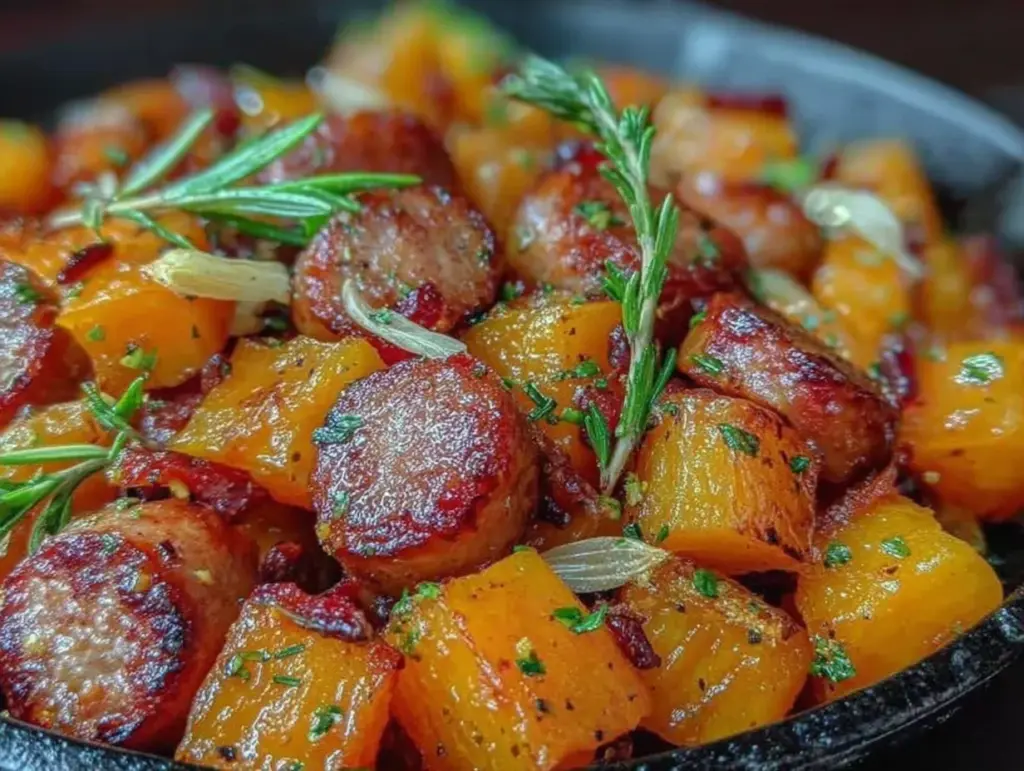
You know that feeling when you find a recipe that makes everyone at the table happy? That’s this one. The butternut squash gets caramelized and sweet, the sausage brings savory depth, and everything cooks in one skillet so cleanup is painless. I added a pinch of cinnamon and a drizzle of maple syrup to win over the little ones, and honestly, it makes the whole dish sing. Let me tell you—if you’ve been trying to get your family to eat more winter squash, this is the recipe that’ll do it.
Why You’ll Love This Recipe
This isn’t just another roasted vegetable dish. After developing this recipe through countless trials (and a few kitchen disasters), I can tell you exactly why it works for busy families like yours.
- One-Pan Wonder: Everything cooks in a single skillet, which means less cleanup and more time actually sitting down with your family. I’ve tested this with both cast iron and stainless steel pans, and both work beautifully.
- Budget-Friendly Ingredients: Butternut squash is surprisingly affordable when it’s in season, and a good-quality sausage stretches a long way. You can feed a family of four for under $15 with this recipe.
- Picky Eater Approved: My own kids went from “what’s that orange thing?” to “can we have this again?” in just two meals. The natural sweetness of roasted squash combined with savory sausage is a winning combination for even the most reluctant eaters.
- Meal Prep Friendly: This dish reheats beautifully, so you can make a double batch on Sunday and have lunches or quick dinners ready all week. The flavors actually get better after a day in the fridge.
- Customizable in Minutes: Swap the sausage type, change up the herbs, or add different vegetables based on what you have on hand. I’ll share specific variations later in this post.
What makes this recipe different from other squash and sausage dishes is the technique. Instead of boiling or steaming the squash, we roast it directly in the skillet with the sausage drippings. That caramelization is where the magic happens—the squash gets golden and sweet on the edges while staying tender in the middle. It’s the kind of dish that makes you close your eyes after the first bite, even when you’re sitting at your own kitchen table with kids chattering beside you.
What Ingredients You Will Need
This recipe uses simple, wholesome ingredients that you can find at any grocery store. The beauty is in how they work together—each component plays a specific role in creating that irresistible flavor and texture.
For the Skillet Base
- 1 medium butternut squash, peeled, seeded, and cut into 1-inch cubes (about 4 cups) — Look for squash that feels heavy for its size with no soft spots. I prefer buying whole squash and cutting it myself because pre-cut cubes are often uneven and dry out faster.
- 1 pound mild Italian sausage, casings removed — I recommend Johnsonville or your local butcher’s bulk sausage for the best flavor. If your family prefers less spice, go with sweet Italian sausage. For a milder option, use chicken or turkey sausage.
- 1 medium yellow onion, diced — About 1 cup. Yellow onions have the right balance of sweetness and sharpness for this dish.
- 3 cloves garlic, minced — Fresh garlic is non-negotiable here. The pre-minced stuff in jars just doesn’t deliver the same punch.
- 2 tablespoons olive oil — Use a good-quality extra virgin olive oil for roasting. It helps the squash caramelize properly.
- 1 tablespoon maple syrup — This is the secret weapon for winning over kids. It enhances the natural sweetness of the squash without making the dish taste like dessert. Use pure maple syrup, not pancake syrup.
- 1 teaspoon dried thyme — Thyme pairs beautifully with both squash and sausage. If you have fresh thyme, use 1 tablespoon of leaves.
- 1/2 teaspoon ground cinnamon — Just a pinch adds warmth and depth. Trust me on this one—it doesn’t make the dish taste like a pumpkin spice latte.
- 1/2 teaspoon salt — I use kosher salt for cooking. Start with this amount and adjust at the end.
- 1/4 teaspoon black pepper — Freshly ground is best, but pre-ground works in a pinch.
For the Garnish
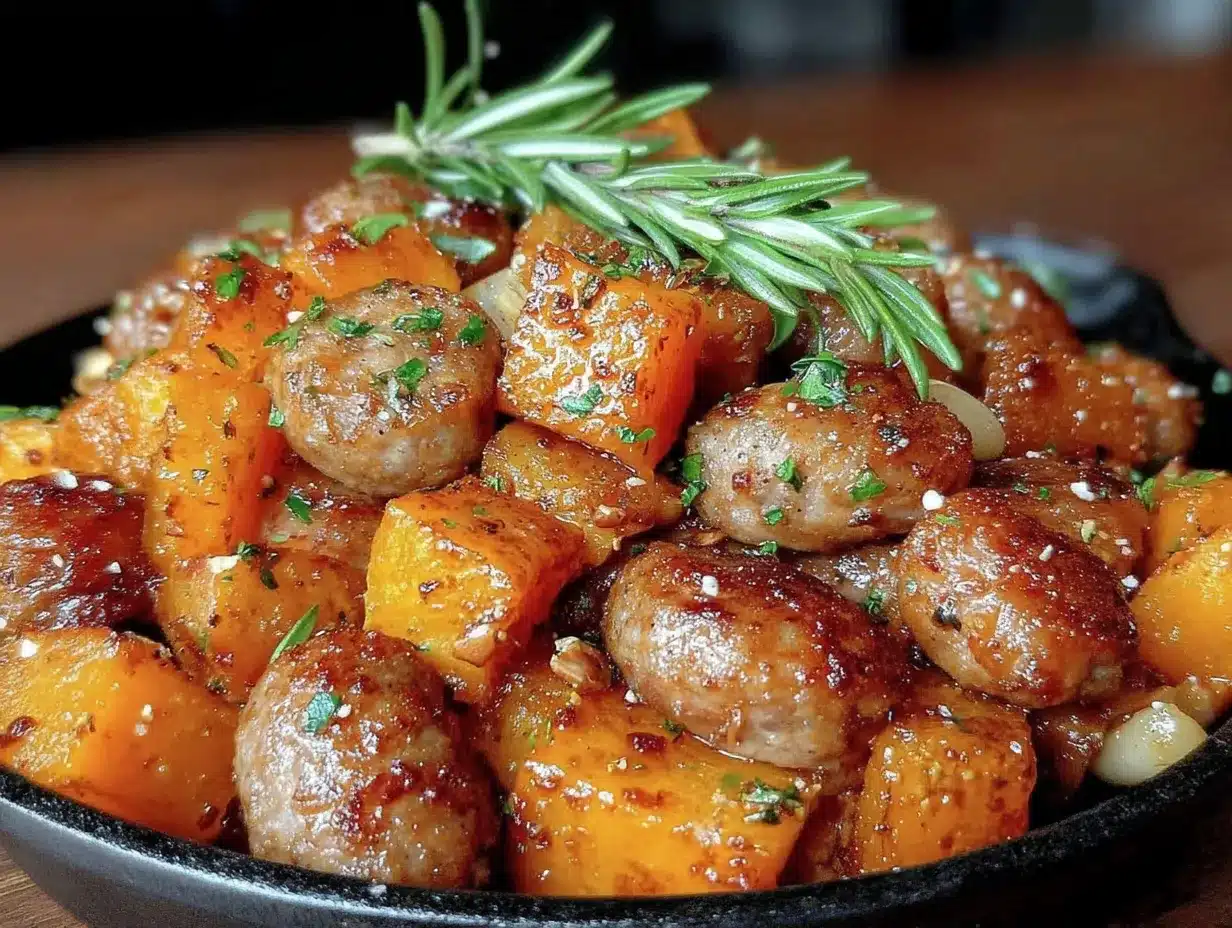
- 2 tablespoons fresh parsley, chopped — Adds a pop of color and freshness. Flat-leaf parsley has more flavor than curly.
- 1/4 cup grated Parmesan cheese (optional) — My kids love this, but it’s totally optional. Use real Parmesan, not the green can stuff.
Substitution Guidance: If butternut squash isn’t available, try delicata squash (no need to peel it!) or sweet potatoes. For a dairy-free version, skip the Parmesan or use a plant-based alternative. If maple syrup isn’t your thing, honey works beautifully too. And if you’re feeding a family that loves heat, use hot Italian sausage instead of mild—just warn the kids!
Equipment Needed
You don’t need a fancy kitchen to make this recipe work. Here’s what you’ll actually use:
- Large oven-safe skillet (12-inch) — Cast iron is my first choice because it holds heat evenly and gives the squash those gorgeous caramelized edges. A stainless steel skillet with an oven-safe handle works great too. If you don’t have an oven-safe skillet, you can transfer everything to a baking sheet for roasting.
- Sharp chef’s knife — Peeling and cubing butternut squash requires a good knife. A dull blade is dangerous here. I’ve been using my Wusthof for years, and it makes quick work of squash.
- Vegetable peeler — A sturdy Y-peeler is my favorite for tackling squash skin. The regular straight peelers work, but they take more effort.
- Cutting board — Use a large board with a groove to catch juices. I prefer wood, but plastic is fine too.
- Wooden spoon or spatula — For breaking up the sausage and stirring everything together.
- Measuring spoons — Accuracy matters with the maple syrup and spices.
Budget-Friendly Tip: Don’t own a cast iron skillet? Check thrift stores—I found my favorite 12-inch Lodge for $8. A quick scrub with salt and oil, and it was good as new. Alternatively, any oven-safe baking dish will work in a pinch.
Preparation Method
Let’s get cooking. I’ve broken this down into clear steps with time estimates and sensory cues so you know exactly what to look for at each stage.
Step 1: Preheat and Prep (10 minutes)
Preheat your oven to 400°F (200°C). While the oven heats, peel your butternut squash using a vegetable peeler. Cut off the top and bottom, then slice it in half lengthwise. Scoop out the seeds with a spoon—save them for roasting later if you’re feeling ambitious. Cut the squash into 1-inch cubes. They should be roughly the same size so they cook evenly. If some pieces are smaller, they’ll burn before the larger ones are done.
Step 2: Cook the Sausage (8-10 minutes)
Place your skillet over medium-high heat. Add the sausage, breaking it up with your wooden spoon as it cooks. You want it browned and crumbly, not grey and steamed. This takes about 8-10 minutes. The smell at this point is incredible—that savory, slightly fatty aroma that tells you good things are coming. Once the sausage is cooked through, use a slotted spoon to transfer it to a plate, leaving about 2 tablespoons of drippings in the pan. If there’s too much fat, pour some off, but don’t drain it completely—that flavor is gold.
Step 3: Sauté the Aromatics (3 minutes)
Reduce the heat to medium. Add the diced onion to the skillet with the sausage drippings. Cook for about 3 minutes, stirring occasionally, until the onion turns translucent and starts to soften. You’ll see it go from opaque white to a glassy, pale gold. Add the minced garlic and cook for another 30 seconds until fragrant—don’t let it burn, or it’ll turn bitter.
Step 4: Build the Flavor Base (2 minutes)
Add the cubed butternut squash to the skillet along with the olive oil, maple syrup, dried thyme, cinnamon, salt, and pepper. Stir everything together until the squash is well coated. You want every piece to have a little bit of that seasoned oil mixture. The maple syrup will start to caramelize immediately, creating those sticky, sweet edges we’re after.
Step 5: Roast Until Tender (25-30 minutes)
Spread the squash in an even layer in the skillet. Return the cooked sausage to the pan and stir gently to combine. Place the skillet in the preheated oven and roast for 25-30 minutes, stirring halfway through. You’ll know it’s done when the squash is fork-tender and the edges are caramelized and golden brown. The kitchen will smell like a cozy autumn afternoon—savory sausage, sweet squash, and warm cinnamon.
Step 6: Garnish and Serve (2 minutes)
Remove the skillet from the oven. Let it rest for about 2 minutes—this lets the flavors settle. Sprinkle with fresh parsley and Parmesan cheese if using. Serve hot, straight from the skillet if you want to keep things rustic and family-style.
Troubleshooting Tip: If your squash isn’t tender after 30 minutes, your cubes might be too large. Next time, aim for 1-inch pieces. If the top is browning too quickly, tent the skillet with foil for the last 10 minutes of roasting.
Cooking Tips & Techniques
After making this dish more times than I care to count, I’ve learned a few things the hard way. Here are my best tips for getting it right every time.
Don’t overcrowd the pan. This was my biggest mistake early on. If the squash pieces are piled on top of each other, they’ll steam instead of roast, and you’ll miss out on that beautiful caramelization. Spread them in a single layer. If your skillet isn’t big enough, use a baking sheet instead.
Let the sausage brown properly. I know it’s tempting to stir constantly, but resist the urge. Let the sausage sit undisturbed for a minute or two before breaking it up. Those brown bits stuck to the bottom of the pan? That’s flavor waiting to happen. They’ll incorporate into the onions and squash as you stir.
Cut the squash consistently. I learned this lesson after a batch where half the pieces were mushy and half were still crunchy. Take the extra minute to make your cubes uniform. Your patience will be rewarded with perfectly cooked squash every time.
Use the right pan. My first few attempts were in a non-stick skillet with a plastic handle that couldn’t go in the oven. I had to transfer everything to a baking sheet mid-recipe, which meant extra dishes and lost heat. Invest in an oven-safe skillet—it makes the whole process seamless.
Taste before serving. Squash sweetness varies, and so does sausage saltiness. Take a bite before you garnish and adjust the seasoning if needed. Sometimes a pinch more salt or an extra drizzle of maple syrup makes all the difference.
Variations & Adaptations
This recipe is incredibly flexible. Here are some of my favorite variations that I’ve tested in my own kitchen.
Dietary Adaptations
Vegetarian Version: Skip the sausage and add a can of drained and rinsed chickpeas along with the squash. The chickpeas get crispy and delicious in the oven. Add a pinch of smoked paprika for depth.
Gluten-Free: This recipe is naturally gluten-free as written, but double-check your sausage labels. Some brands add fillers that contain gluten. Most quality sausages are safe, but it’s worth verifying.
Dairy-Free: Simply omit the Parmesan cheese. The dish is still incredibly flavorful without it. You could also sprinkle on some nutritional yeast for a cheesy flavor without the dairy.
Flavor Twists
Apple Addition: Add one diced apple (I like Honeycrisp or Fuji) along with the squash. The apple softens and sweetens as it roasts, adding another layer of kid-friendly flavor. My kids go crazy for this version.
Herb Swap: Replace the thyme with rosemary or sage for a different flavor profile. Rosemary pairs beautifully with sausage, and sage gives it a more traditional, autumnal feel.
Spice It Up: If your family likes heat, add 1/4 teaspoon of red pepper flakes along with the cinnamon. The warmth builds gradually without overwhelming the dish.
Seasonal Variations
Summer Version: Swap butternut squash for zucchini and yellow squash. Cut them into large chunks and reduce the roasting time to 15-20 minutes. Add cherry tomatoes in the last 10 minutes for a burst of juiciness.
Winter Version: Add cubed sweet potatoes and carrots along with the squash. Root vegetables all roast at a similar pace, so this is an easy way to pack in more vegetables.
Serving & Storage Suggestions
This dish is versatile enough for busy weeknights and special occasions alike.
Serving Ideas
Serve the skillet hot, straight from the oven. I like to set it in the middle of the table with a big spoon and let everyone help themselves. It’s casual and family-friendly. For a complete meal, pair it with a simple green salad dressed with lemon vinaigrette, or serve it over rice, quinoa, or crusty bread to soak up the juices.
Leftovers are fantastic the next day. The flavors meld together overnight, and the squash absorbs even more of the sausage seasoning. I’ve been known to eat it cold straight from the fridge—don’t judge me until you’ve tried it.
Storage Instructions
Refrigerator: Store leftovers in an airtight container for up to 4 days. The squash will soften slightly upon reheating, but the flavor remains excellent.
Freezer: This dish freezes surprisingly well. Let it cool completely, then transfer to a freezer-safe container. It will keep for up to 3 months. Thaw overnight in the refrigerator before reheating.
Reheating Methods
Stovetop: Reheat in a skillet over medium heat with a splash of water or broth to prevent sticking. Stir occasionally until heated through, about 5-7 minutes.
Microwave: For quick lunches, microwave individual portions for 1-2 minutes, stirring halfway through. The squash will be softer, but it’s still delicious.
Oven: Spread leftovers on a baking sheet and reheat at 350°F for 10-15 minutes. This helps restore some of the caramelization.
Nutritional Information & Benefits
This skillet meal is as nutritious as it is delicious. Here’s a rough breakdown per serving (based on 4 servings, without Parmesan):
| Nutrient | Amount per Serving |
|---|---|
| Calories | 385 |
| Protein | 22g |
| Fat | 22g |
| Carbohydrates | 28g |
| Fiber | 5g |
| Sugar | 10g |
| Sodium | 680mg |
Butternut squash is packed with vitamin A (one serving provides over 100% of your daily needs), vitamin C, potassium, and fiber. It supports eye health, immune function, and digestion. The sausage adds high-quality protein and iron, while the olive oil provides heart-healthy monounsaturated fats.
Dietary Considerations: This recipe is naturally gluten-free and can be made dairy-free by omitting the Parmesan. It’s also low-carb friendly with only 28g of carbohydrates per serving. If you’re watching sodium, look for low-sodium sausage or turkey sausage.
Conclusion
This Kid-Friendly Roasted Butternut Squash and Sausage Skillet has become a staple in my home for good reason. It’s the kind of recipe that solves the eternal dinner dilemma: how to feed a family with different tastes without cooking three separate meals. The sweet, caramelized squash wins over the kids, while the savory sausage and aromatic herbs keep the adults happy. And honestly? The fact that it all comes together in one pan with minimal cleanup is the cherry on top.
I hope you’ll try this recipe and make it your own. Maybe you’ll add apples like my kids love, or swap in turkey sausage for a lighter version. Whatever you do, don’t skip the maple syrup—it’s the secret that turns skeptics into fans. If you make this, I’d love to hear how it went. Drop a comment below and tell me what your family thought. Did the picky eaters surprise you? Did you discover a new variation? Share your story—I read every single comment, and your feedback helps me create better recipes for all of us.
Happy cooking, friends. Here’s to more meals that bring everyone to the table.
Frequently Asked Questions
Can I use frozen butternut squash for this recipe?
Yes, you can use frozen butternut squash, but there’s a catch. Frozen squash releases more water as it cooks, so you’ll get less caramelization. To compensate, thaw the squash first and pat it dry with paper towels. You may also need to add 5-10 minutes to the roasting time. Fresh squash gives better texture, but frozen works in a pinch.
How do I peel and cut butternut squash safely?
Start by cutting off both ends so the squash sits flat on your cutting board. Use a sharp vegetable peeler to remove the skin, working from top to bottom. Then cut the squash in half lengthwise and scoop out the seeds with a spoon. Place each half flat-side down and cut into 1-inch cubes. If the squash is too hard to cut, microwave it whole for 2-3 minutes to soften it slightly.
Can I make this recipe ahead of time?
Absolutely. You can prepare the entire dish up to 2 days in advance. Simply cook and cool the skillet, then store it covered in the refrigerator. Reheat in a 350°F oven for 15-20 minutes, or in a skillet on the stovetop. The flavors actually deepen overnight, making it even more delicious the next day.
What other vegetables can I add to this skillet?
This recipe is very forgiving. Try adding diced sweet potatoes, carrots, or parsnips along with the squash—they all roast at a similar pace. For a pop of color and freshness, stir in a handful of baby spinach or kale during the last 5 minutes of roasting. Bell peppers and zucchini work well too, though they cook faster, so add them halfway through.
Is this recipe suitable for meal prep?
Yes, it’s excellent for meal prep. Divide the cooked skillet into individual containers and refrigerate for up to 4 days. It reheats well in the microwave or stovetop, making it perfect for quick lunches or busy weeknight dinners. I often double the recipe and freeze half for later—just thaw overnight in the fridge before reheating.
Pin This Recipe!
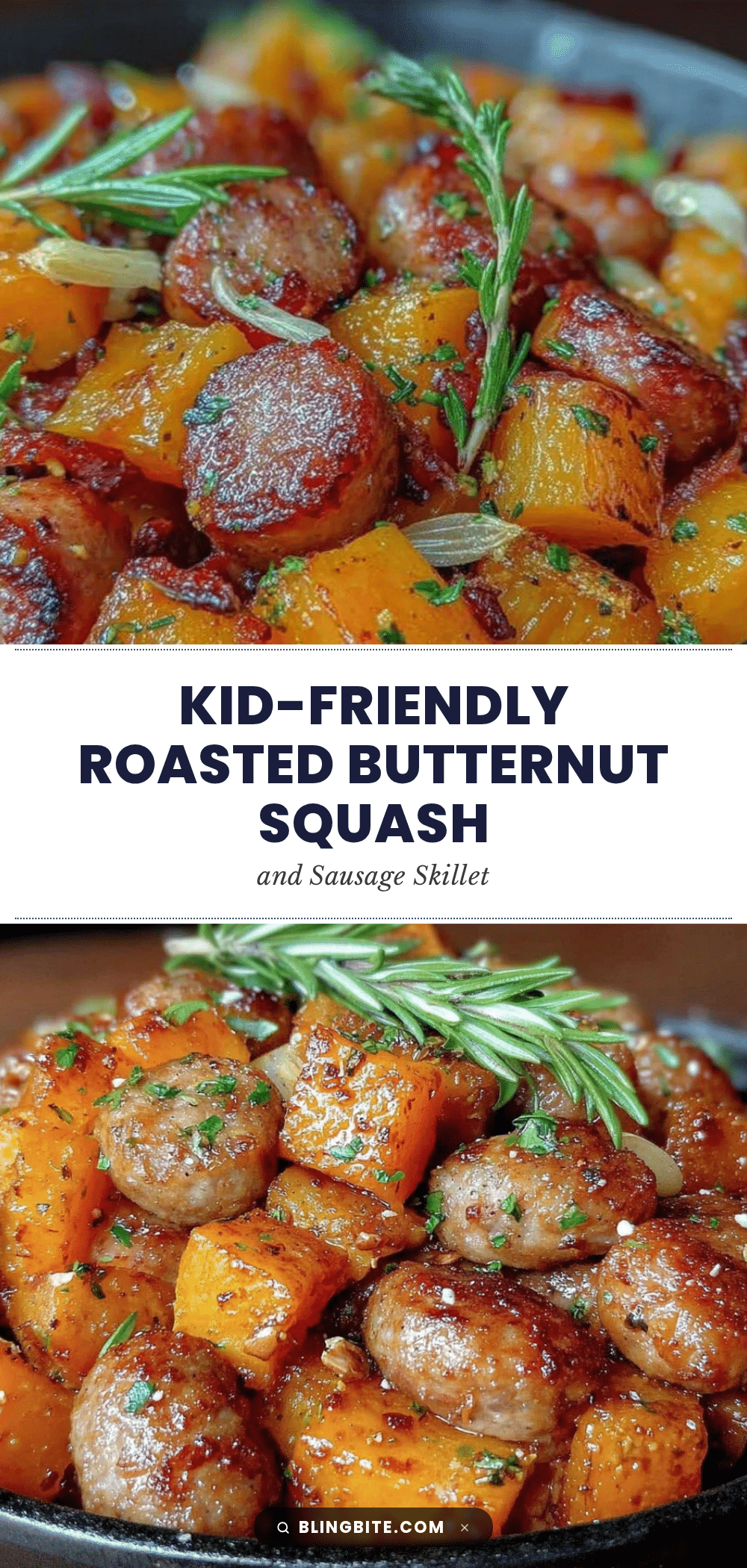
Easy Kid-Friendly Roasted Butternut Squash and Sausage Skillet

A one-pan wonder featuring caramelized butternut squash and savory sausage, sweetened with a touch of maple syrup and cinnamon. This budget-friendly, picky eater-approved meal comes together in a single skillet for easy cleanup and is perfect for busy weeknights.
- Prep Time: 15 minutes
- Cook Time: 30 minutes
- Total Time: 45 minutes
- Yield: 4 servings 1x
- Category: Main Course
- Cuisine: American
Ingredients
- 1 medium butternut squash, peeled, seeded, and cut into 1-inch cubes (about 4 cups)
- 1 pound mild Italian sausage, casings removed
- 1 medium yellow onion, diced (about 1 cup)
- 3 cloves garlic, minced
- 2 tablespoons olive oil
- 1 tablespoon maple syrup
- 1 teaspoon dried thyme
- 1/2 teaspoon ground cinnamon
- 1/2 teaspoon salt
- 1/4 teaspoon black pepper
- 2 tablespoons fresh parsley, chopped
- 1/4 cup grated Parmesan cheese (optional)
Instructions
- Preheat oven to 400°F (200°C). Peel butternut squash, cut in half lengthwise, scoop out seeds, and cut into 1-inch cubes.
- Place a large oven-safe skillet over medium-high heat. Add sausage and cook, breaking it up with a wooden spoon, until browned and crumbly, about 8-10 minutes. Transfer sausage to a plate, leaving about 2 tablespoons of drippings in the pan.
- Reduce heat to medium. Add diced onion to the skillet and cook until translucent, about 3 minutes. Add minced garlic and cook for 30 seconds until fragrant.
- Add cubed butternut squash, olive oil, maple syrup, dried thyme, cinnamon, salt, and pepper to the skillet. Stir until squash is well coated.
- Spread squash in an even layer. Return cooked sausage to the skillet and stir gently. Place skillet in the oven and roast for 25-30 minutes, stirring halfway through, until squash is fork-tender and edges are caramelized.
- Remove from oven and let rest for 2 minutes. Sprinkle with fresh parsley and Parmesan cheese if using. Serve hot.
Notes
For best caramelization, do not overcrowd the pan. Cut squash into uniform 1-inch cubes for even cooking. If squash is not tender after 30 minutes, cubes may be too large. If top browns too quickly, tent with foil for last 10 minutes. Leftovers keep in the refrigerator for up to 4 days or freeze for up to 3 months.
Nutrition
- Serving Size: 1 serving (about 1.5
- Calories: 385
- Sugar: 10
- Sodium: 680
- Fat: 22
- Saturated Fat: 7
- Carbohydrates: 28
- Fiber: 5
- Protein: 22
Keywords: butternut squash, sausage, one-pan, kid-friendly, easy dinner, fall recipe, skillet meal