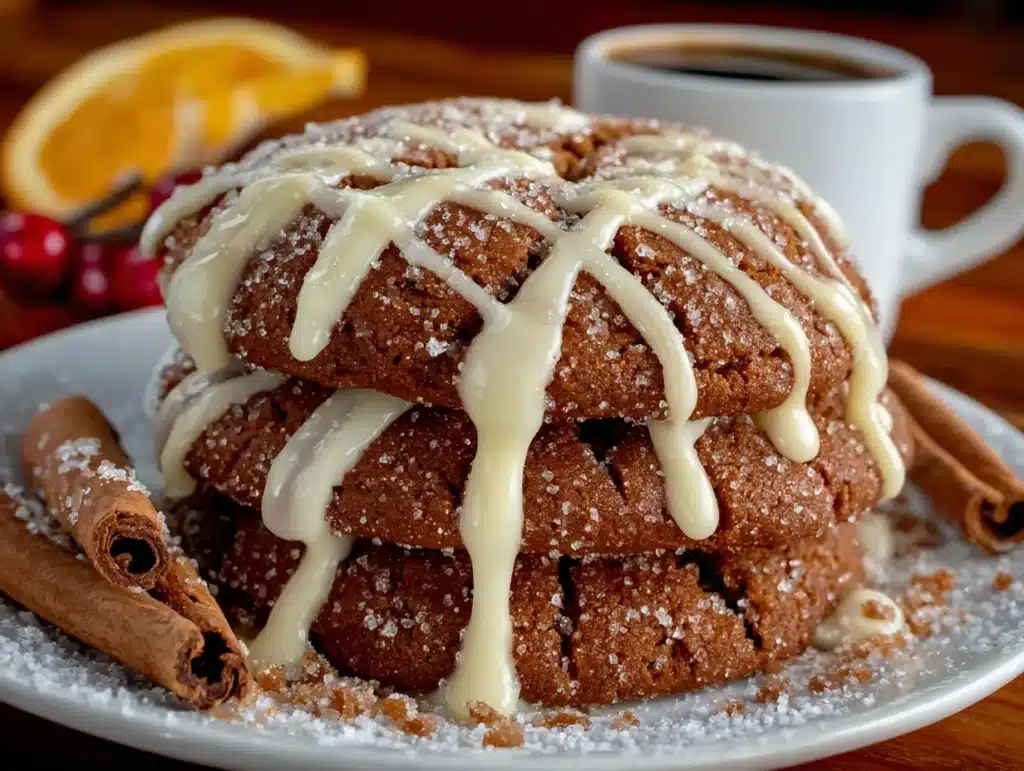
There used to be a tiny bakery tucked between a dusty antiques shop and a laundromat on Main Street in my old neighborhood. They called it The Gilded Whisk, and honestly, it was the kind of place that felt like a secret. They made these soft gingerbread cookies that were unlike any I’d ever had—not crisp and snappy, but pillowy, almost like a gingerbread cake in cookie form, topped with a shimmering orange zest icing that cut through the spice perfectly. When they closed suddenly two winters ago—just a handwritten sign in the window saying “Thank you, neighbors”—I felt a genuine pang of loss. You know that feeling when a small, simple joy just vanishes from your week?
After maybe seven or eight tries—some too dry, one that spread into a flat, sad puddle, and one that was so spicy it practically smoked—I finally cracked the code. The secret, I learned, was a careful balance of molasses and brown sugar for moisture, plus a touch of orange juice in the dough itself, not just the icing. This recipe is my love letter to that little bakery. It is the cookie that makes you slow down, pour a cup of tea, and just breathe for a minute. Let me tell you, getting that first batch right felt like winning a small, delicious victory.
Why You’ll Love This Recipe
These aren’t your average holiday cookies. They are the kind that disappear from the plate before you’ve even poured your coffee. I’ve tested this recipe more times than I care to count, tweaking the flour ratio and the bake time until every single cookie came out perfectly soft and tender. Here is why this version is the one you’ll come back to year after year:
- Perfectly Soft Texture: No crunchy, hard gingerbread here. These cookies are soft, chewy, and almost melt-in-your-mouth tender, thanks to the perfect blend of molasses and butter.
- Simple Pantry Ingredients: You likely have most of these in your cupboard right now. No weird, hard-to-find ingredients—just classic baking staples that come together beautifully.
- Unique Flavor Twist: The orange zest icing isn’t just a pretty topping. It adds a bright, citrusy pop that balances the warm, deep spices of the gingerbread. It’s a flavor combination that feels both classic and surprising.
- Perfect for Cozy Evenings: These cookies were born for a cold, rainy day or a quiet night by the fire. They are the edible equivalent of wrapping yourself in a warm blanket.
- Crowd-Pleaser Guaranteed: I have brought these to potlucks, cookie swaps, and family dinners. They get devoured every single time. Kids love the icing, and adults appreciate the sophisticated spice blend.
This recipe is different because it focuses on texture first. So many gingerbread cookies are dry and crumbly. I wanted one that felt soft and luxurious, like a little cloud of spice. When you bite into one, you should get that initial soft give, then the burst of ginger and cinnamon, followed by that cool, sweet, citrusy icing. It is comfort food, reimagined for a cookie plate.
What Ingredients You Will Need
This recipe uses simple, wholesome ingredients that work together to create that signature soft texture and deep flavor. Most of these are pantry staples, but a few notes will help you get the best results.
For the Soft Gingerbread Cookies:
- All-Purpose Flour: 2 ¼ cups (280g). Spoon and level your flour for the most accurate measurement. Too much flour will make the cookies dense.
- Baking Soda: 1 teaspoon. This gives the cookies their soft, puffy lift.
- Ground Ginger: 2 teaspoons. Use fresh, aromatic ground ginger for the best flavor. I prefer the brand Spice Islands for its potency.
- Ground Cinnamon: 1 ½ teaspoons. This adds that classic warmth.
- Ground Cloves: ½ teaspoon. A little goes a long way, adding a deep, almost floral note.
- Ground Nutmeg: ¼ teaspoon. For a subtle, nutty warmth.
- Salt: ½ teaspoon. Balances the sweetness and enhances the spices.
- Unsalted Butter: ½ cup (113g), softened to room temperature. Don’t melt it! Softened butter creates the right texture for creaming.
- Light Brown Sugar: ¾ cup (150g), packed. The molasses in brown sugar adds moisture and a deeper flavor than white sugar.
- Large Egg: 1, at room temperature. A cold egg can seize the butter mixture.
- Molasses: ⅓ cup (80ml). Use unsulphured molasses, like Grandma’s or Brer Rabbit. Do not use blackstrap molasses, as it is too bitter.
- Orange Juice: 1 tablespoon, freshly squeezed. This is my secret weapon! It adds a subtle tang that brightens the whole cookie.
- Vanilla Extract: 1 teaspoon. Pure vanilla extract is best.
For the Orange Zest Icing:
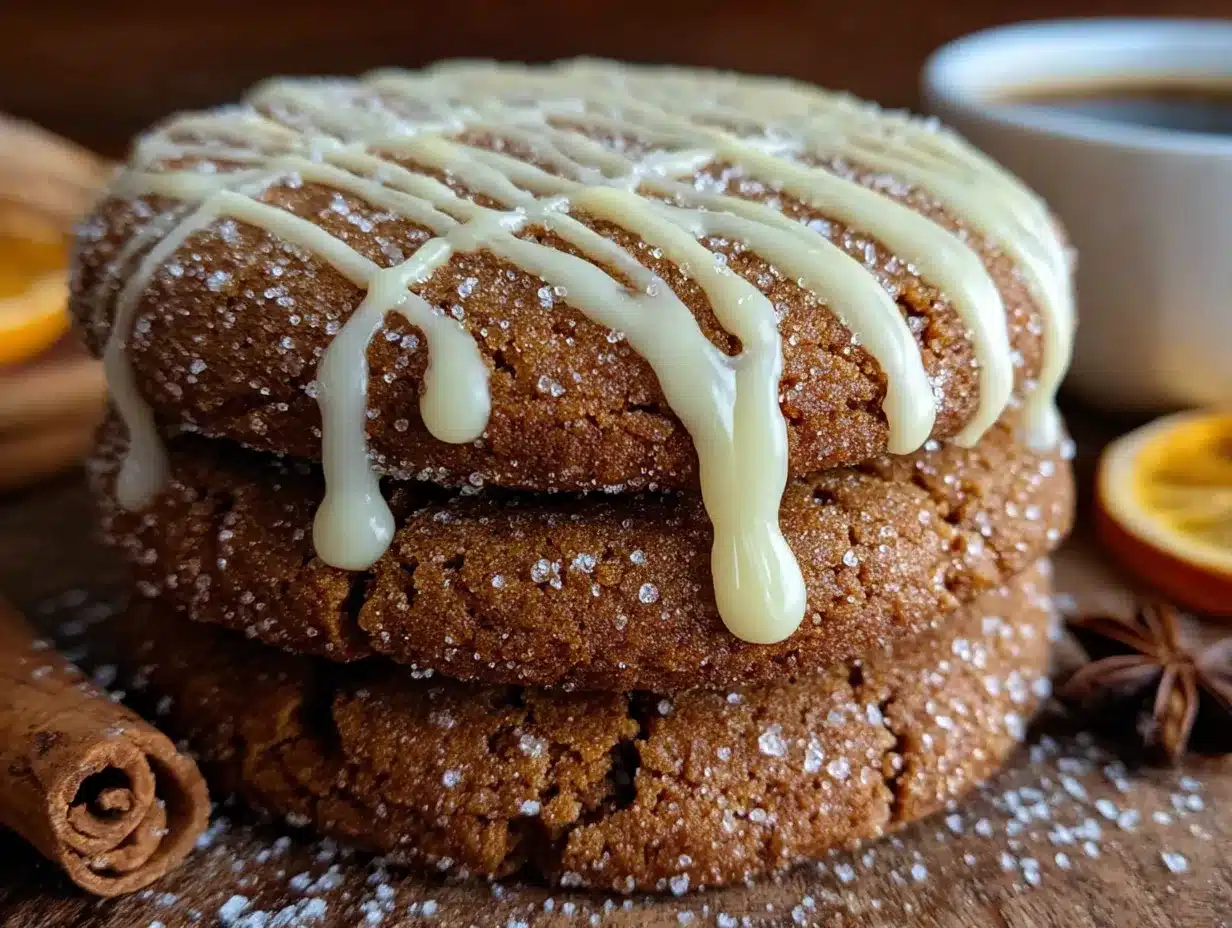
- Powdered Sugar: 1 ½ cups (180g), sifted to remove lumps.
- Orange Zest: 1 tablespoon, from about 1 large orange. Make sure to zest only the orange part, not the white pith, which is bitter.
- Fresh Orange Juice: 2-3 tablespoons. This will thin the icing to the perfect drizzling consistency.
- Melted Butter: 1 tablespoon. This adds a tiny bit of richness and shine to the icing.
Equipment Needed
You don’t need a professional bakery setup to make these cookies, but having the right tools makes the process smoother and more fun.
- Mixing Bowls: You will need a large bowl for the dry ingredients and another for the wet ingredients. A set of glass or stainless steel bowls works perfectly.
- Electric Hand Mixer or Stand Mixer: While you can cream the butter and sugar by hand with a wooden spoon, an electric mixer makes it much easier and faster. It ensures the butter and sugar are light and fluffy, which is key for a soft cookie.
- Whisk: For combining the dry ingredients evenly.
- Rubber Spatula: For scraping down the sides of the bowl and folding in the dry ingredients.
- Cookie Scoop: A 1.5-tablespoon cookie scoop is perfect for getting uniform cookie sizes, which ensures even baking. I have a simple OXO scoop that has lasted for years.
- Baking Sheets: Two or three rimmed baking sheets. I prefer light-colored aluminum sheets, as dark sheets can cause the bottoms of the cookies to brown too quickly.
- Parchment Paper or Silicone Baking Mats: This is non-negotiable for soft cookies. It prevents sticking and promotes even browning.
- Wire Cooling Rack: Essential for letting the cookies cool completely before you ice them.
- Microplane or Zester: For getting that fine, fluffy orange zest without the bitter pith.
- Piping Bag or Small Ziploc Bag: For drizzling the icing neatly. If you don’t have a piping bag, a small Ziploc bag with a tiny corner snipped off works just as well.
Preparation Method
This process is straightforward, but a few key steps make all the difference between a good cookie and a great one. Let’s walk through it together.
- Preheat and Prep: First, preheat your oven to 350°F (175°C). Line your baking sheets with parchment paper or silicone mats. This is a step you don’t want to skip—trust me, I learned the hard way with a batch that stuck like glue.
- Whisk Dry Ingredients: In a medium bowl, whisk together the 2 ¼ cups all-purpose flour, 1 teaspoon baking soda, 2 teaspoons ground ginger, 1 ½ teaspoons cinnamon, ½ teaspoon cloves, ¼ teaspoon nutmeg, and ½ teaspoon salt. Set this bowl aside. This ensures the spices and leavening are evenly distributed throughout the dough.
- Cream Butter and Sugar: In a large mixing bowl, beat the ½ cup of softened unsalted butter and ¾ cup of packed light brown sugar together on medium speed for about 2-3 minutes. You want the mixture to look light, fluffy, and a bit paler in color. Scrape down the sides of the bowl with a rubber spatula once or twice during this process.
- Add Wet Ingredients: Add the 1 large egg, ⅓ cup molasses, 1 tablespoon of orange juice, and 1 teaspoon of vanilla extract to the butter mixture. Beat on medium speed until everything is well combined and smooth. The mixture might look a little separated at first, but keep beating and it will come together into a thick, glossy batter.
- Combine Wet and Dry: With the mixer on low speed, gradually add the dry ingredient mixture to the wet ingredients. Mix only until the flour just disappears. Do not overmix! Overmixing develops gluten, which will make your cookies tough instead of soft. You will have a soft, slightly sticky dough.
- Chill the Dough (Crucial Step!): Cover the bowl with plastic wrap and refrigerate the dough for at least 1 hour. This is not optional. Chilling the dough solidifies the butter, which prevents the cookies from spreading too much in the oven. It also allows the flavors of the spices and molasses to meld together. I once skipped this step in a hurry, and my cookies turned into flat, crispy discs. Don’t be like me.
- Scoop and Roll: Once the dough is chilled, remove it from the fridge. Using your cookie scoop, scoop out rounded tablespoons of dough. Roll each scoop between your palms to form a smooth ball. Place the dough balls about 2 inches apart on the prepared baking sheets. They won’t spread a ton, but they need a little room.
- Bake: Bake in the preheated oven for 10-12 minutes. The cookies will look puffed up and slightly cracked on top. The edges should be set, but the centers will still look a little soft and underdone. That’s perfect! They will continue to set as they cool on the baking sheet. For a softer cookie, bake for 10 minutes. For a slightly firmer cookie, go for 12.
- Cool on Baking Sheet: This is the hardest part. Let the cookies cool on the baking sheet for 5 minutes. This allows them to finish setting up. If you try to move them immediately, they will fall apart.
- Transfer to Wire Rack: After 5 minutes, carefully transfer the cookies to a wire cooling rack to cool completely before icing. They must be completely cool, or the icing will just melt right off.
- Make the Icing: While the cookies cool, make the icing. In a small bowl, whisk together the 1 ½ cups of sifted powdered sugar, 1 tablespoon of orange zest, 1 tablespoon of melted butter, and 2 tablespoons of fresh orange juice. Whisk until smooth. If the icing is too thick to drizzle, add the remaining 1 tablespoon of orange juice, one teaspoon at a time, until it reaches a slow, drizzling consistency.
- Ice the Cookies: Once the cookies are completely cool, drizzle the icing over them. You can use a small spoon, or transfer the icing to a piping bag or a small Ziploc bag with a tiny corner snipped off. Let the icing set for about 30 minutes before stacking or storing.
Cooking Tips & Techniques
I have made a lot of mistakes with gingerbread cookies over the years, so let me save you some trouble. Here are the key things I’ve learned.
Don’t Overbake! This is the number one rule for soft cookies. The cookies will look slightly underdone when you take them out of the oven. They will look puffy and soft in the center. That is exactly what you want. They will continue to bake from the residual heat of the baking sheet as they cool. Overbaking is what gives you dry, hard cookies.
Measure Your Flour Correctly. I cannot stress this enough. Scooping your measuring cup directly into the flour bag packs it down, and you can end up with 25% more flour than you need. This will make your cookies dry and dense. Always spoon the flour into your measuring cup and then level it off with a knife.
Room Temperature Ingredients Matter. Your butter, egg, and even the molasses should be at room temperature. A cold egg can cause the creamed butter and sugar to seize up, resulting in a lumpy dough. Room temperature ingredients emulsify together much better, creating a smoother, more uniform dough.
Use a Cookie Scoop. For consistent baking, all your cookies need to be the same size. A cookie scoop is the easiest way to achieve this. It also makes the process much faster and less messy.
Chill the Dough. I know I said it before, but it’s worth repeating. Chilling the dough is the most important step for preventing spread. It solidifies the butter, so the cookies hold their shape in the oven instead of melting into flat pancakes. It also deepens the flavor, making the spices taste more complex and warming.
Variations & Adaptations
One of the best things about this recipe is how flexible it is. You can easily change it up to suit your mood or what you have in the pantry.
- Spice It Up or Down: If you love a really spicy cookie, add ¼ teaspoon of black pepper or a pinch of cayenne pepper to the dry ingredients. For a milder cookie, reduce the ginger to 1 teaspoon and omit the cloves.
- Citrus Swap: Not an orange fan? No problem. Use lemon zest and lemon juice in the icing instead. The bright, tart flavor of lemon is also a wonderful pairing with gingerbread. You could even try lime for a more tropical twist.
- Add Some Texture: Fold in ½ cup of chopped crystallized ginger for a chewy, spicy surprise in every bite. Or, add ½ cup of toasted pecans or walnuts for a nice crunch.
- Make Them Gluten-Free: I have tested this with a high-quality 1-to-1 gluten-free baking flour blend (like Cup4Cup or King Arthur Measure for Measure), and it works beautifully. Just make sure your blend contains xanthan gum. No other adjustments are needed.
- Turn Them into Sandwiches: Make the cookies slightly larger (use a 2-tablespoon scoop) and bake for 12-13 minutes. Once cool, spread a dollop of cream cheese frosting on the flat side of one cookie and top with another. It is an incredible dessert!
Serving & Storage Suggestions
These cookies are wonderful on their own, but they truly shine when served with a warm drink. The combination of the spicy cookie and the sweet, citrusy icing is pure bliss.
I love serving these cookies slightly warm from the oven (before icing) with a tall glass of cold milk. For a more adult treat, they are fantastic with a cup of strong coffee or a mug of hot chai tea. The spices in the cookie complement the chai perfectly. For a cozy dessert, serve them alongside a scoop of vanilla bean ice cream or a dollop of lightly sweetened whipped cream.
Storage: Store the iced cookies in an airtight container at room temperature. They will stay soft and fresh for up to 5 days. I like to place a slice of plain bread in the container with the cookies—the bread absorbs excess air and helps keep the cookies extra soft. Just replace the bread slice every day or two.
Freezing: These cookies freeze beautifully. You can freeze the baked, un-iced cookies in a freezer-safe bag or container for up to 3 months. Thaw them at room temperature, then make the fresh icing and drizzle it on. You can also freeze the raw cookie dough balls. Scoop them, place them on a baking sheet, and freeze until solid. Then transfer the frozen dough balls to a freezer bag. You can bake them directly from frozen, just add 1-2 minutes to the baking time.
Nutritional Information & Benefits
While these are definitely a treat, they do have a few redeeming qualities! The molasses is a source of iron, calcium, and potassium. The ginger is well-known for its anti-inflammatory properties and can help with digestion and nausea. The cinnamon is packed with antioxidants and can help regulate blood sugar.
Here is an approximate nutritional breakdown per cookie (based on 24 cookies):
- Calories: 145
- Fat: 5g
- Carbohydrates: 24g
- Sugar: 16g
- Protein: 1g
- Fiber: 0.5g
Please note that these values are estimates and can vary based on the specific brands of ingredients you use.
These cookies are not gluten-free or vegan in their standard form, but as noted in the variations section, they can be adapted. They do contain dairy (butter) and gluten (flour), as well as eggs.
Conclusion
Honestly, these soft gingerbread cookies with orange zest icing are more than just a recipe to me. They are a little piece of a memory, a way to bring back the feeling of walking into that tiny, warm bakery on a cold day. They are the cookie you make when you need a hug, when you want to fill your home with the smell of spices, or when you just want to create something beautiful and delicious for the people you love.
I really hope you give this recipe a try. Don’t be afraid to make it your own—add more ginger, swap the citrus, or double the batch (you’ll want to). The best part about baking is the process itself, and these cookies are a joy to make from start to finish.
When you bake them, I would love to hear about it! Leave a comment below and tell me how they turned out. Did you add any fun variations? Share a photo of your beautiful cookies on Pinterest and tag me—I love seeing your creations. Happy baking, friends!
Frequently Asked Questions
Can I use blackstrap molasses?
I do not recommend it. Blackstrap molasses is much more bitter and less sweet than regular unsulphured molasses. It will give your cookies a very strong, almost burnt flavor and a darker color. Stick with unsulphured molasses for the best results.
Why did my cookies spread so much?
This is almost always because the dough was not chilled long enough. The butter needs to be solid when it goes into the oven so the cookies hold their shape. Make sure you chill the dough for at least 1 hour, or even up to 2 hours if you have the time. Also, make sure you are using room temperature butter, not melted butter.
Can I make the dough ahead of time?
Absolutely! This is a great make-ahead recipe. You can prepare the dough, wrap it tightly in plastic wrap, and refrigerate it for up to 3 days. You can also freeze the dough balls for up to 3 months, as mentioned in the storage section.
My icing is too runny. How do I fix it?
If your icing is too thin, simply add a little more sifted powdered sugar, one tablespoon at a time, until it thickens to your desired consistency. If it is too thick, add a tiny bit more orange juice or even a splash of milk.
Can I use a different type of flour?
Yes, a 1-to-1 gluten-free baking flour blend works very well in this recipe. I would not recommend using coconut flour or almond flour alone, as they have different absorption rates and will not produce the same soft texture.
Pin This Recipe!

Easy Soft Gingerbread Cookies with Orange Zest Icing

These soft, pillowy gingerbread cookies are topped with a bright orange zest icing. They are the perfect cozy treat for cold days, with a texture that is more like a gingerbread cake in cookie form.
- Prep Time: 15 minutes
- Cook Time: 10-12 minutes
- Total Time: 1 hour 25 minutes (including chilling time)
- Yield: 24 cookies 1x
- Category: Dessert
- Cuisine: American
Ingredients
- 2 ¼ cups (280g) all-purpose flour
- 1 teaspoon baking soda
- 2 teaspoons ground ginger
- 1 ½ teaspoons ground cinnamon
- ½ teaspoon ground cloves
- ¼ teaspoon ground nutmeg
- ½ teaspoon salt
- ½ cup (113g) unsalted butter, softened to room temperature
- ¾ cup (150g) light brown sugar, packed
- 1 large egg, at room temperature
- ⅓ cup (80ml) unsulphured molasses
- 1 tablespoon freshly squeezed orange juice
- 1 teaspoon vanilla extract
- 1 ½ cups (180g) powdered sugar, sifted
- 1 tablespoon orange zest (from about 1 large orange)
- 2–3 tablespoons fresh orange juice
- 1 tablespoon melted butter
Instructions
- Preheat your oven to 350°F (175°C). Line your baking sheets with parchment paper or silicone mats.
- In a medium bowl, whisk together the all-purpose flour, baking soda, ground ginger, cinnamon, cloves, nutmeg, and salt. Set aside.
- In a large mixing bowl, beat the softened unsalted butter and packed light brown sugar together on medium speed for 2-3 minutes until light, fluffy, and slightly paler in color. Scrape down the sides of the bowl as needed.
- Add the egg, molasses, orange juice, and vanilla extract to the butter mixture. Beat on medium speed until well combined and smooth.
- With the mixer on low speed, gradually add the dry ingredient mixture to the wet ingredients. Mix only until the flour just disappears. Do not overmix. The dough will be soft and slightly sticky.
- Cover the bowl with plastic wrap and refrigerate the dough for at least 1 hour.
- Once chilled, use a cookie scoop to scoop out rounded tablespoons of dough. Roll each scoop between your palms to form a smooth ball. Place the dough balls about 2 inches apart on the prepared baking sheets.
- Bake in the preheated oven for 10-12 minutes. The cookies will look puffed up and slightly cracked on top, with edges set but centers still soft.
- Let the cookies cool on the baking sheet for 5 minutes, then transfer to a wire cooling rack to cool completely before icing.
- While the cookies cool, make the icing: In a small bowl, whisk together the sifted powdered sugar, orange zest, melted butter, and 2 tablespoons of fresh orange juice until smooth. If too thick, add the remaining 1 tablespoon of orange juice, one teaspoon at a time, until it reaches a slow, drizzling consistency.
- Once the cookies are completely cool, drizzle the icing over them using a small spoon, piping bag, or a small Ziploc bag with a tiny corner snipped off. Let the icing set for about 30 minutes before stacking or storing.
Notes
Chilling the dough is crucial to prevent spreading. Do not overbake; cookies should look slightly underdone when removed from the oven. For a gluten-free version, use a 1-to-1 gluten-free baking flour blend containing xanthan gum. Store iced cookies in an airtight container at room temperature for up to 5 days; place a slice of bread in the container to keep them soft. Freeze baked, un-iced cookies for up to 3 months, or freeze raw dough balls for up to 3 months.
Nutrition
- Serving Size: 1 cookie
- Calories: 145
- Sugar: 16
- Fat: 5
- Carbohydrates: 24
- Fiber: 0.5
- Protein: 1
Keywords: soft gingerbread cookies, orange zest icing, gingerbread, Christmas cookies, holiday baking, easy cookie recipe