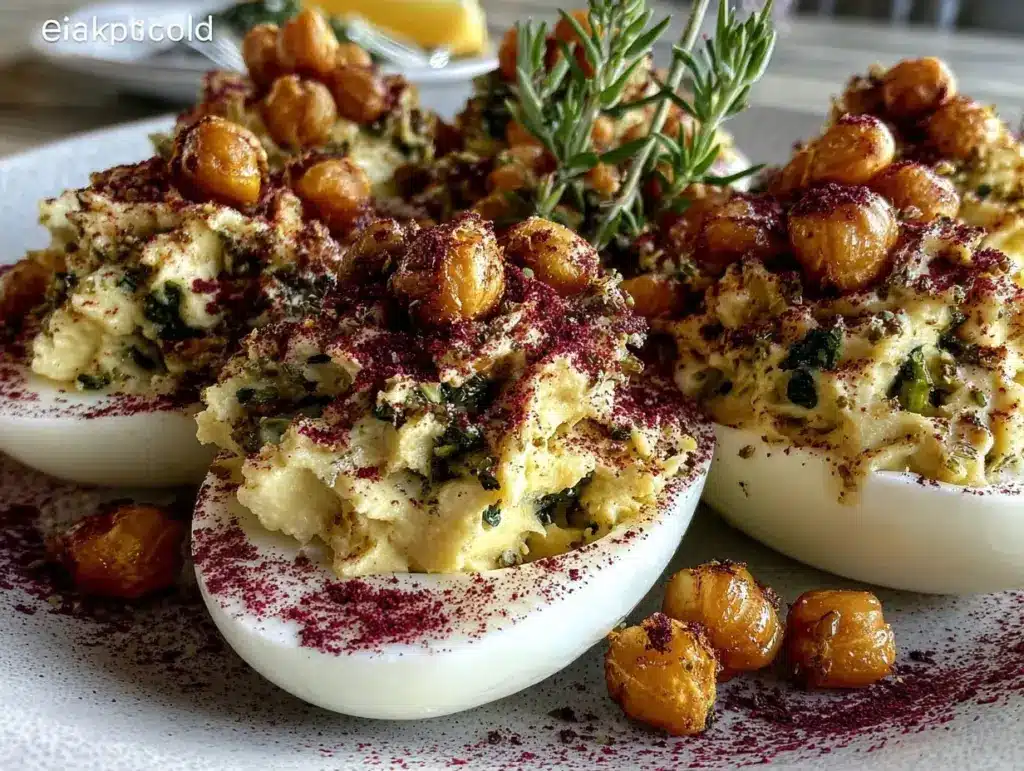
“You know that moment when you’re at a friend’s party, and someone brings a dish that just stops you in your tracks?” That was me last spring, standing by the snack table, stealing bites of these deviled eggs unlike any I’d ever tasted. They weren’t your usual mayo-and-mustard kind — no, these were sprinkled generously with za’atar, kissed by tangy sumac, and topped with the crunchiest little chickpeas you could imagine. Honestly, I was skeptical at first. I mean, deviled eggs with Middle Eastern spices? It sounded like a mismatch, but the flavors sang together perfectly.
The story behind these flavorful za’atar deviled eggs with sumac and crispy chickpeas is a bit of a happy accident. I was trying to make a simple appetizer for a casual potluck, but I’d run out of paprika—the classic deviled egg topper. I grabbed my jar of za’atar from the pantry, thinking “why not?” and roasted some chickpeas for crunch because I love texture in my bites. The result? A dish that stole the show and made me rethink what deviled eggs could be.
Maybe you’ve been there, stuck in a cooking rut, craving something familiar but wanting a twist. This recipe is that kind of magic. The tang of sumac brightens each bite, the za’atar adds earthy, herby warmth, and those crispy chickpeas bring a little joyful crunch. Plus, it’s surprisingly simple to pull together—even on a busy weeknight when you’re juggling a million things. Let me tell you, these eggs have stuck with me ever since, popping up at brunches, weekend hangouts, and anytime I want to impress without the fuss.
Why You’ll Love This Recipe
I’ve put these flavorful za’atar deviled eggs through the test at countless gatherings, and they never fail to get compliments. Here’s why you might want to add them to your appetizer repertoire:
- Quick & Easy: Ready in about 30 minutes, perfect for those last-minute gatherings or simple snacks.
- Simple Ingredients: No hunting for obscure spices—za’atar and sumac are pantry staples for many, and the rest is basics you probably have already.
- Perfect for Entertaining: Whether it’s a casual brunch, potluck, or holiday spread, these eggs bring something a little different to the table.
- Crowd-Pleaser: Kids and adults alike love the familiar creaminess with a zesty, crunchy twist.
- Unbelievably Delicious: The balance of tangy sumac, herby za’atar, and crispy chickpeas creates layers of flavor and texture that keep you coming back.
This isn’t just another deviled egg recipe. The key is blending the creamy yolk filling with za’atar’s complex notes and adding those roasted chickpeas that crackle with every bite. I’ve even swapped out traditional mayo for Greek yogurt sometimes, for a lighter, tangier filling that doesn’t skimp on richness. Honestly, it’s like comfort food with a fresh, vibrant soul.
What Ingredients You Will Need
This recipe uses straightforward ingredients that together bring bold flavor and satisfying texture without fuss. Many of these items are pantry staples or easy to find in most grocery stores.
- Eggs: Large eggs, preferably pasture-raised for richer yolks and better flavor.
- Mayonnaise: Use your favorite brand; I like Hellmann’s for its creaminess. You can swap with Greek yogurt for a tangier, lighter option.
- Za’atar: This Middle Eastern spice blend is the star—look for one with sumac and sesame seeds included. I recommend Ziyad brand for authentic flavor.
- Sumac: Adds a bright, lemony tang. If you can only get one, za’atar usually contains sumac, but extra sprinkles on top really pop.
- Lemon Juice: Freshly squeezed for that fresh acidity that cuts through the richness.
- Garlic Powder: Just a pinch to enhance the savory notes without overpowering.
- Salt & Pepper: To taste, balancing all the flavors.
- Canned Chickpeas: Rinsed and dried thoroughly before roasting. These become crispy little gems topping the eggs.
- Olive Oil: For roasting chickpeas, preferably extra virgin for fruity depth.
- Optional Garnish: Fresh parsley or mint leaves for a pop of green and freshness.
If you want a gluten-free version, this recipe is naturally so. For a vegan twist, swap eggs for firm tofu or avocado halves and adjust the filling accordingly. The crispy chickpeas are great as a snack on their own too, so you might find yourself doubling the batch!
Equipment Needed
- Medium saucepan: For boiling the eggs. A heavy-bottomed pot helps prevent cracking.
- Bowl of ice water: Essential for shocking the eggs to stop cooking and make peeling easier.
- Mixing bowl: For combining the yolk filling ingredients.
- Spoon or piping bag: To fill the egg whites neatly. A piping bag with a star tip makes for a fancy presentation.
- Baking sheet: For roasting the chickpeas. Lined with parchment paper for easy cleanup.
- Fine mesh strainer: To rinse and drain chickpeas thoroughly.
- Measuring spoons and cups: For accuracy, though the recipe is forgiving.
You don’t need anything fancy here. I’ve used everything from a basic colander to a fancy silicone piping bag, and each works fine. If you don’t have a piping bag, a sturdy zip-top bag with the corner snipped off does the job just as well. Just be sure to season and roast the chickpeas on a sturdy sheet to get them evenly crisp.
Preparation Method
- Boil the Eggs: Place 12 large eggs in a medium saucepan and cover with cold water by about 1 inch (2.5 cm). Bring to a rolling boil over medium-high heat, then cover and remove from heat. Let sit for 10-12 minutes.
- Cool and Peel: Transfer eggs to a bowl of ice water to cool for at least 5 minutes. Gently tap and peel each egg under running water to ease shell removal. Pat dry with a towel.
- Prepare Chickpeas: Preheat oven to 400°F (200°C). Rinse and drain one 15-ounce (425 g) can of chickpeas, then dry thoroughly with a clean towel. Toss chickpeas with 1 tablespoon olive oil and a pinch of salt.
- Roast Chickpeas: Spread chickpeas in a single layer on a parchment-lined baking sheet. Roast for 25-30 minutes, shaking the pan every 10 minutes for even crispiness. They should be golden and crunchy.
- Make Filling: Slice eggs in half lengthwise and carefully remove yolks, placing them in a mixing bowl. Mash yolks with a fork until crumbly.
- Mix Ingredients: Add 1/3 cup (80 ml) mayonnaise, 1 teaspoon lemon juice, 1 teaspoon za’atar, 1/2 teaspoon garlic powder, and salt and pepper to taste. Mix until smooth and creamy. Adjust seasoning if needed.
- Fill Egg Whites: Spoon or pipe the filling back into the egg white halves, mounding it slightly.
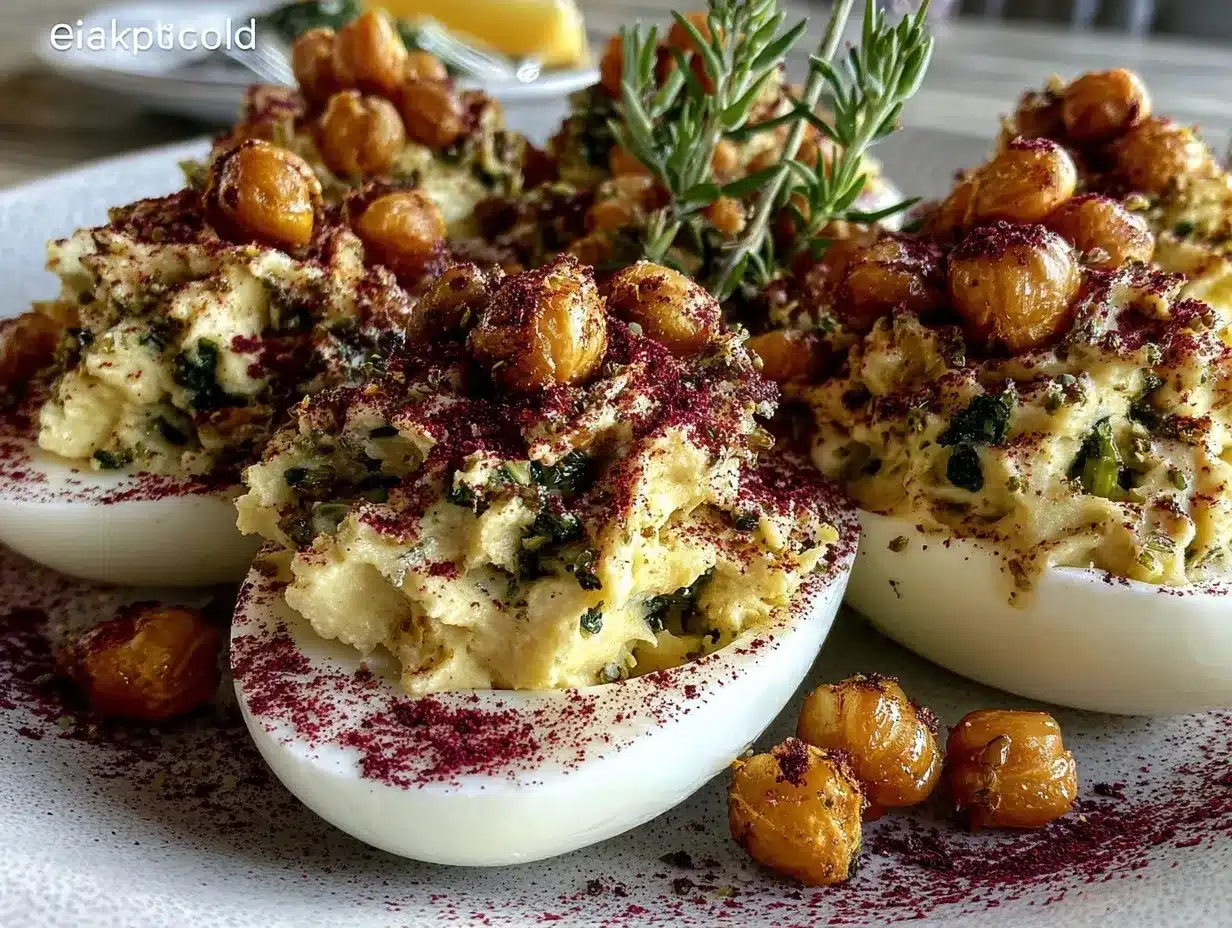
- Garnish: Sprinkle each egg with a pinch of sumac, a little extra za’atar, and top with a few crispy chickpeas. Add fresh herbs if using.
- Serve: Chill in the fridge for 15 minutes before serving to let flavors meld and filling firm up slightly.
Pro Tip: If peeling eggs is a challenge, peeling under running water helps wash away stubborn bits of shell. Also, roasting chickpeas longer than 30 minutes risks burning, so keep an eye (and nose!) on them. The filling should be smooth but not runny—add mayo gradually.
Cooking Tips & Techniques
One trick I picked up is to use slightly older eggs for boiling—they peel much easier than fresh eggs. If you have fresh eggs, adding a teaspoon of baking soda to the boiling water can help make peeling less of a headache.
When roasting chickpeas, drying them thoroughly is key. Wet chickpeas steam instead of roast, leaving them chewy rather than crispy. Also, tossing them halfway through roasting prevents uneven browning. I once left them in too long and ended up with smoky chickpeas—not terrible, but not what I was aiming for!
For the filling, I like to mash yolks really well to avoid lumps. Using a fork or a small whisk works fine. If you want ultra-smooth filling, a food processor can help but isn’t necessary. Don’t overmix or the filling might become too soft to pipe nicely.
Timing-wise, you can boil eggs while prepping the chickpeas to save time. Multitasking this way is a game-changer when guests arrive sooner than expected. Remember, chilling the eggs after boiling makes peeling easier and helps the filling set.
Variations & Adaptations
- Spicy Twist: Add a dash of cayenne pepper or harissa paste to the filling for a subtle heat that pairs beautifully with za’atar.
- Herb Swap: If you don’t have za’atar, try a mixture of thyme, oregano, sesame seeds, and a pinch of sumac to mimic the flavor profile.
- Vegan Version: Use halved baby potatoes or avocado halves instead of eggs, and blend chickpeas with tahini, lemon, and spices for the filling.
- Seasonal Twist: In warmer months, toss in finely chopped fresh mint or dill into the filling for a refreshing note.
- Alternative Crunch: Swap crispy chickpeas for toasted pine nuts or crushed pistachios for a different texture and nutty flavor.
One variation I stumbled upon recently was adding a bit of preserved lemon zest to the filling—wow, it added a surprising brightness that made these eggs even more addictive. Feel free to experiment with what you love!
Serving & Storage Suggestions
Serve these deviled eggs chilled or at room temperature. They make a stunning appetizer on a bright platter, especially when garnished with fresh herbs for color contrast. Pair them with fresh pita bread, olives, and a light salad for a Middle Eastern-inspired spread.
Store leftovers in an airtight container in the refrigerator for up to 3 days. The chickpea topping is best added just before serving to keep its crunch. If you want to prep in advance, roast chickpeas and prepare filling separately, then assemble last minute.
To reheat chickpeas, a quick 5-minute toast in a 350°F (175°C) oven refreshes their crispiness. The eggs themselves are best served cold, so avoid warming them.
Over time, the flavors meld beautifully, but the texture of the filling may soften if stored too long. I recommend enjoying these within a day or two for the best experience.
Nutritional Information & Benefits
Each serving of these za’atar deviled eggs packs a satisfying mix of protein, healthy fats, and fiber. Eggs provide high-quality protein and essential vitamins like B12 and D. Za’atar offers antioxidants and anti-inflammatory properties thanks to its thyme and sumac content.
Roasted chickpeas add fiber and plant-based protein, aiding digestion and satiety. Using Greek yogurt instead of mayonnaise can reduce fat content while boosting protein. This recipe is naturally gluten-free and can be adapted for low-carb diets by skipping chickpeas or swapping ingredients.
Note that eggs and chickpeas are common allergens, so keep that in mind if serving guests. Overall, this dish offers a satisfying, nutrient-dense snack that feels indulgent but carries wholesome benefits.
Conclusion
These flavorful za’atar deviled eggs with sumac and crispy chickpeas have become a go-to whenever I want to impress without stress. The combination of creamy yolk filling, earthy spices, and crunchy chickpeas is just so satisfying. I love how they bring a little unexpected flair to a classic appetizer, and honestly, they’ve sparked plenty of kitchen experiments since.
Feel free to make this recipe your own—tweak the spices, swap the toppings, or try different garnishes. Cooking is all about making dishes that fit your taste and style. If you give these eggs a try, I’d love to hear how you customize them or what occasion you serve them for. Share your thoughts and versions in the comments!
Here’s to many delicious bites and happy gatherings with friends and family. Enjoy every crunchy, tangy, creamy mouthful!
FAQs About Flavorful Za’atar Deviled Eggs
Can I make these deviled eggs ahead of time?
Yes! Prepare the filling and roast chickpeas in advance, then assemble the eggs a few hours before serving. Keep them chilled until ready to eat, adding chickpeas just before serving for best crunch.
What if I don’t have za’atar or sumac?
You can substitute za’atar with a mix of thyme, oregano, sesame seeds, and a pinch of lemon zest. Sumac can be replaced with a little lemon juice or vinegar for tanginess.
How do I get perfectly peeled hard-boiled eggs?
Use eggs that are at least a week old, cool them quickly in ice water after boiling, and peel under running water to help loosen the shells.
Can I roast chickpeas without oil?
Yes, but tossing chickpeas in a little olive oil helps them crisp up better and adds flavor. If avoiding oil, roast them longer on a parchment-lined sheet, stirring frequently.
Are these eggs suitable for a gluten-free diet?
Absolutely! All ingredients are naturally gluten-free, but always check your spice blends and condiments to be sure.
Pin This Recipe!

Flavorful Zaatar Deviled Eggs Recipe with Crispy Chickpeas Easy and Perfect
These deviled eggs are elevated with Middle Eastern spices like za’atar and sumac, topped with crispy roasted chickpeas for a crunchy, tangy twist. Perfect for quick appetizers or entertaining, they offer a fresh, vibrant take on a classic snack.
- Prep Time: 15 minutes
- Cook Time: 30 minutes
- Total Time: 45 minutes
- Yield: 24 deviled egg halves (12 eggs) 1x
- Category: Appetizer
- Cuisine: Middle Eastern
Ingredients
- 12 large eggs, preferably pasture-raised
- 1/3 cup mayonnaise (or Greek yogurt for a lighter option)
- 1 teaspoon lemon juice, freshly squeezed
- 1 teaspoon za’atar spice blend
- 1/2 teaspoon garlic powder
- Salt and pepper, to taste
- 1 (15-ounce) can chickpeas, rinsed and dried thoroughly
- 1 tablespoon extra virgin olive oil
- Pinch of sumac, for garnish
- Extra za’atar, for garnish
- Optional: fresh parsley or mint leaves for garnish
Instructions
- Place 12 large eggs in a medium saucepan and cover with cold water by about 1 inch. Bring to a rolling boil over medium-high heat, then cover and remove from heat. Let sit for 10-12 minutes.
- Transfer eggs to a bowl of ice water to cool for at least 5 minutes. Gently tap and peel each egg under running water to ease shell removal. Pat dry with a towel.
- Preheat oven to 400°F (200°C). Rinse and drain chickpeas, then dry thoroughly with a clean towel. Toss chickpeas with 1 tablespoon olive oil and a pinch of salt.
- Spread chickpeas in a single layer on a parchment-lined baking sheet. Roast for 25-30 minutes, shaking the pan every 10 minutes for even crispiness. They should be golden and crunchy.
- Slice eggs in half lengthwise and carefully remove yolks, placing them in a mixing bowl. Mash yolks with a fork until crumbly.
- Add mayonnaise, lemon juice, za’atar, garlic powder, salt, and pepper to the mashed yolks. Mix until smooth and creamy. Adjust seasoning if needed.
- Spoon or pipe the filling back into the egg white halves, mounding it slightly.
- Sprinkle each egg with a pinch of sumac, a little extra za’atar, and top with a few crispy chickpeas. Add fresh herbs if using.
- Chill in the fridge for 15 minutes before serving to let flavors meld and filling firm up slightly.
Notes
Use slightly older eggs for easier peeling or add a teaspoon of baking soda to boiling water. Dry chickpeas thoroughly before roasting to ensure crispiness. Roast chickpeas for no longer than 30 minutes to avoid burning. For a lighter filling, substitute mayonnaise with Greek yogurt. Add chickpeas just before serving to maintain crunch. Peeling eggs under running water helps remove stubborn shells.
Nutrition
- Serving Size: 1 deviled egg half
- Calories: 70
- Sugar: 0.5
- Sodium: 120
- Fat: 5
- Saturated Fat: 1
- Carbohydrates: 4
- Fiber: 1
- Protein: 4
Keywords: deviled eggs, za'atar, sumac, crispy chickpeas, appetizer, Middle Eastern spices, easy recipe, party food, snack