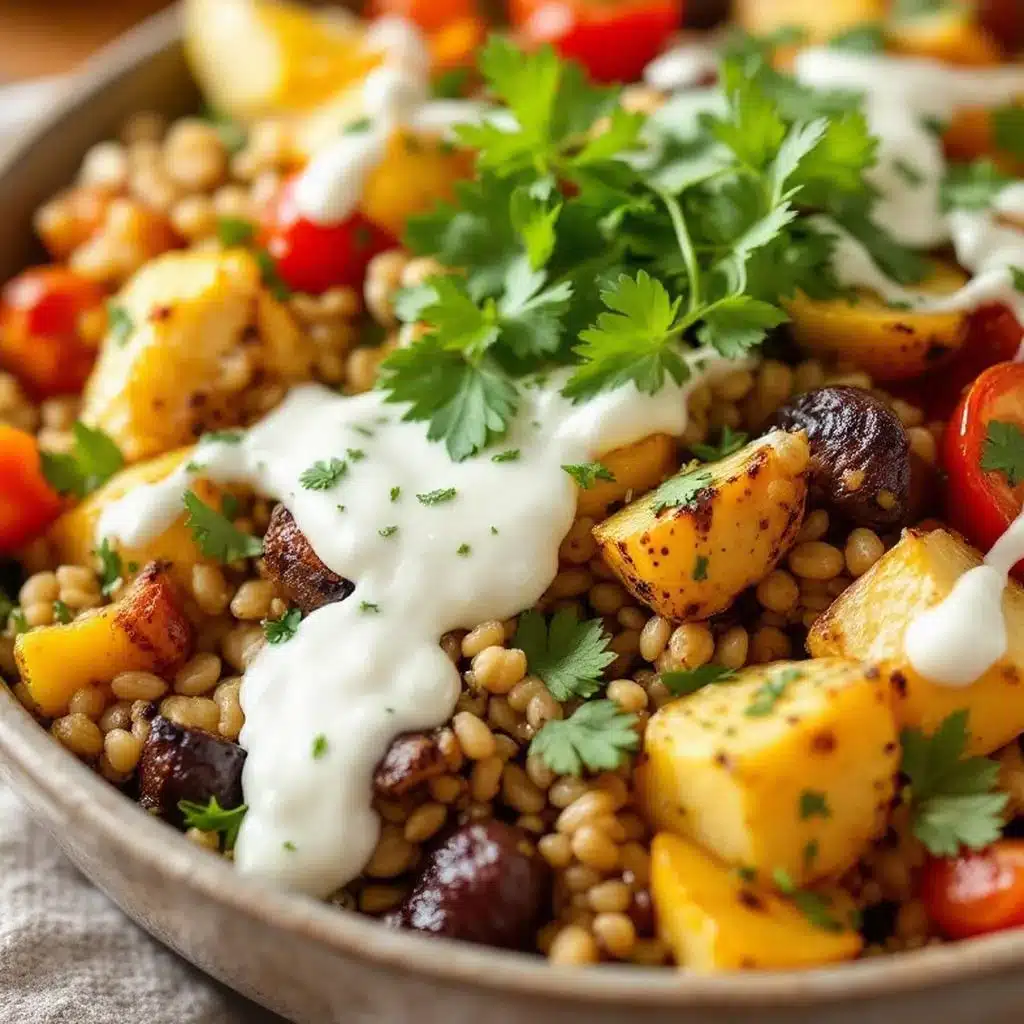
I kept ordering grain bowls at cafes and feeling disappointed. They were either soggy, underseasoned, or somehow both. For a while, I just accepted that a warm, satisfying bowl of grains and vegetables wasn’t going to happen outside my own kitchen. The roasted veggies were always limp, the dressing was boring, and the whole thing felt like a sad desk lunch instead of the cozy meal I wanted.
This fall harvest grain bowl started as a solution to a specific problem. I had a fridge full of root vegetables, a bag of farro I didn’t know what to do with, and a craving for something that felt like autumn on a plate. I wanted the vegetables to be caramelized at the edges, the grains to be chewy and nutty, and the whole thing to come together without a complicated sauce situation. Honestly, I was tired of complicated.
The first version was good. The second version was better. By the third time I made it, I stopped tweaking and started eating. The maple-tahini dressing was the missing piece—it ties the roasted sweetness to the earthy grains in a way that just clicks. This simple cozy fall harvest grain bowl with roasted veggies became my go-to Sunday meal prep, my weeknight dinner when I wanted something warm but not heavy, and the thing I actually looked forward to eating cold the next day. It stuck because it didn’t try to be fancy. It just tried to be good.
Why You’ll Love This Recipe
This isn’t just another grain bowl recipe. I tested this one about four times before I felt confident sharing it, and each batch taught me something about timing, temperature, and what actually makes a bowl feel complete. Here is why this version works.
- Simple Ingredients : You probably have most of this in your kitchen right now. No hunting down specialty items at three different stores.
- Perfect for Meal Prep : Roast the veggies and cook the grains on Sunday, then assemble all week. The flavors actually get better after a day in the fridge.
- Naturally Adaptable : Swap in whatever vegetables are in your crisper drawer. Use quinoa instead of farro. Make it vegan or add goat cheese. It bends without breaking.
- That Maple-Tahini Dressing : I am not exaggerating when I say this dressing is the reason I make this bowl as often as I do. It is creamy, tangy, slightly sweet, and it coats everything perfectly without being heavy.
- Crowd-Pleaser : I brought this to a Friendsgiving potluck and people who claimed they “don’t do bowls” went back for seconds. It is that kind of recipe.
What makes this different from the countless grain bowl recipes out there is the balance. The vegetables are roasted at high heat so they get those gorgeous browned edges. The farro is cooked like pasta—in plenty of salted water—so it stays separate and al dente. And the dressing is emulsified properly so it doesn’t separate into a watery mess by day three. It is comfort food reimagined—healthier, faster, but with the same soul-soothing satisfaction. Perfect for impressing guests without stress, or turning a simple meal into something memorable.
What Ingredients You Will Need
This recipe uses simple, wholesome ingredients to deliver bold flavor and satisfying texture without the fuss. Most are pantry staples, and the ones that aren’t are easy to find and worth the trip.
- Farro (1 cup, dry) – I prefer semi-pearled farro for this. It cooks faster than whole farro but still has that wonderful chew. If you can’t find farro, spelt berries or wheat berries work beautifully.
- Butternut Squash (2 cups, peeled and cubed into 1-inch pieces) – Look for squash that feels heavy for its size. Pre-cut cubes save time but roast slightly differently—pat them dry first for better caramelization.
- Brussels Sprouts (2 cups, halved) – Choose firm, bright green sprouts. Smaller ones are sweeter and less bitter. Trim the ends but leave the outer leaves—they get crispy and delicious.
- Red Onion (1 medium, cut into wedges) – The sweetness mellows out during roasting. You could use shallots instead for a milder flavor.
- Olive Oil (3-4 tablespoons, divided) – Use a good quality extra virgin for the dressing, but a standard one for roasting is fine.
- Maple Syrup (2 tablespoons, pure) – Not pancake syrup. The real stuff makes a difference in the dressing.
- Tahini (3 tablespoons) – I recommend Soom or Seeds of Change for the smoothest texture. Stir it well before measuring because it separates.
- Lemon Juice (2 tablespoons, fresh) – Bottled lemon juice will work in a pinch, but fresh gives the dressing a brighter finish.
- Apple Cider Vinegar (1 tablespoon) – Adds acidity that cuts through the richness of the tahini.
- Garlic (1 small clove, grated) – A microplane is best here. You want the garlic to dissolve into the dressing, not linger in chunks.
- Salt and Black Pepper – Kosher salt is best for roasting. Flaky sea salt at the end adds a nice crunch.
- Optional Toppings : Crumbled goat cheese or feta, toasted pumpkin seeds, pomegranate arils, fresh parsley. These aren’t essential, but they add texture and pops of flavor.
For the dressing, you can substitute Greek yogurt for tahini if you want a creamier, less nutty version. Use tamari or coconut aminos instead of salt for a deeper umami note. In summer, swap in fresh zucchini and cherry tomatoes instead of the butternut squash and Brussels sprouts.
Equipment Needed
You don’t need a lot of fancy tools for this one. A large rimmed baking sheet is the most important piece—without enough space, the vegetables steam instead of roast. I use a half-sheet pan and it is perfect. If you only have smaller pans, split the vegetables between two sheets.
A medium saucepan with a lid is essential for cooking the farro. A sharp chef’s knife makes quick work of cubing squash and halving Brussels sprouts. A microplane is ideal for grating the garlic into the dressing, but a very fine mince works too.
For the dressing, a small jar with a tight-fitting lid is my preferred method—just shake until emulsified. You can also whisk it in a bowl. A citrus juicer helps get every drop of lemon juice without seeds.
Budget-friendly options? Skip the microplane and grate garlic on the smallest holes of a box grater. Use a regular baking sheet if that’s what you have—just keep an eye on the vegetables and rotate the pan halfway through.
Preparation Method
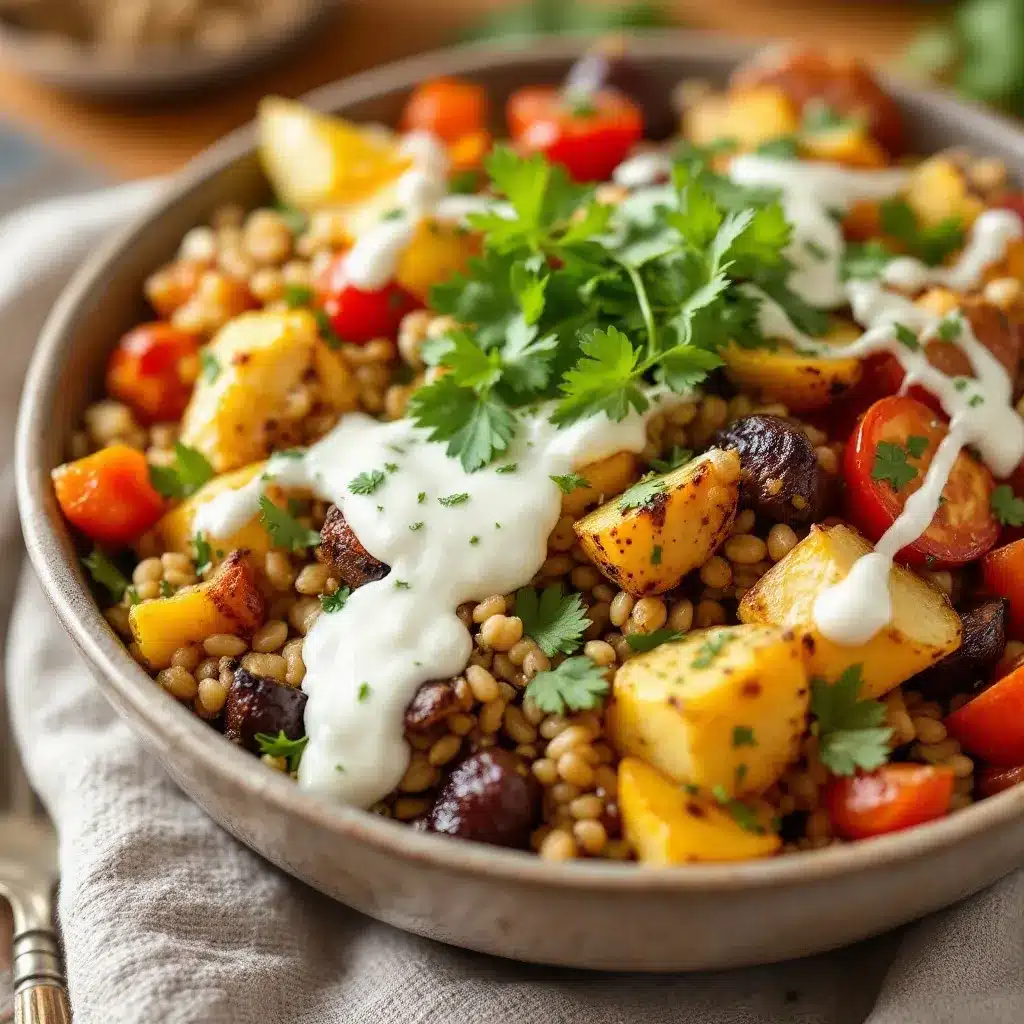
- Preheat the oven to 425°F (220°C). This high heat is non-negotiable for properly caramelized vegetables. While the oven heats, line a large rimmed baking sheet with parchment paper for easy cleanup.
- Cook the farro. Bring a large pot of generously salted water to a boil. Add 1 cup of farro and cook according to package directions—usually 25-30 minutes for semi-pearled farro. Drain well and spread on a plate to cool slightly. Tossing with a splash of olive oil prevents sticking. You want about 3 cups of cooked farro.
- Prep the vegetables. Toss the cubed butternut squash, halved Brussels sprouts, and red onion wedges with 2 tablespoons of olive oil, ½ teaspoon of salt, and ¼ teaspoon of black pepper. Spread them in a single layer on the prepared baking sheet. Do not overcrowd—if vegetables overlap, they steam instead of roast. Roast for 25-30 minutes, flipping halfway through, until the squash is tender and the Brussels sprouts are deeply browned at the edges. The onions should be soft and caramelized.
- Make the dressing. While the vegetables roast, combine 3 tablespoons of tahini, 2 tablespoons of maple syrup, 2 tablespoons of fresh lemon juice, 1 tablespoon of apple cider vinegar, 1 small grated garlic clove, and ¼ teaspoon of salt in a small jar. Add 3-4 tablespoons of warm water, one at a time, shaking or whisking after each addition until the dressing is smooth and pourable. It should be thick but drizzle-able—like heavy cream. Adjust water as needed.
- Assemble the bowls. Divide the warm farro among serving bowls. Top with the roasted vegetables. Drizzle generously with the maple-tahini dressing. Add any optional toppings you like—crumbled goat cheese, toasted pumpkin seeds, pomegranate arils, or fresh parsley.
- Check the seasoning. Taste before serving. A final pinch of flaky sea salt and a crack of black pepper can make all the difference. The dressing should be tangy and slightly sweet, balancing the earthy vegetables and nutty farro.
Sensory cue: The farro should be chewy but not hard, the squash should yield easily to a fork but hold its shape, and the Brussels sprouts should have crispy outer leaves with tender centers. The dressing should smell nutty and bright, not overwhelmingly garlicky.
If the dressing is too thick, thin it with warm water a teaspoon at a time. If it is too thin, add more tahini. If the vegetables aren’t browning after 20 minutes, increase the oven temperature to 450°F (230°C) for the last 5-10 minutes.
Cooking Tips & Techniques
I learned the hard way that crowding the baking sheet is the fastest way to sad, steamed vegetables. Give them space. If they touch, they trap moisture. If they have room, they caramelize. That browning is where the flavor lives.
Another mistake I made early on? Not salting the farro cooking water enough. Pasta water should taste like the sea, and farro water should be almost as salty. The grains absorb that seasoning from the inside out. Undersalted farro makes the whole bowl taste flat.
For the dressing, patience with the water is key. Add it slowly and whisk constantly. If you dump it all in at once, the tahini seizes up and turns into a gritty paste. Trust me, I have thrown out more than one ruined dressing. Start with 2 tablespoons of water, whisk until smooth, then add more until it reaches the right consistency.
Timing tip: Start the farro first, then prep the vegetables while it cooks. By the time the farro is done, the oven is hot and the vegetables are ready to go in. It is a smooth workflow that takes about 45 minutes total, with about 15 minutes of active hands-on time.
For consistent results, cut your vegetables into uniform pieces. Uneven chunks mean some burn while others stay raw. Aim for 1-inch cubes on the squash and halved sprouts that are roughly the same size.
Variations & Adaptations
- Grain Swap : Use quinoa, brown rice, or freekeh instead of farro. Quinoa cooks faster (15 minutes), while brown rice needs about 40 minutes. Adjust cooking times accordingly.
- Protein Add-In : Add roasted chickpeas, grilled chicken, or crispy tofu. For chickpeas, drain and dry a can, toss with olive oil and salt, and roast alongside the vegetables for the last 20 minutes.
- Vegan Version : Skip the goat cheese and use the dressing as is—it is already vegan. Add avocado for creaminess instead of cheese.
- Seasonal Twist : In spring, use asparagus and peas. In summer, zucchini and cherry tomatoes. In winter, roasted sweet potatoes and kale. The dressing works with any combination.
- Spicy Kick : Add a pinch of red pepper flakes to the dressing or drizzle with sriracha before serving.
I once made this with roasted delicata squash instead of butternut, and it was incredible—the skin is edible, so no peeling required. If you have a similar craving for something warm and filling, you might also enjoy this creamy roasted butternut squash soup for another cozy fall meal.
Serving & Storage Suggestions
Serve this bowl warm or at room temperature. The farro should be just warm enough to soften the dressing when you drizzle it on. I like to arrange the vegetables on top of the grains so they stay visible—it makes the bowl look as good as it tastes.
For a complete meal, pair this with a simple side salad or a roasted red pepper hummus with za’atar spice and some warm pita bread. A crisp green salad with lemon vinaigrette would also round things out nicely.
Storage: Keep the farro, roasted vegetables, and dressing in separate airtight containers in the refrigerator. The farro and vegetables stay good for up to 5 days. The dressing thickens when cold—let it sit at room temperature for 10 minutes, then whisk in a teaspoon of warm water to loosen it before using.
Reheating: Reheat the farro and vegetables together in a microwave or on the stovetop with a splash of water to add moisture. Do not microwave the dressing—it will separate. Add the dressing after reheating.
The flavors actually develop and deepen overnight. The farro absorbs the seasoning, the vegetables soften slightly, and the whole thing tastes even more cohesive on day two.
Nutritional Information & Benefits
Per serving (approximate, without optional toppings):
- Calories: 420
- Protein: 12g
- Fat: 18g
- Carbohydrates: 58g
- Fiber: 12g
- Sugar: 14g
This bowl is packed with fiber from the farro and vegetables, which keeps you full and supports digestive health. Butternut squash is rich in vitamin A and antioxidants. Brussels sprouts provide vitamin C and K. Tahini adds healthy fats and calcium. The maple syrup is minimal, but the sweetness comes mostly from the roasted vegetables themselves.
Dietary considerations: This recipe is naturally vegan, dairy-free (if you skip the cheese), and nut-free. It is also vegetarian and can be made gluten-free by substituting quinoa for farro. Potential allergens: sesame (tahini) and gluten (farro).
I love that this bowl feels indulgent but is actually full of whole foods. It is the kind of meal that makes you feel good after eating it—not heavy, not sluggish, just satisfied.
Conclusion
This simple cozy fall harvest grain bowl with roasted veggies is the kind of recipe that earns a permanent spot in your rotation. It is forgiving enough for a busy weeknight, impressive enough for company, and adaptable enough to use whatever vegetables you have on hand. The maple-tahini dressing alone is worth making—it works on salads, grain bowls, and even as a dip for raw vegetables.
I love this recipe because it proves that eating well doesn’t have to be complicated or boring. A few good ingredients, proper roasting, and a well-balanced dressing are all you need. Customize it based on what looks good at the market or what is lingering in your fridge. That is the beauty of a bowl like this—it never has to be the same twice.
If you make this, I would love to hear about it. Leave a comment below with your favorite variations, tag me in your photos, or share how you adapted it to your own kitchen. And if you are looking for another cozy dinner idea, this red wine braised short ribs with creamy polenta is perfect for a weekend when you want something extra special. Happy cooking!
Frequently Asked Questions
Can I use frozen vegetables for this recipe?
Yes, but pat them dry thoroughly before roasting to remove excess moisture. Frozen vegetables release more water, so they may not caramelize as deeply. Roast at 425°F and check for doneness 5-10 minutes earlier than fresh vegetables.
How do I make the dressing ahead of time?
The dressing keeps in an airtight jar in the refrigerator for up to a week. It will thicken as it chills—let it sit at room temperature for 10 minutes, then whisk in warm water a teaspoon at a time until it reaches your desired consistency.
Can I make this recipe gluten-free?
Absolutely. Substitute the farro with quinoa, brown rice, or certified gluten-free oats. Cook according to package directions. The rest of the recipe is naturally gluten-free, including the dressing.
What if I don’t have tahini?
You can substitute tahini with almond butter, sunflower seed butter, or Greek yogurt. Each will change the flavor slightly—almond butter adds sweetness, sunflower seed butter adds earthiness, and Greek yogurt makes it tangier and creamier.
How do I prevent the farro from becoming mushy?
Cook farro like pasta in plenty of salted water, not like rice with a fixed amount of water. Drain it when it is tender but still chewy. Spreading it on a plate to cool stops the cooking process and prevents it from turning into a sticky mess.
Pin This Recipe!
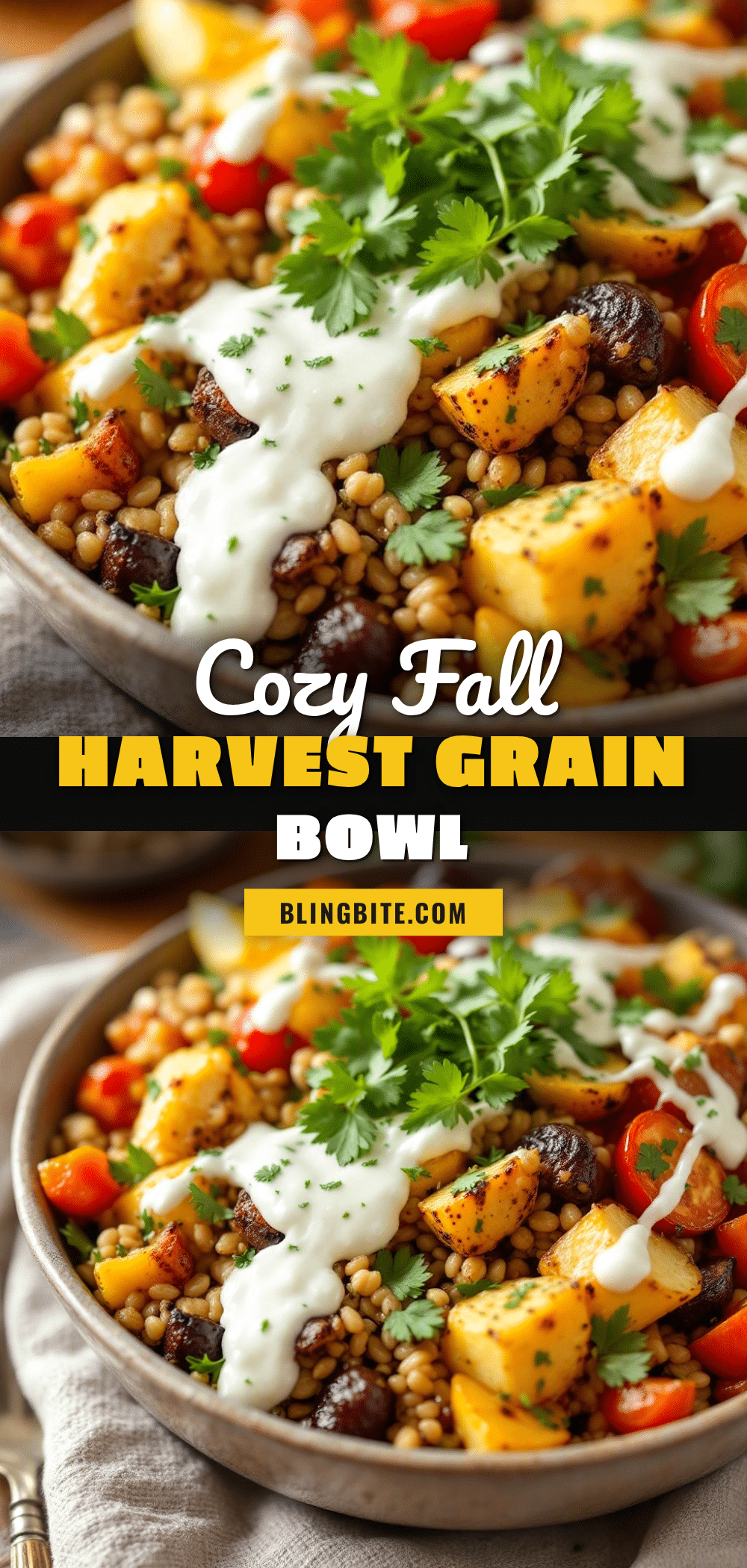
Simple Cozy Fall Harvest Grain Bowl with Roasted Veggies
A warm, satisfying bowl of roasted vegetables and chewy farro tossed in a creamy maple-tahini dressing. Perfect for meal prep or a cozy weeknight dinner, this adaptable recipe is packed with fiber and flavor.
- Prep Time: 15 minutes
- Cook Time: 30 minutes
- Total Time: 45 minutes
- Yield: 4 servings 1x
- Category: Main Course
- Cuisine: American
Ingredients
- 1 cup farro (semi-pearled preferred)
- 2 cups butternut squash, peeled and cubed into 1-inch pieces
- 2 cups Brussels sprouts, halved
- 1 medium red onion, cut into wedges
- 3–4 tablespoons olive oil, divided
- 2 tablespoons pure maple syrup
- 3 tablespoons tahini
- 2 tablespoons fresh lemon juice
- 1 tablespoon apple cider vinegar
- 1 small garlic clove, grated
- Salt and black pepper to taste
- Optional toppings: crumbled goat cheese or feta, toasted pumpkin seeds, pomegranate arils, fresh parsley
Instructions
- Preheat the oven to 425°F (220°C). Line a large rimmed baking sheet with parchment paper.
- Cook the farro: Bring a large pot of generously salted water to a boil. Add 1 cup farro and cook according to package directions (25-30 minutes for semi-pearled). Drain well and spread on a plate to cool slightly. Toss with a splash of olive oil to prevent sticking.
- Prep the vegetables: Toss cubed butternut squash, halved Brussels sprouts, and red onion wedges with 2 tablespoons olive oil, ½ teaspoon salt, and ¼ teaspoon black pepper. Spread in a single layer on the prepared baking sheet. Roast for 25-30 minutes, flipping halfway through, until squash is tender and Brussels sprouts are deeply browned.
- Make the dressing: In a small jar, combine 3 tablespoons tahini, 2 tablespoons maple syrup, 2 tablespoons lemon juice, 1 tablespoon apple cider vinegar, 1 grated garlic clove, and ¼ teaspoon salt. Add 3-4 tablespoons warm water, one at a time, shaking or whisking after each addition until smooth and pourable.
- Assemble the bowls: Divide warm farro among serving bowls. Top with roasted vegetables. Drizzle generously with maple-tahini dressing. Add optional toppings as desired.
- Check seasoning: Taste and adjust with flaky sea salt and black pepper before serving.
Notes
For best caramelization, do not overcrowd the baking sheet. Cook farro like pasta in plenty of salted water to keep it al dente. The dressing thickens when cold; let it sit at room temperature and whisk in warm water to loosen. Store farro, vegetables, and dressing separately in the refrigerator for up to 5 days. Reheat farro and vegetables together; do not microwave the dressing.
Nutrition
- Serving Size: 1 bowl
- Calories: 420
- Sugar: 14
- Sodium: 480
- Fat: 18
- Saturated Fat: 2.5
- Carbohydrates: 58
- Fiber: 12
- Protein: 12
Keywords: fall harvest grain bowl, roasted vegetables, farro bowl, maple tahini dressing, vegan grain bowl, meal prep, healthy bowl, autumn recipe