“You know that moment when the streets of a bustling city suddenly feel alive with the scent of simmering spices? That was me, standing outside a tiny noodle shop in Hanoi about five years ago, clutching a cracked bowl as the drizzle started. The sizzle of beef bones roasting and the faint clatter of herbs being chopped pulled me right in. Honestly, I wasn’t expecting much, just a quick warm-up from the rain. But that first spoonful of pho changed my whole idea of soup. It was like a hug in broth form—complex yet comforting, layered yet simple. I remember almost dropping my chopsticks because I got so caught up in the flavors.
Back home, I tried recreating that magic in my own kitchen a dozen times—burnt broth here, bland spices there, and once, I even used the wrong cut of beef (don’t ask). But slowly, piece by piece, I assembled a recipe that felt true to that rainy Hanoi evening. This Vietnamese pho soup recipe is the result of those trials, mistakes, and a fair share of noodle slurping. Maybe you’ve been there—chasing a flavor memory from a faraway place. Well, this recipe is my little way of bringing that authentic taste home, minus the jet lag and the drizzle. Let me tell you, it’s worth every minute spent stirring and sniffing the broth.
Why You’ll Love This Recipe
This Vietnamese pho soup recipe is more than just a dish; it’s a celebration of flavors and tradition that’s approachable for home cooks. After testing countless versions, I’ve landed on this one that balances authenticity with ease.
- Quick & Easy: While pho traditionally simmers for hours, this recipe streamlines the process to under 3 hours without losing depth.
- Simple Ingredients: You won’t need exotic or hard-to-find items—everything is either pantry staples or easy to source.
- Perfect for Cozy Nights: Whether it’s a chilly evening or a Sunday brunch, this soup warms you inside out.
- Crowd-Pleaser: The blend of savory broth, tender beef, and fresh herbs always wins over both pho newbies and seasoned lovers.
- Unbelievably Delicious: The secret to this recipe? Roasting the bones and spices separately to coax out layers of flavor you can taste in every sip.
What sets this pho recipe apart is the subtle balance—no overpowering star, just a harmonious blend of cinnamon, star anise, and charred onion that sings with the beefy broth. You’ll find yourself closing your eyes with that first spoonful, savoring the moment. This isn’t just soup; it’s a little bowl of authenticity you can make in your own kitchen, anytime you crave that soulful Vietnamese taste.
What Ingredients You Will Need
This pho recipe uses simple, wholesome ingredients to deliver bold flavor and satisfying texture without the fuss. Most are pantry staples, and the fresh herbs add that signature brightness. Here’s what you’ll gather before diving in:
- Beef Bones: 3 pounds (1.4 kg) of marrow and knuckle bones (for rich, gelatinous broth)
- Brisket or Flank Steak: 1 pound (450 g), thinly sliced (adds tender meat to the soup)
- Yellow Onion: 1 large, halved and charred (adds sweetness and depth)
- Fresh Ginger: 3-inch piece, sliced and charred (for warmth and a subtle kick)
- Star Anise: 4 whole pods (classic pho spice)
- Cinnamon Stick: 1 large stick (adds warm spice)
- Cloves: 3 whole (intense aromatic touch)
- Cardamom Pods: 2 pods (optional but recommended for complexity)
- Fish Sauce: 4 tablespoons (I recommend Red Boat for authentic, clean flavor)
- Rock Sugar or Brown Sugar: 1 tablespoon (balances savory notes)
- Rice Noodles (Bánh Phở): 12 ounces (340 g), flat and medium width (easy to find in Asian markets)
- Fresh Herbs: Thai basil, cilantro, and mint (a handful each for garnish and freshness)
- Bean Sprouts: 1 cup (adds crunch)
- Lime: Cut into wedges (for brightness)
- Jalapeño or Thai Chili: Thinly sliced, optional (for heat)
- Green Onions: 3 stalks, thinly sliced (for garnish)
Note: If you want a gluten-free version, double-check your fish sauce label and noodles. For a vegetarian twist, swap beef bones with dried shiitake mushrooms and vegetable broth (I tried it once, and it’s surprisingly satisfying!).
Equipment Needed
- Large Stockpot (8-quart or larger): Essential for simmering bones and broth. I’ve found that a heavy-bottomed pot helps prevent scorching during the long simmer.
- Strainer or Fine Mesh Sieve: To remove spices and bones for a clear broth.
- Charcoal Grill or Gas Burner: Optional but great if you want to char onions and ginger authentically. Otherwise, a broiler or cast iron pan works well.
- Sharp Knife: For slicing meat thinly—freezing the meat slightly makes this easier.
- Large Bowls: For serving and soaking noodles.
- Slotted Spoon or Skimmer: To remove foam and impurities from the broth surface.
If you don’t have a broiler or grill handy, no worries—just use a dry pan over medium heat for charring. Budget-friendly tip: a cast iron skillet does double duty for this and many other cooking tasks in the kitchen. Keep your knives sharp to avoid squashing herbs and meat slices.
Preparation Method
- Prepare the Bones: Rinse the beef bones under cold water. Place them in a large stockpot and cover with cold water (about 4 quarts / 3.8 liters). Bring to a boil over high heat for 10 minutes to blanch and remove impurities. Skim off any foam that rises to the surface. Drain and rinse bones to remove any residue. This step is key for a clean broth.
- Char the Aromatics: While bones blanch, char the halved onion and sliced ginger. You can do this directly over a gas flame, under a broiler, or in a dry cast iron pan. Char until blackened spots appear, about 5-7 minutes, turning occasionally. This adds smoky sweetness to the broth.
- Toast the Spices: In a dry skillet over medium heat, toast star anise, cinnamon stick, cloves, and cardamom pods for 2-3 minutes until fragrant. Be careful not to burn—aroma is your guide here.
- Simmer the Broth: Return the cleaned bones to the stockpot and add 5 quarts (4.7 liters) of fresh water. Add the charred onion, ginger, toasted spices, fish sauce, and rock sugar. Bring to a gentle boil, then reduce heat to low. Simmer uncovered for 2.5 to 3 hours, skimming foam or fat every 30 minutes. The broth should develop a rich golden hue and smell fragrant.
- Prepare Noodles and Meat: About 10 minutes before serving, soak rice noodles in warm water until pliable, about 10 minutes, then drain. Freeze or refrigerate the brisket or flank steak for 20 minutes to firm it up, which makes slicing thin easier. Slice thinly against the grain.
- Strain the Broth: Remove bones, onion, ginger, and spices from the broth using a fine mesh sieve. Taste and adjust seasoning with more fish sauce or sugar if needed. Keep broth hot.
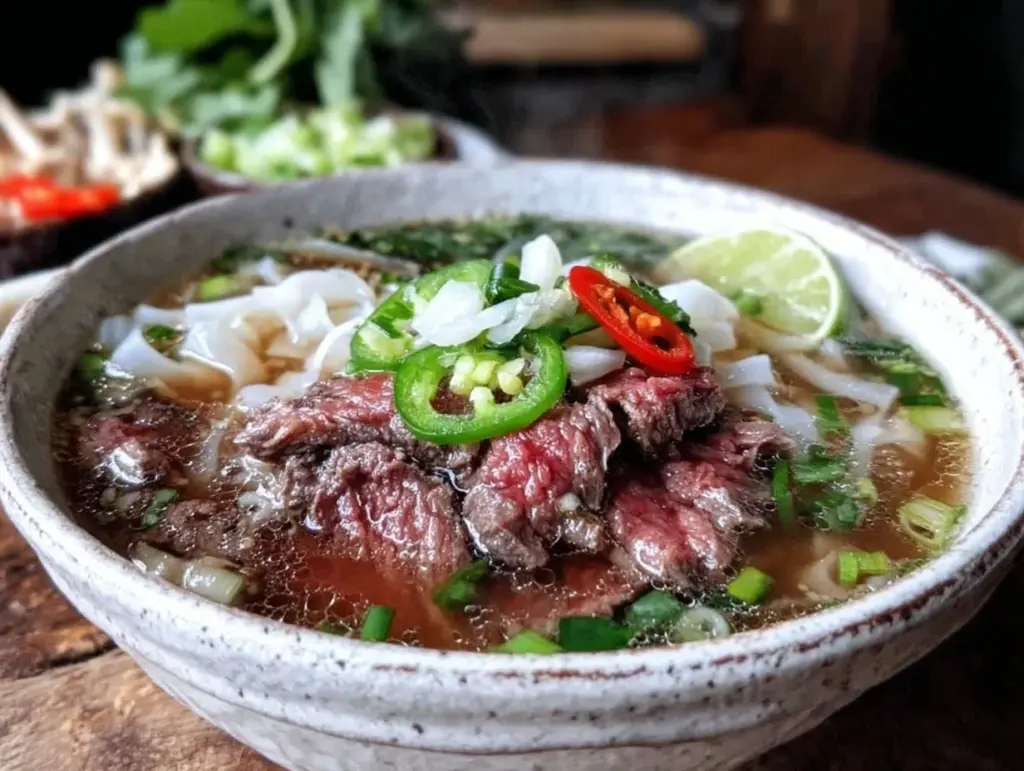
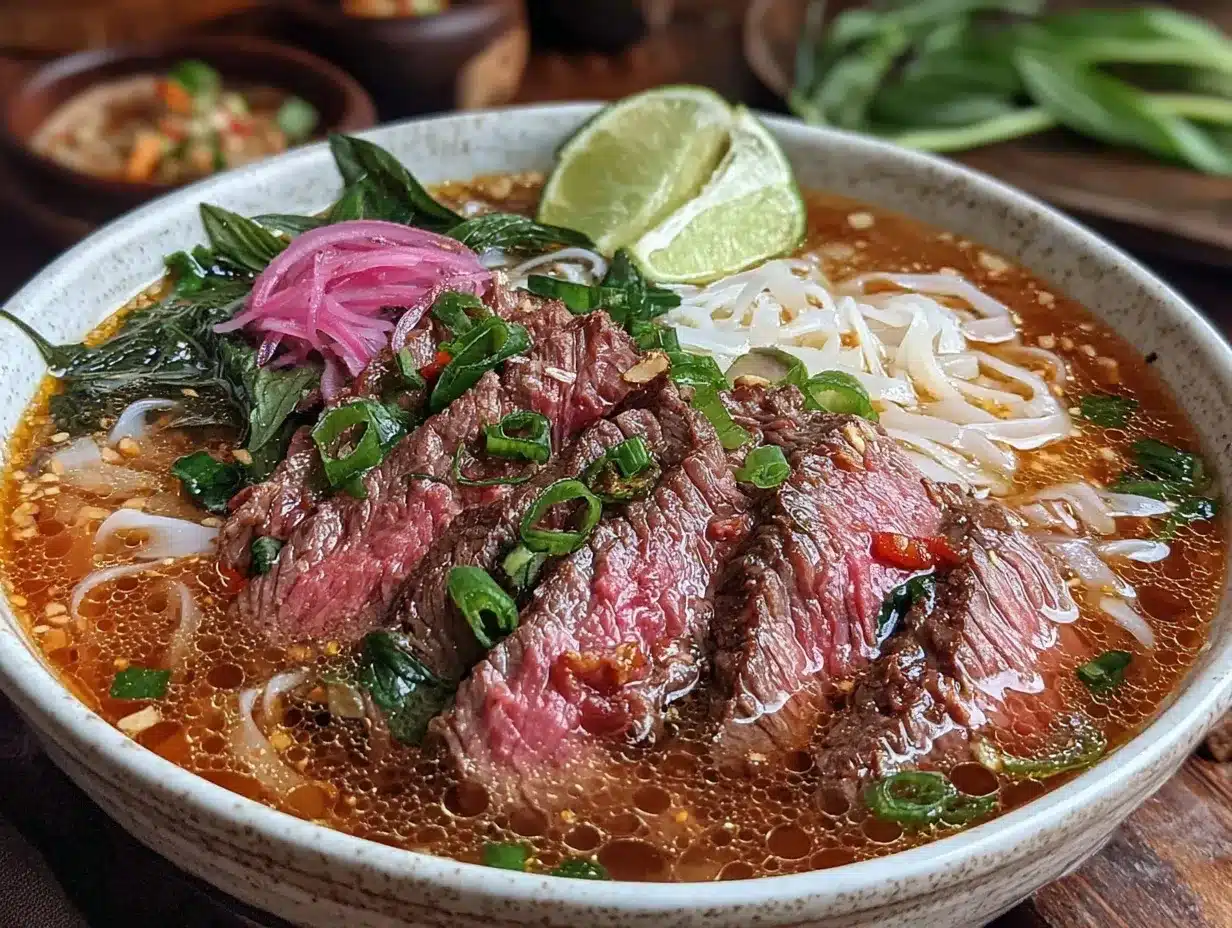
- Assemble Bowls: Divide noodles into serving bowls. Top with raw beef slices. Ladle hot broth directly over the meat to gently cook it (should turn pale pink in seconds). Garnish with bean sprouts, fresh herbs, green onions, lime wedges, and sliced chilies as desired.
Pro tip: Don’t rush the simmering—this slow process is what builds that signature pho flavor. Also, keep your broth simmering gently; a rolling boil can cloud the broth and toughen your meat slices.
Cooking Tips & Techniques
Making authentic Vietnamese pho soup can seem intimidating, but a few tips will have you slurping confidently in no time.
- Don’t Skip Blanching Bones: It removes impurities and keeps your broth clear, which is the hallmark of good pho.
- Char Aromatics Properly: That smoky fragrance comes from charred onion and ginger. If you skip this, the broth tastes flat.
- Toast Spices Gently: Burnt spices can ruin the broth’s delicate balance. Toast until fragrant, not dark brown.
- Skim Often: Foam and fat rising during simmering make broth cloudy and greasy. Keep your broth clean by skimming every half hour.
- Slice Meat Thin and Against the Grain: It ensures tenderness. Pop the meat in the freezer for about 20 minutes before slicing—it firms up and slices cleaner.
- Cook Meat with Hot Broth: Pouring boiling broth over raw meat cooks it quickly without overcooking.
- Multitask: While broth simmers, prep herbs and soak noodles. Saves time and keeps the kitchen flowing.
I once tried skipping the skimming step (hey, I was distracted by a phone call), and the broth turned cloudy and greasy—definitely not the pho experience I wanted. So trust me on this one: patience pays off!
Variations & Adaptations
This Vietnamese pho soup recipe is flexible and deliciously adaptable to suit your preferences or dietary needs.
- Vegetarian Pho: Replace beef bones with dried shiitake mushrooms, kombu seaweed, and vegetable broth. Use soy sauce instead of fish sauce and add tofu for protein.
- Chicken Pho (Phở Gà): Swap beef bones for chicken carcass and thighs. Toast the same spices and char aromatics. This yields a lighter but equally flavorful broth.
- Gluten-Free Option: Ensure rice noodles and fish sauce are gluten-free (many brands are). Use tamari instead of soy sauce if needed.
- Spicy Pho: Add Sriracha or sliced fresh bird’s eye chilies for heat. I like adding a spoonful of chili oil for an extra kick.
- Herb Variations: Try swapping out Thai basil for regular sweet basil or adding sawtooth coriander for an herbal twist.
Personally, I once experimented with coconut sugar instead of rock sugar—it added a subtle caramel note that was surprisingly delightful. Don’t hesitate to tailor the recipe; pho should feel like a warm hug made just for you.
Serving & Storage Suggestions
Serve pho piping hot to enjoy the full depth of flavors. It’s perfect with a platter of fresh herbs, lime wedges, and bean sprouts on the side so everyone can customize their bowl.
Pair the soup with a cold Vietnamese iced coffee or jasmine tea to balance the warmth. A fresh spring roll appetizer complements the meal beautifully.
Leftover broth stores well in the fridge for up to 3 days or freezes for up to 3 months. Store noodles separately to prevent sogginess. Reheat broth gently on the stove—avoid boiling again to keep clarity. When ready to serve, soak fresh noodles and assemble as usual.
Flavors tend to deepen overnight in the fridge, so if you have time, let the broth rest a day before serving. Just remember to skim off any solidified fat on top before reheating.
Nutritional Information & Benefits
This Vietnamese pho soup recipe is a nourishing comfort food with several health benefits. A typical serving contains approximately:
| Calories | 350-400 kcal |
|---|---|
| Protein | 30-35 g |
| Fat | 8-12 g |
| Carbohydrates | 40-45 g |
| Fiber | 2-3 g |
The broth is rich in collagen from simmered bones, which supports joint and skin health. Fresh herbs provide antioxidants and vitamins, while the lean beef adds high-quality protein. This recipe can be adapted for low-carb diets by reducing noodles or swapping rice noodles for shirataki noodles.
Just a heads-up, this recipe contains fish sauce, which is a common allergen for some. Always check ingredient labels if you have sensitivities.
Conclusion
Making this Vietnamese pho soup recipe at home is like inviting a little piece of Vietnam into your kitchen. The layers of flavor, the fresh herbs, and that comforting warmth make it a dish worth the effort. Feel free to tweak the herbs, spice levels, or protein to suit your taste—pho is wonderfully forgiving.
I love this recipe because it’s a bridge between memories, culture, and everyday comfort food. Every simmer and stir brings me back to that drizzly Hanoi evening, the sizzle of bones, and the joy of sharing a bowl with friends. If you try it, drop a comment below and tell me how your pho journey went—I’m always excited to hear your twists and stories. Happy cooking!
FAQs
How long should I simmer the pho broth for the best flavor?
Simmer the broth gently for at least 2.5 to 3 hours. This slow cooking extracts rich flavors and collagen from the bones, resulting in a deep, satisfying broth.
Can I make pho broth in a slow cooker or Instant Pot?
Yes! Use the slow cooker on low for 6-8 hours or the Instant Pot on high pressure for about 1 hour, then release pressure naturally. Adjust seasonings afterward.
What’s the best way to slice beef thin for pho?
Freeze the beef for 15-20 minutes until firm but not frozen solid, then slice thinly against the grain with a sharp knife for tender bites.
How do I keep the broth clear and not cloudy?
Blanch bones before simmering, simmer gently without boiling, and skim foam and fat regularly during cooking.
Can I prepare pho noodles ahead of time?
Yes, soak them in warm water until soft, drain, and keep them covered at room temperature for up to a few hours. Avoid refrigerating soaked noodles as they may harden.
Pin This Recipe!
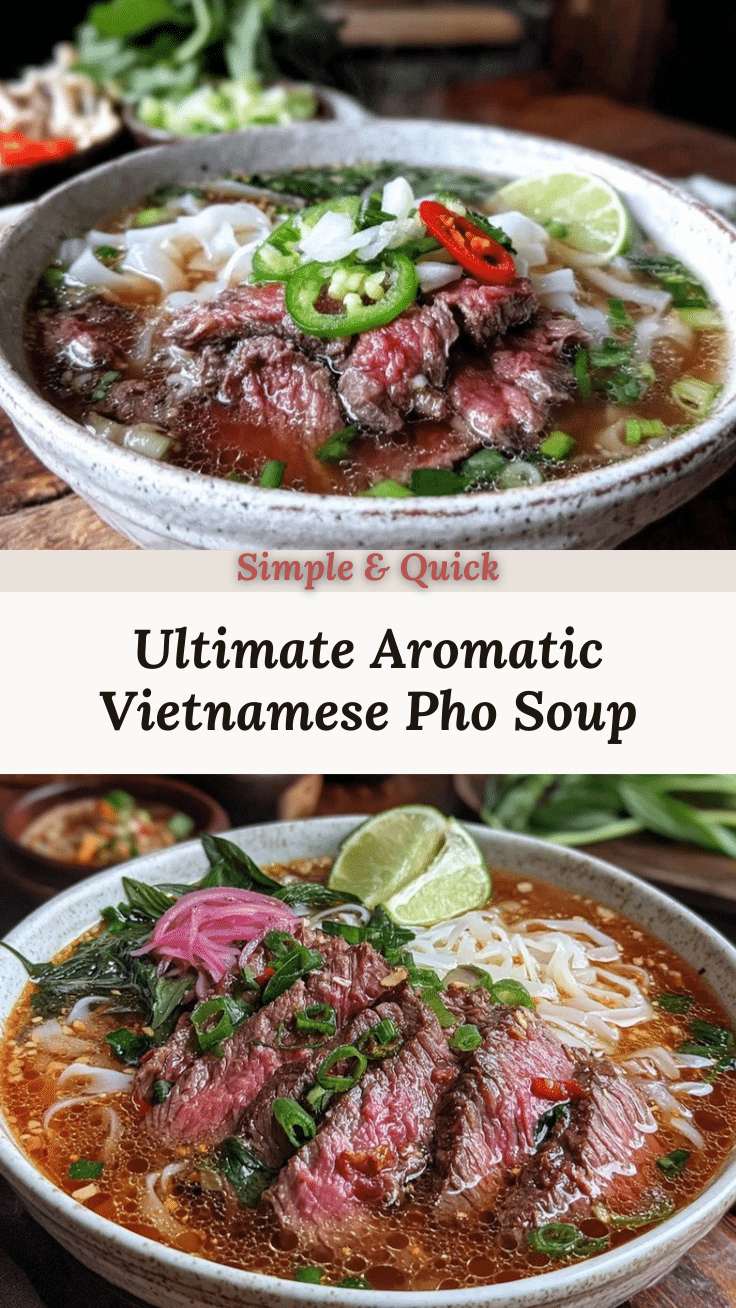
Vietnamese Pho Soup Recipe Easy Authentic Flavorful Homemade Guide
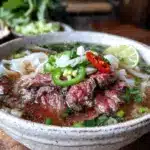
This Vietnamese pho soup recipe delivers an authentic, flavorful broth with tender beef and fresh herbs, perfect for cozy nights and approachable for home cooks.
- Prep Time: 30 minutes
- Cook Time: 3 hours
- Total Time: 3 hours 30 minutes
- Yield: 6 servings 1x
- Category: Main Course
- Cuisine: Vietnamese
Ingredients
- 3 pounds beef marrow and knuckle bones
- 1 pound brisket or flank steak, thinly sliced
- 1 large yellow onion, halved and charred
- 3-inch piece fresh ginger, sliced and charred
- 4 whole star anise pods
- 1 large cinnamon stick
- 3 whole cloves
- 2 cardamom pods (optional)
- 4 tablespoons fish sauce (recommend Red Boat)
- 1 tablespoon rock sugar or brown sugar
- 12 ounces rice noodles (Bánh Phở), flat and medium width
- Handful each of fresh Thai basil, cilantro, and mint
- 1 cup bean sprouts
- Lime wedges
- Thinly sliced jalapeño or Thai chili (optional)
- 3 stalks green onions, thinly sliced
Instructions
- Rinse beef bones under cold water. Place in a large stockpot and cover with about 4 quarts (3.8 liters) cold water. Bring to a boil over high heat for 10 minutes to blanch and remove impurities. Skim foam, drain, and rinse bones.
- Char the halved onion and sliced ginger over a gas flame, broiler, or dry cast iron pan until blackened spots appear, about 5-7 minutes, turning occasionally.
- Toast star anise, cinnamon stick, cloves, and cardamom pods in a dry skillet over medium heat for 2-3 minutes until fragrant, being careful not to burn.
- Return cleaned bones to stockpot and add 5 quarts (4.7 liters) fresh water. Add charred onion, ginger, toasted spices, fish sauce, and rock sugar. Bring to a gentle boil, then reduce heat to low and simmer uncovered for 2.5 to 3 hours, skimming foam or fat every 30 minutes.
- About 10 minutes before serving, soak rice noodles in warm water until pliable, about 10 minutes, then drain. Freeze or refrigerate brisket or flank steak for 20 minutes to firm up, then slice thinly against the grain.
- Strain broth through a fine mesh sieve to remove bones, onion, ginger, and spices. Taste and adjust seasoning with more fish sauce or sugar if needed. Keep broth hot.
- Divide noodles into serving bowls. Top with raw beef slices. Ladle hot broth over meat to gently cook it until pale pink. Garnish with bean sprouts, fresh herbs, green onions, lime wedges, and sliced chilies as desired.
Notes
Blanch bones to keep broth clear. Char aromatics for smoky sweetness. Toast spices gently to avoid bitterness. Skim foam and fat regularly. Freeze beef slightly before slicing thin. Pour hot broth over raw meat to cook gently. For gluten-free, verify fish sauce and noodles. Vegetarian version uses dried shiitake mushrooms and vegetable broth.
Nutrition
- Serving Size: 1 bowl (approximatel
- Calories: 375
- Sugar: 3
- Sodium: 900
- Fat: 10
- Saturated Fat: 3
- Carbohydrates: 43
- Fiber: 2.5
- Protein: 32
Keywords: Vietnamese pho, pho soup, beef pho, authentic pho recipe, homemade pho, Vietnamese noodle soup, pho broth, easy pho recipe